
Vitamin C serum is a popular skincare category for brands because it has strong consumer recognition and clear shelf appeal. For a manufacturer, however, vitamin C serum development requires careful decisions around formula route, ingredient form, color and odor control, packaging protection, claim language, stability expectations, and production quality control.
This article explains how international beauty brands can create a vitamin C serum with a cosmetic manufacturer. It is written for skincare startups, Amazon sellers, DTC brands, distributors, private label buyers, and sourcing managers planning an OEM/ODM serum project with Mooyam Cosmetic. We support brand and wholesale manufacturing projects; we do not accept retail orders.
Quick Summary
- Vitamin C serum projects need a clear formula route, realistic claims, protective packaging, sample review, and stability-aware production planning.
- Buyers should decide whether they need private label skincare speed, ODM support, or a custom formulation with a more specific ingredient and texture direction.
- Packaging choices such as amber glass, opaque airless pumps, and cartons can affect formula protection, MOQ, cost, and customer experience.
- Mooyam Cosmetic supports sample development, packaging sourcing, bulk production, quality control, and export support for B2B OEM/ODM projects.
Why Vitamin C Serum Needs Careful Development
Vitamin C serum is attractive because it is familiar to skincare customers and fits many product lines. But it is also a category where buyers must be precise. Different vitamin C derivatives, supporting ingredients, pH direction, texture systems, color expectations, packaging, and claim language can lead to very different products. A low-cost formula in clear packaging is not the same project as a premium custom serum in an opaque airless pump.
When working with a cosmetic OEM manufacturer or cosmetic ODM manufacturer, the first step is not simply asking for a vitamin C serum price. The buyer should define target price, launch channel, benchmark texture, packaging preference, ingredient direction, MOQ expectation, and target market. Requirements for ingredients, labels, claims, and importer responsibilities may vary by market, so regulatory promises should be avoided unless properly verified.
Private Label, ODM, or Custom Formula?
There are several practical ways to launch a vitamin C serum. A private label skincare route may be suitable when a brand wants speed, lower development risk, and standard packaging choices. ODM development can help the brand adjust concept, sensory direction, packaging, and positioning with factory support. Custom formulation is better when the brand needs a specific derivative, texture, ingredient story, or product benchmark.
| Development Route | Typical Buyer Need | Project Consideration |
|---|---|---|
| Private label | Fast launch with existing vitamin C serum options | Check available formula, packaging, MOQ, artwork, and claim limitations |
| ODM support | Factory-guided product concept with selected adjustments | Useful for brands that need direction but still want differentiation |
| Custom formulation | Specific ingredient form, texture, sensory profile, or premium positioning | Requires more sample rounds, stability review, and clearer technical brief |
Formula Decisions Buyers Should Discuss
The phrase “vitamin C serum” can mean many formula types. Some brands want a lightweight daily serum. Others want a more premium antioxidant-positioned product, a gentle derivative route, a fragrance-free product, or a formula combined with hydration-focused ingredients. The factory needs to understand whether the brand wants a watery texture, gel serum, silky finish, or richer serum feel.
Buyers should also discuss color and odor expectations. Some vitamin C formulas may naturally have color or odor changes over time depending on the ingredient system and packaging. This does not mean every formula has the same risk, but it does mean the buyer should ask how the manufacturer manages ingredient choice, packaging protection, storage recommendations, and quality control standards.
Claims Need Careful Language
Vitamin C skincare often attracts strong marketing language. B2B brands should avoid medical claims, guaranteed results, or unsupported regulatory promises. Benefits should be framed according to formula support, available testing, and the target market’s claim rules. If a brand wants claims such as brightening, antioxidant support, sensitive-skin suitability, clean beauty, vegan, or fragrance-free, those claims should be reviewed during development and documentation planning.
Packaging Sourcing for Vitamin C Serum
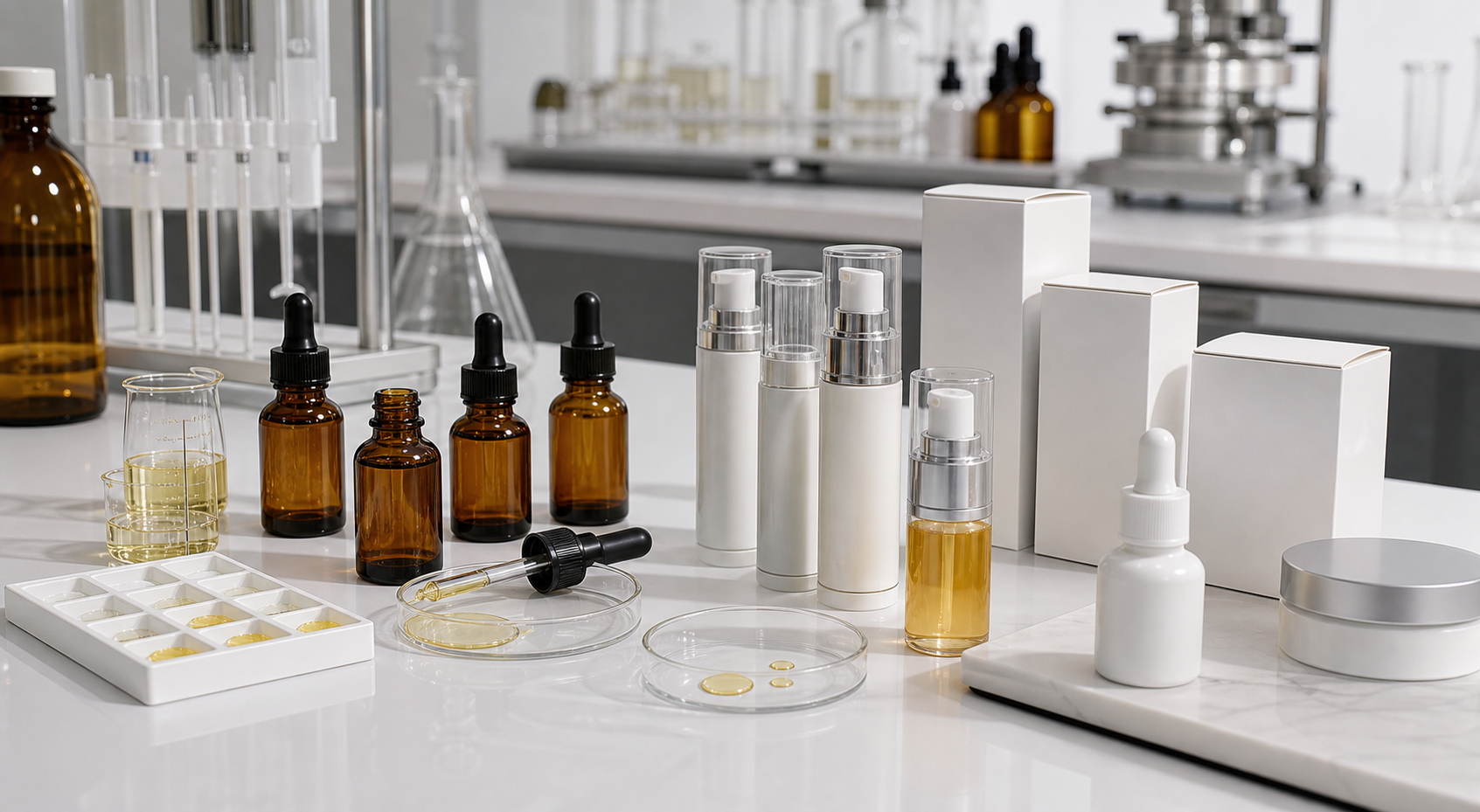
Packaging is especially important for vitamin C serum because the product story often involves ingredient freshness, color control, and customer trust. Amber glass bottles, opaque bottles, airless pumps, protective cartons, and careful decoration choices can all support the product presentation. The right option depends on formula type, viscosity, budget, MOQ, shipping route, and brand positioning.
Mooyam Cosmetic’s packaging sourcing support helps buyers compare droppers, airless pumps, bottles, cartons, labels, and decoration methods. For low MOQ projects, stock amber or opaque components may be more practical. For premium launches, customized packaging may support differentiation but can increase lead time and component minimums.
Sample Development and Evaluation
Sampling should be structured. The buyer should not approve a formula only from the first impression on the hand. Evaluate the sample for color, odor, viscosity, absorption, finish, stickiness, layering with moisturizer or sunscreen, packaging fit, and expected retail story. If the product will be sold on Amazon or DTC websites, also consider product photography, carton protection, leakage risk, and repeat purchase expectations.
A manufacturer can revise samples more efficiently when feedback is specific. Instead of saying “make it better,” describe whether the serum should be less sticky, more watery, less yellow, lower fragrance, faster absorbing, more premium feeling, or better matched with the selected pump. Clear feedback shortens the route to final approval and bulk production.
| Decision Area | Questions to Ask | Why It Matters |
|---|---|---|
| Formula route | Which vitamin C form, texture, fragrance, and supporting ingredients fit the brief? | Controls sensory feel, cost, positioning, and sample revisions |
| Packaging | Dropper, airless, amber, opaque, label, carton, or custom component? | Affects protection, filling, MOQ, leakage, lead time, and brand image |
| Quality control | What appearance, odor, viscosity, filling, packaging, and retained-sample checks apply? | Supports repeatable bulk production and problem tracing |
| Export support | What product information, carton details, and shipment documents are needed? | Helps buyers prepare for import, distribution, and channel requirements |
Quality Control and Stability-Aware Production
Quality control for vitamin C serum should be practical and documented. Important checks may include raw material control, formula appearance, odor, color, viscosity, pH where relevant, filling weight, packaging function, leakage review, carton inspection, batch records, and retained samples. Stability direction and packaging compatibility should be considered before production rather than after the goods are filled.
Mooyam Cosmetic provides quality control and compliance support to help buyers align approved samples, manufacturing standards, packaging checks, and export information. Exact compliance requirements depend on the destination market, sales channel, product claims, and importer responsibilities.
Buyer Checklist for a Vitamin C Serum Project
- Define your route: private label, ODM, or custom formulation.
- Prepare benchmark samples and describe texture, color, odor, finish, and price target.
- Discuss ingredient form, supporting ingredients, fragrance, claim language, and target market.
- Choose packaging with formula protection, leakage, filling, MOQ, decoration, and carton needs in mind.
- Evaluate samples after realistic use, including layering with moisturizer, sunscreen, or makeup.
- Confirm bulk production timeline, packaging lead time, artwork deadline, sample approval, and MOQ.
- Review quality control, retained samples, export support, and any documentation required by your sales channel.
Common Mistakes to Avoid
A common mistake is treating all vitamin C serums as the same product. Ingredient form, formula base, packaging, sensory feel, claim direction, and price point change the project. Another mistake is selecting clear or decorative packaging without considering product protection, carton needs, or shipping risk. Buyers should also avoid promising strong effects without suitable support.
For international brands, the responsible approach is to build claims around the formula and local market requirements. The manufacturer can support product information and export communication, but the importer or responsible person may need local review before sale.
How Mooyam Cosmetic Supports Vitamin C Serum Manufacturing
Mooyam Cosmetic helps overseas beauty brands with vitamin C serum OEM/ODM manufacturing, private label skincare options, custom formulation, packaging sourcing, sample development, low MOQ planning, bulk production, quality control, and export support. We help buyers turn a product idea into a practical manufacturing plan with clear decisions around formula, packaging, timeline, and production standards.
Our team works with skincare startups, DTC brands, Amazon sellers, distributors, sourcing managers, and wholesale buyers. We support B2B manufacturing projects and do not accept retail orders.
Create Your Vitamin C Serum With Mooyam Cosmetic
Looking for a reliable cosmetic OEM/ODM manufacturer for a vitamin C serum project? Mooyam Cosmetic can help with formula route selection, private label options, custom formulation, packaging sourcing, sample development, low MOQ planning, bulk production, quality control, and export support. Contact us to discuss your serum brief, packaging options, MOQ, and launch plan.
FAQ
Can Mooyam Cosmetic make private label vitamin C serum?
Yes. Mooyam Cosmetic can support private label and OEM/ODM vitamin C serum projects for brand and wholesale buyers, including sampling, packaging, filling, and bulk production.
Is custom formulation necessary for vitamin C serum?
Not always. Private label may be suitable for faster launches, while custom formulation is useful when the brand needs a specific ingredient direction, texture, sensory profile, or premium positioning.
What packaging is best for vitamin C serum?
The best packaging depends on the formula and brand plan. Amber glass, opaque bottles, airless pumps, protective cartons, and suitable labels are common options to review with the manufacturer.
Can I request a low MOQ for vitamin C serum?
Low MOQ may be possible depending on formula route, packaging components, decoration method, and carton requirements. Standard packaging usually makes low MOQ planning easier.
How should I evaluate vitamin C serum samples?
Check color, odor, texture, absorption, stickiness, layering, packaging fit, pump or dropper function, and whether the sample matches your target price and product story.
Can the factory guarantee regulatory approval?
No responsible manufacturer should guarantee universal approval. Requirements vary by target market, claims, labels, ingredients, sales channel, and importer responsibility.
Does Mooyam Cosmetic accept retail orders?
No. Mooyam Cosmetic supports B2B beauty brand, distributor, private label, and wholesale OEM/ODM manufacturing projects. We do not accept retail orders.