Cosmetic OEM solutions help beauty distributors and wholesalers build private label product ranges that are easy to present, quote, import, stock, and reorder. The right factory partner supports more than formula production; it connects SKU planning, sample development, packaging sourcing, quality control, mass production, and export support into one resale-ready project.
For distributors, cosmetic OEM means manufacturing products under your brand or customer-facing label, while cosmetic ODM can provide ready formula concepts that reduce development time. This guide explains how distributors and wholesalers can plan a practical OEM/ODM skincare assortment without duplicating generic supplier-selection or basic private label advice.
Quick Summary
- Distributors need OEM products that work for resale channels, not only attractive lab samples.
- A cosmetic OEM manufacturer or cosmetic ODM manufacturer can help with private label skincare, custom formulation, packaging sourcing, sample development, mass production, quality control, and export support.
- The best starting point is a focused SKU map: hero products, support products, market-specific variants, and reorder priorities.
- Compliance, label wording, import documents, and claims depend on the target market, so buyers should confirm local requirements before launch.
Why Distributors Need a Different OEM Plan
A beauty brand may develop one hero product for its own website. A distributor or wholesaler often needs a broader product system that can be sold to retailers, salons, spas, online sellers, and regional sub-distributors. That changes how the OEM project should be planned.
Distributor projects usually involve price tiers, case quantities, carton labels, test samples for sales teams, market documentation, and reliable replenishment. The product must be attractive to end customers, but it must also be easy for sales partners to understand and reorder. If the product line is too fragmented, the distributor may carry inventory risk. If it is too generic, retailers may not see a clear reason to buy.
Mooyam’s OEM/ODM manufacturing service is useful for distributor-led projects because it connects formula route, packaging selection, production planning, and export communication in one workflow.
Start with a Resale-Ready SKU Strategy
Before asking for a quote, distributors should define how the products will be sold. A supermarket chain, spa group, Amazon reseller, boutique retailer, and regional wholesale customer may all need different price points, packaging durability, and product education materials.
| SKU role | Distributor use case | OEM/ODM planning focus |
|---|---|---|
| Hero SKU | Main product used to open accounts and explain the range | Strong texture, clear positioning, stable packaging, good sample feedback |
| Support SKU | Completes the routine and increases order value | Compatible formula story, matched packaging, manageable MOQ |
| Channel SKU | Version for salon, spa, retail, ecommerce, or promotional sets | Unit size, carton quantity, display needs, claim wording, price tier |
| Reorder SKU | High-velocity item that protects repeat business | Production lead time, safety stock, batch consistency, export schedule |
This table is not a branding exercise. It helps the buyer decide which products deserve custom formulation, which can use a proven private label skincare base, and which should wait until sales data is available.
Choose the Right Formula Route
Stock or Private Label Formula
A stock private label formula can be useful when the distributor needs a faster launch, lower development complexity, and a reliable first assortment. This route is often suitable for moisturizers, cleansers, toners, body care, and basic routine products where speed and consistency matter more than full exclusivity.
Modified Formula
A modified formula can adjust texture, fragrance direction, viscosity, color, hero ingredient story, or usage feel. It gives distributors a more ownable product while keeping development time more manageable than a fully custom route.
Custom Formulation
For premium accounts, salon/spa exclusives, or a distributor-owned flagship line, custom formulation support can create a stronger differentiation story. Buyers should prepare benchmark products, target price, usage claims, packaging preference, and realistic sample review timelines.
Packaging Sourcing for Wholesale Channels
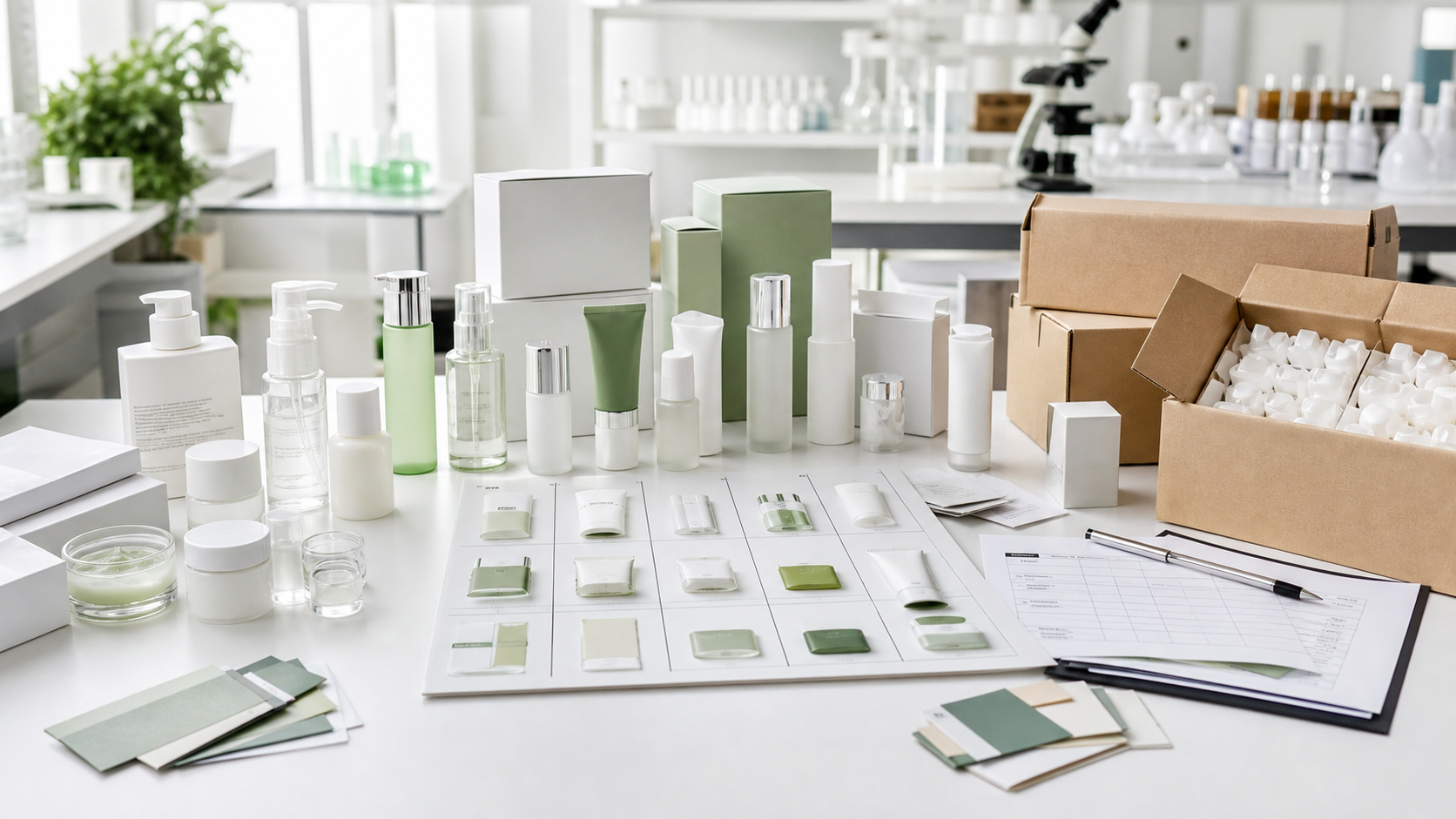
Packaging decisions affect margin, shipping safety, retail presentation, and reorder speed. A luxury jar may look appealing but raise freight cost or breakage risk. A simple tube may be better for salons or high-volume wholesale accounts. Airless bottles, pumps, jars, tubes, sachets, cartons, and display-ready packs all need to match the channel.
Mooyam’s packaging sourcing options can help buyers compare available molds, decoration methods, carton structures, label areas, and MOQ limits. For distributors, carton labeling and outer-box planning should be discussed early because warehouse teams and retail customers often need clear identification.
Sample Development for Sales Teams
Sample development should not only satisfy the sourcing manager. Distributors may need sales samples for retail buyers, salon owners, market agents, training teams, or ecommerce partners. The sample pack should show formula feel, packaging direction, unit size, and price tier clearly enough for a commercial discussion.
A cosmetic ODM manufacturer can help prepare sample options, but the distributor should give structured feedback. Useful feedback includes texture preference, fragrance tolerance, packaging comments, target shelf price, local competitor references, and which accounts are expected to buy first.
Distributor OEM Project Checklist
- Define your target buyers: retailers, salons, spas, ecommerce sellers, sub-distributors, or mixed channels.
- Prepare a SKU map with hero, support, channel, and reorder products.
- Choose the formula route for each SKU: stock private label, modified formula, or custom formulation.
- Set target unit cost, expected wholesale margin, and acceptable MOQ range.
- Confirm packaging needs for shelf display, ecommerce shipping, sample kits, and export cartons.
- Share destination markets so label, claim, import, and document responsibilities can be discussed.
- Plan sample quantities for internal testing, retailer meetings, sales reps, and distributor roadshows.
- Agree on mass production approval steps, retained samples, QC checkpoints, and reorder timing.
Quality Control and Documentation
Distributor projects need consistent batches because a quality issue can affect many downstream customers at once. Buyers should ask how appearance, odor, color, viscosity, fill weight, packaging sealing, label position, carton condition, batch numbers, and retained samples are checked.
Mooyam’s quality control and compliance support helps buyers align approval standards and documentation expectations. However, a factory should not guarantee universal regulatory approval. Ingredient rules, label requirements, product claims, import documents, and notification responsibilities vary by target market.
How to Protect Margin and Reorder Stability
Wholesale success depends on more than the first shipment. Distributors should estimate sell-through, reorder lead time, packaging lead time, sea or air freight timing, and safety stock. If a product needs custom packaging, the packaging reorder schedule may be as important as the formula production schedule.
Ask the factory to separate formula MOQ, packaging MOQ, decoration MOQ, and finished-goods MOQ. This helps you see where cost pressure really comes from. It also helps you decide whether to launch fewer SKUs with stronger inventory depth instead of too many products with weak reorder planning.
Common Mistakes to Avoid
The first mistake is copying a consumer brand’s product range without considering wholesale economics. A distributor needs price architecture, channel fit, carton planning, and sales tools. The second mistake is approving formula samples before confirming packaging compatibility. Pumps, tubes, jars, caps, seals, and cartons can affect filling, leakage, freight cost, and user experience.
A third mistake is writing strong claims before the target market and formula evidence are clear. Avoid medical claims, guaranteed effects, or wording that suggests regulatory approval is automatic. Keep product communication practical and confirm local rules before selling.
How Mooyam Supports Distributor and Wholesaler Projects
Mooyam works as a cosmetic OEM manufacturer and cosmetic ODM manufacturer for overseas B2B buyers. We support private label skincare, custom formulation, packaging sourcing, sample development, mass production, quality control, and export support for brands, distributors, wholesalers, and sourcing teams.
If your project needs a distributor-owned skincare line, a retailer-ready assortment, or a wholesale product range for multiple markets, private label skincare manufacturing can provide a practical starting point. For differentiated hero products, custom development can be added selectively rather than applied to every SKU.
B2B Inquiry CTA
Looking for a reliable cosmetic OEM/ODM manufacturer in China? Contact Mooyam Cosmetic to discuss your product idea, formula requirements, packaging options, MOQ, sample development, and production plan.
FAQ
Can a distributor create its own skincare line with an OEM factory?
Yes. A distributor can work with a cosmetic OEM manufacturer to create products under its own label or customer-facing brand. The project should start with target channels, SKU plan, price range, packaging direction, and destination markets.
Is ODM faster than custom formulation for wholesalers?
Often, yes. A cosmetic ODM manufacturer may offer existing formula concepts that can reduce development time. Custom formulation can provide stronger differentiation, but it usually needs more sample rounds and a clearer technical brief.
How many SKUs should a distributor launch first?
Many distributors start with a focused range of three to six SKUs: one or two hero products, several support products, and optional sample or travel sizes. The right number depends on MOQ, budget, sales channel, and reorder plan.
Can Mooyam help with packaging sourcing?
Yes. Packaging sourcing can include bottles, jars, tubes, pumps, caps, cartons, labels, decoration methods, and export carton planning. Final choices depend on formula compatibility, MOQ, target cost, and channel requirements.
What documents may distributors need for import?
Document needs vary by target market and product type. Buyers may request ingredient lists, COA-style documents, MSDS/SDS where applicable, production information, packing lists, invoices, and other market-specific materials. Local compliance should be confirmed by the importer or qualified advisor.
How can distributors reduce inventory risk?
Start with fewer SKUs, choose packaging with manageable MOQ, separate hero products from experimental products, track sales velocity, and plan reorder timing before stock runs too low. A clear mass production and export schedule helps protect availability.
Does Mooyam accept retail orders?
No. Mooyam is a B2B cosmetic OEM/ODM factory. We support brand, distributor, wholesaler, private label, and sourcing projects rather than single-piece retail orders.