
Serum concealer is becoming a practical bridge between complexion makeup and skincare-positioned routines. For beauty brands, the opportunity is not only a lighter texture, but a product that can address under-eye, spot coverage and natural finish needs without feeling heavy.
This guide explains how Mooyam Cosmetic can support serum concealer OEM/ODM projects for brand buyers, from formula direction and shade planning to packaging and production testing. Mooyam Cosmetic is a cosmetics and color makeup OEM/ODM factory for brand orders; we do not accept retail orders.
Quick Summary
- Serum concealer should balance coverage, flexible wear and a skincare-style texture story.
- Shade planning must include undertones, depth levels and oxidation checks, not only light-to-dark numbering.
- Eye-area use requires careful review of pigments, preservatives, irritation risk and claim language.
- Mooyam Cosmetic can help brands develop samples, shade ranges, packaging compatibility and OEM/ODM production controls.
Why Serum Concealer Fits Modern Complexion Lines
Many beauty customers want complexion products that look natural in daylight, layer well with skincare and do not emphasize texture. Serum concealer answers this demand when it is developed as a true hybrid: more refined than a basic liquid concealer, but more targeted than a skin tint.
For B2B buyers, the category is useful because it can sit beside foundation, skin tint, primer or color corrector ranges. A brand can launch it as an under-eye brightening product, a breathable spot concealer, a clean daily complexion item or a makeup-skincare bridge. The formula brief should define the use case before the lab starts adjusting viscosity or coverage.
Define the Product Position First
The term “serum concealer” can mean several things in manufacturing. Some brands need a fluid concealer with hydrating ingredients; others need a medium-coverage under-eye product with a flexible film. A clear position helps prevent sampling delays.
| Product Direction | Best For | Development Focus |
|---|---|---|
| Hydrating under-eye concealer | Dry or mature under-eye areas | Slip, creasing control, pigment smoothness |
| Natural spot concealer | Daily coverage with skin-like finish | Buildable coverage, blend edge, shade matching |
| Brightening serum concealer | Complexion lifting and soft-focus looks | Undertone balance, pearl level, claim control |
Formula Priorities for OEM/ODM Development
Coverage Without Heaviness
A serum concealer needs enough pigment to correct discoloration while staying thin enough to blend. If the pigment load is too low, the product becomes a skin tint. If it is too high, the formula may crease, settle or lose the serum positioning. Mooyam can create several lab samples with different coverage levels so buyers can compare under-eye, blemish and redness performance.
Film formers, emollients and powders should be chosen around the target finish. A dewy serum concealer may require a different system than a satin long-wear product. The buyer should decide whether the formula should self-set, need powder, or remain flexible during wear.
Skincare-Style Ingredients and Claims
Hydrating or skin-conditioning ingredients can strengthen the story, but claims must stay realistic and supportable. Ingredients such as humectants, emollients or soothing components may improve application feel, but the formula should not be positioned like a medical treatment. Mooyam can help align ingredient story, product texture and packaging copy so the claim direction is commercially useful without becoming risky.
Shade Range and Undertone Strategy
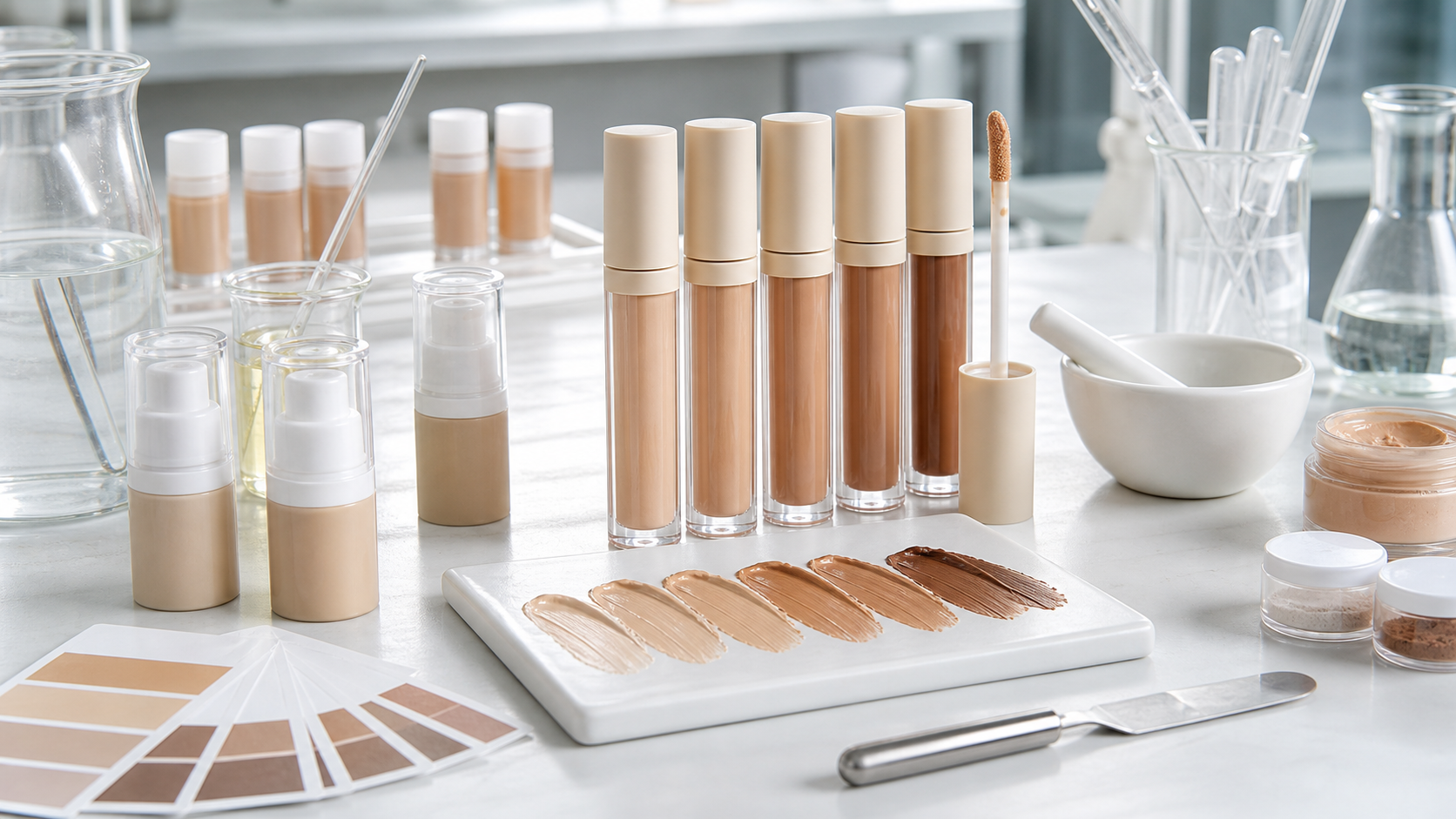
Concealer shade development is more demanding than many color cosmetics because customers often use it on areas with different undertones. Under-eye shades may need peach, neutral or golden correction. Spot concealing may need a closer match to foundation. A good OEM/ODM brief should define both coverage use and undertone logic.
For an initial launch, many brands start with 8 to 12 shades, then expand after sales data. If the brand already has a skin tint or foundation range, Mooyam can help map concealer shades to existing complexion families.
| Shade Task | What to Check | Why It Matters |
|---|---|---|
| Depth levels | Fair, light, medium, tan, deep spacing | Avoids gaps in buyer assortment |
| Undertones | Neutral, warm, cool, peach options | Improves under-eye and spot matching |
| Oxidation | Color after dry-down and wear | Prevents shade disappointment after launch |
Packaging and Applicator Decisions
Most serum concealers use a doe-foot tube because it is familiar and easy to apply. However, buyers should also consider airless pumps, squeeze tubes and mini sample formats. The right component depends on viscosity, fill weight, applicator pickup, leakage risk and target price.
Packaging compatibility should be tested with the actual formula. A thin formula may leak through a poor wiper. A high-pigment formula may coat the wand unevenly. A serum-style formula may also need extra attention to separation, evaporation and cap tightness during transport.
Buyer Checklist Before Sampling
- Define whether the product is for under-eye, blemishes, redness or all-purpose use.
- Choose coverage level: sheer-correcting, medium natural or higher coverage.
- Confirm finish: dewy, natural satin or soft matte.
- Plan shade depth and undertone logic before requesting final samples.
- Decide applicator type and fill weight early for compatibility testing.
- Review color additives and eye-area safety requirements for target markets.
- Test creasing, oxidation, separation, leakage, microbial control and heat stability.
Quality Control for Serum Concealer
Serum concealer quality checks should cover shade consistency, pigment dispersion, viscosity, fill weight, applicator pickup, microbial limits, odor, separation, dry-down color, heat stability and freeze-thaw performance. If the product is marketed for the eye area, irritation risk and ingredient suitability should receive extra attention.
Mooyam Cosmetic can help buyers move from lab sample to pilot batch with documented controls. This is important because complexion products are judged quickly by customers: if the shade oxidizes, the applicator leaks or the formula creases, repeat purchase becomes difficult.
Develop Serum Concealer with Mooyam Cosmetic
If your brand is developing serum concealer, hydrating concealer or a skincare-infused complexion range, Mooyam Cosmetic can support formula samples, shade matching, packaging coordination, QC and OEM/ODM mass production. We work with beauty brands and private label buyers, not retail single-unit customers.
FAQ
Can serum concealer provide real coverage?
Yes. The formula can be developed with sheer, medium or higher coverage, but the pigment system must be balanced with the desired serum texture and wear profile.
Is serum concealer suitable for under-eye use?
It can be, but the formula should be reviewed for eye-area use, pigment suitability, preservative system, fragrance level and irritation risk for the target market.
How many shades should a new brand launch?
Many brands start with 8 to 12 shades if they want a serious complexion line. Smaller launches can work if the product has a targeted under-eye or correcting function.
Can Mooyam match an existing foundation range?
Yes. Buyers can share existing shade references, target undertones and market needs. Mooyam can develop concealer shades that coordinate with your foundation or skin tint lineup.
Trend Reference / Sources
- Google Trends comparison was used to review search interest around serum concealer, concealer, skin tint and under-eye concealer as product-format signals.
- Google Search Central helpful content guidance was used as the SEO direction for creating useful, buyer-focused content.
- FDA eye cosmetic safety was referenced for eye-area awareness when developing under-eye concealer products.
- FDA color additives permitted for use in cosmetics was referenced for color cosmetic compliance background. These links support trend, SEO and regulatory context; the article itself is original B2B OEM/ODM purchasing guidance for Mooyam Cosmetic buyers.