Cosmetic export manufacturing is more than producing a formula and shipping cartons overseas. International beauty brands need a supplier workflow that connects product development, packaging, quality control, documentation, carton planning, and target-market compliance awareness before bulk production begins.
This article explains what overseas buyers should know when working with a cosmetic export manufacturer in China. It is written for beauty brands, skincare startups, Amazon and DTC sellers, distributors, private label buyers, and sourcing managers planning OEM/ODM projects with Mooyam Cosmetic. We support B2B manufacturing projects and do not accept retail orders.
Quick Summary
- Export-ready cosmetic manufacturing should align formula route, packaging, labels, quality control, carton packing, and shipment documents before production.
- Target-market requirements vary by country, product category, ingredients, claims, importer role, and sales channel, so manufacturers should not promise universal regulatory approval.
- Buyers should prepare product briefs, artwork requirements, destination market details, MOQ expectations, quality standards, and logistics information early.
- Mooyam Cosmetic supports cosmetic OEM/ODM manufacturing, private label skincare, custom formulation, packaging sourcing, quality control, and export support.
What Cosmetic Export Manufacturing Means
Cosmetic export manufacturing means producing products for brands that will sell outside the factory’s local market. The work includes formula development or formula matching, sample approval, packaging sourcing, artwork coordination, bulk production, inspection, packing, and export document support. It also requires clear communication about the buyer’s destination market and import responsibilities.
A cosmetic OEM manufacturer may produce according to a buyer’s formula or technical specification. A cosmetic ODM manufacturer may help adapt a product concept, recommend a practical formula route, and support sample development. For many buyers, the project starts with private label skincare because it can reduce development time, while more differentiated brands may need a custom formula.
Export Planning Should Start Before Sampling
Many problems appear late because export details were treated as a shipping issue instead of a manufacturing issue. The target market can affect ingredient preferences, label language, carton marks, documentation, product claims, and importer obligations. A brand selling in the United States, European Union, United Kingdom, Middle East, Southeast Asia, or Australia may face different requirements.
Mooyam Cosmetic can support export communication, product information, packaging coordination, and manufacturing records, but the brand or importer should confirm local requirements with qualified regulatory and logistics advisors. Responsible suppliers avoid blanket promises such as guaranteed approval in every market.
| Export Area | Buyer Should Confirm | Factory Can Support |
|---|---|---|
| Formula route | Product type, target market, ingredient preferences, avoid list, claim boundaries | Sample development, formula feasibility, INCI information, custom formulation options |
| Packaging | Bottle, jar, tube, pump, carton, label area, decoration method, shipment durability | Packaging sourcing, component comparison, filling compatibility, carton coordination |
| Labels and artwork | Brand copy, net contents, ingredient list format, warnings, importer details, barcode, market language | Artwork size checks, print coordination, batch code area, production file control |
| Quality control | Approval standards, retained samples, inspection level, product-specific tests | Quality control and compliance support, batch records, inspection, packaging checks |
| Export documents | Destination, consignee, freight forwarder, Incoterms, special channel needs | Commercial invoice data, packing list, carton details, shipment coordination support |
Information Buyers Should Prepare
A useful export manufacturing inquiry should include more than product name and quantity. Buyers should share the target country or region, sales channel, product category, preferred formula route, benchmark products, packaging direction, MOQ expectation, claim language, artwork timeline, and required documents if known.
If the product will be sold through Amazon, the buyer may need carton durability, barcode planning, leakage prevention, and inventory timing. If it will be sold through distributors, the brand may need shelf-ready cartons, samples, sales packs, and reorder planning. For DTC brands, packaging appearance, unboxing quality, and shipping weight often matter more.
Formula and Claim Boundaries
Export buyers should be careful with claims. Cosmetic products can usually describe cleansing, moisturizing, appearance, fragrance, sensory, and beautifying benefits when properly supported, but claims that imply disease treatment, drug action, SPF protection, or guaranteed results may create regulatory issues in many markets.
During custom formulation, the buyer should state the desired ingredient story, texture, avoid list, fragrance direction, and target market. The manufacturer can explain whether the request is practical for sampling and bulk production, but final market-facing compliance should be reviewed according to the destination market.
Packaging for Export Shipments
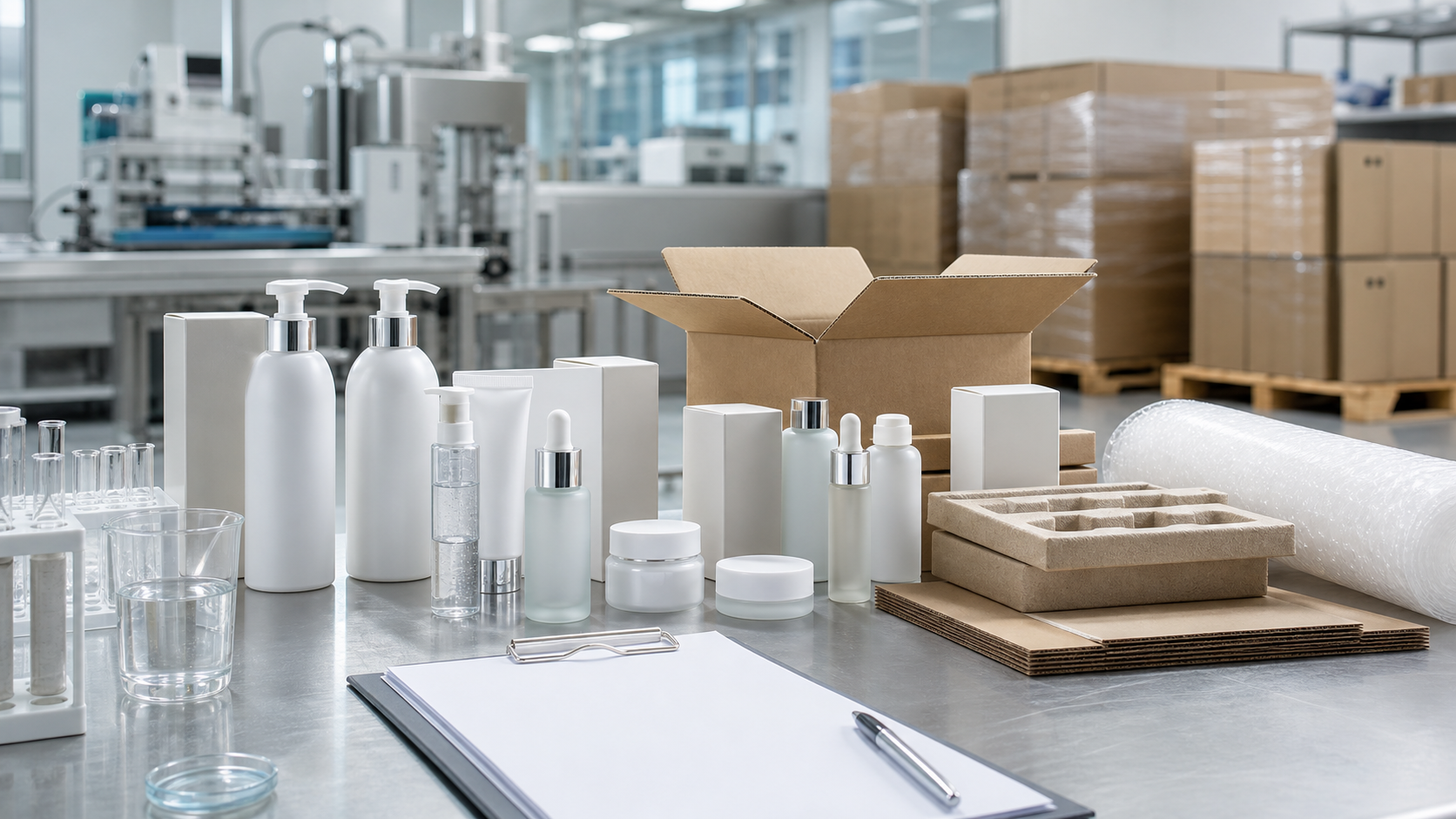
Packaging must protect the product, support the brand image, and survive the logistics route. Pumps, droppers, jars, tubes, sachets, cartons, inserts, and master cartons each affect cost, lead time, MOQ, and shipping risk. A beautiful component that leaks, scratches, cracks, or has insufficient label area can delay launch.
Buyers should test packaging with the actual formula where possible. Viscosity, oil content, fragrance, powder load, and fill method can affect pump output, tube rebound, cap seal, dropper performance, and evaporation risk. Export cartons should also be planned around freight method, case pack, carton weight, and warehouse handling.
Quality Control for Export Orders
Quality control should be agreed before the purchase order. Common checkpoints include approved formula sample, approved packaging sample, appearance, color, odor, viscosity, pH where relevant, fill weight, packaging function, leakage review, carton condition, batch code, retained samples, and final inspection. Product-specific checks may vary by formula and destination.
For export orders, documentation matters because problems are harder to resolve after goods leave the factory. Batch records, retained samples, packing lists, carton photos, and inspection notes can help both sides trace issues and support reorder consistency.
Export Manufacturing Checklist for Buyers
- Confirm destination market, sales channel, importer role, launch timing, and any known document needs.
- Choose the manufacturing route: OEM, ODM, private label skincare, modified formula, or full custom formulation.
- Prepare formula preferences, benchmark samples, ingredient avoid list, claim boundaries, and target price range.
- Review packaging component samples, label area, decoration method, carton strength, and shipping durability.
- Approve final formula sample, packaging sample, artwork, batch code location, and production standard before bulk production.
- Agree on quality control checkpoints, retained samples, inspection timing, and acceptance criteria.
- Share freight forwarder details, consignee information, carton marks, shipment terms, and export document requirements early.
Common Export Manufacturing Mistakes
Waiting too long to discuss the destination market
The destination market can affect ingredients, labels, claims, documentation, and importer duties. Share this information before sampling so the factory can support a more practical development route.
Approving packaging without transport thinking
Export packaging must survive filling, storage, inland transport, international freight, warehouse handling, and final delivery. Test pumps, caps, droppers, cartons, labels, and master cartons before mass production whenever practical.
Assuming the factory owns all compliance responsibility
The factory can provide manufacturing support and product information, but the brand, importer, distributor, or responsible person may have market-specific obligations. Requirements vary, so buyers should confirm responsibilities locally.
How Mooyam Cosmetic Supports Overseas Brands
Mooyam Cosmetic works with international beauty brands, private label buyers, Amazon sellers, DTC brands, distributors, and sourcing managers on cosmetic OEM/ODM export projects. We can help review product ideas, recommend formula routes, coordinate sample development, source packaging, manage bulk production, and support quality control and export communication.
For buyers launching their first export project, a clear brief is the best starting point. Include product type, target market, formula expectations, packaging direction, MOQ, timeline, and any compliance or document questions you already know.
Start an Export-Ready OEM/ODM Project
Looking for a reliable cosmetic export manufacturer for international beauty brands? Mooyam Cosmetic can support private label skincare, custom formulation, low MOQ planning, packaging sourcing, sample development, bulk production, quality control, and export support.
Send your project details through the Mooyam Cosmetic contact page. We can discuss your formula requirements, packaging options, MOQ, production timeline, and export manufacturing solution.
FAQ
What is a cosmetic export manufacturer?
It is a manufacturer that supports cosmetic production for overseas buyers, including formulation or private label options, packaging, quality control, packing, and export document coordination.
Can Mooyam Cosmetic export private label skincare?
Yes. Mooyam Cosmetic supports B2B private label skincare and OEM/ODM cosmetic manufacturing projects for international beauty brands, distributors, Amazon sellers, DTC brands, and sourcing managers.
What documents are needed for cosmetic export?
Document needs vary by destination, product type, shipment method, and importer requirements. Common documents may include commercial invoice, packing list, product information, ingredient information, and other documents requested by the buyer or freight forwarder.
Can a manufacturer guarantee regulatory approval?
No responsible manufacturer should guarantee universal approval. Requirements vary by target market, product category, ingredients, claims, labels, importer role, and sales channel.
Should packaging be tested before export production?
Yes. Packaging should be checked with the actual formula where possible, including filling, leakage, cap or pump function, label fit, carton strength, and transport durability.
Is OEM or ODM better for export brands?
OEM is suitable when the buyer has a defined formula or specification. ODM is useful when the buyer wants factory support with product route, sample development, formula adjustment, and packaging planning.
Does Mooyam accept small retail orders?
No. Mooyam Cosmetic focuses on B2B cosmetic OEM/ODM, private label, wholesale, and export manufacturing projects. We do not accept retail single-unit orders.