
Tubing mascara is a useful product direction for beauty brands that want long wear, clean removal and a clear performance story. Unlike standard volumizing mascara or waterproof mascara, a tubing formula is designed to form flexible wraps around lashes that can release with warm water and gentle pressure.
This guide explains how Mooyam Cosmetic can support tubing mascara OEM/ODM projects for brand buyers, from polymer film systems and brush selection to eye-area safety and production control. Mooyam Cosmetic is a cosmetics and color makeup OEM/ODM factory for brand orders; we do not accept retail orders.
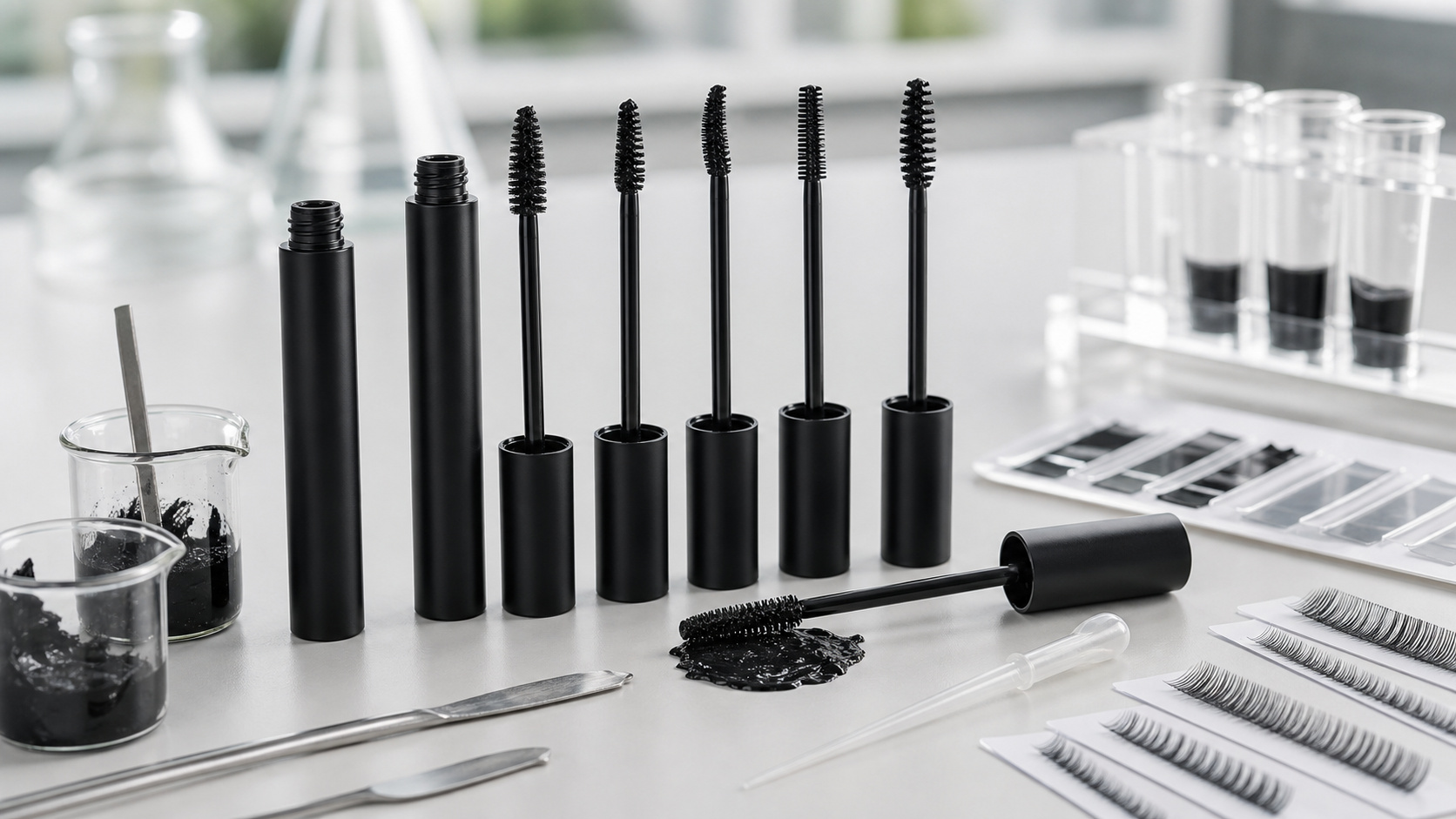
Quick Summary
- Tubing mascara development depends on film-forming polymers, brush architecture and removal behavior working together.
- Brands should define whether they need lengthening, curl hold, natural definition or visible volume before sampling.
- Eye-area safety, microbial control, wiper fit and brush compatibility must be tested before launch.
- Mooyam Cosmetic can support custom samples, component selection, black/brown shade adjustment, QC and OEM/ODM production planning.
Why Tubing Mascara Is a Strong OEM/ODM Brief
Consumers often want mascara that resists smudging during daily wear but does not require harsh removal. That is why tubing mascara has become an attractive format for brands building a practical eye makeup line. The product story is easy for customers to understand: defined lashes, reduced smearing and warm-water removal.
For B2B buyers, the opportunity is strongest when the product is developed around one primary benefit. A tubing mascara can be positioned as a lengthening mascara, a daily office mascara, a sensitive-eye-friendly direction, a humid-weather product or a clean-removal alternative to waterproof mascara. The manufacturing brief should make that priority clear before formula work begins.
Choose the Right Tubing Mascara Direction
Tubing mascara is not one single formula. Brush shape, polymer system, pigment load and wax balance can shift the final product from natural definition to dramatic length. A focused direction avoids endless sampling changes.
| Product Direction | Best For | Development Focus |
|---|---|---|
| Lengthening tubing mascara | Brands focused on visible lash extension | Flexible film, combing brush, flake control |
| Natural definition mascara | Daily wear and minimal makeup routines | Clean separation, low clump, soft black or brown shade |
| Volume tubing mascara | Brands wanting stronger before-and-after impact | Bulk, brush loading, weight and curl balance |
Formula Priorities for Tubing Mascara
Film Formation and Removal
The core of a tubing mascara is the film system. The formula should coat each lash evenly, dry into flexible tubes and release during removal without heavy rubbing. If the film is too brittle, the mascara may flake. If it is too soft, it may transfer or lose definition during wear.
Mooyam Cosmetic can prepare lab samples with different film flexibility, pigment intensity and dry-down speeds. This helps buyers compare real performance instead of approving a formula based only on initial brush application.
Black Intensity, Brown Options and Claim Control
Most tubing mascara launches start with black, but brown and soft black shades can support natural makeup trends. The formula should be checked for shade uniformity, pigment dispersion and dry-down color. Claims should stay precise: “easy warm-water removal,” “smudge-resistant wear” or “lengthening effect” are clearer than vague overpromises.
Brush and Wiper Design Matter
A tubing mascara can fail if the brush and wiper do not match the formula. A brush that loads too much product may create clumps. A wiper that is too tight may remove too much formula. A brush that is too flexible may not comb lashes well enough for a lengthening claim.
| Component Choice | Buyer Advantage | Risk to Test |
|---|---|---|
| Slim comb brush | Separation and length | May look too natural if formula pickup is low |
| Hourglass brush | Volume and lash coverage | Clumping, heavy lash feel, slow drying |
| Precision micro brush | Lower lashes and short lashes | Small fill perception, limited dramatic effect |
Eye-Area Safety and Compliance Planning
Mascara is used close to the eye, so safety planning must be built into the project. Buyers should review approved colorants for the target market, preservative strategy, microbial limits, fragrance direction, applicator cleanliness and packaging instructions. The product should not encourage consumers to add water or share applicators.
Mooyam can help align formula, packaging and testing with the intended market. This is especially important if the brand wants to sell in multiple regions, because color additive rules and labeling expectations can differ.
Buyer Checklist Before Sampling
- Define the main benefit: length, volume, definition, curl hold or easy removal.
- Choose the target shade range: black, soft black, brown or specialty shades.
- Confirm whether the product should be water-resistant, smudge-resistant or warm-water removable.
- Select brush prototypes early so formula pickup can be tested correctly.
- Review eye-area color additives and preservative strategy for target markets.
- Test flaking, transfer, dry time, curl drop, removal behavior, leakage and heat stability.
- Plan packaging copy that explains tubing removal without exaggerating performance.
Quality Control for Tubing Mascara Production
Quality control should include viscosity, pigment dispersion, fill weight, brush loading, wiper fit, microbial limits, odor, dry time, water-resistance, warm-water removal, flaking, smudging and packaging leakage. Pilot batch checks are especially useful because mascara performance depends on the interaction between formula and component.
Mooyam Cosmetic can help buyers compare lab sample, pilot batch and final production behavior. This reduces the risk of approving a sample that performs well in the lab but changes after filling or shipping.
Develop Tubing Mascara with Mooyam Cosmetic
If your brand is planning a tubing mascara, lengthening mascara or eye makeup OEM/ODM project, Mooyam Cosmetic can support formula samples, brush and component selection, shade adjustment, QC and mass production. We work with beauty brands and private label buyers, not retail single-unit customers.
FAQ
Is tubing mascara the same as waterproof mascara?
No. Tubing mascara is usually designed around film-forming wraps and warm-water removal, while waterproof mascara is typically built for stronger water resistance and may require dedicated remover.
Can Mooyam develop custom brush options?
Yes. Buyers can review brush prototypes and wiper options with the formula so pickup, separation, volume and removal behavior are tested together.
Can tubing mascara be made in brown?
Yes. Brown, soft black and black shades can be developed, but each shade should be checked for pigment dispersion, dry-down color and eye-area color additive suitability.
What should brands test before mass production?
Brands should test flaking, smudging, dry time, curl drop, warm-water removal, microbial control, packaging leakage, heat stability and brush loading across lab and pilot batches.
Trend Reference / Sources
- Google Trends comparison was used to review search interest around tubing mascara, mascara, waterproof mascara and lengthening mascara as product-format signals.
- Google Search Central helpful content guidance was used as the SEO direction for useful, buyer-focused content.
- FDA eye cosmetic safety was referenced for eye-area safety awareness when developing mascara products.
- Beauty Independent tubing mascara market coverage was referenced for industry background on consumer interest and education gaps. These links support trend, SEO and regulatory context; this article is original B2B OEM/ODM purchasing guidance for Mooyam Cosmetic buyers.