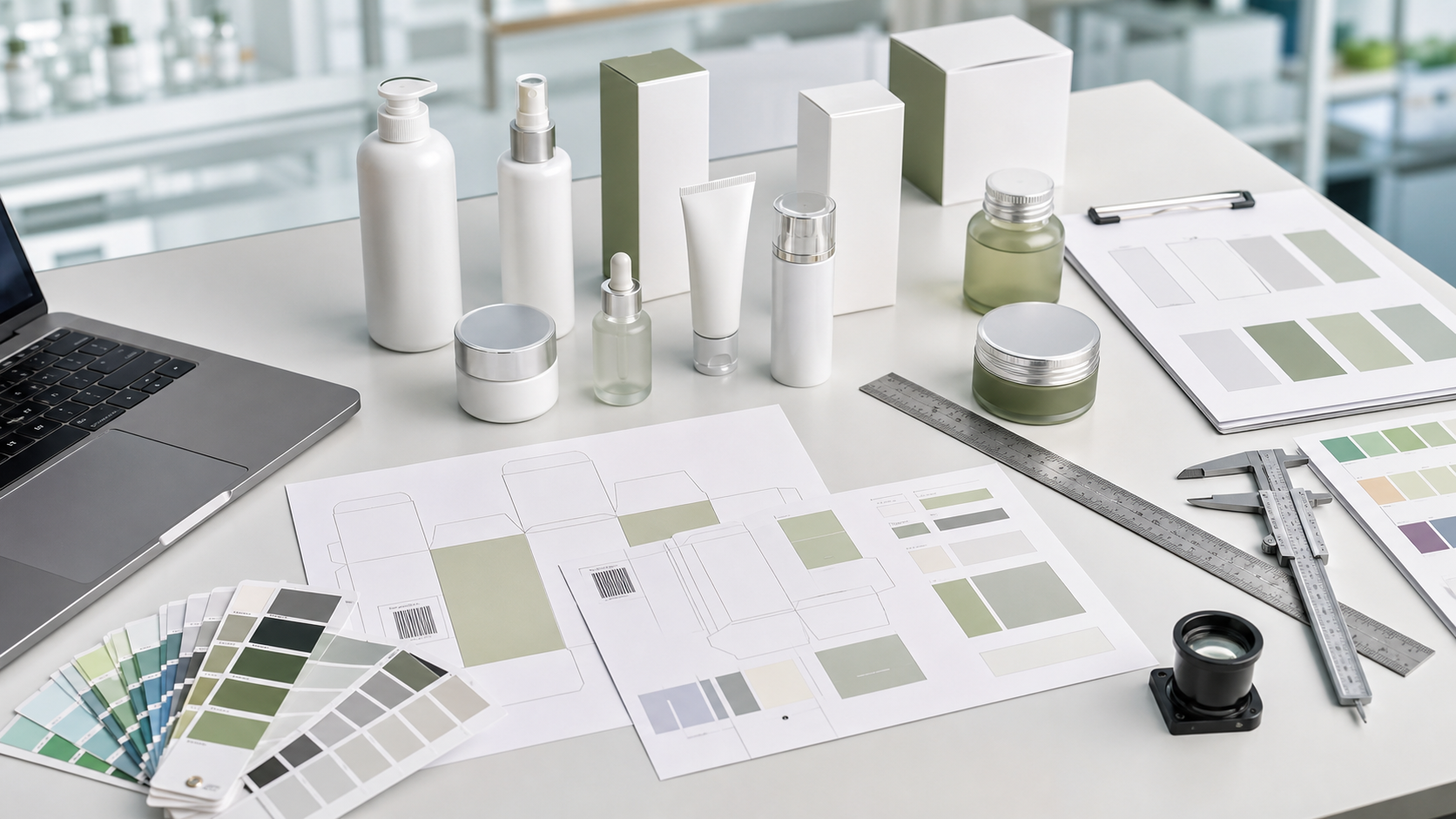
A cosmetic artwork checklist helps a beauty brand confirm every label, carton, and print file detail before mass production starts. It reduces the risk of wrong colors, missing symbols, incorrect barcodes, mismatched dielines, and last-minute packaging delays.
In cosmetic OEM/ODM manufacturing, artwork means the approved visual and technical files used for labels, tubes, bottles, jars, cartons, sleeves, inserts, and shipping marks. The checklist below gives overseas B2B buyers a practical way to review artwork before the factory releases packaging for bulk production.
Quick Summary
- Artwork should be checked after packaging selection and before mass production, not after components are already printed.
- The most important items are dieline fit, size, color, logo placement, barcode, INCI, net content, batch area, warnings, carton marks, and final approval record.
- Compliance wording, claims, importer details, and recycling symbols can vary by target market, so brands should review them before giving final approval.
- Mooyam Cosmetic can support OEM/ODM skincare manufacturing support, sample development, packaging sourcing, artwork coordination, quality control, mass production, and export support.
What Is Cosmetic Artwork in a Manufacturing Project?
Cosmetic artwork is the production-ready design information used to decorate and identify a cosmetic product. It may include a label file, carton dieline, bottle screen print, tube artwork, sticker layout, outer box design, barcode, ingredient list, warning text, shade name, SKU code, and shipper carton mark.
For a private label skincare project, artwork is often the bridge between brand identity and factory execution. A brand may approve a formula sample and packaging sample, but if the artwork file is incomplete, the packaging supplier cannot print accurately. A cosmetic OEM manufacturer or cosmetic ODM manufacturer needs clear artwork approval before ordering printed components for mass production.
The artwork checklist is not a replacement for legal or regulatory review. Cosmetic labeling, product claims, responsible person details, recycling marks, importer information, and language requirements can vary by target market. Brands should confirm those items with qualified advisers for their sales region before final sign-off.
Why Artwork Approval Matters Before Mass Production
Artwork errors are expensive because they often appear late. A wrong capacity, missing barcode, poor color match, or dieline mismatch may not be obvious until printed cartons or labels arrive. At that point, the brand may need reprinting, production rescheduling, repacking, or even shipment delay.
A structured checklist gives the brand owner, sourcing manager, designer, project manager, and packaging supplier one shared record. It also helps the factory connect artwork approval with formula sample approval, packaging sample approval, purchase order details, and quality control standards.
For Amazon, Shopify, DTC, distributor, salon, spa, and retail buyers, artwork affects more than shelf appearance. It also affects scanning, warehouse handling, multi-SKU identification, export documentation, carton sorting, and customer trust. A professional artwork approval workflow helps the buyer launch with fewer preventable problems.
Cosmetic Artwork Checklist Before Mass Production
| Checkpoint | What to Confirm | Why It Matters |
|---|---|---|
| Dieline and size | Label size, carton structure, bleed, safe area, folding lines, seal area, and actual component measurements | Prevents artwork from being cut off, folded in the wrong place, or misaligned on the package |
| Product identity | Product name, SKU, shade, fragrance, capacity, net content, and variant code | Helps avoid wrong packaging for similar products or multiple SKUs in one order |
| Brand elements | Logo version, color values, font files, finish direction, and placement on each packaging side | Keeps the final package consistent with the approved brand design |
| Label content | INCI list, directions, warnings, responsible company details, country of origin, PAO or other symbols where applicable | Supports market-specific labeling review and reduces reprint risk |
| Barcode and tracking | UPC, EAN, QR code, batch code area, expiration or manufacture date area, and shipper marks | Protects retail, e-commerce, warehouse, and export handling requirements |
| Print approval | Digital proof, color proof, physical packaging sample, signed approval date, and final file name | Creates a traceable reference for mass production and quality control |
How to Review Artwork Step by Step
Start from the approved packaging sample
Artwork should be reviewed against the actual packaging component, not only against a design mockup. The buyer should confirm bottle shape, tube diameter, jar lid curve, label area, carton size, and decoration method. If the package changed during packaging customization and sourcing support, the artwork must be updated to match the latest sample.
Check formula and product information
Artwork should match the formula direction and product file. If the brand uses a stock formula, modified base, or full custom formulation work, the ingredient list and product name should match the final approved formula record. Texture, fragrance, color, capacity, and usage directions should also align with the approved sample.
Review claims with care
Cosmetic claims should be written carefully and supported appropriately. Avoid medical wording or promises that imply guaranteed treatment results. If the brand sells in more than one country, claim language may need to change by market. A factory can help coordinate information, but it cannot guarantee approval in every target market.
Confirm color, finish, and print method
Colors can look different on screen, paper proof, coated carton, clear label, matte tube, glass bottle, or metallic cap. Ask whether the final package uses label printing, silk screen, hot stamping, color spray, embossing, sleeve, or carton printing. The more complex the finish, the more important it is to approve a physical proof before mass production.
Buyer Checklist Before Giving Final Artwork Approval
Artwork Approval Checklist
- Confirm the final product name, SKU, shade, capacity, and packaging component for every item.
- Check dielines, bleed, safe area, label size, carton folds, cap direction, and barcode placement.
- Make sure logo files, fonts, colors, coating, hot stamping, and print method match the approved brand direction.
- Review INCI, usage directions, warnings, importer details, country of origin, batch code area, and symbols for the target market.
- Verify barcode or QR code readability with the buyer’s retail, Amazon, Shopify, or distributor requirements.
- Compare digital proof, color proof, and physical packaging sample before confirming mass production.
- Record the final file name, approval date, approver, version number, and any allowed tolerance.
- Send one final written approval to the factory so purchasing, printing, filling, quality control, and export teams use the same version.
Common Artwork Mistakes to Avoid
The first common mistake is approving artwork before the packaging size is final. A label that looks good on a PDF may wrinkle on a curved bottle or sit too close to a tube seal. The second mistake is forgetting multi-SKU differences. Similar products may need different shade names, barcodes, scents, capacities, or ingredient lists.
The third mistake is relying only on screen color. Digital color is useful for layout, but physical materials, coating, and lighting can change the final appearance. The fourth mistake is sending revised files through scattered messages. One final approved file and one approval record are much easier for a manufacturing team to control.
Brands should also avoid making the factory guess compliance details. If the product needs specific language, responsible person information, importer details, recycling marks, or market-specific claims review, provide those requirements before the print order is placed.
How Mooyam Supports Artwork and Production Coordination
Mooyam Cosmetic helps overseas buyers connect artwork approval with the wider OEM/ODM workflow. Our team can review packaging availability, decoration options, sample development timing, printed component lead time, filling compatibility, and mass production planning. We can also help buyers organize practical checkpoints before printed materials enter production.
During production preparation, Mooyam’s quality control and compliance guidance can support visual inspection, component matching, print position review, carton condition checks, batch documentation, and export support. The buyer remains responsible for final market-specific label and claim approval, but a clear checklist helps every party work from the same information.
FAQ
When should artwork be approved in a cosmetic OEM project?
Approve artwork after the formula direction, packaging sample, order quantity, and target market are clear, but before printed packaging components are ordered for mass production.
Is a digital proof enough for final approval?
A digital proof is useful for layout, but a physical proof or printed packaging sample is safer for color, material, finish, size, and placement confirmation.
Who should check cosmetic label compliance?
The brand should confirm market-specific label and claim requirements with qualified advisers. Requirements can vary by target market, and a factory cannot guarantee regulatory approval for every country.
What file format should a brand send for artwork?
Production artwork is usually provided as editable vector files or high-resolution print files with fonts, linked images, color values, dielines, and version names clearly organized.
Can artwork changes be made after sample approval?
Yes, but changes should be controlled. Any update to copy, barcode, color, size, or dieline may affect cost, lead time, proofing, and printed material approval.
Does artwork approval affect quality control?
Yes. The final approved artwork becomes a reference for checking print color, position, content, component matching, carton marks, and finished goods appearance.
Can Mooyam help coordinate artwork with packaging suppliers?
Yes. Mooyam can help coordinate packaging sourcing, decoration options, sample development, proof review, mass production planning, quality control, and export support for overseas B2B buyers.
Prepare Artwork for Your Next Production Run
Looking for a reliable cosmetic OEM/ODM manufacturer in China? Contact us to discuss your product idea, formula requirements, packaging options, MOQ, sample development, and production plan.