Developing a new cosmetic product is exciting, but it can also become expensive and slow if the brief is unclear. Overseas beauty brands often come to a cosmetic OEM/ODM factory with a product idea, a competitor reference, or a target price, yet they may not know what information the manufacturer needs before sample development can begin.
This guide explains how to develop a new cosmetic product with an OEM/ODM factory, from concept and formula direction to packaging sourcing, quality control and bulk production. Mooyam Cosmetic supports B2B brand projects, private label skincare lines and custom formulation requests; we do not accept retail single-unit orders.
Quick Summary
- Start with a clear product brief before requesting samples from a cosmetic OEM manufacturer.
- Choose OEM, ODM, private label or custom formulation according to your budget, timeline and differentiation goals.
- Packaging, MOQ, claims, target market and quality control requirements should be discussed before final quotation.
- Mooyam Cosmetic can support concept review, sample development, packaging sourcing, bulk production and export support for brand buyers.
What Product Development Means in OEM/ODM Cosmetics
In cosmetic manufacturing, product development is not only the lab creating a formula. It is the full process of turning a product idea into a manufacturable, stable and commercially realistic finished item. It includes formula direction, ingredient preferences, texture, fragrance, packaging compatibility, label planning, MOQ, cost target, testing and production schedule.
A cosmetic ODM manufacturer may offer existing formula bases that can be adjusted for texture, fragrance, color or positioning. This is often practical for startups that need a faster launch. A cosmetic OEM manufacturer can also work with a buyer’s own formula or a more specific development brief, depending on project requirements. For brands that need stronger differentiation, custom formulation can be used to build a product direction from the ground up.
The right path depends on how much originality the brand needs, how much time is available, and how much sample testing the buyer can manage. A professional factory should help clarify these choices instead of pushing every buyer into the same production model.
Step 1: Build a Practical Product Brief
The product brief is the foundation of the project. It tells the factory what the product should be, who it is for, how it should feel, what packaging it may use, and what commercial limits must be respected. Without a brief, the manufacturer can only guess, and sample revisions can multiply quickly.
A useful brief should include the product category, target market, preferred claims, texture, scent direction, skin feel, benchmark products, ingredient preferences, ingredients to avoid, packaging ideas, target MOQ, expected retail channel and launch timeline. If you sell through Amazon, DTC, salons, distributors or professional channels, mention that early because packaging, claims and documentation needs may differ.
For private label skincare buyers, the brief does not need to be scientific. It should be clear enough for the lab and sourcing team to understand your commercial goal. Mooyam Cosmetic can review a buyer’s early brief and recommend whether an ODM base, private label option or custom formulation route is more suitable.
| Brief Item | Why It Matters | Example Buyer Input |
|---|---|---|
| Product category | Defines formula system and production line needs. | Hydrating serum, facial cleanser, body lotion or cream mask. |
| Texture and finish | Guides raw material selection and sample evaluation. | Light gel, rich cream, non-sticky serum or soft matte lotion. |
| Target market | Supports claim, label and documentation planning. | United States, EU, Middle East, Southeast Asia or Australia. |
| Packaging idea | Affects MOQ, compatibility, cost and filling method. | Airless pump, tube, jar, dropper bottle or sachet. |
| Budget and MOQ | Helps the factory suggest a realistic development route. | Low MOQ launch, test batch or distributor-scale bulk order. |
Step 2: Choose OEM, ODM, Private Label or Custom Formulation
Many buyers use the terms OEM, ODM and private label interchangeably, but they lead to different development timelines. An OEM project usually starts from a more specific formula or buyer-owned concept. An ODM project often uses manufacturer-developed formula knowledge and existing product directions. Private label skincare is useful when the buyer wants a faster, more structured launch with proven product categories and packaging options.
If your priority is speed, start with private label skincare solutions or ODM formula bases. If your priority is a distinctive hero product, discuss custom formulation support. If you already have a confirmed formula, ask about OEM/ODM manufacturing service, sample verification and scale-up requirements.
The best factory does not only quote a unit price. It helps the buyer select a development model that matches product positioning, order quantity, risk tolerance and launch plan.
Step 3: Develop and Evaluate Samples
Sample development is where the idea becomes tangible. The first sample may not be final, and that is normal. Buyers should evaluate texture, absorption, fragrance, color, viscosity, packaging fit, application experience and compatibility with the intended use. Feedback should be specific. “Make it better” is not useful, while “reduce stickiness after 30 seconds” or “make the cream lighter but keep a cushion feel” gives the lab a clear direction.
For custom formulation projects, expect more than one sample round. For ODM or private label routes, the sample process may be shorter because the base formula already exists. In both cases, sample approval should happen before packaging is locked and before bulk production is scheduled.
Mooyam Cosmetic can support sample development, formula adjustment and packaging coordination so brand teams can compare realistic product directions before committing to production.
Step 4: Match Packaging with Formula and Brand Positioning
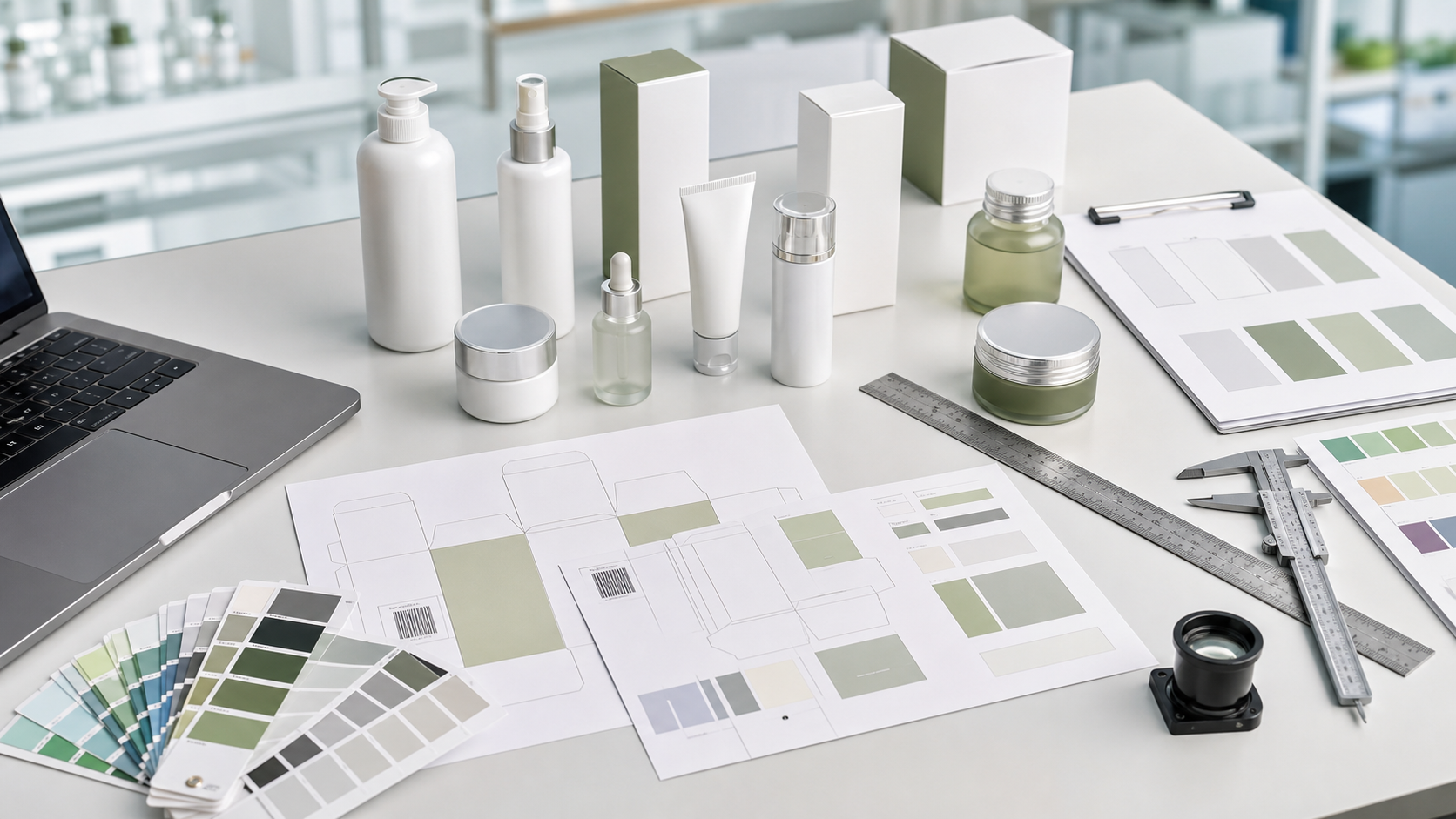
Packaging is not just decoration. It affects MOQ, filling speed, leakage risk, stability, shipping weight, unit cost and consumer use. A serum may work in a dropper bottle, pump bottle or airless bottle, but each option has different compatibility concerns. A thick cream may look premium in a jar, but a tube may be better for hygiene perception and travel use.
Discuss customized packaging options early, especially if your brand needs color matching, silk screen printing, hot stamping, label design, cartons, gift sets or market-specific labeling. Packaging sourcing should be checked before final quotation because some components have higher MOQ than the formula itself.
Step 5: Confirm Cost, MOQ and Timeline
A realistic quotation depends on formula complexity, raw materials, packaging, decoration, order quantity, testing requirements and export needs. Low MOQ can help a startup reduce launch risk, but very low quantities may limit packaging choices or increase unit cost. A serious manufacturer should explain these tradeoffs clearly.
Before bulk production, confirm sample approval, packaging approval, artwork files, deposit, production lead time, inspection plan, carton marks, shipping terms and documentation needs. Requirements can vary by target market, so buyers should also review local cosmetic labeling and compliance expectations with qualified advisors when necessary.
Buyer Checklist Before Starting Development
- Define product category, target audience and sales channel.
- Prepare benchmark products and describe what you like or dislike.
- Choose whether you need private label, ODM, OEM or custom formulation.
- Set a realistic low MOQ, target cost and launch timeline.
- Confirm packaging format before final stability and compatibility checks.
- Review claims, labels and market requirements before printing packaging.
- Ask about quality control and compliance support before bulk production.
How Mooyam Cosmetic Supports New Product Projects
Mooyam Cosmetic works with overseas beauty brands, private label buyers, distributors, Amazon sellers and DTC founders that need practical OEM/ODM manufacturing support. We can help review product ideas, recommend a suitable development route, coordinate formula samples, source packaging, prepare production details, manage quality control and support export communication.
If your brand is developing a new skincare or cosmetic product, contact Mooyam Cosmetic with your product idea, formula direction, packaging preferences, target MOQ and destination market. Our team can help you turn the concept into a clear OEM/ODM project plan.
FAQ
Do I need a complete formula before contacting a cosmetic manufacturer?
No. You can contact a manufacturer with a product idea, benchmark sample or basic brief. A cosmetic ODM manufacturer can suggest existing bases or development directions, while custom formulation may be used when you need more originality.
How many sample rounds are normal?
It depends on the project. Private label and ODM products may need fewer adjustments, while custom formulation can require several rounds to refine texture, scent, viscosity, packaging fit and performance expectations.
Can Mooyam help with both formula and packaging?
Yes. Mooyam Cosmetic can support formula direction, sample development, packaging sourcing and production planning for B2B brand orders.
What affects the MOQ for a new cosmetic product?
MOQ is affected by formula type, raw materials, packaging components, decoration method, filling requirements and supplier minimums for bottles, tubes, jars, labels or cartons.
Can I launch with low MOQ first?
Often yes, depending on the product and packaging choice. Low MOQ is useful for testing demand, but buyers should understand that unit cost and packaging flexibility may be different from larger production orders.
When should quality control be discussed?
Quality control should be discussed before bulk production, not after problems appear. Confirm sample approval, packaging checks, stability expectations, fill weight, appearance, odor, viscosity and shipment inspection needs early.
Does Mooyam accept retail orders?
No. Mooyam Cosmetic focuses on B2B OEM/ODM, private label and wholesale manufacturing projects for brands and buyers, not retail single-unit orders.
Develop Your Next Cosmetic Product with Mooyam
Looking for a reliable cosmetic OEM/ODM manufacturer? Contact Mooyam Cosmetic to discuss your product idea, formula requirements, packaging options, MOQ, sample development, bulk production plan, quality control and export support.