Low MOQ private label skincare can be a smart way for a beauty startup to test demand, launch a focused product line and avoid tying too much cash into inventory. It can also create hidden tradeoffs if the buyer expects unlimited packaging choices, custom formulas and the same unit cost as a large production order.
This article explains the pros, cons and practical tips for low MOQ private label skincare projects. It is written for overseas brand founders, Amazon sellers, DTC teams, distributors and sourcing managers who need a realistic path from sample development to bulk production. Mooyam Cosmetic supports B2B OEM/ODM and private label projects; we do not accept retail orders.
Quick Summary
- Low MOQ private label skincare helps brands launch with lower inventory risk and faster market testing.
- The main tradeoffs are higher unit cost, fewer packaging options and less flexibility than large custom projects.
- Buyers should align formula route, packaging sourcing, artwork, claims and quality control before placing a small order.
- Mooyam Cosmetic can support low MOQ planning, sample development, private label skincare production and export communication for brand buyers.
What Low MOQ Private Label Skincare Really Means
MOQ means minimum order quantity. In private label skincare, low MOQ usually means the factory can produce a smaller first batch than a traditional full-scale order. This may involve existing formula bases, standard packaging options, limited decoration choices or a simplified production route. The exact MOQ depends on product type, formula, packaging, filling process and component supplier requirements.
Low MOQ does not mean every product can be produced in any quantity. A serum in a standard bottle may be easier to launch at a lower quantity than a complex custom cream with special packaging and multiple carton decorations. A good cosmetic OEM manufacturer should explain what is flexible and what is fixed before the buyer commits to artwork or marketing promises.
For many startups, the best use of low MOQ is not to launch too many SKUs at once. It is to launch a focused product range, collect market feedback, improve forecasting and then scale into larger bulk production when demand is clearer.
The Main Pros for New Beauty Brands
The first advantage is lower inventory risk. Instead of ordering a large batch before the brand has data, a buyer can test a smaller quantity through DTC, Amazon, distributor sampling, salon accounts or local retail partners. This is especially useful when the brand is still confirming positioning, hero products and repeat purchase behavior.
The second advantage is faster launch planning. Private label skincare often uses established product directions, which can reduce development time compared with a fully custom formulation. A cosmetic ODM manufacturer can help the buyer choose product categories, texture options and packaging combinations that are already practical for production.
The third advantage is cash flow control. Smaller initial orders leave more budget for branding, product photography, platform fees, shipping, influencer seeding, paid ads and customer support. For a startup, these costs can be just as important as the formula itself.
| Benefit | Why It Helps | Buyer Reminder |
|---|---|---|
| Lower inventory exposure | Reduces the risk of unsold stock during market testing. | Forecast reorder timing so you do not run out after launch. |
| Faster product setup | Uses practical formula and packaging routes. | Do not skip sample approval and packaging checks. |
| Better cash flow | Keeps budget available for sales and marketing. | Unit cost may be higher than large orders. |
| Focused product validation | Helps identify which SKUs deserve scaling. | Track channel feedback and repeat purchase signals. |
The Cons and Tradeoffs Buyers Should Expect
Low MOQ production usually has a higher unit cost. The factory still needs setup, filling, packaging preparation, inspection and production management, even when the order is small. Raw materials and packaging may also have their own minimum purchase requirements. If a buyer compares only unit price without considering risk reduction, low MOQ may look expensive, but if the launch is unproven, it can still be the more practical choice.
Packaging flexibility may be limited. Fully custom bottles, molds, caps, pumps, printing colors or cartons can require higher MOQ than the formula. In a low MOQ project, it is often smarter to use standard packaging with strong label design, carton design or brand color direction rather than insisting on a completely unique component from day one.
Custom formulation may also be more limited at very low quantities. If the brand wants a unique formula, special ingredients and complex testing, the development cost and timeline may increase. For some buyers, a private label route is the right first step, while custom formulation becomes more suitable after the first product-market signal is proven.
Low MOQ vs Custom Development: How to Choose
A low MOQ private label route is usually best when speed, manageable cost and market testing are priorities. Custom development is better when the brand already has a clear concept, stronger budget and a need for product differentiation. Many brands start with private label products, then develop custom hero products after understanding their audience.
Mooyam Cosmetic can help buyers compare private label skincare, OEM/ODM manufacturing and custom formulation routes based on MOQ, timeline, packaging, formula requirements and launch strategy.
| Route | Best For | Typical Tradeoff |
|---|---|---|
| Low MOQ private label | Startups, test launches, focused first lines and channel validation. | Less customization and higher unit cost than large orders. |
| ODM development | Brands that want factory-developed formula options with some adjustment. | More flexible than basic private label, but still based on practical formula routes. |
| Custom formulation | Brands needing a distinctive texture, ingredient story or hero product. | Longer sample timeline, more testing and higher development commitment. |
Packaging Tips for Low MOQ Projects
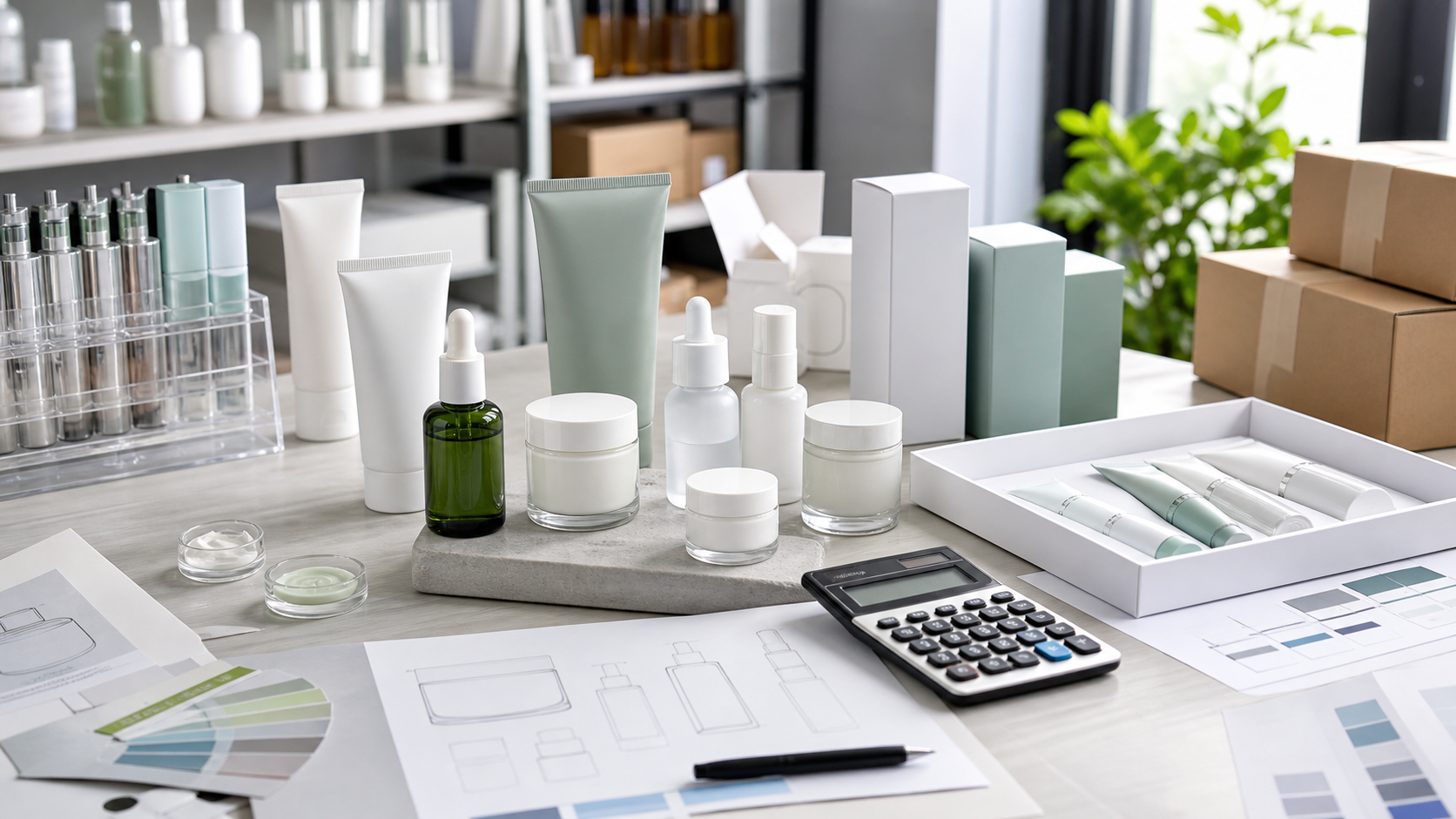
Packaging can make or break a low MOQ project. Choose components that are available, compatible with the formula and suitable for your brand positioning. A simple airless bottle, tube, jar or dropper can look professional if the label, carton and color system are handled carefully. Overly complex packaging can delay the launch and force the MOQ higher.
Ask about packaging sourcing and customization options before finalizing product photography or e-commerce renders. Confirm bottle size, decoration method, label material, carton structure, barcode area, shipping carton requirements and lead time. If the target market has specific labeling rules, check those requirements before printing. Requirements vary by market, and buyers should verify local rules with qualified advisors where needed.
Buyer Checklist for Low MOQ Private Label Skincare
- Choose a focused product line instead of launching too many SKUs.
- Confirm whether the formula is private label, ODM adjusted or custom developed.
- Ask for realistic MOQ by formula, packaging and decoration method.
- Approve samples before confirming artwork and bulk production.
- Use standard packaging when it helps reduce risk and lead time.
- Check quality control and compliance support before shipment.
- Plan reorder timing, export support and shipping documents before launch.
Quality Control Still Matters for Small Orders
A small batch still needs disciplined quality control. Buyers should not treat low MOQ as a shortcut around sample approval, packaging compatibility, appearance checks, odor checks, fill weight, batch records, carton inspection or shipment review. These steps protect both the brand and the manufacturer.
Mooyam Cosmetic can support sample confirmation, packaging checks, production inspection and export communication for low MOQ private label skincare projects. The goal is not only to produce a small order, but to build a repeatable production path that can scale when the product performs.
How Mooyam Cosmetic Supports Low MOQ Buyers
Mooyam Cosmetic works with overseas beauty startups, Amazon sellers, distributors and brand teams that need practical manufacturing support. We can help review product ideas, recommend private label skincare options, coordinate sample development, support packaging sourcing, plan MOQ and prepare for bulk production. We also help buyers communicate export needs and production details clearly before the order moves forward.
If your brand wants to test a skincare line with a manageable first order, contact Mooyam Cosmetic with your product category, packaging preference, target quantity, destination market and timeline. Our team can recommend a realistic low MOQ route.
FAQ
Is low MOQ private label skincare suitable for startups?
Yes. It is often suitable for startups that want to test demand, reduce inventory risk and launch a focused product line before scaling to larger orders.
Does low MOQ mean the lowest unit price?
No. Low MOQ usually reduces total inventory commitment, but unit cost can be higher because setup, sourcing, filling and inspection costs are spread across fewer units.
Can I customize packaging at low MOQ?
Some customization is possible, such as labels, cartons or certain decoration methods. Fully custom components may require higher MOQ, so packaging should be discussed early.
Can low MOQ products use custom formulas?
Sometimes, but custom formulation may increase development time, testing needs and minimum order requirements. A private label or ODM route may be more practical for the first launch.
What products are common for low MOQ skincare launches?
Common options include serums, cleansers, creams, masks, toners, body care and skincare sets, depending on factory capability and packaging availability.
How should buyers reduce low MOQ risk?
Start with fewer SKUs, approve samples carefully, choose practical packaging, check claims and labels, confirm QC steps and plan reorder timing before launching.
Does Mooyam accept retail orders?
No. Mooyam Cosmetic supports B2B private label, OEM/ODM and wholesale manufacturing projects for brands and buyers, not retail single-unit orders.
Plan a Low MOQ Skincare Project
Looking for a cosmetic OEM/ODM manufacturer for a low MOQ private label skincare project? Contact Mooyam Cosmetic to discuss formula options, sample development, packaging, MOQ, quality control, bulk production and export support.