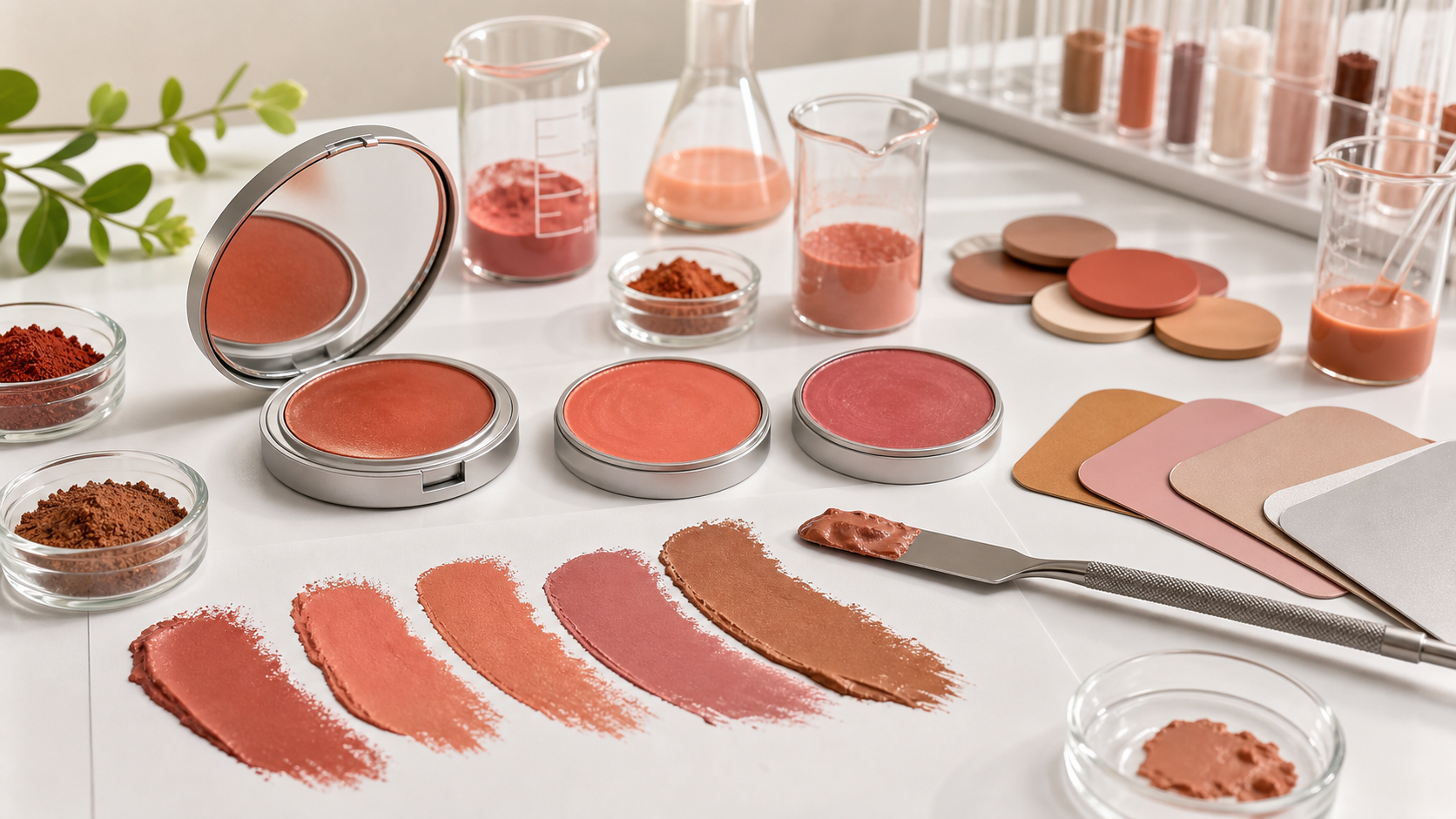
Blonzer, the blush and bronzer hybrid, is gaining attention because it gives one compact a warmer, healthier color payoff while reducing steps in a makeup routine. For beauty brands, the opportunity is not simply copying a trend name; it is building a shade, texture, packaging and claim strategy that feels easy for consumers and reliable for manufacturing.
This guide explains how Mooyam Cosmetic can help develop blonzer compacts for OEM/ODM projects, from formula direction to shade range planning, quality testing and production handover. Mooyam Cosmetic is a cosmetics and makeup OEM/ODM factory for brand projects, and we do not accept retail orders.
Quick Summary
- Blonzer works best when the shade sits between cheek warmth and soft bronzing, not as a full contour product.
- Texture selection should match your target market: powder for control, cream balm for glow, or baked/pressed hybrid for a polished finish.
- OEM/ODM planning must define pigment load, shimmer level, skin-tone coverage, packaging and stability tests before sampling.
- Mooyam Cosmetic supports B2B brand development from formula discussion and sample adjustment to packaging coordination and bulk production.
Why Blonzer Fits Current Color Cosmetics Demand
Consumers are looking for makeup that does more with fewer products. Blush, bronzer and soft sculpting are often used together, so a blonzer compact answers a clear use case: adding warmth, cheek color and a sun-kissed effect in one step. For brands, this can simplify merchandising while still creating room for shade storytelling.
From a factory development perspective, blonzer is not just a new label on an existing blush pan. The product needs a controlled balance of red, peach, brown and golden undertones. Too much red makes it a normal blush; too much brown makes it a bronzer; too much shimmer can limit daily use. The winning formula depends on the brand’s channel, target skin tones and desired finish.
Choose the Right Blonzer Format
Before sampling, a brand should decide what type of use experience it wants customers to remember. Mooyam Cosmetic can develop several formats, but the formula architecture, packaging and testing plan change by format.
| Format | Best For | OEM/ODM Focus |
|---|---|---|
| Pressed powder blonzer | Buildable color, oily skin, professional palettes | Payoff, powder compression, fallout control, pan adhesion |
| Cream balm compact | Dewy finish, clean-looking makeup, dry to normal skin | Oil phase, wax structure, heat stability, payoff after pickup |
| Baked or marbled hybrid | Visual shelf appeal, soft radiance, premium collections | Color swirl control, shimmer dispersion, batch consistency |
Formula Development Priorities
1. Shade Balance
A practical blonzer shade range usually starts with three to six tones: soft peach bronze, warm rose brown, terracotta, neutral tan rose, deeper cinnamon bronze and a richer red-brown option. The goal is to let different skin tones see warmth and cheek color without creating a gray or muddy cast.
2. Finish and Payoff
Brands should choose between matte blur, satin skin, luminous pearl or wet-glow balm. A daily-use blonzer often performs better with a satin or soft luminous finish because it avoids the heavy sparkle that can make the product look seasonal only. For OEM/ODM sampling, Mooyam Cosmetic can adjust mica particle size, pigment dispersion and binder systems to control payoff and spread.
3. Wear and Compatibility
Blonzer is usually applied over skincare, sunscreen, foundation or skin tint. The product should not disturb base makeup, patch when layered, or hard pan after repeated brush pickup. Stability and compatibility tests are especially important for cream balm compacts because heat can affect sweating, oil separation and surface texture.
OEM/ODM Development Flow
| Stage | Brand Decision | Factory Output |
|---|---|---|
| Concept brief | Target user, finish, price tier, launch market | Formula direction, benchmark-free development plan |
| Lab sampling | Shade approvals, texture feedback, packaging style | Adjusted samples, shade cards, basic performance notes |
| Pre-production | Final artwork, ingredient review, order quantity | Bulk formula confirmation, QC standard, filling and assembly plan |
Packaging and Shade Range Strategy
Packaging should support the positioning. A slim mirror compact works for pressed powder and travel-friendly kits. A sealed balm compact or component with good closure control is better for cream formats. If the brand wants a premium look, metallic pans, soft-touch cases and refillable-style designs can be considered, but the component must still pass drop, closure and compatibility checks.
Shade names and claims should be clear and supportable. Avoid exaggerated treatment or sun-protection claims unless the formula and regulatory path truly support them. For most blonzer projects, safer claim directions include buildable color, soft warmth, blendable texture, natural-looking radiance, or multi-use cheek warmth.
Buyer Checklist Before Sampling
- Define the formula type: powder, cream balm, baked, marbled or hybrid compact.
- Confirm the desired finish: matte blur, satin, pearl glow or dewy balm.
- Prepare target skin tone coverage and reference shade descriptions.
- Decide whether the product is single shade, duo pan, palette or seasonal collection.
- Share target market, ingredient restrictions, packaging budget and launch timeline.
- Confirm MOQ, sample rounds, artwork requirements and compliance documents before bulk production.
Quality Control Points for Blonzer Production
For powder formats, QC should check color difference, press hardness, payoff, drop resistance, fallout and pan adhesion. For balm formats, QC should include high and low temperature stability, sweating, odor change, microbial control, payoff after heat exposure and packaging compatibility. For marbled or baked styles, visual consistency becomes an additional control point because customers expect the product to look similar across units.
Mooyam Cosmetic can help brands define practical QC limits before production begins. This reduces the risk of approving a beautiful lab sample that is difficult to repeat in bulk.
Develop Blonzer with Mooyam Cosmetic
If your brand is planning a blush-bronzer hybrid, Mooyam Cosmetic can support formula development, shade matching, packaging sourcing, sampling, stability checks and bulk production for OEM/ODM orders. We work with beauty brands, importers and private label teams. We do not accept retail orders.
Share your target format, shade range, finish, packaging direction and launch market to start a blonzer OEM/ODM project discussion.
FAQ
Is blonzer more like blush or bronzer?
It sits between both. A good blonzer gives cheek color and warm dimension without becoming a strong contour shade or a bright blush.
Can Mooyam Cosmetic develop private label blonzer compacts?
Yes. Mooyam Cosmetic supports OEM/ODM development for private label makeup projects, including formula direction, shade adjustment, packaging coordination and production planning.
What is the best format for a first blonzer launch?
Pressed powder is usually easier for broad use and shade control. Cream balm can feel more trend-led and dewy, but it needs stronger heat stability and packaging compatibility checks.
How many shades should a brand start with?
Many brands start with three to six shades. The best number depends on target skin tones, retail channel, MOQ and whether the product is sold as a single compact or collection.
Does Mooyam Cosmetic sell blonzer products directly to consumers?
No. Mooyam Cosmetic is a cosmetics and makeup OEM/ODM factory for brand projects and does not accept retail orders.
Trend Reference / Sources
These links were used only for trend, SEO direction, formulation background and regulatory context. This article is original B2B OEM/ODM purchasing content written for beauty brand development teams.
- Google Trends comparison for blonzer and related cheek color searches.
- Google Search Central helpful content guidance for people-first SEO direction.
- Sensient Beauty 2026 formulation trends for sensorial color cosmetics context.
- FDA cosmetics labeling guide for claim and labeling awareness.
- FDA color additives permitted for cosmetics for color additive compliance reference.