A brightening skincare product line can be attractive for beauty brands because it gives customers a clear routine story: cleanse, hydrate, target dull-looking skin, moisturize and protect the look of a healthy glow. For B2B buyers, the real work is not only choosing popular ingredients. It is building a line that has a coherent claim direction, stable formulas, compatible packaging and a realistic production plan.
This guide explains how overseas brands, Amazon sellers, DTC founders, distributors and private label buyers can develop a brightening skincare product line with a cosmetic OEM manufacturer or cosmetic ODM manufacturer. Mooyam Cosmetic supports brand and wholesale OEM/ODM projects only; we do not accept retail orders.
Quick Summary
- A brightening line should be planned around routine logic, target market, claim boundaries and product compatibility.
- Useful line structures include cleanser plus toner, serum, cream and mask, but the first launch does not need too many SKUs.
- Formula direction should avoid medical or guaranteed-result claims and focus on cosmetic appearance language such as radiance, tone look and glow.
- Packaging sourcing, low MOQ planning, sample development, quality control and export support should be discussed before bulk production.
- A clear buyer checklist helps reduce sample revisions, cost surprises and production delays.
What a Brightening Skincare Product Line Means
In cosmetic manufacturing, a brightening skincare line is usually positioned around improving the appearance of dullness, supporting a more radiant-looking complexion and creating a fresher skin glow. It should not promise to treat pigmentation disorders, permanently change skin color or deliver medical outcomes. Exact claim wording and label requirements vary by target market, so brands should review local rules before sale.
For a manufacturer, the line must work as a system. A cleanser should not leave the skin feeling stripped. A toner or essence should support the texture story. A serum may carry the strongest active-positioning message. A cream should complete the routine with comfort and barrier-friendly feel. If a mask is included, it should add a clear use case rather than repeat the serum story.
Choose the Right Launch Structure
Many startup brands want to launch five or six products at once because a full range looks professional. In practice, too many SKUs can create MOQ pressure, packaging complexity, more artwork files, more sample rounds and higher inventory risk. A focused two or three product launch can be stronger when it has a clear hero product and supporting routine.
| Line Structure | Best For | Manufacturing Notes |
|---|---|---|
| Serum plus cream | New DTC or Amazon brand testing a brightening concept | Lower SKU count, easier low MOQ planning, clear hero serum story |
| Cleanser, toner, serum and cream | Brands that need a complete daily routine | Requires stronger line architecture, packaging consistency and inventory planning |
| Serum, mask and set packaging | Gift sets, distributor programs or promotional bundles | Needs careful carton design, fill quantity planning and shelf-life review |
Mooyam Cosmetic can help buyers compare whether to start with private label skincare options, a modified ODM formula route or deeper custom development. The right route depends on timing, budget, target market and how differentiated the brand needs to be.
Formula Direction and Ingredient Planning
A brightening-positioned line often uses ingredients associated with radiance, even-looking tone and antioxidant-style cosmetic care. Depending on the product type and market, brands may discuss niacinamide, vitamin C derivatives, alpha arbutin where allowed, licorice-derived materials, tranexamic-acid-positioned cosmetic ingredients where appropriate, gentle exfoliating acids, panthenol and moisturizing support systems. Ingredient availability, permitted use and claim wording should be checked for the destination market.
The strongest formulas are not always the ones with the longest ingredient list. A crowded formula can increase irritation risk, stability challenges and cost without making the brand message clearer. A practical custom formulation plan should define hero ingredients, support ingredients, fragrance direction, texture, target cost and claim boundaries before the first sample round.
For brands that want a unique texture or ingredient story, Mooyam can support custom formulation development while keeping production feasibility in view. For brands that need speed, an ODM or private label base may be adjusted with texture, fragrance, packaging and line-positioning decisions.
Packaging and Brand Consistency
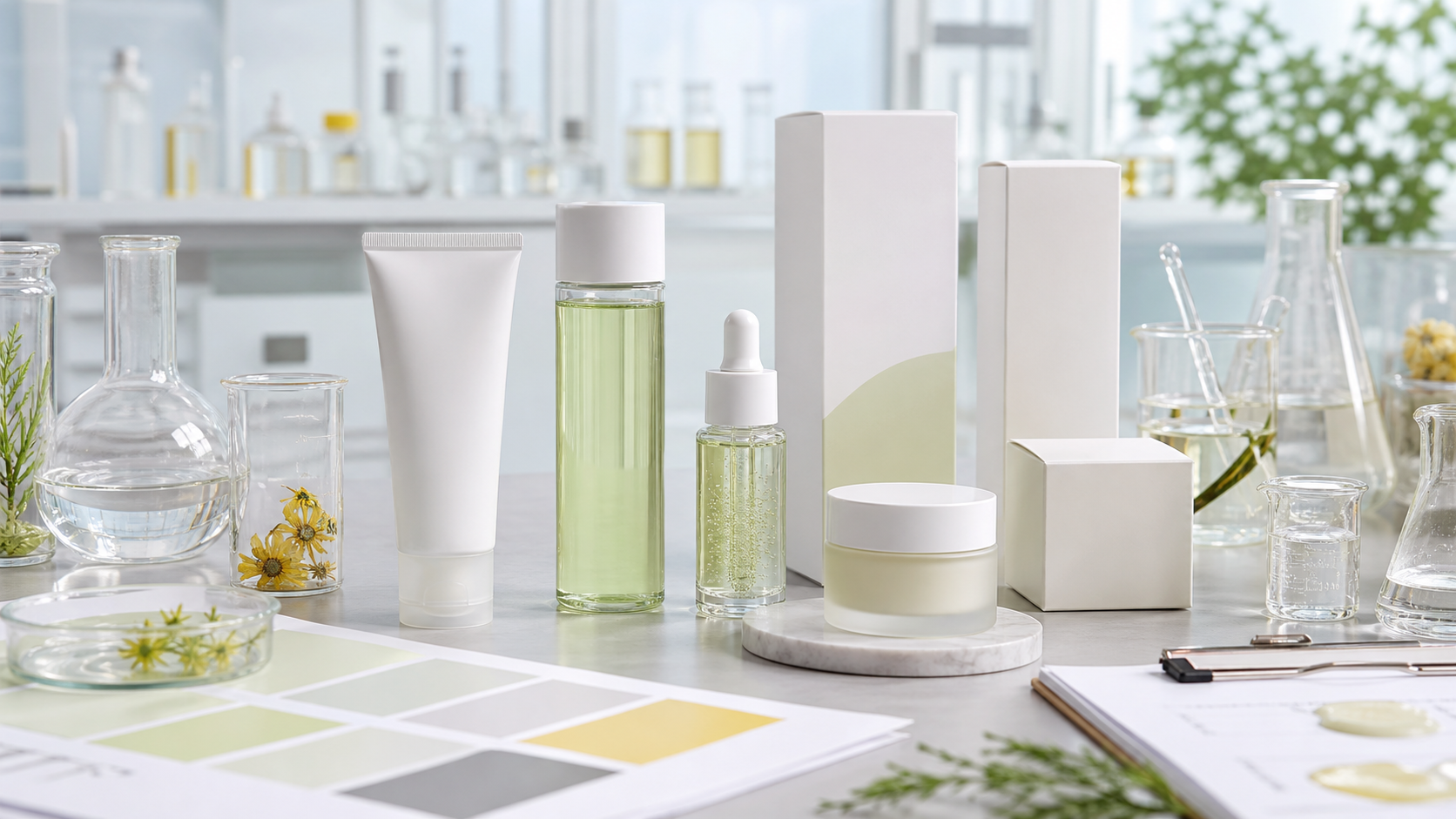
Brightening skincare often uses clean, fresh packaging cues: white, soft yellow, pale green, clear glass, silver accents or airless formats. But packaging should be more than a color choice. It must protect the formula, dispense correctly, fit the fill volume and support the sales channel.
For example, a vitamin C style serum may need packaging that helps reduce light exposure. A cream may work better in an airless pump, tube or jar depending on viscosity and positioning. A toner may need a cap, pump or flip-top that prevents leakage during export shipping. Mooyam can support cosmetic packaging sourcing and customization so formula and package are reviewed together before bulk production.
OEM/ODM Development Process
A professional brightening line begins with a product brief. The brief should include target customer, sales channel, product types, benchmark products, texture expectations, preferred and avoided ingredients, packaging direction, MOQ expectation, target market and launch timeline. This gives the factory enough information to recommend a workable route.
After the brief is reviewed, the manufacturer can suggest product structure, formula path and packaging options. Lab samples are then prepared and adjusted based on buyer feedback. The buyer should evaluate appearance, scent, viscosity, skin feel, layering, packaging fit and whether the routine feels coherent. When samples are approved, the project moves toward stability observation, packaging compatibility checks, artwork review, production scheduling and quality control planning.
Mooyam Cosmetic provides cosmetic OEM/ODM manufacturing services for brand projects that need formula planning, sample development, low MOQ discussion, bulk production and export support.
Buyer Checklist Before Sampling
- Define whether the line is for glow, dull-looking skin, uneven-looking tone, sensitive-skin-positioned radiance or daily preventive care.
- Choose a focused first launch instead of too many SKUs if budget and MOQ are limited.
- Confirm ingredient restrictions, claim language and target-market requirements before artwork begins.
- Decide whether the project should use private label, ODM adjustment or custom formulation.
- Review packaging compatibility for light exposure, viscosity, filling, leakage and shipping.
- Test how products layer together, especially toner, serum, cream and sunscreen-adjacent routines.
- Ask for quality control standards, retained sample rules, batch records and available export documents.
Quality Control and Compliance Notes
Brightening skincare needs careful quality control because color, odor, pH, viscosity and formula appearance can change if the formula is not stable or if packaging is poorly matched. Important checks may include appearance, odor, color, pH where relevant, viscosity, fill weight, microbial review, packaging leakage, label adhesion, carton condition and retained sample comparison.
Claims should remain within cosmetic scope. Phrases such as radiance, glow, more even-looking tone and dullness care are generally safer than medical or guaranteed-result language, but requirements vary by country or region. Mooyam’s quality control and compliance support can help buyers discuss practical checks and documents before production, while final market compliance should be confirmed for the buyer’s destination market.
Common Mistakes to Avoid
One mistake is building every product around the same hero ingredient. If every SKU repeats the same story, the line may feel redundant. Another mistake is choosing premium custom packaging before understanding component MOQ and lead time. A third mistake is using strong claim language before checking whether the formula, documents and target-market rules support it.
Brands should also avoid approving samples based only on first impression. A brightening line should be reviewed after repeated use, with attention to fragrance level, layering, texture, residue and packaging function. A product that looks attractive in a jar may not be the best choice for an Amazon shipment or humid-market distributor program.
Develop Your Brightening Skincare Line
Looking for a reliable cosmetic OEM/ODM manufacturer for a brightening skincare product line? Mooyam Cosmetic can help with private label skincare, custom formulation, packaging sourcing, sample development, low MOQ planning, bulk production, quality control and export support. Contact Mooyam Cosmetic to discuss your product idea, formula requirements, packaging options, MOQ and production solution.
FAQ
Can Mooyam Cosmetic develop a brightening skincare product line?
Yes. Mooyam Cosmetic can support B2B OEM/ODM and private label brightening skincare projects, including formula direction, samples, packaging and production planning.
How many products should a new brightening line include?
Many brands start with two or three SKUs, such as serum plus cream or cleanser, serum and cream. A focused launch can reduce MOQ pressure and simplify inventory management.
Can brightening products make medical claims?
Cosmetic products should avoid medical treatment claims and guaranteed results. Claims should be reviewed based on formula, documents and the target market’s rules.
Is custom formulation necessary?
Not always. Private label or ODM formulas may work for faster launches, while custom formulation is better when the brand needs a more specific texture, ingredient story or performance target.
What packaging is common for brightening serums?
Dropper bottles, airless pumps and opaque or tinted components are common options, but the final choice should be tested with the actual formula and sales channel.
Can low MOQ work for a brightening skincare line?
Low MOQ may be possible when the product structure is focused and packaging is practical. Fully custom formulas or components may require higher minimums.
Does Mooyam accept retail orders?
No. Mooyam Cosmetic supports B2B brand, private label and wholesale OEM/ODM manufacturing projects, not retail single-unit orders.