
A private label shampoo launch succeeds when formula, scalp and hair positioning, fragrance, packaging, price, and reorder planning support the same commercial idea. Selecting a pleasant sample is only one step. The product must also dispense reliably, remain stable through storage and transport, fit the target market, and reach an order quantity the brand can sell responsibly.
This guide gives overseas beauty brands, salon brands, Amazon and DTC sellers, distributors, and sourcing managers a practical development framework. It explains how to work with a cosmetic OEM manufacturer or cosmetic ODM manufacturer from brief to bulk production. Mooyam Cosmetic serves B2B OEM/ODM and wholesale projects only and does not accept retail orders.
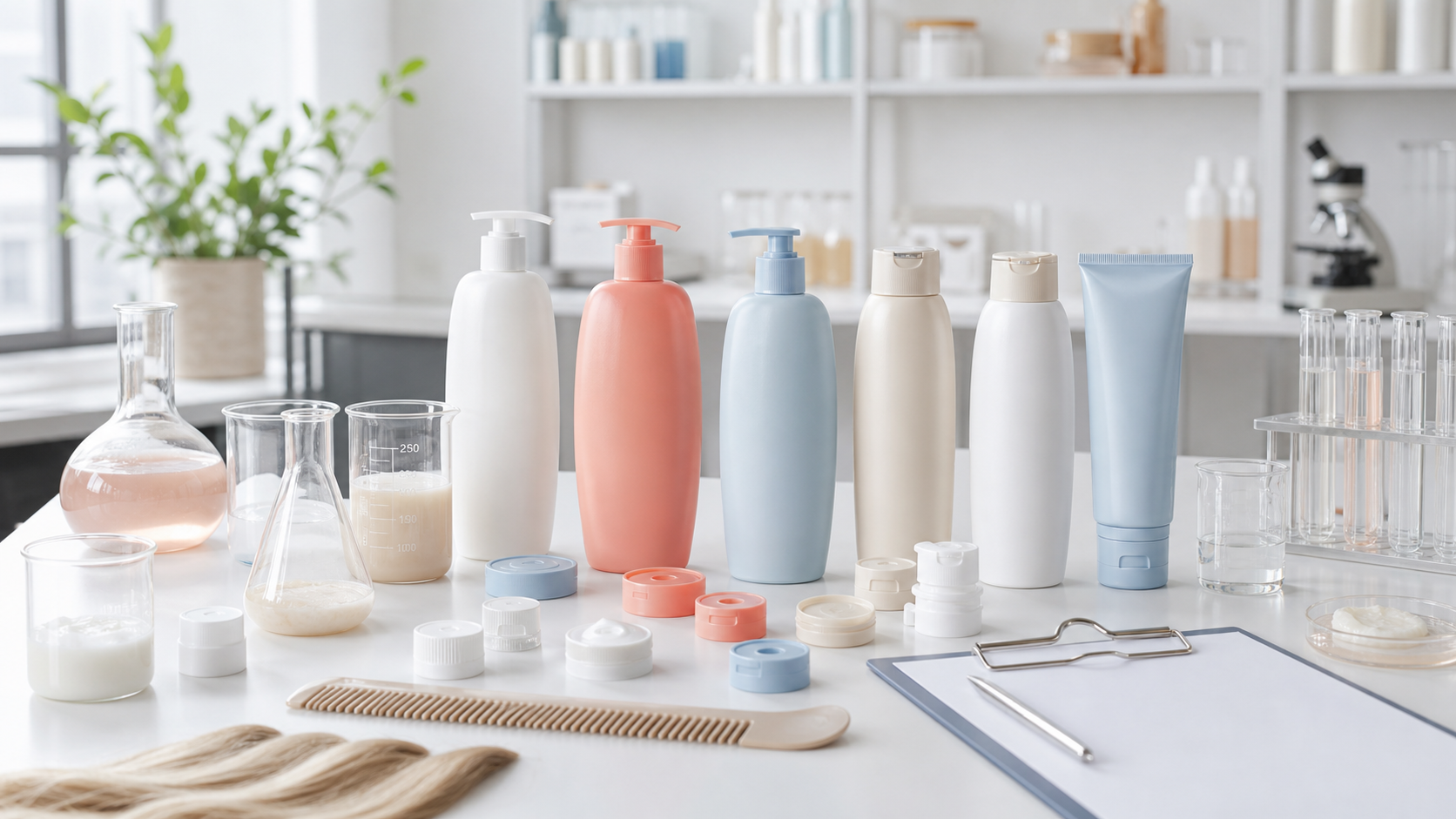
- Build the brief around hair type, cleansing level, sensory profile, channel, target market, and retail price.
- Use a private label formula for speed or a custom formulation when differentiation justifies added time and testing.
- Evaluate shampoo and packaging as one system, especially viscosity, pump output, closure seal, and transport leakage.
- Confirm claims, labeling, testing, quality specifications, and market requirements before artwork approval.
- Set MOQ and reorder plans by SKU so a broad range does not create avoidable inventory pressure.
Define the Shampoo’s Business Role First
Before discussing ingredients, decide what role the shampoo plays in the line. Is it a daily cleanser for a broad DTC audience, a salon-positioned product, a clarifying SKU, a color-care companion, or the entry product in a shampoo-and-conditioner set? Each role affects cleansing feel, fragrance, size, package format, price, and claim language.
A strong brief includes the target customer, hair and scalp context, sales channel, expected retail price, bottle volume, fragrance direction, foam and rinse preferences, appearance, ingredient exclusions, benchmark products, and destination markets. Avoid asking for guaranteed outcomes such as stopping hair loss or treating scalp conditions. Those statements may move a cosmetic product into more regulated territory and require evidence or approvals that vary by market.
Select Private Label, Semi-Custom, or Custom Development
Private label shampoo is useful when speed and controlled investment matter. A cosmetic ODM manufacturer may already have evaluated shampoo bases that can be paired with selected fragrance and packaging. A cosmetic OEM manufacturer can also produce to a buyer-approved formula or develop against a detailed brief. Mooyam Cosmetic’s OEM/ODM manufacturing support helps buyers compare the routes.
| Development Route | Suitable Buyer | What Can Change | Main Planning Point |
|---|---|---|---|
| Private label base | Startup, salon, distributor, or fast channel test | Fragrance, color, size, packaging, label and carton | Fastest route when the base fits the intended positioning |
| Semi-custom base | Brand wanting selected sensory or ingredient-direction changes | Viscosity, appearance, scent level, limited composition adjustments | Changes may restart stability or compatibility work |
| Custom formulation | Established concept requiring distinctive cleansing and after-feel | Full formula direction within feasibility and market constraints | Needs a precise brief, more samples, testing, and budget |
Brands prioritizing speed can explore private label skincare and hair-care manufacturing. Buyers requiring a proprietary sensory profile or technical direction should use a documented custom formula development pathway.
Turn Positioning into Measurable Formula Criteria
Cleansing Level and After-Feel
Words such as moisturizing, clarifying, gentle, or salon quality are not sufficient for lab work. Explain the desired foam density, wet slip, rinse speed, hair feel after rinsing, fragrance persistence, and frequency of use. A benchmark can help communicate the experience, but it should not be used to copy another brand’s formula or packaging.
Appearance, Viscosity, and Fragrance
Shampoo can be clear, pearlescent, creamy, colored, or naturally tinted, but the visual direction affects raw material choices and package appearance. Viscosity must match the bottle and climate expectations. Fragrance should be assessed in the finished base because surfactants and other materials can change how it develops over time.
Claims and Ingredient Stories
Ingredient-led marketing is useful only when the formula contains the ingredient at an appropriate level and the claim is supportable. “Sulfate-free,” “silicone-free,” “vegan,” “for color-treated hair,” and similar statements require clear definitions, supplier documentation, and target-market review. Cosmetic rules, retailer standards, and labeling duties vary, so the brand or importer should confirm local obligations.
Build Packaging around Formula and Channel
Packaging influences user experience, production efficiency, freight cost, and MOQ. A thick shampoo may need a wider pump pathway or softer squeeze bottle. A shower product needs a closure that can be operated with wet hands and resist water entry. An Amazon seller may prioritize leakage protection and e-commerce transit performance, while a salon brand may prefer a larger pump bottle with controlled output.
Decoration choices also affect the order threshold. Stock bottles with labels may support a low MOQ. Screen printing, multiple colors, custom-colored resin, metallic finishes, and molded components can increase minimum quantities and lead time. Use Mooyam Cosmetic’s customized packaging and sourcing service to compare realistic options before formula and artwork are locked.
| Format | Best Use | Checks Before Approval |
|---|---|---|
| Disc-top squeeze bottle | Mass retail, DTC, travel and everyday formats | Squeeze force, cap seal, orifice size, upside-down leakage |
| Pump bottle | Salon, family size, premium bathroom presentation | Output dose, priming, lock function, clogging, transit leakage |
| Tube | Smaller sizes, kits, targeted or travel products | Seal strength, wall compatibility, decoration durability |
| Refill pouch | Refill systems and lower packaging-weight concepts | Film compatibility, seal strength, spout control, claim wording |
Manage Sample Development Efficiently
Begin with two or three directions that answer the main formula question. Do not request ten minor variations before deciding the desired cleansing and after-feel. Once one direction is selected, refine fragrance, appearance, and viscosity in controlled rounds. Consolidate feedback from marketing, product, sales, and procurement so the factory receives one decision rather than conflicting comments.
Approve samples using a dated evaluation form. Record appearance, odor, foam, application, rinse, wet feel, dry feel, packaging output, and comparison notes. The approved master sample should be referenced during pre-production and finished-goods inspection. If packaging, fragrance, or key materials change later, confirm whether compatibility or stability work must be repeated.
Plan MOQ and Cost by SKU
Shampoo projects often expand into conditioner, mask, scalp product, or several fragrance variants. Every additional SKU creates its own label, carton, component, formula, testing, and inventory decisions. A broad launch can appear efficient but may tie up cash in slow-moving variants. Start with the SKU combination that has the clearest demand and reorder logic.
Ask the supplier to separate costs for formula, fragrance, bottle, closure, decoration, label, carton, testing, and export packing. Clarify which materials must be purchased above the finished-product MOQ and whether excess components will be stored, invoiced, or discarded. Low MOQ should be evaluated together with unit cost and repeat-order lead time.
Quality Control from Raw Materials to Shipment
| Control Stage | Examples of Checks | Buyer Record |
|---|---|---|
| Incoming materials | Identity or supplier documents, appearance, lot traceability, package components | Approved material list and specifications |
| Bulk manufacture | Batch instructions, mixing parameters, appearance, odor, viscosity, pH where relevant | Approved formula and master sample |
| Filling and packing | Net content, closure torque, pump function, coding, label and carton alignment | Artwork files and packaging standard |
| Finished goods | Sampling inspection, leakage, appearance, quantity, shipper marks | Inspection criteria and release decision |
Testing may include stability, compatibility, microbial limits, packaging function, transport-related checks, and other evaluations agreed for the product and markets. Review Mooyam Cosmetic’s quality control and compliance information, while recognizing that final legal responsibilities and documentation needs depend on destination-market requirements.
Private Label Shampoo Buyer Checklist
- Target customer, channel, destination markets, retail price, and launch timing are defined.
- Shampoo role, cleansing level, foam, rinse, wet feel, dry feel, fragrance, color, and appearance are approved.
- Formula route and ownership or exclusivity expectations are written into the project scope.
- MOQ is confirmed for bulk formula, fragrance, bottle, closure, decoration, labels, and cartons.
- Selected packaging has passed agreed compatibility, dispensing, and leakage checks.
- Claims, ingredient list, warnings, language, barcode, and batch-code area are reviewed before printing.
- Testing plan, specifications, approved master sample, and finished-goods inspection criteria are documented.
- Reorder lead time, component stock, export packing, and shipping handoff are understood.
FAQ
What is the typical MOQ for private label shampoo?
MOQ depends on batch size, fragrance, packaging inventory, decoration, and carton printing. Using a stock formula and stock bottle can reduce complexity, while custom-colored or molded packaging usually increases minimums.
Can I change the fragrance of a stock shampoo formula?
Often yes, but fragrance can affect odor development, appearance, viscosity, and stability. The selected fragrance must be evaluated in the final base and packaging.
How long does shampoo sample development take?
The timeline depends on the brief, formula route, sample feedback speed, packaging availability, and testing plan. Custom work generally requires more time than selecting an existing private label base.
Can a shampoo claim to prevent hair loss or treat dandruff?
Such claims may be regulated as drug, therapeutic, or special-function claims in some markets. Do not use them without qualified regulatory review and adequate evidence for the destination market.
Should shampoo and conditioner launch together?
A paired set can improve merchandising, but it doubles many development and inventory decisions. Launch both only when the sales plan, budget, MOQ, and demand support the additional SKU.
Can the manufacturer provide export documents?
The factory can support agreed commercial, product, and shipment documents, but exact importer and regulatory requirements vary by country. Confirm the list before production.
What should I approve before bulk production?
Approve the formula sample, fragrance, color, viscosity, bottle, closure, decoration sample, final artwork, specifications, testing plan, quantity, and inspection requirements.
Looking for a reliable cosmetic OEM/ODM manufacturer? Mooyam Cosmetic supports private label shampoo, custom formulation, packaging sourcing, sample development, low MOQ planning, bulk production, quality control, and export support. Contact Mooyam Cosmetic with your target market, product positioning, benchmark experience, bottle size, expected quantity, and launch timing. We work with overseas brands, salons, distributors, wholesalers, and private label buyers, not retail consumers.