A skincare set can help a beauty brand sell a complete routine instead of a single product. For startups, DTC sellers, Amazon brands, distributors, and spa or salon buyers, a well-planned set can improve product storytelling, average order value, and repeat purchase. But a skincare set is also more complex than launching one serum or cream. Each SKU needs a clear role, compatible formula direction, matching packaging, realistic MOQ, and a controlled sample approval process.
This guide explains how to create a skincare set with a cosmetic OEM/ODM factory. Mooyam Cosmetic supports B2B private label and OEM/ODM projects for brands and wholesale buyers; we do not accept retail orders.
- A skincare set should be built around clear SKU roles, not random products placed in one box.
- Formula compatibility, packaging family, MOQ, sampling timeline, and quality control should be planned before artwork approval.
- Startups can reduce risk by choosing focused sets, shared packaging components, and practical low MOQ routes.
- Mooyam Cosmetic can support private label skincare, custom formulation, packaging sourcing, sample development, bulk production, and export support.
What a Skincare Set Means in OEM/ODM Manufacturing
A skincare set is a group of products sold together as a routine, gift kit, trial kit, travel kit, professional service kit, or product line launch. Common combinations include cleanser plus toner plus serum plus cream, mask plus serum plus moisturizer, or mini sizes for a discovery set. In cosmetic manufacturing, a set is not only a marketing idea. It is a multi-SKU production project with formula, packaging, artwork, packing, and quality control decisions for each item.
A good skincare set manufacturer should help the buyer define the purpose of every product in the set. One SKU may introduce the routine, another may deliver the hero texture, while another supports daily use or repeat purchase. If the set does not have clear product roles, it can become expensive to sample, hard to explain, and difficult to reorder.
Start with the Buyer and Sales Channel
Before choosing products, define who will buy the set and where it will be sold. A DTC launch set may need strong visual consistency and easy routine messaging. An Amazon bundle may need leakage-resistant packaging, clear outer cartons, and efficient fulfillment dimensions. A distributor may prefer products with broad appeal and reorder stability. A spa or salon buyer may need backbar sizes plus retail take-home products.
This sales channel decision affects product size, texture, packaging, MOQ, claims language, carton packing, and export support. For private label skincare projects, it also helps decide whether to use existing formulas, modify stock formulas, or request custom formulation for one or more hero SKUs.
Choose SKU Roles Before Choosing Ingredients
Many buyers start by asking for popular ingredients. Ingredients matter, but a set should start with product roles. What should the cleanser do in the routine? Is the toner a watery prep step, a soothing step, or a lightweight essence? Is the serum the hero item? Should the cream be rich, gel-like, or barrier-focused? Does the set need a mask, sunscreen, eye cream, or travel-size option?
When roles are clear, the supplier can propose formula routes that work together. A set for sensitive-positioned buyers should avoid aggressive claims and should be reviewed carefully for target-market requirements. A brightening-positioned set should use cautious cosmetic language and avoid medical promises. Requirements can vary by market, ingredient, claim, and importer role.
| Set Type | Typical SKU Mix | Manufacturing Focus |
|---|---|---|
| Starter routine | Cleanser, toner, serum, cream | Simple steps, low MOQ planning, easy reorder structure. |
| Hero serum set | Serum, cream, mask or cleanser | Strong hero product with supporting textures and matching packaging. |
| Travel or trial kit | Mini cleanser, mini toner, mini cream, sachets | Small packaging sourcing, filling accuracy, carton layout, leakage control. |
| Professional retail set | Backbar product plus retail serum or cream | Different fill sizes, salon/spa use, staff feedback, repeat order planning. |
| Gift or holiday set | Best-selling items plus box or pouch | Seasonal packaging lead time, decoration, assembly, and shipment schedule. |
Formula Planning for a Cohesive Routine
Formula planning should make the set feel coherent. Products should not fight each other in texture, fragrance direction, positioning, or usage order. If every item has a strong fragrance, the routine may feel heavy. If every texture is rich, the set may not suit warm climates. If all products use expensive ingredients, the final set price may move beyond the target channel.
Mooyam Cosmetic can help buyers review custom formulation support for hero products while using more efficient private label routes for supporting SKUs. This mixed approach can balance differentiation and launch speed. For example, a brand may customize a serum texture while choosing an existing cleanser and moisturizer base with suitable adjustments.
Packaging Family and Set Presentation
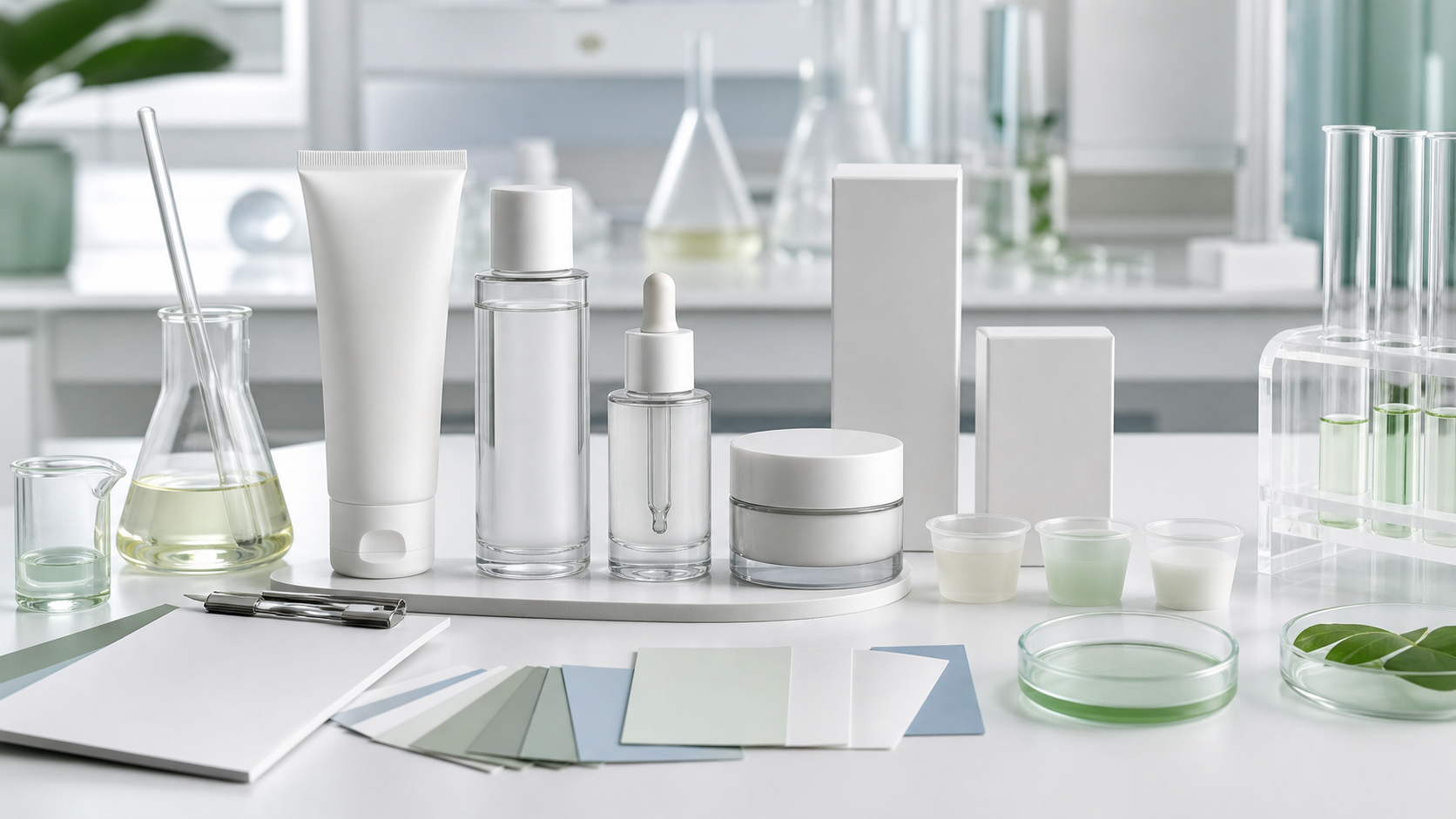
Packaging is especially important for skincare sets because buyers see the products together. The bottles, jars, tubes, labels, caps, cartons, and outer box should feel like one product family. That does not mean every item must use the same component, but the color, finish, label layout, and material quality should look intentional.
Packaging also controls cost and MOQ. A custom bottle color may look strong but increase minimums. A standard bottle with a well-designed label may be more practical for a first launch. A gift box may require separate artwork, insert structure, carton testing, and assembly planning. Review packaging sourcing and customization before finalizing the set size and launch date.
MOQ and Cost Planning for Multi-SKU Sets
A skincare set multiplies decisions. Three SKUs may mean three formulas, three packaging components, three labels, three fill weights, and a shared outer carton. Each item may have its own MOQ. Buyers should ask whether the factory can align batch size, packaging order quantity, and finished set quantity. Otherwise, one item may create extra inventory while another item runs short.
Low MOQ planning works best when the set is focused. Instead of launching six products at once, a startup may begin with three essential SKUs and add a mask or eye cream later. A distributor may launch two set options using shared packaging components. A DTC brand may use full-size hero products and sample sachets to manage budget.
Sample Development and Approval Workflow
Sampling for a set should be managed as a system. Buyers should test each formula individually and then test the routine together. The supplier should record sample codes, version numbers, feedback, approved fragrance direction, texture comments, packaging choices, and artwork status. Without a clear sample record, it becomes difficult to translate approval into bulk production.
For brands using OEM/ODM manufacturing support, the sample stage should connect formula approval with packaging approval. A beautiful sample in a temporary bottle is not enough if the final pump, tube, or jar changes product flow, fill weight, or user experience.
| Stage | Buyer Decision | Factory Output |
|---|---|---|
| 1. Set brief | Target buyer, sales channel, SKU count, routine promise | Product route, formula options, initial MOQ and timeline. |
| 2. Formula samples | Texture, scent, skin feel, usage order, product role | Sample versions, adjustment notes, approved standards. |
| 3. Packaging samples | Bottle, jar, tube, label, carton, set box | Component sourcing, decoration route, compatibility review. |
| 4. Pre-production approval | Final formula, packaging, artwork, carton plan | Production specification, QC checkpoints, bulk schedule. |
| 5. Bulk production | Inspection standard and shipment plan | Filling, assembly, retained samples, packing and export support. |
Quality Control for Skincare Sets
Quality control for a set covers every SKU and the finished pack. The factory should check raw materials, packaging appearance, fill weight, closure performance, label placement, carton strength, set assembly, and retained samples. If the products use different packaging types, each component needs its own inspection focus. Pumps may need leakage and dosage checks, jars may need lid fit checks, and tubes may need seal strength review.
Before bulk production, confirm which checks are included and which tests may require separate discussion based on the product and target market. Mooyam Cosmetic can help buyers plan quality control and compliance support without making unverified regulatory promises. Final requirements depend on the buyer’s market, claims, formula, importer role, and sales channel.
Buyer Checklist for Skincare Set Development
- Define the purpose of the set: starter routine, trial kit, gift box, professional kit, or product line launch.
- Limit the first launch to SKUs that have clear roles and realistic MOQ.
- Decide which products need custom formulation and which can use private label routes.
- Choose packaging as a family, including labels, cartons, caps, and outer box structure.
- Ask for separate MOQ assumptions for formula, packaging, and finished set assembly.
- Review sample versions as a complete routine before approval.
- Confirm QC checkpoints for each SKU and the finished set.
- Plan carton packing, export documents, and reorder timing before launch.
Planning a skincare set for your beauty brand? Mooyam Cosmetic can support product selection, private label skincare, custom formulation, low MOQ planning, packaging sourcing, sample development, bulk production, quality control, and export support. Contact us to discuss your OEM/ODM skincare set project.
FAQ
How many products should a first skincare set include?
Many startup brands begin with three or four products because this keeps MOQ, sampling, packaging, and launch messaging easier to manage.
Can one product in the set be custom while others are private label?
Yes. A mixed route can make sense when the brand wants one hero custom product and efficient supporting SKUs.
Does a skincare set require matching packaging?
The packaging should feel coordinated, but it does not need to use identical components. Color, label layout, cap style, and carton design can create a family look.
What affects MOQ for a skincare set?
Formula batch size, packaging component MOQ, decoration method, SKU count, carton or box requirements, and set assembly all affect MOQ.
How long does sample development take?
Timing depends on formula complexity, packaging sourcing, revision rounds, and buyer feedback speed. Custom formulas usually need more time than existing private label routes.
What quality issues are common in skincare sets?
Common risks include mismatched packaging color, label inconsistency, leakage, carton damage, wrong fill weight, and unclear sample approval records.
Can Mooyam Cosmetic help with export support?
Yes. For B2B buyers, Mooyam Cosmetic can support packing coordination, documents, and shipment preparation as part of an OEM/ODM project.