
Azelaic acid serum has become a serious active-skincare brief because buyers want formulas that speak to uneven tone, visible redness, texture, and blemish-prone routines without building an aggressive exfoliation story. For brands, the opportunity is strongest when the product is positioned carefully and developed with realistic stability and claim controls.
This guide explains how Mooyam Cosmetic supports azelaic acid serum OEM/ODM projects for beauty brands, importers, and distributors. Mooyam Cosmetic is a cosmetics and makeup OEM/ODM factory, and we do not accept retail orders.
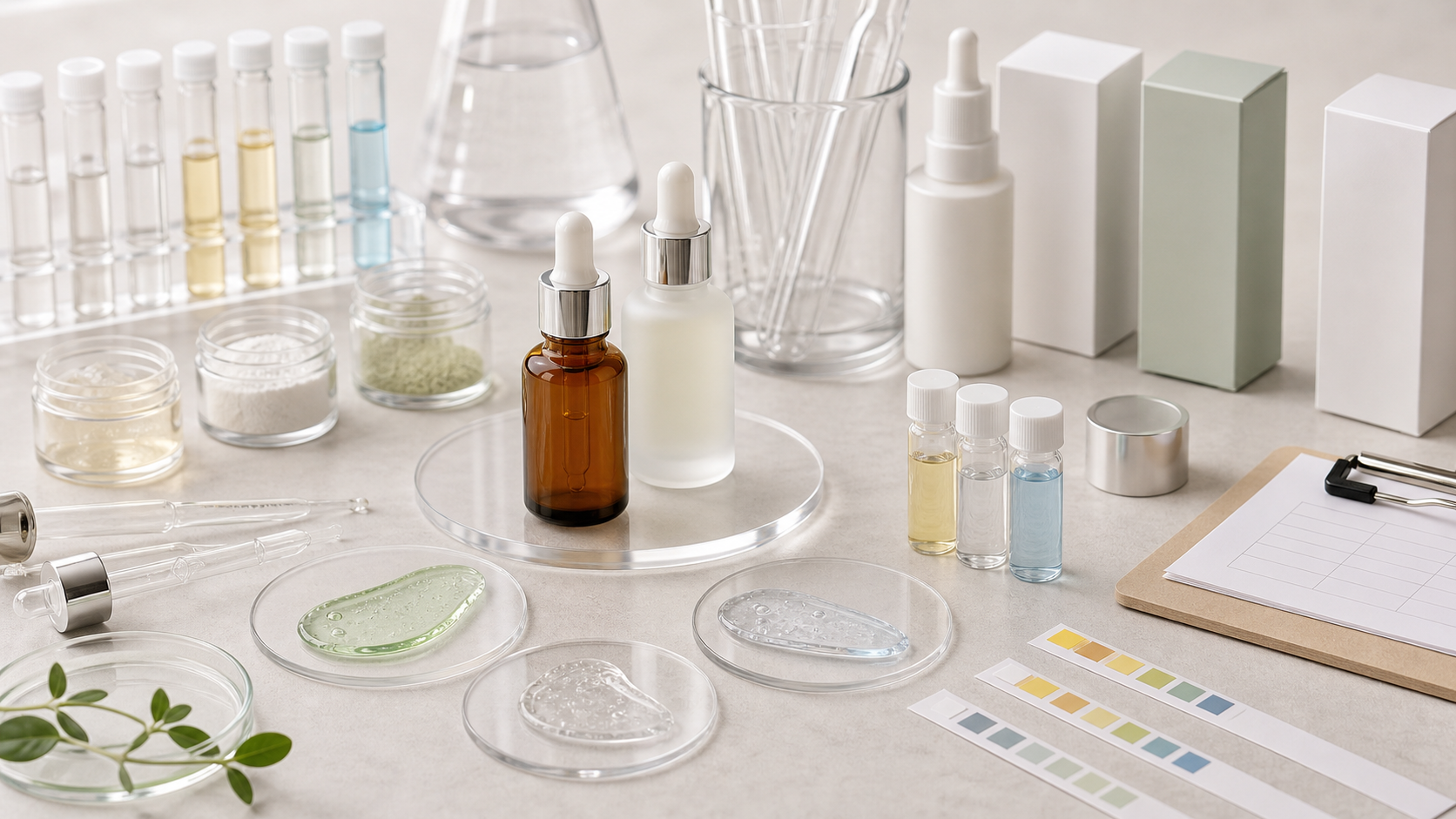
- Azelaic acid serum projects should define cosmetic positioning, target percentage, pH range, skin feel, irritation-control system, and claim limits before sampling.
- A strong formula brief balances active level, solubility or dispersion, texture, preservative system, packaging compatibility, and stability testing.
- Claims such as acne treatment can change regulatory classification in some markets, so buyers should separate cosmetic appearance claims from drug-style claims.
- Mooyam Cosmetic can help B2B buyers develop samples, supporting ingredients, packaging, MOQ plans, quality checks, and production documentation.
Why Azelaic Acid Serum Is Worth a B2B Brief
Recent skincare coverage continues to favor science-backed actives, barrier respect, and products that do more than create a short-lived glow. Azelaic acid fits that direction because brands can build a calm, targeted serum concept around uneven tone, visible redness, pores, and post-blemish appearance. Industry beauty coverage has also called out azelaic acid as an in-demand 2026 skincare topic, which makes it a useful category for private label and OEM/ODM planning.
The product still needs discipline. Azelaic acid is often discussed by consumers in relation to acne, rosacea, and pigmentation, but a beauty brand must decide whether it is making cosmetic appearance claims or regulated treatment claims. That decision affects ingredient level, testing, artwork, website copy, and the markets where the SKU can launch.
Formula Strategy: Active Level, pH, and Skin Feel
Choosing the Active Positioning
Azelaic acid can be challenging because higher levels may feel grainy, heavy, or irritating if the system is not designed well. Some brands prefer a lower-level daily cosmetic serum with niacinamide, panthenol, beta-glucan, allantoin, green tea, or hydrating polymers. Others want a more active-feeling night serum. The factory needs the target customer and claim boundary before recommending a route.
Mooyam Cosmetic usually starts with two or three sample directions: a lightweight daily gel serum, a cream-serum for sensitive-looking skin, and a higher-active night serum where the buyer has the required claim and compliance plan. This comparison helps the buyer evaluate skin feel, layering, pilling, odor, opacity, and package compatibility before moving to final shade or fragrance decisions.
pH and Stability Considerations
pH matters for user comfort, ingredient compatibility, and preservative selection. Azelaic acid systems may also need careful mixing, particle-size control, solubilizer choice, or suspension strategy, depending on the active form and target sensory profile. A formula that looks smooth in a beaker can separate, crystallize, thicken, or change odor under accelerated stability conditions.
| Formula Route | Best Buyer Goal | OEM/ODM Checkpoint |
|---|---|---|
| Daily cosmetic serum | Uneven tone, dullness, visible redness support | Skin feel, pH comfort, layering, cosmetic claim wording |
| Sensitive-skin cream serum | Comfort positioning and barrier-support story | Soothing system, richness, preservative fit, tube compatibility |
| Higher-active night serum | More targeted active-skincare customer | Irritation risk, stability, claim review, market restrictions |
| Multi-active brightening serum | Tone and post-blemish appearance range | Ingredient compatibility, discoloration, pilling, final INCI story |
Packaging: Dropper, Airless Pump, or Tube?
Packaging should be selected after the formula route is known. A watery gel may work in a dropper bottle, while a thicker suspension may need an airless pump or soft tube for reliable dosing. Transparent packaging can look premium, but buyers should consider light exposure and formula appearance changes. A tinted or opaque bottle may be better if the serum is sensitive to light or develops visible color shift.
Mooyam Cosmetic can help compare stock droppers, airless pumps, tubes, cartons, and label materials. For first orders, a proven stock package with custom decoration is often more efficient than a custom mold. Custom tooling can follow after the brand confirms demand and repeat order volume.
OEM/ODM Development Flow
| Stage | Buyer Provides | Factory Output |
|---|---|---|
| 1. Product brief | Target market, active level, texture, claims, benchmark | Formula route, compliance notes, MOQ and timeline estimate |
| 2. Lab sample | Feedback on feel, opacity, odor, pilling, finish and irritation concern | Adjusted samples, pH records, packaging suggestions |
| 3. Stability and compatibility | Selected package and target logistics market | Heat, freeze-thaw, separation, odor, color, viscosity and leakage review |
| 4. Pre-production | Artwork, INCI confirmation, claim approval, inspection standard | Pilot batch, final sample, bulk production plan and QC sheet |
Buyer Checklist Before Sampling
- Define whether the SKU is a cosmetic appearance serum or a product with drug-style acne treatment claims.
- Choose target active level, supporting ingredients, fragrance preference, texture, and packaging format.
- Share target markets so the factory can flag claim, ingredient, and labeling risks early.
- Test layering with moisturizer, sunscreen, primer, and makeup if the serum is meant for morning use.
- Ask for pH, viscosity, odor, color, separation, microbial, compatibility, and accelerated stability checks.
- Confirm MOQ by formula batch, bottle or tube, pump/dropper, carton, label, and decoration method.
Claims and Compliance Boundaries
Azelaic acid serum copy should be written carefully. Cosmetic claims can focus on appearance support, such as helping skin look more even, smoother, calmer, or clearer-looking. Claims that say the product treats acne, rosacea, disease, infection, or inflammation may trigger drug or medicine requirements in some markets. Buyers should review claim language before approving labels, product pages, ads, and influencer briefs.
Mooyam Cosmetic can support B2B teams by preparing formula samples, ingredient lists, production records, stability notes, and QC checkpoints. The brand remains responsible for market-specific registration, claim substantiation, and final regulatory review.
If your brand is planning an azelaic acid serum, send Mooyam Cosmetic your target market, desired active level, cosmetic claim direction, texture preference, packaging style, benchmark products, expected MOQ, and launch timing. We can review formulation feasibility, supporting ingredients, packaging compatibility, sampling timeline, and QC planning for private label, OEM, or ODM production. Mooyam Cosmetic works with B2B buyers only and does not accept retail orders.
FAQ
Can Mooyam Cosmetic develop an azelaic acid serum for private label?
Yes. Mooyam Cosmetic can support private label and OEM/ODM serum projects for B2B buyers, including formula sampling, packaging selection, MOQ planning, and production QC.
Can the serum claim to treat acne?
That depends on target market rules and the full product positioning. In the United States, acne treatment claims can fall under drug rules, so buyers should review claim language before publishing packaging or ads.
What packaging works best for azelaic acid serum?
It depends on viscosity, opacity, light sensitivity, and dosing needs. Droppers, airless pumps, and tubes can all work when matched correctly to the formula.
What should be checked during stability testing?
Check pH, viscosity, odor, color, separation, precipitation, package leakage, pump or dropper function, microbial quality, and appearance after heat and freeze-thaw exposure.
The links below are used only for skincare trend, market, SEO direction, and compliance background. This article is original B2B OEM/ODM procurement guidance and is not copied, translated, or structured from the source pages.