
Choosing between glass and plastic skincare bottles is not only a design preference. For beauty brands, the decision affects product positioning, formula compatibility, low MOQ planning, filling, shipping, breakage risk, packaging sourcing, quality control and total landed cost.
This guide compares glass bottles and plastic bottles for private label skincare, custom formulation and cosmetic OEM/ODM manufacturing projects. It is written for overseas brand owners, sourcing managers, Amazon sellers, DTC brands, distributors and wholesale buyers who need a practical packaging decision before sample development and bulk production. Mooyam Cosmetic supports B2B OEM/ODM projects only and does not sell retail units.
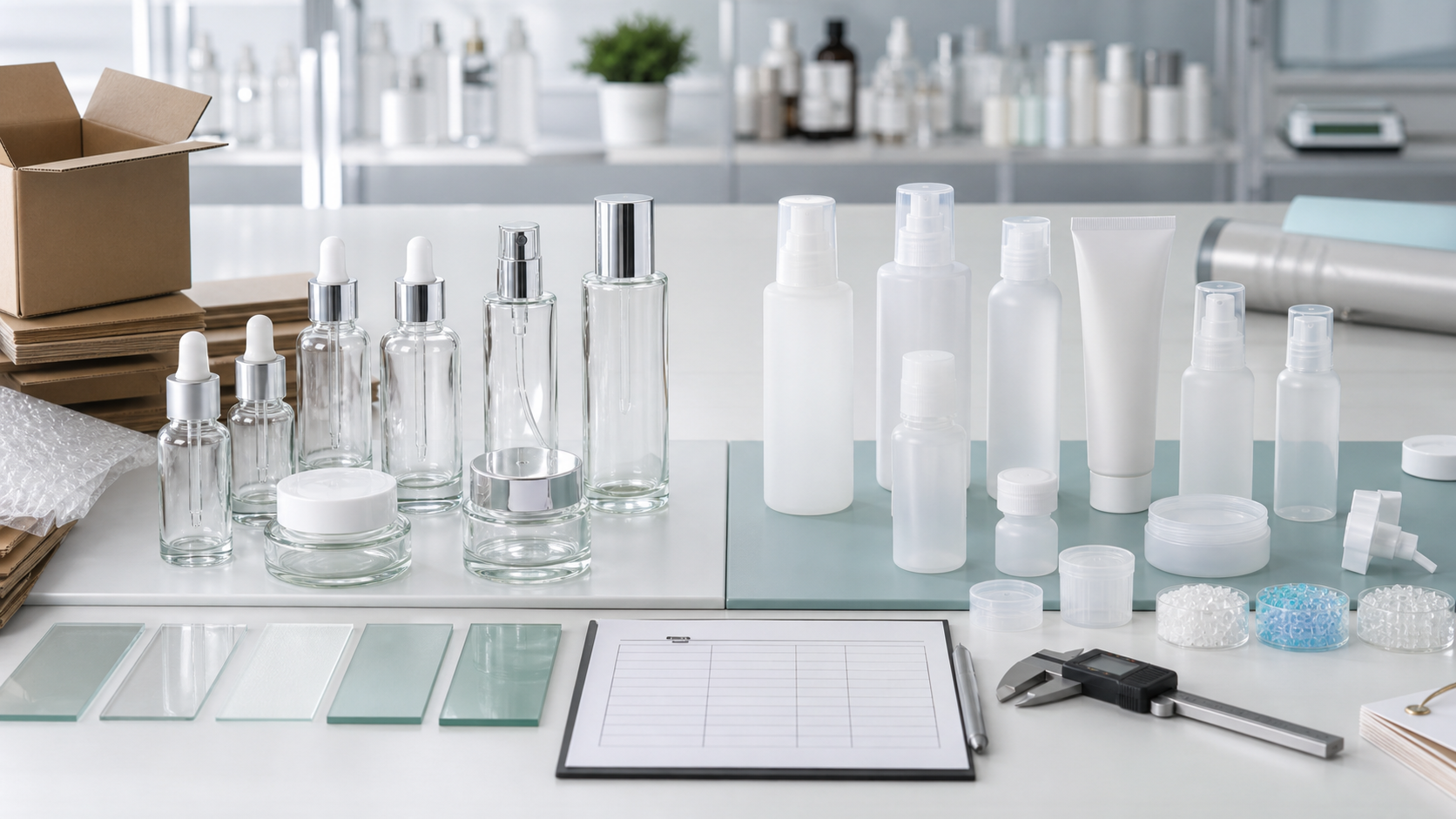
Quick Summary
- Glass bottles can support premium positioning, transparency and a heavier feel, but they may raise freight cost and breakage risk.
- Plastic bottles can support low MOQ, lighter shipping and wider component choices, but material quality and formula compatibility must be checked.
- The right choice depends on formula type, viscosity, sales channel, target price, market requirements and reorder plan.
- Mooyam Cosmetic can support packaging sourcing, custom formulation, sample development, quality control, bulk production and export support.
Why Bottle Material Matters in Skincare Manufacturing
In cosmetic manufacturing, packaging is part of the product system. A serum, toner, lotion, cleanser or cream can perform differently depending on the bottle, pump, cap, dropper, liner, label and carton. The bottle must protect the formula, dispense correctly, survive shipping and match the brand’s price positioning.
A cosmetic OEM manufacturer or cosmetic ODM manufacturer can help buyers compare bottle options, but the buyer still needs to define the product goal. A premium serum may justify glass. A travel-friendly cleanser may need plastic. A low MOQ test launch may require stock packaging. A distributor line may need consistent cartons and durable case packing.
Glass Bottles: Strengths and Tradeoffs
Glass is often chosen for serums, facial oils, toners and premium skincare products because it feels heavier and can show formula color clearly. Frosted glass, clear glass, amber glass and colored glass can create different shelf impressions. Glass can also work well with droppers, pumps and caps when the closure and neck finish are matched correctly.
The tradeoffs are practical. Glass is heavier, usually more fragile and may increase international freight cost. It requires stronger inner packing, carton protection and drop or vibration checks. Breakage during e-commerce fulfillment can create customer service problems. Glass decoration may also carry higher MOQ or longer lead time depending on color coating, printing or custom shape.
Plastic Bottles: Strengths and Tradeoffs
Plastic bottles are widely used for private label skincare because they are lighter, flexible in shape, and often available in many stock sizes. PET, PP, PE and other plastic options can support toners, cleansers, lotions, creams, mists, body care and travel products. Plastic is often easier for low MOQ launches because stock components may be available faster.
The main concern is quality and compatibility. Thin walls, weak pumps, poor cap fit, label adhesion issues or unsuitable material can damage the user experience. Some formulas with oils, fragrance, pigments, surfactants or solvents may require additional compatibility checks. Buyers should not assume every plastic bottle works with every formula.
| Decision Factor | Glass Bottle | Plastic Bottle |
|---|---|---|
| Brand impression | Premium, clear, heavier and often suitable for hero serums or oils. | Practical, lightweight, broad style range and suitable for daily-use lines. |
| Shipping | Higher weight and breakage risk; needs stronger cartons and protection. | Lighter and usually easier for e-commerce and export packing. |
| MOQ and lead time | Stock glass may be practical, but color coating or custom shapes can raise MOQ. | Many stock options support faster sampling and low MOQ planning. |
| Formula compatibility | Often stable for many serum or oil formats, but closure parts still need review. | Material choice matters; formula-filled compatibility checks are important. |
| Decoration | Frosting, coating, printing and metalized closures can look premium. | Color matching, labels, screen print and many cap choices can support brand families. |
Choose by Product Type, Not by Trend
For serums, both glass and plastic can work. A clear glass dropper may be right for a premium facial oil, while an airless plastic pump may be better for a thicker serum or a formula that needs controlled dispensing. For toners and mists, lightweight plastic bottles may reduce shipping cost and breakage. For creams and lotions, jars, tubes and airless pumps may be more important than the glass-versus-plastic debate.
Product format should guide the discussion. A watery formula, gel serum, milky lotion, cream cleanser, facial oil and clay mask each need different dispensing logic. When Mooyam Cosmetic reviews a packaging brief, the team considers formula type, fill volume, target market, price band, MOQ, decoration needs and shipment method together.
How MOQ and Cost Change the Decision
MOQ pressure can make the best-looking option unrealistic. A brand may want a custom-colored glass bottle with a special cap, but the component supplier may require a higher order than the formula batch. A plastic stock bottle with custom label and carton may allow the buyer to launch faster, test sales and invest in more customized packaging later.
Total cost should include bottle, cap, pump or dropper, carton, label, decoration, inner protection, labor, quality checks, freight and possible breakage allowance. A cheaper bottle can become expensive if it causes leakage, poor dispensing or returns. A premium bottle can be worthwhile if it supports price positioning and repeat orders.
Compatibility and Quality Control Checks
Before bulk production, the selected bottle should be tested with the actual formula. Checks may include leakage observation, pump function, dropper fit, cap torque, label adhesion, odor change, color change, fill weight, carton strength and appearance after storage. The right protocol depends on product category and target market.
Compliance and labeling requirements vary by country or region. A manufacturer can support production records, ingredient information and quality control documentation, but brands and importers should confirm local obligations before selling. Avoid unsupported certification claims or medical promises on labels and cartons.
| Project Stage | Buyer Decision | Factory Support |
|---|---|---|
| Brief | Product type, target price, market, bottle preference and launch quantity. | Packaging route, formula route, MOQ and lead time discussion. |
| Sampling | Compare glass and plastic components with benchmark references. | Formula-filled samples, dispensing checks and decoration options. |
| Pre-production | Approve bottle, closure, artwork, carton and inspection standard. | Component inspection, quality control plan and retained sample setup. |
| Bulk production | Confirm purchase quantity, packing method and shipment plan. | Filling, packing, final inspection and export support. |
Buyer Checklist for Glass vs Plastic Bottles
- Define product category, viscosity, fill volume, target price and sales channel.
- Ask whether glass, PET, PP, PE or another material is suitable for the formula.
- Compare full packaging cost, not only bottle unit price.
- Review MOQ for bottle, cap, pump, dropper, label, carton and decoration separately.
- Request formula-filled samples before approving artwork or mass production.
- Check leakage, dispensing, cap torque, drop resistance, label adhesion and carton protection.
- Confirm label and claim requirements for the destination market before printing.
- Plan reorder timing because custom bottle colors or decorations may need longer lead time.
How Mooyam Cosmetic Helps Buyers Choose
Mooyam Cosmetic supports cosmetic OEM/ODM service projects from product idea to finished goods. Buyers can review private label skincare options for faster launches or discuss custom formulation when the formula requires a specific texture, viscosity or dispensing experience.
For packaging, our team can help compare customized packaging options including glass bottles, plastic bottles, pumps, droppers, jars, tubes, labels and cartons. Before production, buyers can align quality control and compliance support with component checks, artwork review, finished goods inspection and export preparation.
FAQ
Are glass bottles always better for skincare?
No. Glass can support premium positioning, but it may increase weight, breakage risk and freight cost. The best choice depends on the formula, channel and budget.
Are plastic bottles suitable for premium skincare?
Yes, if the component quality, decoration and dispensing experience match the brand. Airless pumps and well-designed plastic bottles can support a premium but practical position.
Which bottle is better for low MOQ launches?
Stock plastic bottles often support low MOQ more easily, but stock glass can also work. The buyer should confirm component availability and decoration MOQ before deciding.
Can glass bottles be used for Amazon skincare products?
They can be used, but packaging protection, drop resistance, leakage risk and carton strength need careful review because e-commerce shipping can be demanding.
Does bottle material affect formula stability?
It can. The full packaging system should be checked with the actual formula, including bottle material, pump, cap, liner, label and storage conditions.
Can Mooyam source both glass and plastic bottles?
Yes. Mooyam can help compare packaging options as part of a B2B OEM/ODM manufacturing project.
Who is responsible for label compliance?
The brand or importer should confirm destination-market requirements. A manufacturer can support production information and documentation, but requirements vary by market.
Does Mooyam accept one-piece retail orders?
No. Mooyam Cosmetic works with B2B beauty brands, private label buyers, distributors and wholesale OEM/ODM projects only.
Compare Skincare Bottle Options With Mooyam
Looking for a cosmetic OEM/ODM manufacturer to help choose packaging for your skincare line? Contact Mooyam Cosmetic to discuss glass, plastic, formula compatibility, MOQ, sample development, quality control and export support.