When beauty brands compare cosmetic factories, they often ask about GMP and ISO standards. These terms matter because they point to how a factory organizes production hygiene, process control, documentation, staff training, equipment management and quality records. For overseas buyers, the practical question is not just whether a supplier uses impressive language. The question is whether the factory can consistently turn an approved sample into safe, repeatable bulk production.
This guide explains why GMP and ISO standards matter in cosmetic production, how they support supplier evaluation, and what brands should check before placing an OEM/ODM order. Requirements and recognition can vary by target market, customer channel and product type, so brands should treat standards as part of a broader quality and compliance review.
Quick Summary
- GMP focuses on controlled manufacturing practices, while ISO systems often support documented quality management and process consistency.
- For B2B buyers, standards are useful only when supported by real procedures, records, staff training and production inspection.
- Ask suppliers how standards affect raw material control, batching, filling, packaging inspection, traceability and retained samples.
- Do not rely on certificates alone; evaluate the factory workflow, audit readiness and communication quality.
- Mooyam Cosmetic supports overseas OEM/ODM projects with sample development, quality control, packaging sourcing and export support.
What GMP Means in Cosmetic Manufacturing
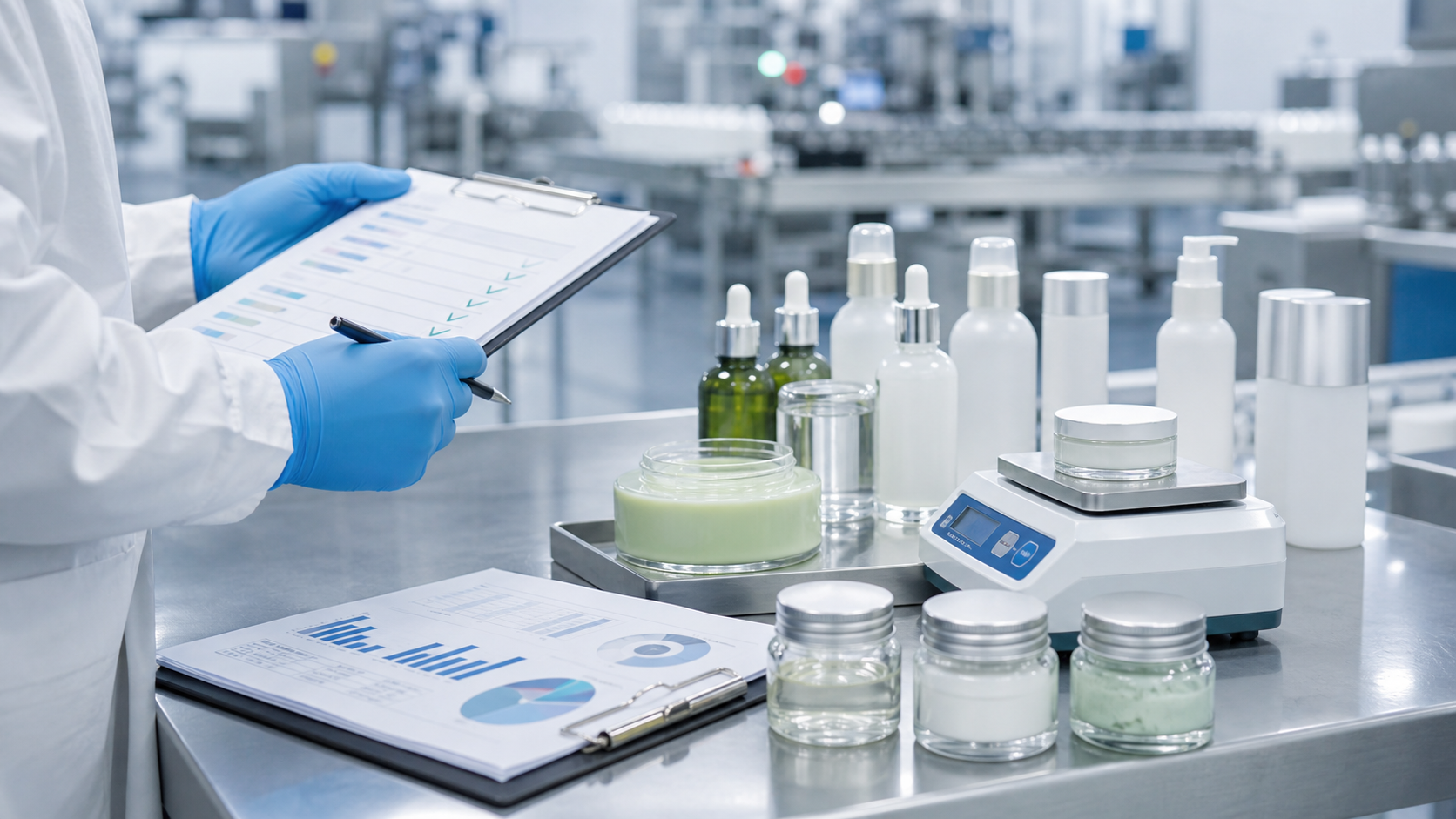
GMP means Good Manufacturing Practice. In cosmetic production, it usually refers to controlled conditions and procedures that help reduce contamination, mix-ups, inconsistent batches and packaging errors. A GMP-oriented factory should have defined rules for sanitation, personnel hygiene, raw material handling, equipment cleaning, production environment control, batch records and finished product release.
For a skincare brand, GMP is not an abstract label. It affects daily production behavior. Are materials clearly identified? Are weighing steps recorded? Are tanks cleaned according to procedure? Are semi-finished products protected before filling? Are packaging components inspected before use? These details influence whether a cosmetic OEM manufacturer can reproduce the approved sample at scale.
What ISO Standards Add to Factory Evaluation
ISO standards are used in many industries to support quality management, environmental management or other organized operating systems. In cosmetic manufacturing, buyers often look for quality-system discipline: documented procedures, internal audits, corrective actions, traceability, supplier management and continuous improvement. The specific ISO standard and certificate scope should be reviewed carefully because not every certificate covers the same activity, facility or product category.
A cosmetic ODM manufacturer with strong systems should be able to explain how quality requirements are translated into production steps. For example, the team should know how formula specifications, packaging drawings, filling limits, artwork approvals and inspection criteria are controlled from sample development to bulk production.
| Area to review | What buyers should ask | Why it matters |
|---|---|---|
| Raw materials | How are suppliers qualified, materials checked and batch numbers recorded? | Material control supports formula consistency and traceability. |
| Production process | Are weighing, mixing, filling and cleaning steps documented? | Process records help the factory repeat approved standards. |
| Packaging control | How are bottles, pumps, cartons and labels inspected before filling? | Packaging errors can cause leakage, wrong labels or shipment delays. |
| Finished product QC | Which appearance, odor, viscosity, fill weight and microbial checks are performed? | Clear release criteria reduce disputes and quality complaints. |
| Corrective action | What happens when a defect or deviation is found? | Problem handling shows whether the quality system works in practice. |
Why Standards Matter for Overseas Beauty Brands
International buyers often manage product development from a distance. They may never see every production step in person, so they need systems that create visibility. GMP and ISO-related practices help convert the project from informal factory know-how into controlled workflow. This is especially important for private label skincare, custom formulation, multi-SKU launches and repeat orders.
Standards also make communication clearer. Instead of saying “good quality,” the buyer and factory can discuss specifications, tolerances, approved samples, inspection standards, batch records and corrective actions. This helps procurement managers compare suppliers in a more professional way.
If your project involves OEM/ODM cosmetic manufacturing, ask the factory to explain how its quality system protects your formula, packaging, production schedule and export shipment. A serious supplier should answer in operational terms, not only with sales claims.
Certificates Are Useful, But They Are Not the Whole Answer
Certificates can be helpful evidence, but they should not be the only basis for supplier selection. Buyers should review the issuing body, scope, validity, facility name and whether the certificate is relevant to the product being manufactured. Some documents cover a company office, some cover a specific facility, and some may not relate directly to the product category you want to produce.
More importantly, certificates do not replace project-specific quality planning. A factory still needs the right formula brief, packaging specification, artwork approval, production instruction, inspection criteria and shipment requirements. Requirements may vary by target market, so the brand should confirm final regulatory obligations with qualified advisors or local import partners.
How GMP and ISO Practices Support Product Development
Good systems affect the project before mass production begins. During sample development, the lab should record formula versions, ingredient changes and feedback. During packaging sourcing, component specifications should be tracked. During pilot or pre-production review, the approved sample should become the standard for color, odor, texture, viscosity, fill weight and packaging appearance.
This is why custom formulation development should connect with quality control from the start. A formula that feels excellent in the lab must also be manufacturable, fillable, stable in the selected package and documented clearly enough for repeat production.
Private Label and Low MOQ Projects Still Need Controls
Some startup brands assume quality systems are only important for large orders. That is a mistake. Low MOQ and first-launch projects can carry higher risk because the brand may still be finalizing formula direction, packaging, artwork, channel requirements and cash-flow limits. A controlled process helps new brands avoid costly corrections.
For private label skincare projects, a buyer should confirm which parts are stock formula, which parts are customizable, and how sample approval connects to the final bulk batch. For low MOQ launches, packaging availability, color tolerance, batch records and retained samples are especially important because the brand may need to reorder quickly if the first market test performs well.
| Project stage | Quality-system contribution | Buyer action |
|---|---|---|
| Brief and quotation | Defines product type, claim limits, packaging route and initial specifications. | Provide target market, benchmark samples, ingredient preferences and MOQ expectations. |
| Lab sample | Records formula version, texture target, fragrance, color and feedback history. | Approve one standard sample and avoid unclear verbal changes. |
| Packaging sourcing | Tracks bottle, pump, jar, tube, label and carton specifications. | Confirm artwork, decoration method, component samples and compatibility testing. |
| Bulk production | Controls batching, filling, in-process checks and release criteria. | Request agreed QC standards, retained samples and shipment inspection records. |
Buyer Checklist for GMP and ISO Review
- Ask which standards or quality systems apply to the facility and product category.
- Review certificate scope, issuing body, validity date and facility name when certificates are provided.
- Ask how raw materials, packaging components and finished goods are identified and traced.
- Confirm whether batch records, cleaning records and inspection records are maintained.
- Check how the factory handles deviations, defects, rejected materials and corrective actions.
- Request compatibility, stability and packaging checks before approving bulk production.
- Clarify what documents may support export, import or buyer-side compliance review.
How Mooyam Cosmetic Supports Quality-Focused OEM/ODM Projects
Mooyam Cosmetic supports brand and wholesale OEM/ODM projects for overseas buyers. Our service connects formula development, packaging sourcing, sample approval, production planning, inspection and export support. For brands reviewing factory standards, our quality control and compliance support page explains how we approach product checks, documentation and buyer questions.
Packaging is part of this system. The wrong pump, carton or label can create quality issues even when the formula is good. Mooyam can help buyers compare custom packaging options, review compatibility and align packaging decisions with production standards.
FAQ
Does a GMP or ISO certificate guarantee product quality?
No. Certificates can support supplier evaluation, but buyers should also review procedures, records, sample approval, inspection standards and how the factory handles problems.
What should I ask a cosmetic factory about GMP?
Ask about sanitation, staff hygiene, raw material handling, batch records, equipment cleaning, filling controls, packaging inspection and finished product release checks.
Why does ISO matter for cosmetic production?
ISO-related systems can show whether a factory manages procedures, documentation, responsibilities, audits and improvement actions in an organized way.
Are GMP and ISO requirements the same in every market?
No. Recognition and requirements can vary by target market, product type and sales channel. Brands should confirm final obligations with local regulatory advisors.
Do low MOQ private label projects need the same quality attention?
Yes. Low MOQ projects still need approved samples, formula records, packaging specifications, inspection criteria and traceability for future reorders.
Can Mooyam provide documents for overseas buyers?
Mooyam can support project documentation, ingredient information, production records and export-related coordination as appropriate for the project. Exact document needs depend on the buyer and destination market.
How do standards affect sample development?
They help track formula versions, feedback, approved standards and manufacturing feasibility so the final product can be reproduced more consistently.
Build Your Cosmetic Project with Quality Controls
Looking for a reliable cosmetic OEM/ODM manufacturer for your skincare or beauty brand? Mooyam Cosmetic can support custom formulation, private label skincare, packaging sourcing, sample development, low MOQ planning, bulk production, quality control and export support. We serve B2B brand, distributor and wholesale OEM/ODM projects only and do not accept retail orders. Contact us to discuss your product idea, formula requirements, packaging options, MOQ and production solution.