
Choosing a cosmetic factory is not only a price comparison. For overseas beauty brands, Amazon sellers, DTC teams, distributors and private label buyers, quality control determines whether a product can be sampled clearly, produced consistently, packed correctly and reordered without avoidable disputes. A supplier may show attractive formulas and packaging, but the real test is how it controls materials, production, filling, inspection and documentation.
This guide explains how to choose a cosmetic factory with strong quality control for OEM/ODM skincare and cosmetics projects. It focuses on practical buyer signals, not vague claims. Mooyam Cosmetic supports B2B cosmetic OEM manufacturer and cosmetic ODM manufacturer projects only; we do not accept retail orders.
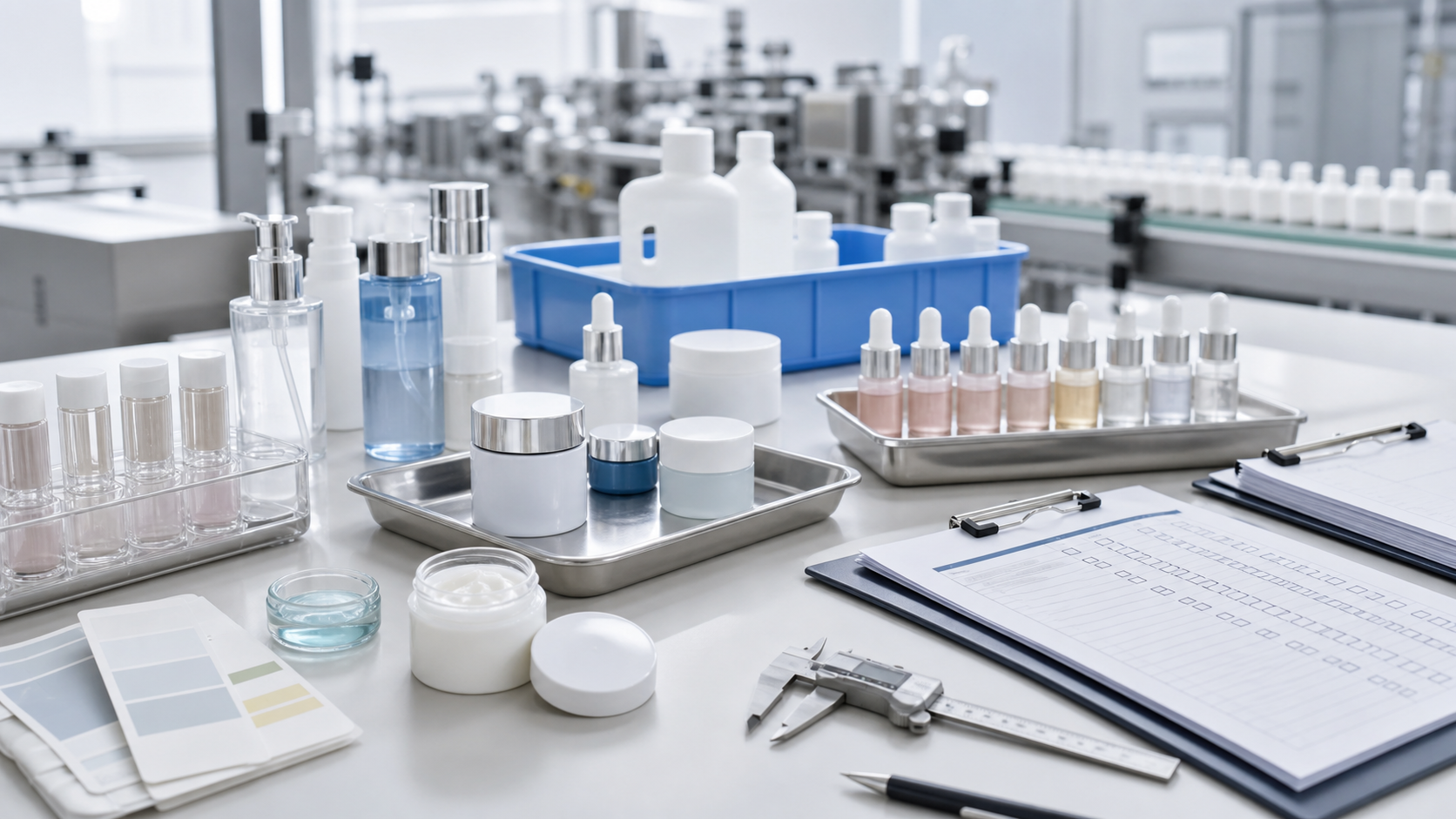
Quick Summary
- A strong cosmetic factory explains its quality process before quotation, not only after a problem appears.
- Buyers should evaluate raw material control, sample approval, packaging inspection, in-process checks, finished product review and batch records.
- Quality control should match the product route, packaging, MOQ, target market and claim boundaries.
- Mooyam Cosmetic can support private label skincare, custom formulation, packaging sourcing, sample development, bulk production, quality control and export support for qualified B2B buyers.
What Strong Quality Control Means in Cosmetic Manufacturing
Strong quality control means the factory has defined checkpoints that protect the approved product standard from development to shipment. It does not mean every project receives the same tests or documents. A simple private label cleanser, a custom formulation serum, a color cosmetic product and a sensitive-skin positioned cream may require different evaluation steps.
For a buyer, the most important point is consistency. The product approved during sample development should be translated into production standards: appearance, odor, color, viscosity, pH where relevant, fill weight, packaging fit, label position, carton information and final packing method. If those standards are not documented, the buyer and factory may have different expectations during bulk production.
A reliable cosmetic OEM/ODM factory should be able to explain what it checks, why it checks it, what the buyer must approve, and where market-specific regulatory responsibility remains with the brand or importer. Requirements vary by target market, so no supplier should promise universal approval without reviewing the actual product, claims and destination.
Quality Signals to Check Before You Request Samples
Many buyers wait until the sample stage to ask about quality. That is late. Before sample development begins, ask how the factory manages formula briefs, raw material selection, packaging sourcing and approval records. The answers show whether the supplier works in a structured way or simply reacts to each request.
| Buyer question | Strong factory answer | Risk if unclear |
|---|---|---|
| How do you confirm the approved sample? | The factory keeps reference samples, formula version notes, packaging specifications and buyer approval records. | The bulk product may drift from the sample because no shared standard exists. |
| How are packaging components inspected? | Components are checked for appearance, fit, leakage risk, closure, printing, label position and carton condition. | Good formula may fail commercially because pumps clog, jars leak or labels lift. |
| What happens during production? | Operators and QC teams check mixing, filling, weight, batch coding, line clearance and finished goods before packing. | Errors may be discovered only after cartons are sealed or shipped. |
| Can you support export buyers? | The factory explains available documents, shipment packing support and reasonable compliance boundaries. | Import delays or missing information can damage the launch timeline. |
Evaluate Raw Material and Formula Control
Formula quality begins with raw material control. Ask whether the factory works with qualified suppliers, records batch information and checks incoming materials before use. For custom formulation, the factory should also confirm whether an ingredient direction is practical for stability, cost, texture, claim language and target market restrictions.
Buyers do not need to manage chemistry themselves, but they should ask good commercial questions. Is the ingredient story realistic? Does the formula need fragrance-free positioning? Are there restricted ingredients for the launch market? Are any hero ingredients likely to increase MOQ or cost? Can the factory provide ingredient list support and basic documentation for importer review?
Mooyam Cosmetic can help brands compare private label skincare routes and custom formula development through its custom formulation support. The practical goal is to turn the brand idea into a formula route that can be sampled, tested, produced and reordered.
Check Packaging Quality, Not Only Packaging Design
Packaging is one of the most common sources of cosmetic manufacturing problems. A bottle may look premium but fail a pump output check. A jar may suit a cream texture but raise hygiene or leakage concerns. A tube may reduce breakage risk but require careful sealing and decoration checks. A strong factory treats packaging as part of the product system.
Before approving components, ask for compatibility thinking. Will the viscosity pass through the pump? Does the cap close tightly after repeated use? Can the label survive normal handling? Is the carton strong enough for export packing? Are decoration methods realistic for your MOQ and cost range?
Mooyam can support packaging sourcing and component coordination through its customized packaging service. This helps buyers align brand image, low MOQ planning, unit cost and production reliability before bulk production.
How Sample Approval Should Work
Sample approval should be a controlled decision, not an informal message saying that a product seems fine. During sample development, buyers should review texture, odor, color, skin feel, packaging fit, dispensing, label direction and claim scope. Feedback should be specific enough for the R&D and production teams to act on.
For example, useful comments include lower fragrance, lighter viscosity, faster absorption, softer foam, more stable color, better pump output or a clearer carton structure. Vague feedback such as make it more premium often creates unnecessary sample rounds. A good factory helps translate commercial feedback into formula or packaging action.
If your project starts from private label skincare options, sample approval may move faster because the base formula is already available. If your project requires a unique texture or ingredient direction, custom formulation will usually need more time and more structured review.
Production QC: What Buyers Should Expect
Bulk production introduces risks that do not always appear in small lab samples. Mixing scale, heating or cooling conditions, filling speed, packaging tolerance and operator setup can all affect the final product. That is why a factory should define in-process and finished product checks.
| QC stage | Typical checks | Why it matters for buyers |
|---|---|---|
| Incoming material | Supplier records, material appearance, batch information and storage condition. | Helps reduce formula variation and traceability problems. |
| Packaging inspection | Bottle, cap, pump, jar, tube, label, carton, color, printing and fit. | Protects shelf appearance, ecommerce reviews and distributor acceptance. |
| In-process control | Mixing, filling, weight, line clearance, batch code and sample retention. | Finds problems before the full order is packed. |
| Finished goods review | Appearance, odor, fill level, packaging condition, carton count and packing method. | Confirms the shipment matches the agreed commercial standard. |
Buyer Checklist for Choosing a Quality-Focused Factory
- Ask how the factory records approved samples and formula versions.
- Confirm which quality checks apply to your product type and packaging.
- Request clear standards for appearance, odor, color, viscosity, fill weight and packaging defects.
- Check whether packaging sourcing includes compatibility and leakage review.
- Ask how low MOQ projects are controlled without weakening inspection discipline.
- Confirm whether sample development, bulk production and export support are managed by a coordinated team.
- Review claim language and label requirements for each target market before printing.
How Mooyam Cosmetic Supports Quality-Focused OEM/ODM Projects
Mooyam Cosmetic supports beauty brands, startups, Amazon and DTC sellers, distributors and private label buyers with OEM/ODM cosmetic manufacturing service. Our team can help you define the product brief, compare formula routes, arrange sample development, source packaging, plan low MOQ options and prepare bulk production standards.
Quality planning is built into the project workflow. Buyers can review Mooyam’s quality control and compliance information to understand typical checkpoints and documentation boundaries. Final market compliance, label wording and claims should still be reviewed according to the destination country.
Plan a Quality-Controlled Cosmetic Project
Looking for a reliable cosmetic OEM/ODM manufacturer for your brand? Mooyam Cosmetic can support private label skincare, custom formulation, packaging sourcing, sample development, low MOQ planning, bulk production, quality control and export support. Contact us to discuss your product idea, formula requirements, packaging options, MOQ and production solution.
FAQ
What is the first quality question to ask a cosmetic factory?
Ask how the factory converts an approved sample into a production standard. This shows whether the supplier controls formula, packaging, filling and inspection details.
Is strong quality control possible with low MOQ?
Yes, but the project should use realistic formula and packaging choices. Special components or complex custom formula work may increase MOQ, cost or testing time.
Should buyers inspect packaging before formula approval?
Packaging should be considered early because it affects formula compatibility, filling, leakage, appearance, carton design and final cost.
Can a factory guarantee compliance in every market?
No. Requirements vary by market, product category, ingredient list and claim language. A factory can support documentation, but brands should confirm local obligations.
What documents should overseas buyers request?
Common requests include ingredient information, batch details, product specifications, packing information and available quality records. The exact package depends on the product and destination.
How does quality control affect reorders?
Good QC records help the buyer compare future batches with the approved standard, which reduces variation across repeat orders.
Does Mooyam Cosmetic accept retail orders?
No. Mooyam Cosmetic works with B2B brand, distributor, wholesale, private label and OEM/ODM projects only.