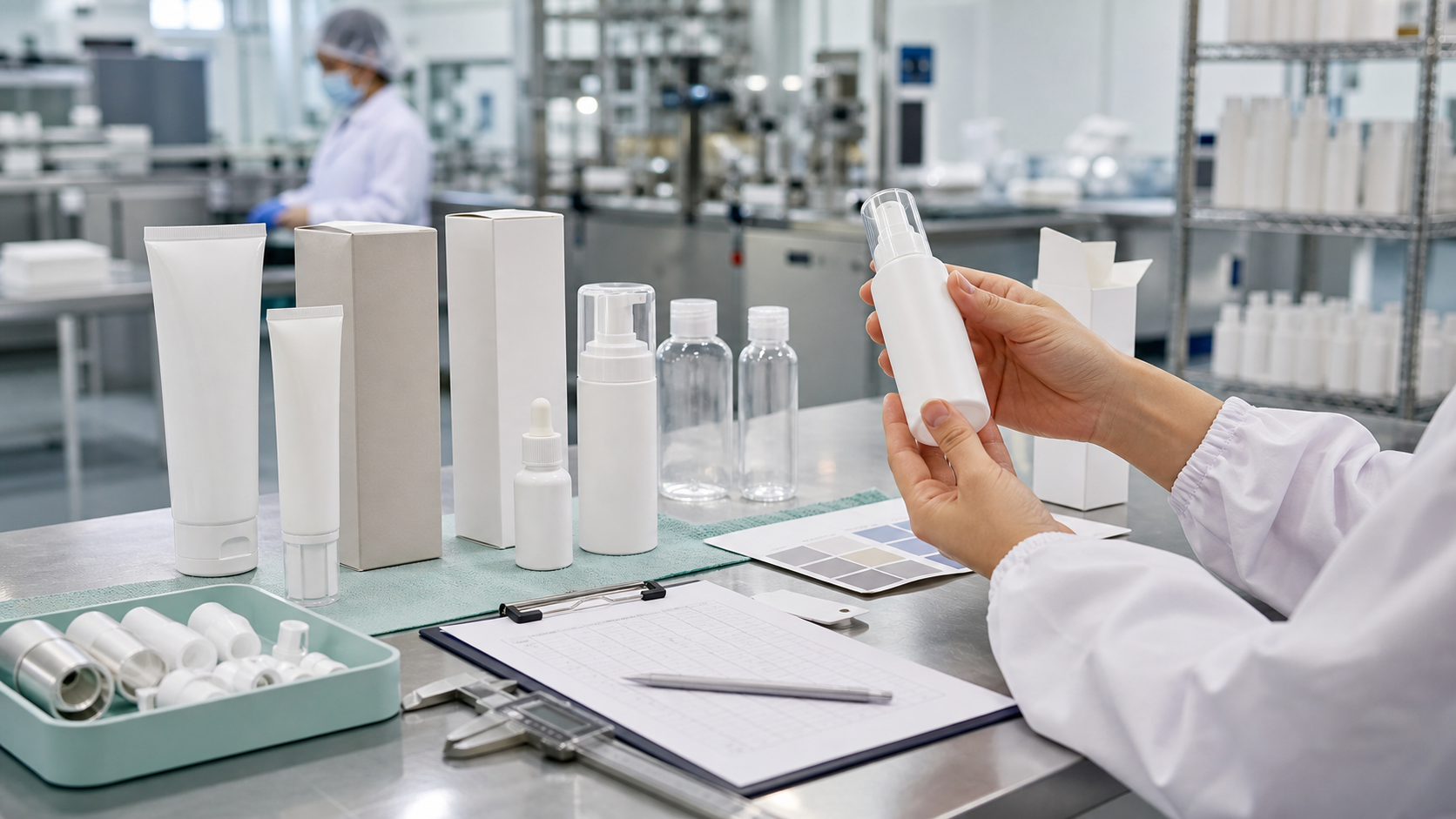
Packaging inspection is one of the quiet steps that protects a cosmetic launch before filling ever begins. A beautiful bottle, tube, jar, cap, pump, label, or carton can still create production delays if the dimensions are wrong, the decoration is inconsistent, the material is incompatible with the formula, or the shipment arrives with defects.
For international beauty brands, Amazon sellers, distributors, and private label buyers, packaging inspection is not only a factory task. It is a purchasing control point that affects product appearance, leakage risk, filling speed, unit cost, and customer trust. Mooyam Cosmetic supports wholesale OEM/ODM projects for brands and does not accept retail orders.
- Packaging should be checked before bulk filling to confirm dimensions, appearance, material, decoration, closure fit, and formula compatibility.
- Strong cosmetic packaging inspection reduces leakage, label defects, carton problems, filling stoppages, and costly rework.
- Buyers should approve samples, artwork, color standards, carton structure, and functional packaging tests before mass production.
- Mooyam Cosmetic can coordinate packaging sourcing, sample development, bulk production checks, quality control, and export support for OEM/ODM skincare projects.
What Packaging Inspection Means in Cosmetic Manufacturing
In a cosmetic OEM manufacturer or cosmetic ODM manufacturer project, packaging inspection means checking packaging components before they are used on the production line. This includes primary packaging such as bottles, jars, tubes, pumps, caps, droppers, and seals. It also includes secondary packaging such as labels, boxes, inserts, display cartons, and shipping cartons.
The purpose is practical: confirm that the packaging supplied for production matches the approved sample and can perform safely during filling, capping, labeling, packing, storage, and transport. Packaging is part of the product experience, but it is also part of the manufacturing system.
Why This Step Matters for B2B Beauty Buyers
Many new brands focus on formula first and treat packaging as a design decision. In reality, packaging can influence MOQ, lead time, filling method, shipping weight, breakage risk, and complaint rates. A low MOQ private label skincare order can become expensive if the cap does not seal, the tube shoulder cracks, or the label adhesive fails after transport.
For buyers comparing suppliers, a factory that pays attention to packaging inspection usually has better project discipline. It can identify mismatches before filling instead of discovering problems after thousands of units are already packed. This is especially important when a brand uses custom formulation, special packaging decoration, or multiple SKUs in one launch.
Key Packaging Items a Factory Should Check
| Inspection Area | What to Check | Why It Matters |
|---|---|---|
| Appearance | Scratches, dents, color variation, dust, deformation, printing defects, uneven surfaces. | Protects brand presentation and reduces rejected finished goods. |
| Dimensions and fit | Bottle neck size, cap thread, pump tube length, label area, carton fit, tube diameter. | Prevents leakage, loose closures, slow filling, and packing line problems. |
| Decoration | Screen printing, hot stamping, labels, color matching, artwork position, barcode readability if used. | Keeps finished products consistent with the approved brand standard. |
| Function | Pump output, cap torque, dropper suction, flip-top hinge, airless mechanism, seal integrity. | Reduces consumer complaints and improves product usability. |
| Compatibility | Formula contact, staining, swelling, odor transfer, viscosity fit, leakage after storage. | Helps confirm that packaging and formula can work together in the target market. |
Inspection Before Sample Approval
Packaging work should begin during sample development, not after the formula is already finished. When Mooyam Cosmetic discusses private label skincare launch options, we ask buyers to share packaging preferences early because the package can affect the sample format, fill volume, product viscosity, and label space.
For example, a thick cream may need a jar or pump that handles higher viscosity. A watery serum may work better with a dropper, pump, or small bottle depending on positioning. A cleanser tube must be checked for wall thickness, cap strength, and sealing. These decisions are easier to adjust during sample development than during bulk production.
Inspection Before Bulk Production
Before bulk filling, the factory should compare received packaging components against the approved standard. This is where purchasing discipline becomes important. The approved packaging sample, artwork file, color reference, carton drawing, and confirmed order details should all be available to the QC team.
For OEM/ODM cosmetic manufacturing projects, Mooyam Cosmetic reviews packaging readiness together with formula readiness. That means checking whether the packaging is available in the correct quantity, whether the decoration is finished, whether the closure components match, and whether any special assembly steps are required before filling.
Common Packaging Problems to Avoid
Packaging issues are often small at first but expensive later. A label may look acceptable on a flat sample but wrinkle on a curved bottle. A carton may protect the product in a showroom but fail during export shipping. A pump may dispense nicely with water but struggle with a thicker lotion. A cap may close by hand but loosen during vibration.
Brands can reduce these risks by using documented approval standards instead of relying only on photographs or verbal descriptions. A professional supplier should be able to discuss defect limits, sample approvals, packaging sourcing records, and production inspection steps in clear language.
How Packaging Inspection Connects with Cost and MOQ
Custom packaging often increases cost, MOQ, and lead time, especially when molds, special colors, printing plates, hot stamping, or custom cartons are required. Stock packaging can support a lower MOQ and faster launch, but buyers still need inspection because stock items can vary between batches.
Mooyam Cosmetic helps brands review customized packaging choices in relation to formula type, target price, order quantity, decoration method, and export packing needs. This helps buyers avoid choosing packaging that looks attractive but creates cost pressure or production instability.
Buyer Checklist Before Confirming Packaging
- Confirm the exact bottle, tube, jar, cap, pump, label, box, and carton specifications.
- Approve physical samples, not only catalog images or 3D mockups.
- Check whether the formula texture is suitable for the chosen packaging format.
- Confirm artwork size, print method, color standard, finish, and acceptable tolerance.
- Ask how packaging components will be inspected before filling.
- Review leakage, torque, pump, dropper, sealing, carton drop, and transport checks where relevant.
- Clarify whether the packaging supports your low MOQ and future scale-up plan.
- Keep approved samples and final files archived for repeat orders.
How Mooyam Cosmetic Supports Packaging Inspection
Mooyam Cosmetic supports beauty brands from custom formulation and sample development through packaging matching, filling, bulk production, and final quality control. For private label and OEM projects, we can help evaluate whether the selected packaging fits the formula and production process. For ODM projects, we can recommend practical packaging routes based on concept, price point, MOQ, and target market.
Our quality control and compliance support is designed to help brands ask the right questions before production begins. Requirements and documentation can vary by target market, so buyers should confirm local labeling, claims, and import expectations before final artwork and shipment.
Mooyam Cosmetic can support private label skincare, cosmetic OEM manufacturing, cosmetic ODM manufacturing, packaging sourcing, sample development, bulk production, quality control, and export support. Contact us to discuss your product idea, packaging options, MOQ, and production solution.
FAQ
When should packaging inspection happen?
Packaging should be reviewed during sample development, checked again when bulk packaging arrives, and monitored during filling, labeling, packing, and final inspection.
Can a factory help source packaging?
Yes. A cosmetic factory can often help with packaging sourcing, stock packaging options, customized packaging, and supplier coordination, but the buyer should still approve physical samples.
Is stock packaging safer than custom packaging?
Stock packaging is usually faster and can support lower MOQ, but it still needs inspection for appearance, fit, function, and compatibility with the formula.
What causes packaging leakage?
Common causes include wrong neck size, weak cap fit, poor sealing, unsuitable gasket, damaged thread, incorrect pump match, formula-packaging incompatibility, or transport vibration.
Do packaging requirements vary by market?
Yes. Labeling, claims, language, symbols, recycling marks, and importer documentation may vary by target market. Buyers should confirm local requirements before final printing.
Can packaging inspection reduce production cost?
It can reduce rework, delays, rejected goods, emergency repacking, and shipping complaints. It is a risk-control step rather than a shortcut to cheaper production.