
Stability testing is one of the most important risk-control steps in cosmetic manufacturing. A skincare formula may look excellent in the first lab sample, but buyers still need to know how it behaves after heat, cold, light exposure, vibration, storage time, and contact with the final packaging.
For overseas beauty brands, private label buyers, Amazon and DTC sellers, distributors, and sourcing managers, stability testing helps protect launch timelines and finished product quality. Mooyam Cosmetic supports wholesale OEM/ODM projects for brands and does not accept retail orders.
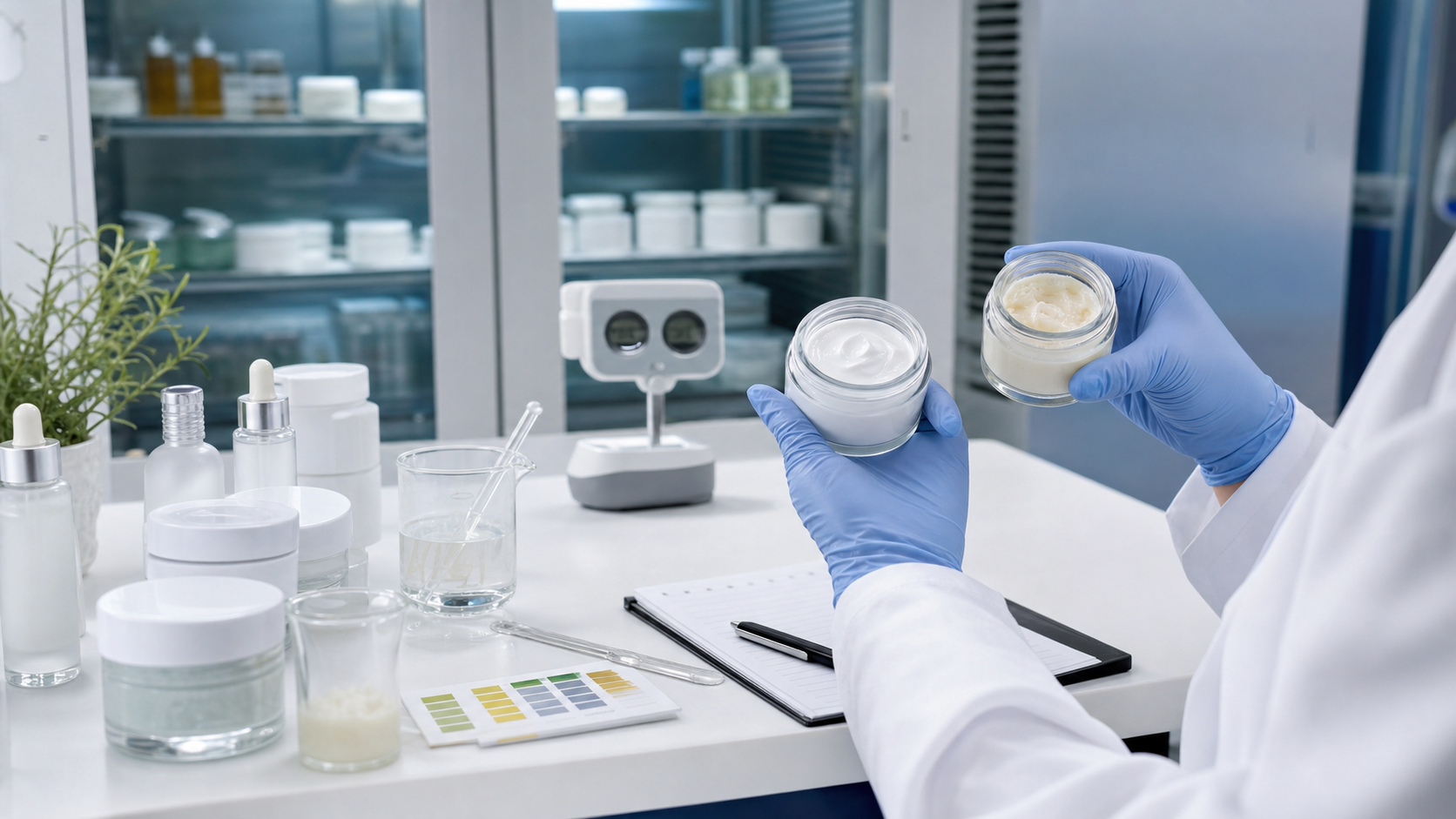
- Stability testing checks whether a cosmetic formula maintains acceptable appearance, odor, texture, pH, viscosity, and packaging compatibility over time.
- It helps reduce risks such as separation, discoloration, odor change, leakage, pump failure, viscosity drift, and customer complaints.
- Testing plans should reflect formula type, packaging, target market, storage conditions, and launch schedule.
- Mooyam Cosmetic can support custom formulation, sample development, quality control, packaging review, bulk production, and export support for OEM/ODM skincare projects.
What Stability Testing Means for Cosmetics
Stability testing cosmetics means placing samples under defined storage conditions and observing whether the product remains within acceptable quality limits. It is not a guarantee that every future unit will stay perfect forever. Instead, it is a structured way to find likely problems before mass production, export shipping, and market launch.
For a cosmetic OEM manufacturer or cosmetic ODM manufacturer, stability work may include room temperature storage, elevated temperature, low temperature, freeze-thaw cycles, light exposure, centrifuge screening, and packaging compatibility checks. The exact plan depends on the product format, formula complexity, packaging type, and target market expectations.
Why Stability Testing Reduces Product Risk
Many product failures begin as small changes. A cream becomes thinner after heat exposure. A serum darkens in a clear bottle. A fragrance becomes stronger after storage. A pump clogs because the formula viscosity changes. A tube swells because the formula and material are not compatible. These problems may not appear during the first sample review.
Stability testing gives buyers and factories time to adjust the formula, packaging, preservation system, fragrance, color, viscosity, or production process before bulk production. For private label skincare and custom formulation projects, this step can prevent expensive relabeling, replacement shipments, platform complaints, or distributor rejection.
Common Stability Checks in OEM/ODM Projects
| Check | What It Looks For | Buyer Value |
|---|---|---|
| Appearance and color | Separation, sediment, fading, darkening, crystal formation, or visible particles. | Protects shelf appearance and brand consistency. |
| Odor | Fragrance drift, raw-material odor, rancid notes, or unexpected smell changes. | Reduces complaints and supports a stable consumer experience. |
| pH and viscosity | Changes that may affect skin feel, preservation, filling behavior, or pump performance. | Helps keep formula performance and production handling consistent. |
| Packaging compatibility | Leakage, staining, swelling, corrosion, label lifting, pump failure, or cap loosening. | Confirms that packaging sourcing choices match the formula. |
| Temperature cycling | Formula behavior under heat, cold, and repeated temperature shifts. | Supports export shipping and storage risk planning. |
Stability Testing Is Not the Same as Efficacy Testing
Buyers sometimes confuse stability testing with clinical testing or efficacy testing. Stability testing focuses on product quality over time: appearance, odor, texture, pH, viscosity, microbial risk planning, and packaging compatibility. It does not prove medical benefits, treatment claims, or guaranteed skin outcomes.
This distinction matters because cosmetic claims and regulatory expectations vary by target market. A factory can help prepare a practical quality control plan, but brands should review local requirements for labeling, claims, import documents, and any additional substantiation needed for marketing language.
When Stability Testing Should Begin
The best time to discuss stability is during custom formulation and sample development. If a buyer waits until artwork and packaging are finished, changes become slower and more expensive. Early testing can identify whether a formula should be adjusted before the brand invests in labels, cartons, large packaging orders, or marketplace launch dates.
For private label skincare projects, testing may be simpler if the base formula is already established. For custom ODM development, testing is more important because the product may use a new texture, active blend, fragrance direction, or packaging format.
How Formula, Packaging, and MOQ Affect the Plan
Stability testing should match the real commercial product. A serum tested in a lab bottle may behave differently in a dropper bottle, pump, airless container, tube, or jar. A cream filled into a wide jar may face different exposure than the same cream in an airless pump. Packaging decoration can also matter if labels, coatings, inks, or cartons are exposed to transport and storage conditions.
MOQ affects the business decision too. A low MOQ launch may use stock packaging and an established formula to move faster, but the buyer still needs enough testing to reduce avoidable risk. A larger bulk production order usually deserves more detailed confirmation before production because the cost of failure is higher.
Recommended Stability Workflow for Brand Buyers
| Stage | Buyer Decision | Factory Support |
|---|---|---|
| Concept and brief | Define product type, target market, hero ingredients, texture, claims direction, and packaging idea. | Review feasibility, formula route, low MOQ options, and testing needs. |
| Lab sample | Evaluate skin feel, odor, appearance, viscosity, and positioning. | Adjust formula and prepare initial stability observations. |
| Packaging match | Choose bottle, jar, tube, pump, label, and carton standards. | Check packaging compatibility, filling behavior, and supplier information. |
| Pre-production confirmation | Approve formula, packaging, artwork, order quantity, and shipping route. | Set QC checkpoints, bulk production controls, retained samples, and inspection records. |
Buyer Checklist Before Approving Production
- Ask which stability checks are appropriate for your product type and target markets.
- Confirm whether testing uses the final packaging or only temporary lab packaging.
- Review appearance, odor, pH, viscosity, color, and texture observations.
- Check whether packaging compatibility covers leakage, staining, swelling, pump function, and label adhesion.
- Clarify how long accelerated and real-time observations will continue after launch.
- Keep approved samples and retained samples for future comparison.
- Avoid strong claims that require support beyond ordinary cosmetic stability checks.
- Align production schedule with realistic sample review and testing milestones.
How Mooyam Cosmetic Supports Stability Risk Control
Mooyam Cosmetic helps brands connect formula development with packaging sourcing, sample revision, bulk production planning, and quality control. Our team can review whether the selected formula and package are practical for filling, storage, export shipping, and the buyer’s target product positioning.
For cosmetic OEM and ODM manufacturing, this coordination matters because the formula, packaging, MOQ, timeline, and export support are linked. A change in one area can affect cost, lead time, and product risk. Our quality control and compliance support helps buyers understand what should be checked before production and what may require local market review.
Mooyam Cosmetic can support private label skincare, custom formulation, sample development, packaging sourcing, low MOQ production, bulk production, quality control, and export support. Contact us to discuss your product idea, formula requirements, packaging options, MOQ, and production solution.
FAQ
How long does cosmetic stability testing take?
Timing depends on the formula, packaging, target market, and launch schedule. Some observations can begin quickly, while longer real-time monitoring may continue after production planning.
Does stability testing guarantee a product will never change?
No. It reduces risk by checking likely conditions and quality changes, but it is not a lifetime guarantee. Storage, transport, packaging, and use conditions still matter.
Can private label formulas skip stability testing?
Established private label formulas may have more history, but buyers should still confirm packaging compatibility, production batch quality, and any changes to fragrance, color, or packaging.
What products need extra attention?
High-water formulas, emulsions, natural-positioned products, active-rich serums, fragrance-free products, clear packaging, and unusual textures often need careful stability review.
Is stability testing required by every market?
Requirements vary by target market and product category. Brands should confirm local rules for product information files, labeling, claims, import documents, and safety expectations.
Can Mooyam help with both formula and packaging checks?
Yes. Mooyam Cosmetic can coordinate formula development, packaging matching, sample testing, quality control, bulk production, and export support for brand and wholesale OEM/ODM projects.