Production inspection is one of the moments when a cosmetic project becomes real. The formula has been approved, packaging has been sourced, artwork has moved forward, and the buyer is expecting finished goods that match the sample and the purchase order. A clear inspection process helps reduce surprises before cartons leave the factory.
This guide explains what usually happens during cosmetic production inspection for overseas beauty brands, private label skincare buyers, Amazon and DTC sellers, distributors, and sourcing managers. Mooyam Cosmetic supports B2B OEM/ODM and wholesale projects; we do not accept retail orders.
- Cosmetic production inspection checks whether bulk products match the approved formula, packaging, artwork, filling standard, and order requirements.
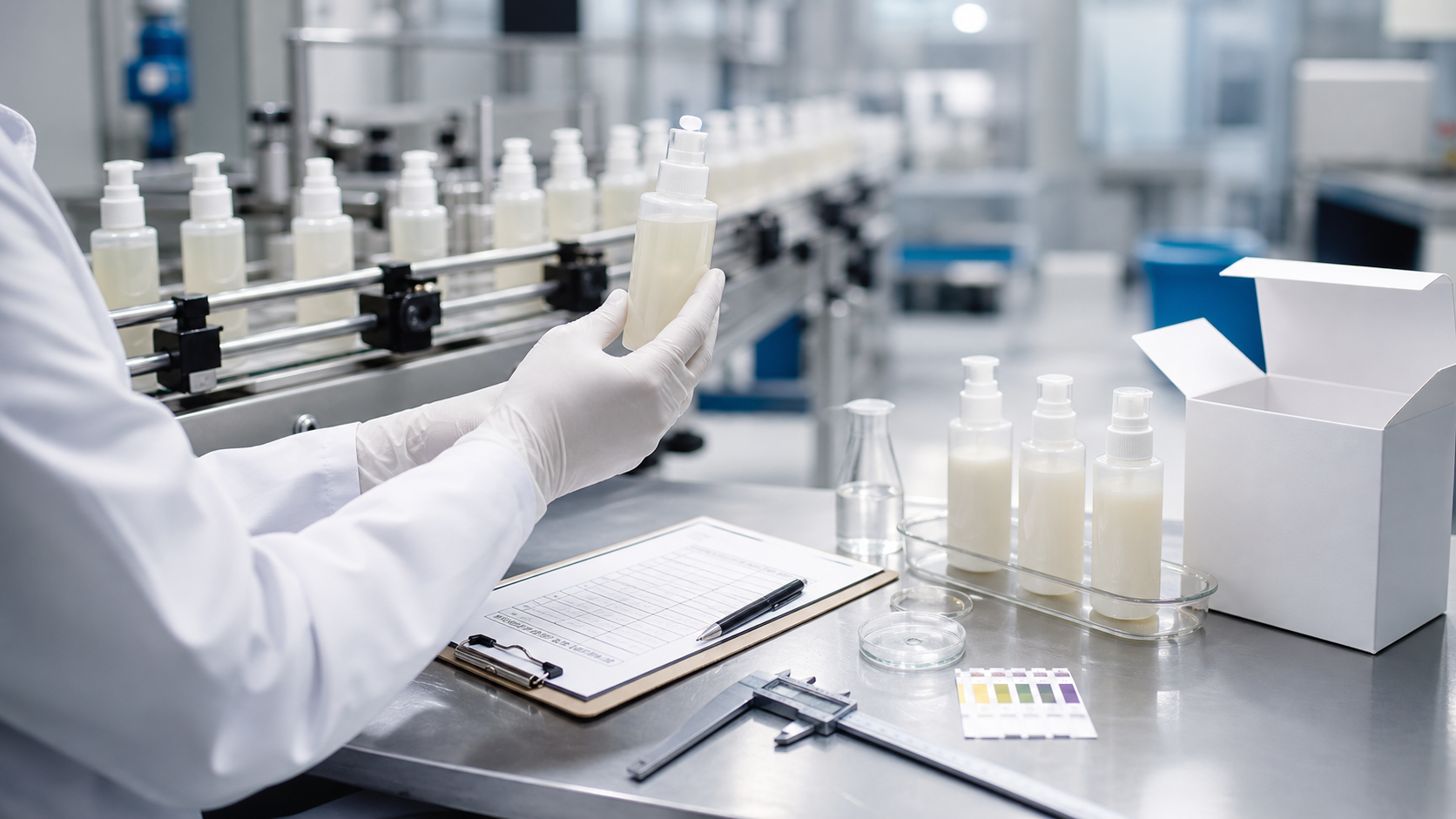
- Typical checkpoints include incoming packaging, bulk formula appearance, filling weight, sealing, labeling, coding, carton packing, retained samples, and final random inspection.
- Inspection should be agreed before bulk production, not after a problem appears.
- Requirements, documents, and acceptance criteria can vary by product type, sales channel, and target market.
- Mooyam Cosmetic can support sample development, bulk production, quality control, packaging sourcing, and export coordination for B2B cosmetic OEM/ODM projects.
What Production Inspection Means in Cosmetics
Cosmetic production inspection is the structured review of materials, semi-finished bulk, filled products, packaging, labels, cartons, and records during or after manufacturing. It is different from general factory evaluation. A factory audit asks whether a supplier has the capability to manufacture. Production inspection asks whether this specific order is being produced according to the approved standard.
For a cosmetic OEM manufacturer or cosmetic ODM manufacturer, inspection is not a single visual check at the end. It starts before filling, continues during production, and closes with finished-goods review. A lotion, serum, cream, cleanser, mask, toner, body care item, or makeup product may need different inspection details, but the principle is the same: compare actual output against the approved sample, specification, purchase order, artwork, packaging plan, and quality control limits.
Inspection Stages Buyers Should Understand
| Stage | What Is Checked | Buyer Value |
|---|---|---|
| Incoming packaging inspection | Bottles, jars, tubes, pumps, caps, labels, boxes, cartons, color, defects, dimensions, and quantity. | Finds component problems before formula is filled into unsuitable packaging. |
| Bulk formula check | Appearance, odor, color, viscosity, pH when relevant, batch record, and approved sample match. | Confirms the formula route is aligned before filling starts. |
| In-process inspection | Fill weight, sealing, cap torque, pump function, label position, coding, leakage risk, and line cleanliness. | Allows correction while production is running instead of after all units are finished. |
| Finished goods inspection | Random finished units, outer cartons, assortment, carton marks, count, retained samples, and photo records. | Supports shipment release and reduces receiving disputes. |
Incoming Packaging Inspection
Many cosmetic production problems begin with packaging. A beautiful bottle may have unstable decoration. A tube may have a weak seal area. A pump may not match formula viscosity. A carton may be too soft for export shipping. For this reason, packaging sourcing and inspection should be linked to the formula and channel requirements.
During incoming packaging inspection, the factory checks whether components match the approved specification. Common checks include color, surface finish, scratches, dents, printing position, cap fit, pump function, bottle neck size, inner plug fit, carton strength, label material, and quantity. If custom packaging is involved, component lead time and MOQ can make correction slower, so early inspection matters.
Bulk Formula and Pre-Filling Checks
Before filling, the factory checks the bulk formula against the approved sample and manufacturing record. For private label skincare, this may confirm a selected base formula with agreed adjustments. For custom formulation, it may involve more detailed comparison against lab sample, pilot batch notes, formula code, and buyer-approved sensory direction.
Typical checks include appearance, color, odor, texture, viscosity, pH where relevant, homogeneity, and batch quantity. These checks do not replace market-specific regulatory review or product testing. They help confirm that the factory is filling the correct bulk and that obvious differences are found before packaging is consumed.
In-Process Inspection on the Filling Line
In-process inspection happens while products are being filled, capped, sealed, labeled, coded, boxed, or packed into cartons. This stage is important because it catches repeatable line issues. If fill weight drifts, labels shift, caps are not tight enough, pumps clog, or boxes are scuffed during assembly, early correction protects the rest of the order.
For buyers, the most practical questions are simple: What is the fill-weight tolerance? How often are units checked? What happens when a defect is found? Who approves line restart? Will retained samples be kept? A reliable supplier should be able to explain these control points clearly rather than treating inspection as a vague promise.
Final Random Inspection Before Shipment
Final inspection usually reviews finished goods after packing. The inspector may open selected cartons, check unit appearance, confirm carton quantity, compare shipping marks, inspect label and barcode placement, review coding, test pumps or closures, check leakage risk, and confirm retained samples. For international orders, export support may also involve carton strength, pallet requirements, and document coordination.
A final inspection cannot fix every upstream mistake. It is a release decision, not a substitute for process control. The best results come when buyer requirements are defined before production and confirmed at each stage.
How Inspection Criteria Should Be Set
Cosmetic buyers should avoid relying on generic language such as “good quality” or “standard inspection.” Instead, define visible defects, functional defects, packaging defects, filling tolerance, artwork requirements, batch coding requirements, carton packing method, sample approval standard, and what counts as a critical issue. Standards can vary by product type and target market, so the importer or brand should confirm any market-specific obligations.
Inspection criteria do not need to be overly complicated for a first order. They need to be practical, written, and shared early. A low MOQ startup project may use stock packaging and a simpler checklist. A larger distributor project may require stricter sampling levels, carton photos, retained samples, and pre-shipment reporting.
Buyer Checklist Before Production Inspection
- Approve the final sample, formula route, packaging components, artwork, carton plan, and order quantity in writing.
- Confirm whether the project uses private label skincare, modified ODM formula, or full custom formulation.
- Ask the supplier to define incoming packaging, bulk formula, in-process, and final inspection checkpoints.
- Agree on fill weight, label placement, cap or pump function, leakage review, coding, and carton count standards.
- Clarify who reviews production photos, retained samples, and any nonconformity before shipment.
- Discuss market-specific labeling or documentation needs early because requirements vary by target market.
- Keep one approved pre-production sample as the reference for bulk production comparison.
How Mooyam Cosmetic Supports Production Inspection
Mooyam Cosmetic provides cosmetic OEM/ODM manufacturing service for B2B skincare, body care, and beauty projects. Buyers can start with private label skincare manufacturing for a faster launch route or discuss custom formulation development when a unique texture, ingredient direction, or product story is needed.
Our team can also help with cosmetic packaging sourcing and customization, sample development, bulk production planning, and export support. Before production, buyers can review quality control and compliance considerations so inspection standards, claim boundaries, and market responsibilities are discussed early.
FAQ
Is production inspection the same as lab testing?
No. Production inspection checks order conformity, packaging, filling, labels, cartons, and records. Lab testing may be needed for stability, microbiology, compatibility, or market-specific requirements.
When should inspection requirements be confirmed?
Before bulk production starts. Inspection is more effective when the buyer and factory agree on standards before materials are ordered and the line is scheduled.
Can low MOQ orders still have quality control?
Yes. Low MOQ orders can still use practical checks for packaging, bulk formula, filling, sealing, labeling, and finished goods. The level of reporting may depend on order size and project complexity.
What documents are useful for production inspection?
Useful documents include product specification, approved sample record, packaging specification, artwork approval, purchase order, batch record, inspection checklist, and retained sample log.
Who decides whether goods can ship?
The factory performs inspection and recommends release, but the buyer should define approval responsibilities in advance, especially for custom packaging, strict channel requirements, or third-party inspections.
Can a third-party inspection company be used?
Yes. Some buyers use third-party inspection for larger orders or distributor requirements. The inspection standard should still be aligned with the factory before the visit.
Does Mooyam Cosmetic accept retail orders?
No. Mooyam Cosmetic supports brand, wholesale, and B2B OEM/ODM manufacturing projects, not individual retail purchases.
Plan Your Cosmetic Production with Mooyam
Looking for a reliable cosmetic OEM/ODM manufacturer? Contact Mooyam Cosmetic to discuss your product idea, formula requirements, packaging options, MOQ, sample development, bulk production, quality control, and export support.