
Formula texture feedback should be specific, sensory, and linked to the product’s intended use. Instead of saying a sample feels “not premium enough,” buyers should describe what needs to change: lighter spread, faster absorption, less tack, richer cushion, softer after-feel, better pump flow, or closer match to a benchmark.
In cosmetic sample development, texture feedback is the bridge between a brand’s market idea and a manufacturable formula. A clear feedback process helps a cosmetic OEM manufacturer or cosmetic ODM manufacturer adjust the sample efficiently while protecting stability, packaging fit, quality control, and mass production feasibility.
Quick Summary
- Good formula texture feedback describes observable sensory details: viscosity, spread, slip, tackiness, absorption, residue, cushion, fragrance feel, color appearance, and packaging flow.
- Feedback should compare the sample with a benchmark, target customer, sales channel, and approved product brief.
- Every texture change may affect custom formulation, sample development time, stability, filling, packaging sourcing, cost, and quality control checks.
- Before mass production, buyers should approve one final sample version and keep written records of what was changed and why.
What Formula Texture Feedback Means
Formula texture feedback is the buyer’s written response to how a cosmetic sample looks, spreads, absorbs, dispenses, smells, and feels during use. It is not only a personal preference. For private label skincare, Amazon products, Shopify/DTC launches, salon lines, and distributor projects, texture affects perceived value, repeat purchase, packaging choice, return risk, and production control.
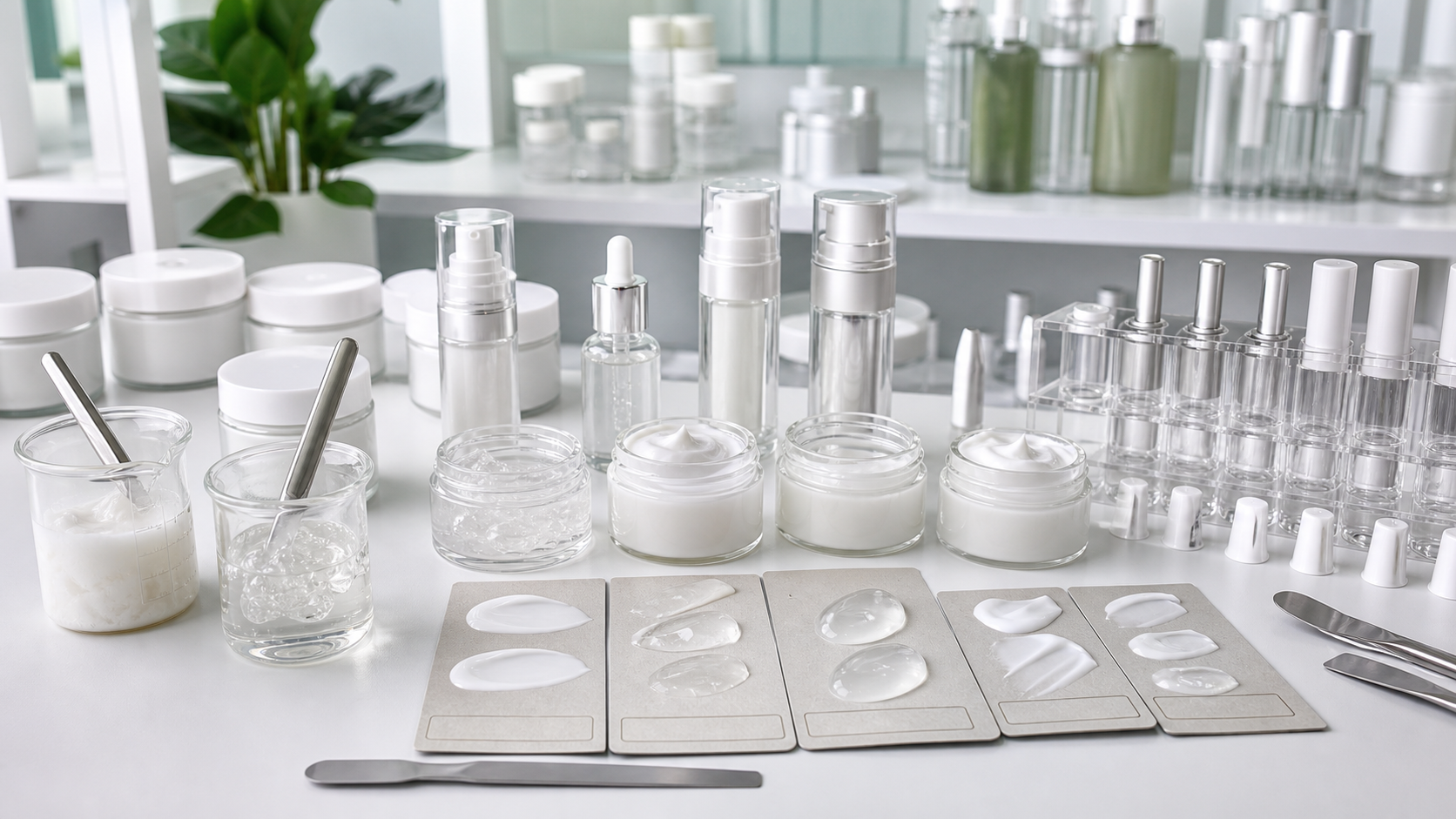
A moisturizer that feels rich in a jar may be too thick for an airless pump. A serum that looks elegant in a glass dropper may feel sticky in a humid market. A gel that spreads beautifully in a lab beaker may create bubbles during filling. That is why feedback should connect the sensory target with custom formulation development, packaging format, and production reality.
Why Vague Feedback Slows OEM/ODM Projects
Many sample delays come from unclear comments. Phrases such as “make it better,” “more luxury,” or “less chemical” can mean different things to a formulator, buyer, and marketing team. The factory may revise the formula but still miss the real target.
Clear feedback reduces repeated sample rounds. It helps the R&D team adjust emulsifier system, oil phase, gum level, humectant balance, powder dispersion, fragrance dosage, cooling process, or other formula details within practical limits. It also helps the project team explain whether the request changes MOQ, price, lead time, testing needs, or packaging sourcing options.
How to Translate Sensory Comments into Factory Instructions
| Buyer Comment | What the Factory Needs to Know | Better Feedback Example |
|---|---|---|
| Too sticky | When does tack appear: during spreading, after one minute, or after full dry-down? | Reduce the tacky after-feel five minutes after application while keeping the same gel transparency. |
| Too heavy | Is the issue thickness in the jar, slow absorption, oily residue, or occlusive skin feel? | Keep the rich cream appearance, but make the rub-out lighter and reduce the oily finish after absorption. |
| Not moisturizing enough | Cosmetic wording should stay within claim limits; texture may need more cushion or less fast dry-down. | Increase the cushioned application feel and reduce the dry finish without making medical or treatment claims. |
| Too thin | Does the buyer need higher viscosity, stronger suspension, better pump control, or a richer visual look? | Increase viscosity so the lotion holds its shape on the hand but still dispenses smoothly through the pump. |
| Fragrance feels strong | Is the concern dosage, fragrance type, after-smell, target market preference, or sensitive-positioning? | Reduce fragrance intensity by about half and prepare one fragrance-free direction for comparison. |
| Color looks different | Lighting, package wall thickness, raw material variation, and batch scale can affect appearance. | Match the approved benchmark under daylight and white lab lighting, and keep the formula suitable for the selected clear jar. |
Build Feedback Around the Product Brief
A formula sample should be reviewed against the product brief, not random personal preference. The brief should define product type, target user, region, sales channel, benchmark, sensory profile, ingredient direction, claim boundaries, package, MOQ target, and launch timing.
For a private label skincare project, the buyer may be adjusting an existing formula base. The revision range can be practical but limited. For a fully custom formulation, the brand may have more control, but more changes can mean more sample rounds, stability observation, cost review, and documentation before approval.
Review Texture with Packaging at the Same Time
Texture and packaging should be checked together. A formula can feel excellent in a lab jar but fail in the final component. Pumps need a suitable viscosity range. Droppers need flow and pickup. Tubes need squeeze recovery. Jars need surface appearance and microbial-use considerations. Airless bottles need compatibility with the formula and filling process.
When Mooyam Cosmetic reviews an OEM/ODM service project, formula direction, component choice, decoration, filling method, carton planning, and export support are discussed as connected decisions.
Buyer Checklist for Sample Texture Feedback
- Test the sample at the same time intervals: immediately, after one minute, after five minutes, and after full dry-down.
- Compare the sample with a named benchmark product or the approved previous sample version.
- Describe the issue using sensory terms: viscosity, spread, slip, tack, residue, cushion, absorption, appearance, color, odor, and pump flow.
- State what should remain unchanged, such as fragrance direction, transparency, color, hero ingredient, vegan-positioning, or cost target.
- Confirm whether the sample was tested from the final package or only from a lab container.
- Separate personal preference from channel needs, such as Amazon review risk, salon professional use, distributor shelf display, or DTC unboxing.
- Ask whether the change affects stability testing, compatibility checks, filling, lead time, MOQ, or quality control specifications.
- Approve only one final version before mass production and keep the revision record with the purchase order.
What the Factory Checks After Feedback
After receiving clear feedback, the factory should decide whether the request is a simple adjustment or a larger formula revision. A small fragrance reduction or viscosity adjustment may be faster. A major change in texture, oil phase, active direction, powder level, color system, preservative approach, or packaging route may require a new development path.
Quality control should also be considered early. Texture revisions may change viscosity range, pH where relevant, appearance standard, odor reference, fill weight behavior, stability observation, microbial control, retained sample comparison, and packaging compatibility. Requirements vary by target market, product category, claim language, and buyer channel, so no supplier should promise universal regulatory approval from a sample revision alone.
Common Mistakes to Avoid
Changing too many things in one round
If a buyer asks for less tack, more fragrance, a new color, lower cost, and a different package at the same time, it becomes hard to know which change caused the result. Prioritize the most important texture issue first.
Approving texture before checking fill performance
Always review how the formula behaves in the intended package. Flow, bubbles, leakage, pump dose, tube squeeze, and jar appearance can affect the final product experience.
Using consumer-style claims as technical feedback
Comments such as “repairing,” “healing,” or “treating” can create claim risk in many markets. Keep sample feedback focused on cosmetic sensory properties and confirm claim language with market-specific compliance support.
How Mooyam Cosmetic Supports Texture Revision
Mooyam Cosmetic supports overseas B2B buyers with product brief review, private label skincare options, custom formulation, sample development, packaging sourcing, mass production planning, quality control, and export support. The goal is to help buyers turn subjective texture opinions into practical instructions that R&D, packaging, production, and QC teams can use.
Send Clear Feedback for Your Next Sample Round
Looking for a reliable cosmetic OEM/ODM manufacturer in China? Contact us to discuss your product idea, formula requirements, packaging options, MOQ, sample development, and production plan.
Share your current sample comments through the Mooyam Cosmetic contact page. Our team can help review texture goals, formula revision options, packaging fit, quality control and compliance checkpoints, and export support before the next sample round.
FAQ
How should I describe a cosmetic sample texture problem?
Use specific sensory language. Describe viscosity, spread, slip, tackiness, absorption, residue, cushion, color, odor, and package flow. Add when the problem appears and what benchmark you are comparing against.
Can a cosmetic ODM manufacturer change the texture of a stock formula?
Often yes, but the revision range depends on the formula base, ingredient system, MOQ, cost, stability, and package. Some stock formulas allow limited adjustment to protect speed and repeatability.
Does changing texture affect sample development time?
It can. Minor sensory changes may be quick, while major formula structure changes can require new samples, compatibility review, stability observation, and updated quality control standards.
Should I test samples in the final packaging?
Yes, especially for pumps, tubes, droppers, jars, airless bottles, and travel-size formats. Packaging can change dispensing, appearance, leakage risk, and perceived texture.
Can texture feedback include fragrance and color?
Yes. Buyers often review fragrance strength, after-smell, formula color, clarity, pearl effect, or visual richness as part of the texture experience. These comments should be separated clearly from viscosity and after-feel notes.
Can a factory guarantee that bulk production will feel exactly like the sample?
No responsible factory should promise impossible identity. The goal is to match the approved specification within practical tolerances using batch records, retained samples, process control, and final inspection.
When should compliance be discussed during sample revisions?
Discuss compliance when texture changes affect ingredients, claims, packaging, label wording, or target market needs. Requirements vary by market, so buyers should confirm local rules before mass production.
What should I send Mooyam Cosmetic for a texture revision request?
Send the product type, sample version, target market, benchmark, current package, desired changes, what should stay unchanged, MOQ expectation, and launch timeline. Photos or short videos of sample behavior can also help the team understand the issue.