Sample approval is the point where a cosmetic project moves from development discussion to production standard. For overseas beauty brands, this step protects the formula, texture, packaging fit, artwork direction, quality expectations and commercial launch plan before money is committed to bulk production.
This article explains why cosmetic sample approval matters before mass production, what buyers should check, and how Mooyam Cosmetic supports B2B OEM/ODM projects with practical sample development, packaging sourcing, quality control and export support. Mooyam Cosmetic works with brand and wholesale projects and does not accept retail orders.
Quick Summary
- Sample approval turns a preferred lab sample into the production reference for bulk manufacturing.
- Buyers should review texture, fragrance, color, viscosity, packaging compatibility, artwork, claims and target market needs before approval.
- Unclear approval can cause delays, rework, inconsistent batches and disputes after production starts.
- Approval should be documented with version codes, photos, retained samples and agreed QC standards.
- Mooyam Cosmetic supports B2B OEM/ODM projects from sample development to low MOQ and bulk production.
What Cosmetic Sample Approval Means
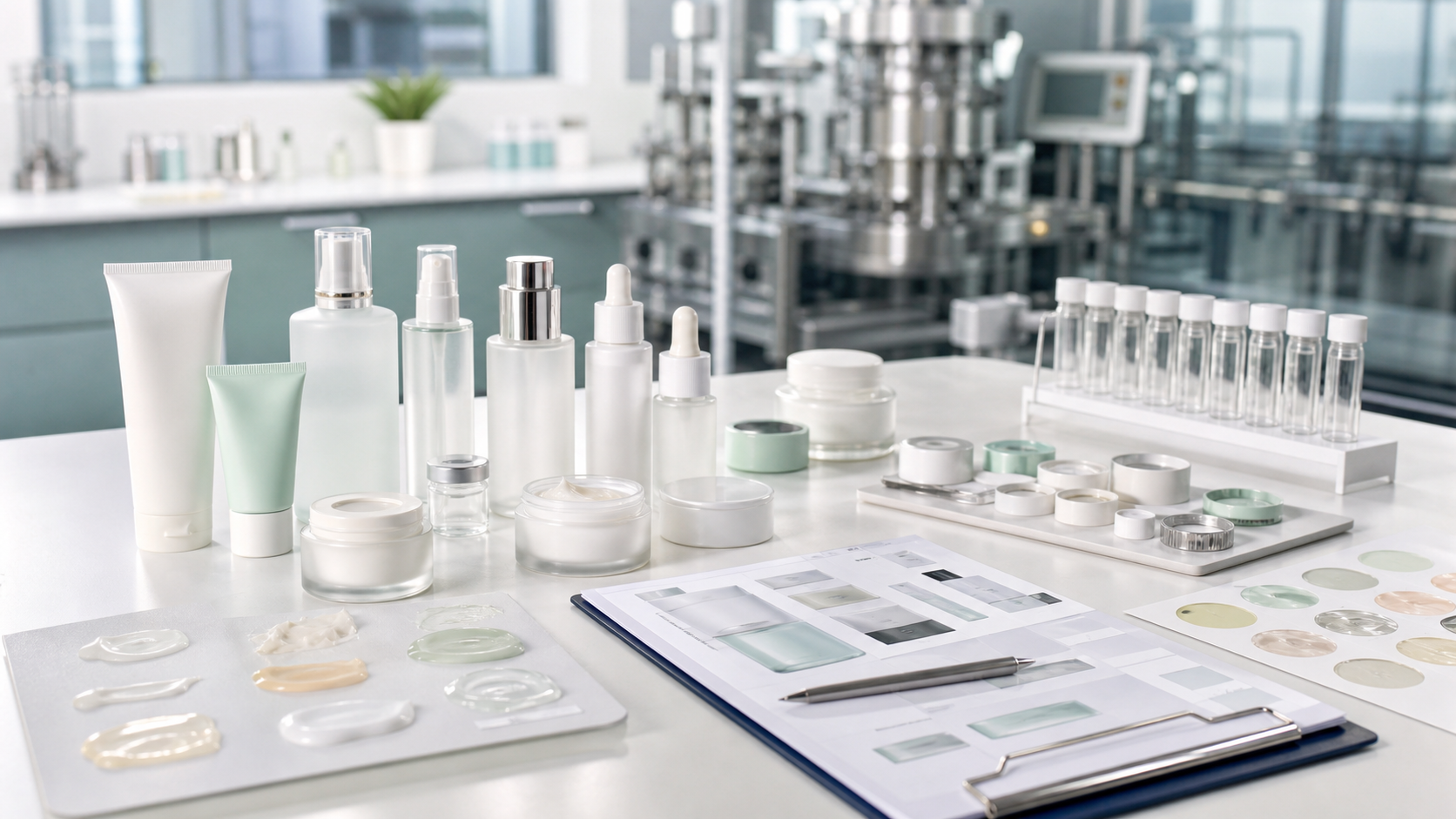
Cosmetic sample approval means the buyer confirms that a specific formula and packaging direction are acceptable for the next stage. The approved sample may be a lab sample, a revised sample, a packaging compatibility sample or a pre-production sample. Once approved, it becomes the reference for production teams, quality control staff and the buyer’s internal decision makers.
The approval should not be a vague message such as “looks good” or “please proceed.” It should identify the exact sample version, date, product name, formula route, packaging option and any final conditions. This is especially important for custom formulation, private label skincare, multi-SKU launches and export orders where several departments may be involved.
Why Approval Matters Before Mass Production
Mass production uses purchased raw materials, packaging components, labor scheduling, filling equipment and inspection resources. Once production begins, late changes become expensive and slow. If the buyer has not fully approved the sample, the factory may follow a direction that no longer matches the brand’s expectations.
For a cosmetic OEM manufacturer, sample approval confirms that the buyer’s requested formula or benchmark has been translated into a manufacturable product. For a cosmetic ODM manufacturer, it confirms that the factory’s proposed formula and product concept fit the buyer’s brand positioning, target cost and launch channel.
| Approval Area | Buyer Question | Risk If Skipped |
|---|---|---|
| Formula feel | Does the texture, absorption, residue and finish match the brief? | Bulk product may feel different from the market positioning. |
| Color and odor | Are shade, fragrance level and base odor acceptable? | Customer complaints or last-minute reformulation may occur. |
| Packaging fit | Does the pump, tube, jar or bottle work with the viscosity? | Leakage, clogging, poor dispensing or filling delays may appear. |
| Artwork and label | Are names, INCI direction, claims and design files ready for review? | Wrong labels or claim language can delay shipment. |
| Quality standard | Which appearance, pH, viscosity, fill weight and inspection checks apply? | The buyer and factory may judge the batch by different standards. |
Sample Approval and Custom Formulation
During custom formulation development, samples often go through several rounds. A buyer may ask for a lighter texture, lower fragrance, different skin feel, different active story or lower target cost. Each revision needs a clear version code so the final approval does not get confused with earlier trials.
Good feedback is specific. Instead of saying “make it better,” tell the factory whether the issue is viscosity, tackiness, spreadability, absorption speed, after-feel, fragrance strength, color, packaging flow or claim direction. This helps the lab revise the formula efficiently and keeps sample development tied to the commercial brief.
Sample Approval in Private Label and Low MOQ Launches
For private label skincare, sample approval may involve selecting from existing formula bases, choosing fragrance or texture adjustments, confirming packaging and preparing artwork. The process can be faster than a fully custom formula, but it still needs control.
Low MOQ projects need particular care because startups often balance speed, budget and market testing. A small first order still has real packaging, filling and shipping costs. Approving a sample carefully helps reduce inventory risk because the brand knows what it is ordering before bulk production begins.
How Packaging Sourcing Affects Approval
Packaging is part of the approved product, not a separate decoration task. A serum that works in a dropper may not flow well in an airless pump. A cream that looks premium in a jar may need different filling or sealing checks in a tube. Decoration choices can affect MOQ, lead time and quality inspection.
When buyers review custom packaging and component options, they should ask for compatibility checks, sample packaging, decoration feasibility and carton requirements before mass production. Final approval should connect the formula sample with the packaging components that will actually be used.
A Practical Sample Approval Workflow
| Stage | Factory Output | Buyer Action |
|---|---|---|
| Brief review | Formula route, ingredient direction, packaging suggestion and feasibility notes. | Confirm target market, product positioning, cost range and MOQ expectation. |
| First sample | Initial lab sample or stock formula option. | Give structured comments on texture, odor, color, feel and packaging fit. |
| Revision | Adjusted sample with version tracking. | Compare against the brief and avoid mixing feedback from old versions. |
| Pre-production check | Confirmed sample, packaging match and QC plan. | Approve final version, artwork direction, order quantity and shipment needs. |
| Bulk production | Manufacturing, filling, inspection and retained samples. | Review agreed records and coordinate export or distributor handoff. |
Buyer Checklist Before Approving a Cosmetic Sample
- Confirm the exact sample code, date and formula version being approved.
- Review texture, spreadability, absorption, tackiness, color and fragrance under realistic use conditions.
- Check whether the sample matches the target market, channel, price tier and claim boundaries.
- Confirm packaging compatibility, pump output, tube seal, jar appearance or dropper performance.
- Ask which stability, compatibility, microbial or other quality checks are appropriate for the product.
- Make sure artwork, label content and carton direction are ready before ordering packaging.
- Document final approval in writing and keep a retained sample for comparison.
Quality and Compliance Considerations
Sample approval is not the same as regulatory approval. Cosmetic requirements vary by destination market, sales channel and product type. Buyers should avoid medical-style claims and confirm final label wording with qualified local advisors or import partners when needed.
Mooyam Cosmetic’s quality control and compliance support helps buyers discuss practical checks, documentation, ingredient information and production control. The goal is to make decisions earlier so the project can move from sampling to bulk production with fewer surprises.
How Mooyam Cosmetic Supports Sample-to-Production Projects
Mooyam Cosmetic provides cosmetic OEM/ODM manufacturing services for overseas beauty brands, Amazon and DTC sellers, distributors, wholesalers and private label buyers. We can support product briefs, sample development, custom formulation, packaging sourcing, low MOQ planning, bulk production, quality control and export support.
Our role is to help buyers turn a product idea into a manufacturable product with clear approval steps. We do not accept retail orders; our service is built for B2B brand and wholesale OEM/ODM projects.
FAQ
Can mass production start before final sample approval?
It is not recommended. Starting before approval can lead to costly changes, disputes and delays if the bulk product does not match the buyer’s expectations.
How many sample rounds are normal?
It depends on the product complexity, formula route, packaging and feedback quality. Simple private label projects may need fewer rounds than custom formulation projects.
Should I approve formula and packaging separately?
You can review them separately during development, but final approval should confirm that the formula and selected packaging work together.
What should be included in written approval?
Include sample code, date, product name, formula version, packaging option, final changes, approved standard and any remaining conditions before production.
Does sample approval guarantee identical bulk production?
No factory should promise perfect identity. Approval gives the production team a standard, and QC checks help control acceptable variation within agreed limits.
Can Mooyam help improve a rejected sample?
Yes. Clear feedback on texture, odor, color, viscosity, packaging flow or cost target helps Mooyam revise the sample more efficiently.
Do export requirements affect sample approval?
They can. Ingredient restrictions, label rules and document needs may vary by target market, so buyers should consider export support and local compliance early.
Approve Samples with a Clear Production Plan
Need help developing your next skincare or cosmetic product? Mooyam Cosmetic can support sample development, custom formulation, private label skincare, packaging sourcing, low MOQ planning, bulk production, quality control and export coordination. Contact us to discuss your formula requirements, packaging options, MOQ and OEM/ODM production solution.