
Bio-cellulose sheet masks are moving from novelty items into targeted skincare programs for brands that want a premium mask with strong skin adhesion and a high serum load. For OEM/ODM buyers, the real decision is not only which mask material looks impressive, but how the substrate, essence, filling process, pouch structure, testing plan, and claims work together before mass production.
Mooyam Cosmetic develops and manufactures cosmetics and makeup for brand owners through OEM/ODM cooperation. We support formulation, sampling, packaging coordination, and production quality control for business clients only; we do not accept retail orders.
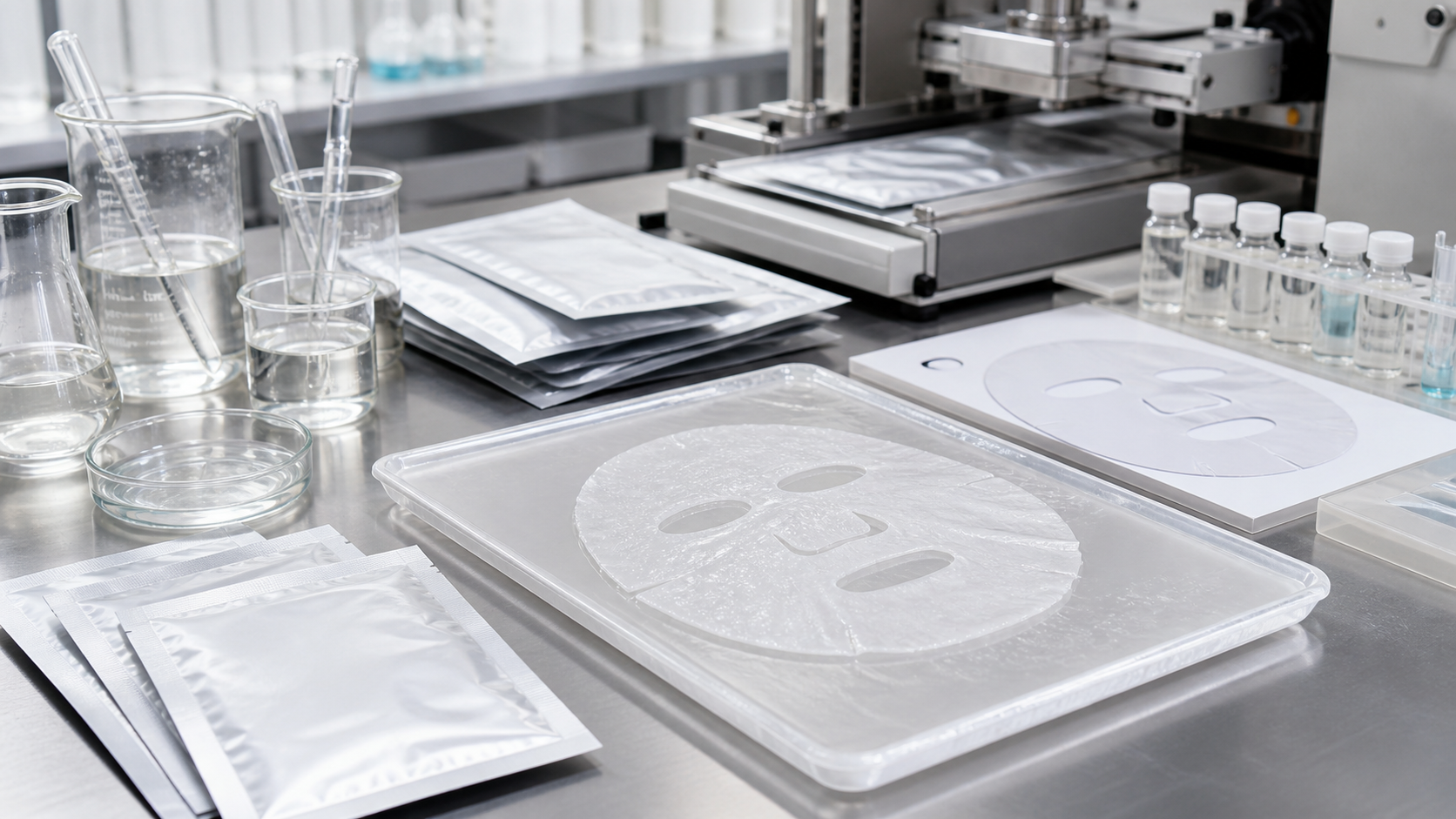
- Bio-cellulose is a premium sheet mask substrate valued for close facial fit, moisture retention, and smooth serum delivery.
- OEM/ODM success depends on matching the mask sheet, serum viscosity, active positioning, pouch barrier, filling volume, and stability tests.
- Brands should define the target claim, skin feel, market, MOQ, artwork requirements, and testing expectations before requesting samples.
- Mooyam Cosmetic helps beauty brands turn a sheet mask concept into a manufacturable, compliant, and commercially realistic product.
Why Bio-Cellulose Sheet Masks Are Attractive for Brands
Recent sheet mask market reporting points to continued demand for mask formats, especially hydrating, premium, and ingredient-led products. Bio-cellulose is relevant because it gives brands a more sensorial mask experience than many basic non-woven sheets: the sheet hugs facial contours, holds essence evenly, and creates a smooth cooling feel that can support spa, professional, and premium at-home positioning.
For procurement teams, the opportunity is not simply to buy a trendy mask. A strong bio-cellulose project needs a defined skin concern, ingredient story, packaging format, and price tier. Without those decisions, samples may look beautiful but become difficult to scale because the serum is too tacky, the pouch leaks during transport, the mask dries at the edges, or claims are not suitable for the destination market.
Key OEM/ODM Development Decisions
1. Choose the Right Mask Substrate
Bio-cellulose usually works best when the brand wants a premium, close-contact mask with a hydrated gel-like feel. It can be positioned above basic non-woven masks, but the buyer must accept higher material cost, careful handling requirements, and stricter control of folded mask placement in the pouch. Mooyam Cosmetic can compare substrate options during sampling so the brand can judge fit, transparency, essence pickup, and removal experience before approving the final bill of materials.
2. Build the Essence Around the Sheet
The serum should be designed for the sheet, not copied from a bottle serum. A bio-cellulose mask needs an essence with enough slip and wetness to saturate the sheet, but not so thin that it pools in the sachet or runs down the neck. Humectants such as glycerin, betaine, panthenol, hyaluronic acid derivatives, and compatible soothing ingredients can be considered depending on the target positioning. Fragrance-free, low-fragrance, alcohol-free, vegan, or sensitive-skin directions can be discussed during the brief, but every claim must be evaluated against ingredient choice and target-market rules.
3. Set the Filling Volume and Pouch Structure
Filling volume changes the entire user experience. Too little essence makes the mask feel dry before the expected wear time; too much can cause leakage, messy opening, or unnecessary cost. Pouch film must protect the formula from evaporation, light, and transport stress. For export projects, pouch thickness, seal width, notch design, carton packing, and drop testing should be discussed early because they affect production efficiency and shipping performance.
| Development Area | Buyer Decision | Factory Control Point |
|---|---|---|
| Substrate | Bio-cellulose thickness, fit, transparency, and target price tier. | Incoming material inspection, mask shape consistency, fold quality, and handling during filling. |
| Essence | Hydrating, soothing, brightening, barrier-support, or post-care positioning. | Viscosity, pH, color, odor, microbial limit, compatibility with sheet and pouch. |
| Filling | Target serum load, wear time, and tactile preference. | Filling weight tolerance, saturation check, pouch seal integrity, and leakage inspection. |
| Packaging | Single sachet, multi-pack box, display carton, or travel kit. | Barrier film selection, artwork proofing, coding position, carton durability, and export packing. |
| Claims | Hydrating, soothing, radiance, sensitive-skin, vegan, or clean-beauty direction. | Formula-document support, label review, restricted wording check, and market-specific compliance review. |
Suggested OEM/ODM Workflow
Brief and Feasibility Review
A useful brief defines target market, benchmark texture, desired substrate, claims direction, price tier, unit pack size, launch timing, and order forecast. Mooyam Cosmetic uses this to review formula feasibility, packaging availability, sample timing, MOQ assumptions, and testing needs.
Formula and Mask Sampling
During sampling, the brand should test more than the first impression. Wear the mask for the intended time, check whether the sheet slides, assess tackiness after removal, review fragrance level, and examine whether remaining essence feels useful or wasteful. If the product is intended for a hot or humid region, shipping and storage expectations should be considered before the sample is approved.
Stability, Compatibility, and Production Approval
Sheet masks place formula, sheet, and sachet in long contact, so stability and compatibility matter. Testing may include accelerated stability, freeze-thaw, microbial checks, pouch leakage, formula discoloration, odor change, and sheet drying behavior. After the final sample is approved, the factory can lock the formula, substrate, filling volume, packaging materials, artwork, and production inspection standard.
| Stage | Main Output | Buyer Should Confirm |
|---|---|---|
| 1. Project brief | Target concept, market, price tier, MOQ estimate. | Product positioning, claim direction, packaging style, launch schedule. |
| 2. Sample development | Mask sheet + essence + pouch prototype. | Fit, wetness, serum feel, fragrance, wear time, residue level. |
| 3. Testing | Stability, compatibility, microbial, and packaging checks. | Testing scope required for sales channels and target countries. |
| 4. Pre-production approval | Locked formula, artwork, BOM, inspection standard. | Final sample, label text, carton structure, shipment plan. |
| 5. Mass production | Filled, sealed, coded, inspected, and packed goods. | Batch documents, QC photos, shipment documents, reorder plan. |
Buyer Checklist Before Requesting a Quotation
- Define whether the mask is for hydration, soothing, barrier support, radiance, post-sun care, or professional spa use.
- Confirm if the project needs bio-cellulose specifically, or if hydrogel, non-woven, or toner-pad formats should also be compared.
- Prepare target market requirements, including label language, ingredient restrictions, and claim limits.
- Decide the desired sachet size, box count, carton quantity, barcode requirements, and artwork timeline.
- Share benchmark sensory goals: wetness level, residue after removal, fragrance preference, and expected wear time.
- Ask for MOQ, sample lead time, testing lead time, filling tolerance, and reorder lead time before setting the launch calendar.
Common Quality Risks to Control
Sheet masks look simple from the outside, but the quality risks are practical and visible to the end user. Common issues include uneven saturation, mask tearing, edge drying, pouch leakage, seal wrinkles, formula discoloration, odor drift, and mismatch between claims and formula support. A factory should control these risks through incoming material inspection, formula batch records, filling weight checks, seal testing, finished-goods inspection, and retained samples.
For international brands, compliance review should happen before artwork is printed. Claims, ingredient lists, warnings, net content, batch code, and country-specific wording need careful review.
Work With Mooyam Cosmetic
Mooyam Cosmetic supports skincare and makeup brands with OEM/ODM development, including formula direction, mask substrate selection, sample adjustment, packaging coordination, MOQ planning, production inspection, and export-ready documentation. If your team is developing a bio-cellulose sheet mask, send your target market, concept, preferred claims, packaging direction, and estimated order quantity so we can review the most practical development route. Mooyam Cosmetic is a cosmetics and makeup OEM/ODM factory for brand and business clients, not a retail seller.
FAQ
Is bio-cellulose better than non-woven sheet material?
It depends on positioning. Bio-cellulose can offer a closer fit and premium feel, while non-woven material may be more cost-efficient for larger promotional or entry-level programs. Sampling both can help a brand balance sensory quality and target cost.
What MOQ should a brand expect for sheet mask OEM/ODM?
MOQ depends on formula, substrate, pouch film, artwork, box structure, and whether materials are standard or custom. A customized bio-cellulose mask normally needs a higher planning quantity than a simple stock-style sheet mask because material and packaging setup must be coordinated.
How long does sheet mask development take?
Timing depends on sample rounds, ingredient availability, packaging sourcing, artwork confirmation, and testing scope. Brands should allow time for formula adjustment and compatibility checks instead of moving directly from first sample to mass production.
Does Mooyam Cosmetic sell single pieces or retail sheet masks?
No. Mooyam Cosmetic works as a cosmetics and makeup OEM/ODM factory for brands, distributors, and business buyers. We do not accept retail orders.
Trend Reference / Sources
These links are used only for trend, SEO direction, compliance, and industry background. The article above is original B2B OEM/ODM procurement content created for brand buyers and does not copy, translate, or reuse the structure of the references.