Retinol skincare can be attractive for beauty brands, but it needs more planning than many standard moisturizers or hydrating serums. Buyers must think about ingredient route, claim language, stability, packaging protection, target-market rules, consumer-use instructions, and quality control before placing a bulk order. A strong cosmetic OEM factory can help turn the concept into a responsible, manufacturable product without making unsupported promises.
Mooyam Cosmetic provides OEM/ODM service for skincare and cosmetic brands, including private label skincare, custom formulation, packaging sourcing, sample development, low MOQ planning, bulk production, quality control, and export support. We serve brand owners, Amazon and DTC sellers, distributors, and wholesale buyers only; we do not accept retail orders.
- Retinol skincare projects require careful formula route selection, packaging protection, stability testing, and market-specific claim review.
- Buyers should decide whether to launch a serum, cream, night product, capsule, or starter line before requesting samples.
- Packaging, active form, preservative system, fragrance direction, MOQ, and artwork timing can all change cost and lead time.
- Mooyam Cosmetic helps business buyers develop responsible retinol-positioned skincare through OEM/ODM cooperation.
Why Retinol Skincare Needs a Careful OEM Plan
Retinol and retinol-positioned products are often used in well-aging skincare concepts. For brand owners, the opportunity is clear: a product can target mature-skin routines, premium night care, texture-refining stories, and active skincare sets. The risk is also clear. If claims sound medical, if packaging does not protect the formula, if the product changes color or odor, or if the instructions are not suitable for the target market, the launch can create avoidable problems.
Working with an experienced cosmetic OEM manufacturer helps buyers make practical choices early. The factory can review formula feasibility, sample direction, packaging compatibility, stability scope, bulk production controls, and export documentation needs. This is especially important for overseas buyers because ingredient limits, labeling rules, and cosmetic claim boundaries vary by country and region.
Start With the Product Format
A retinol skincare project should begin with format, not just ingredient percentage. A lightweight serum, rich night cream, eye-area product, gel-cream, oil serum, capsule format, or skincare set will each require a different approach. The buyer should define the target user, routine step, price point, market, pack size, fragrance preference, and channel before the first lab sample.
For brands that need a faster path, private label skincare development may allow the project to start from an existing concept and adjust texture, packaging, and brand presentation. For brands with specific performance positioning, ingredient exclusions, or unique texture goals, custom formulation development is usually the better route.
| Product Route | Best Fit | Key Control Points |
|---|---|---|
| Retinol serum | Active skincare lines, night routines, DTC hero products, and premium starter sets. | Active form, oxidation control, viscosity, pump or dropper compatibility, and claim wording. |
| Retinol cream | Moisturizing night care, mature-skin lines, and brands wanting a softer product feel. | Emulsion stability, sensory feel, fragrance level, jar or airless packaging, and preservation. |
| Retinol eye product | Specialized line extensions where the brand can manage more cautious wording. | Texture, irritation-risk communication, pack size, claim limits, and target-market review. |
| Retinol skincare set | Brands launching a routine with cleanser, serum, cream, and support products. | SKU coordination, MOQ, carton structure, label consistency, and inventory planning. |
Formula Decisions Buyers Should Discuss
Active Form and Support Ingredients
Retinol projects may involve retinol, retinyl esters, encapsulated systems, or alternative well-aging ingredient stories. The right choice depends on target market, desired positioning, cost, compatibility, and claims. Support ingredients may include moisturizers, barrier-support ingredients, antioxidants, soothing agents, peptides, or humectants. The goal is not to overload the formula, but to create a stable and pleasant product that fits the brand promise.
Texture and User Experience
Retinol skincare is often used at night, so texture matters. Some brands want a fast-absorbing serum, while others prefer a cushiony cream that feels more comfortable. Sample feedback should include absorption, after-feel, tack, spread, fragrance, color, odor, and layering with moisturizer. Buyers should test the sample under realistic routine conditions before approving bulk production.
Claim Boundaries and Instructions
Retinol-related claims require caution. Cosmetic wording may discuss the appearance of smoother-looking skin, radiance, or visible texture, but should avoid treatment promises or drug-like language. Usage instructions, warning language, and artwork wording should be reviewed for the destination market. Requirements can vary, so importers and brands should confirm the rules for their own sales region before printing packaging.
Packaging Choices for Retinol Products
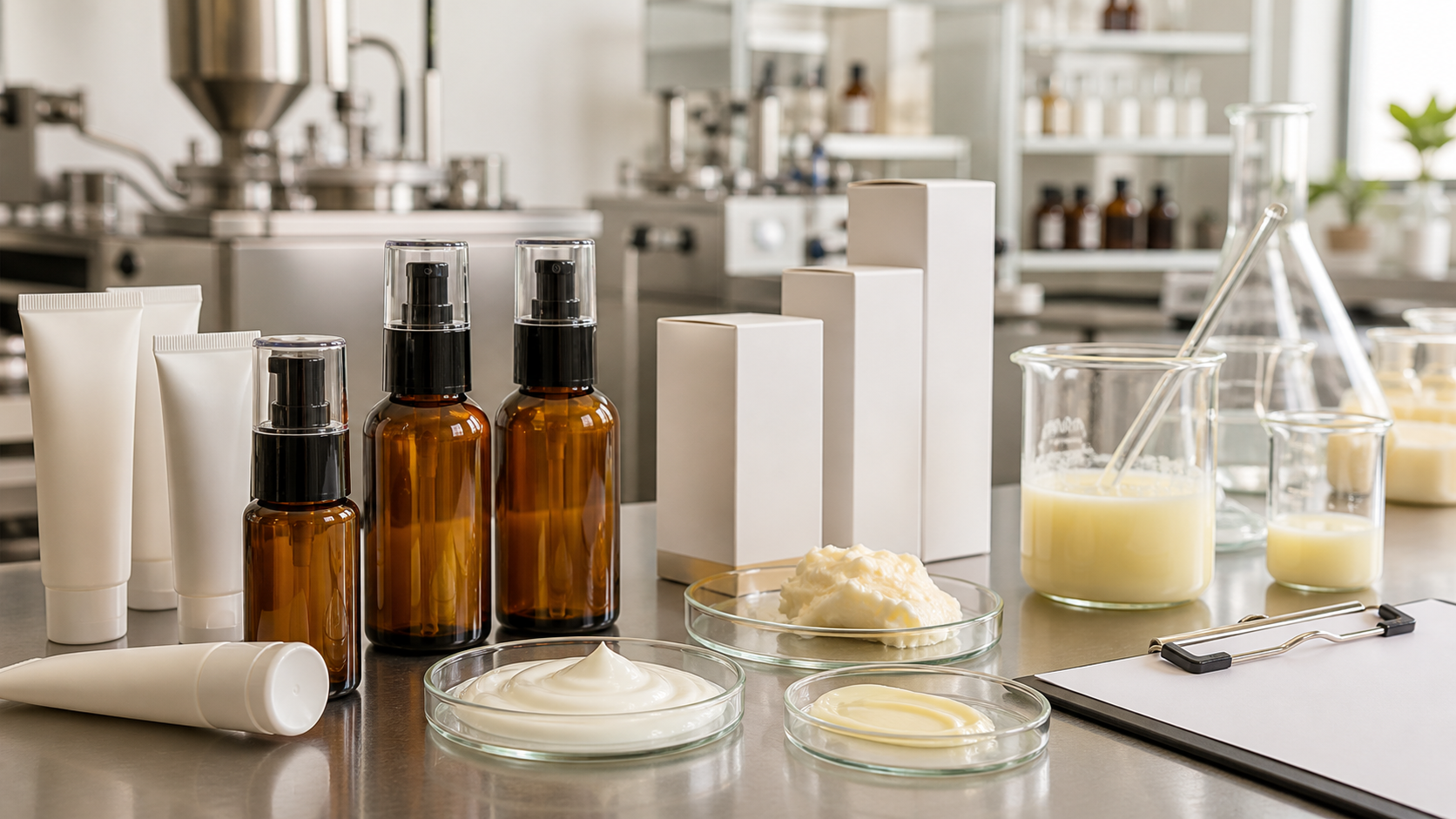
Packaging is not just decoration for this category. Retinol-positioned products often need protection from light, air, and repeated contamination. Amber glass, opaque airless pumps, aluminum tubes, controlled droppers, or protective secondary cartons may be considered depending on the formula and price tier. A beautiful package that exposes the formula to instability is not a good manufacturing decision.
Mooyam Cosmetic can help buyers compare customized packaging options such as airless pumps, tubes, amber bottles, labels, cartons, surface finishes, and export carton structures. Packaging should be selected before final compatibility and stability checks, because the formula must be evaluated in the actual component planned for production.
| Packaging Factor | Why It Matters | Questions to Ask the Supplier |
|---|---|---|
| Light protection | Some active skincare formulas are sensitive to light exposure. | Should the product use amber, opaque, or secondary carton protection? |
| Air exposure | Repeated opening can affect formula appearance, odor, or stability. | Is airless packaging, tube packaging, or a controlled pump more suitable? |
| Viscosity match | A formula may not dispense correctly from every pump, tube, or dropper. | Has the sample been tested in the proposed component? |
| MOQ and lead time | Custom bottles, colors, and decoration can raise MOQ and extend schedule. | Which packaging options are practical for the first production run? |
| Export packing | Fragile or premium packaging needs suitable cartons and packing method. | How will leakage, breakage, label scuffing, and carton strength be checked? |
Suggested Development Workflow
The buyer should send a clear product brief that includes target market, sales channel, desired product type, active direction, fragrance preference, ingredient restrictions, benchmark texture, packaging preference, MOQ expectation, launch timeline, and claim direction. This helps the cosmetic ODM manufacturer recommend a practical route before lab work begins.
After samples are delivered, the brand should test them for texture, fragrance, color, stability feel, packaging fit, pump or tube behavior, and routine compatibility. Feedback should be specific and organized. Once the final sample is approved, the formula, packaging, artwork, testing scope, production quantity, inspection standard, and shipping plan should be locked before bulk production.
Buyer Checklist Before Production
- Define whether the product is a serum, cream, eye product, capsule, or complete routine set.
- Confirm target market, sales channel, desired claims, ingredient restrictions, and brand price tier.
- Review active route, supporting ingredients, fragrance direction, texture target, and preservative system.
- Select packaging that supports stability, dispensing, brand position, MOQ, and export shipping.
- Approve samples in realistic use conditions before confirming formula and packaging.
- Check artwork, label wording, usage instructions, and warnings with market-specific requirements in mind.
- Confirm production inspection, retained samples, batch records, filling weight, carton marks, and export documents.
Quality Control and Compliance Awareness
Retinol-positioned skincare should go through structured quality control and compliance review. Possible checks include raw material review, batch record control, pH, viscosity, appearance, odor, color, microbial testing, stability observation, packaging compatibility, filling weight, label inspection, and finished goods review. The exact scope depends on formula type, market, claim direction, and importer expectations.
Compliance should not be treated as a final paperwork step. Ingredient choice, claim language, instructions, packaging artwork, and export documents all connect to market access. A supplier can support information preparation, but brands and importers should confirm the rules for their destination market before launch.
Work With Mooyam Cosmetic
Planning to launch a retinol skincare product with a cosmetic OEM/ODM factory? Mooyam Cosmetic can support formula planning, sample development, packaging sourcing, low MOQ production planning, quality control, bulk production, and export coordination for business clients. Contact us with your product idea, target market, packaging preference, MOQ, claim direction, and launch schedule to discuss a practical manufacturing solution.
FAQ
Can a new brand launch retinol skincare with low MOQ?
It may be possible, depending on the formula route, packaging choice, decoration method, and production schedule. Low MOQ options are easier when packaging and formula choices stay practical.
Is retinol skincare more difficult to manufacture than a basic moisturizer?
Usually yes. Retinol-positioned products need more attention to active route, stability, packaging protection, claims, and usage instructions.
Should I choose a serum or cream for my first retinol product?
A serum can work well as a hero active product, while a cream may feel more comfortable for night care. The best choice depends on target user, channel, price tier, and brand positioning.
Can Mooyam Cosmetic copy an existing retail retinol product?
No. We can use benchmarks to understand texture and positioning, but development should create an original formula and packaging plan for your brand.
What packaging is best for retinol skincare?
Amber bottles, opaque airless pumps, tubes, and protective cartons may all be suitable. The final choice depends on formula stability, viscosity, MOQ, cost, and brand image.
Can a cosmetic factory guarantee regulatory approval?
No responsible supplier should guarantee approval for every market. Requirements vary by destination, claims, ingredients, and importer responsibilities. Documentation and artwork should be reviewed for the target market.
Does Mooyam Cosmetic sell retail retinol products?
No. Mooyam Cosmetic is a cosmetics and skincare OEM/ODM manufacturer for brand owners, distributors, and wholesale business buyers, not a retail seller.