
Polyglutamic acid is becoming a useful hydration story for skincare brands that want a moisture-retention serum beyond a standard hyaluronic acid brief. For OEM/ODM buyers, the key is not only adding a popular humectant, but building a formula texture, packaging system, and testing plan that can be produced consistently.
Mooyam Cosmetic develops and manufactures cosmetics and makeup for brand owners through OEM/ODM cooperation. We support formula development, sampling, packaging coordination, quality control, stability testing, and production planning for business clients only; we do not accept retail orders.
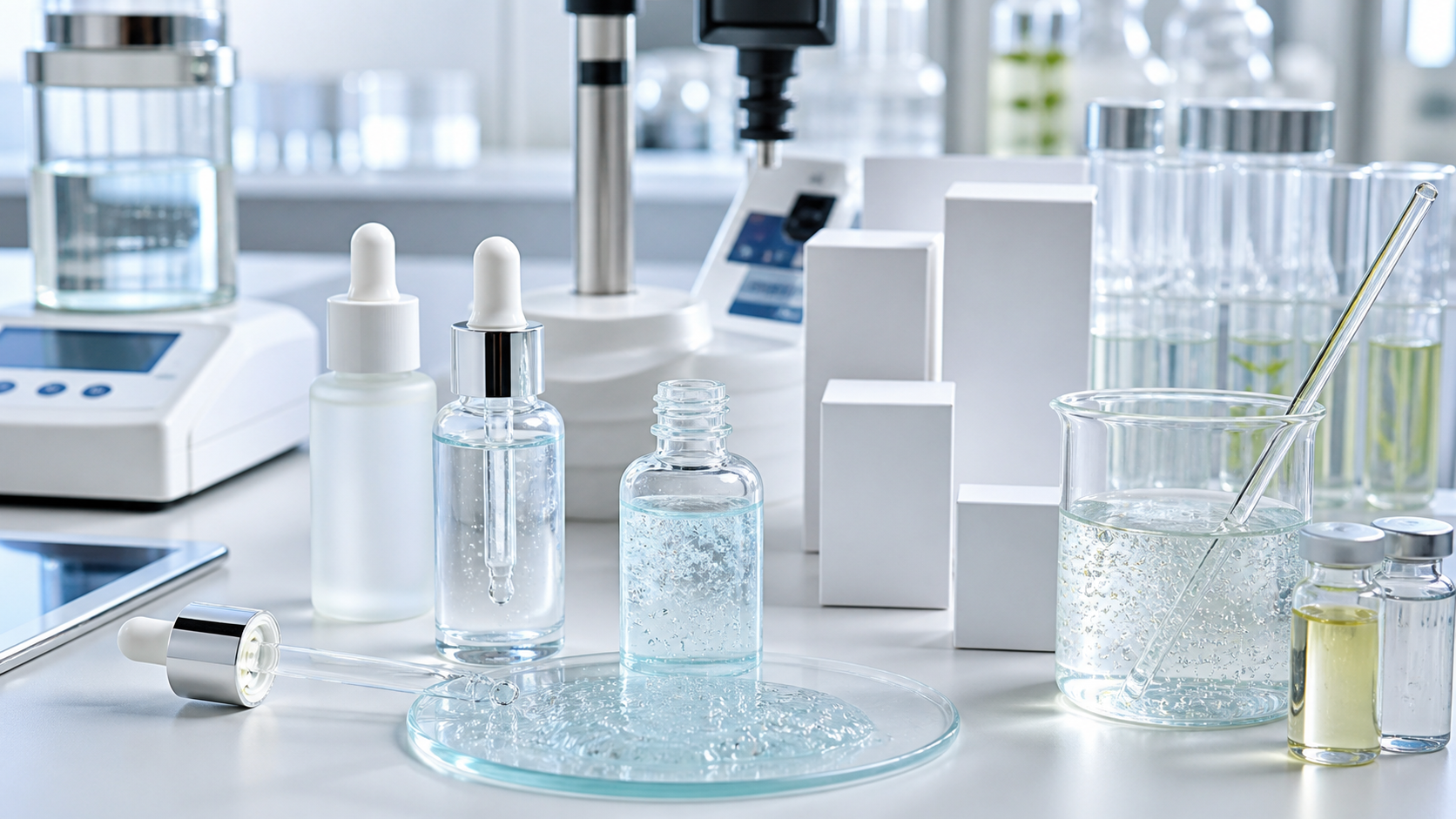
- Polyglutamic acid serum can fit hydration, plumping, barrier-support, glass-skin, and lightweight moisture-positioned skincare programs.
- OEM/ODM success depends on grade selection, viscosity, tack control, preservative compatibility, packaging, filling behavior, and claim review.
- Brands should define target market, texture benchmark, active system, packaging route, MOQ, artwork timing, and testing scope before sampling.
- Mooyam Cosmetic helps brand buyers turn a hydration serum concept into a manufacturable private label skincare product.
Why Polyglutamic Acid Serum Fits Brand Development
Hydration remains one of the most durable skincare needs because it works across skin types, age groups, and product routines. Polyglutamic acid, often shortened to PGA, gives brands a fresh ingredient story while still fitting a practical cosmetic benefit: helping skin feel hydrated, smooth, and supple. It can be positioned as a lightweight daily serum, a dewy base serum, a barrier-support layer, or a premium hydration ampoule.
For procurement teams, the main question is whether the ingredient story can translate into a stable, pleasant, scalable formula. PGA can add a cushiony feel and surface moisture-retention effect, but the overall performance depends on the full system: humectants, film formers, emollients, preservatives, viscosity modifiers, packaging, and finished-goods testing.
Formula Decisions for OEM/ODM Buyers
Humectant Blend and Skin Feel
Polyglutamic acid often works best as part of a hydration network rather than a single-ingredient concept. Mooyam Cosmetic can help buyers compare combinations with glycerin, betaine, panthenol, sodium hyaluronate, trehalose, ectoin, niacinamide, or barrier-support ingredients depending on the target price and claim direction. The final blend should support the brand story while keeping the serum comfortable for daily use.
Viscosity, Tack, and Layering
A hydrating serum must feel good after application. Too much tack can make the product feel cheap or difficult under makeup, while a very thin serum may not deliver the desired cushion. During sampling, buyers should test spread, absorption, finish, stickiness after five minutes, and compatibility with moisturizer and sunscreen. The approved sample should match the final pack, because dropper, pump, and tube formats require different viscosity targets.
Packaging and Filling Behavior
Clear gel-serums look attractive in transparent packaging, but formula sensitivity and brand positioning may call for frosted bottles, airless pumps, or opaque packs. Packaging should be selected before final stability testing. Dropper pull, pump dose, leakage, label adhesion, carton durability, and filling weight tolerance all affect mass production quality.
| Development Area | Buyer Decision | Factory Control Point |
|---|---|---|
| Positioning | Daily hydration, glass-skin serum, barrier-support layer, plumping ampoule, or lightweight moisture booster. | Formula route, ingredient story, sensory target, benchmark review, and claim boundary. |
| Active blend | PGA alone or paired with hyaluronic acid, panthenol, glycerin, niacinamide, ectoin, or ceramides. | Solubility, viscosity, pH, preservative robustness, odor, color, and compatibility. |
| Texture | Watery serum, bouncy gel-serum, milky serum, or ampoule texture. | Tack control, spread, absorption, filling behavior, pump/dropper performance, and sensory approval. |
| Packaging | Dropper, pump, airless bottle, mini vial, carton, travel set, or refill direction. | Component compatibility, leakage, label adhesion, dose control, carton packing, and export durability. |
| Claims | Hydration, smoother feel, dewy finish, plumper-looking skin, or barrier-support wording. | Artwork review, proof support, restricted wording check, and market-specific compliance review. |
Suggested OEM/ODM Workflow
The best brief includes target market, target customer, texture benchmark, formula restrictions, fragrance direction, pack size, packaging preference, claim wording, price target, expected MOQ, and launch timeline. Mooyam Cosmetic reviews these details before sampling so the brand can understand cost drivers, lead time, and testing needs early.
After lab samples are prepared, the buyer should test the formula in realistic routines: after toner, under moisturizer, under sunscreen, and in the climate where it will be sold. Feedback should be specific, such as less tack, more cushion, faster absorption, clearer appearance, lower fragrance, or better dropper pickup. Once the final sample is approved, formula, packaging, artwork, testing, and production inspection standards should be locked.
| Stage | Main Output | Buyer Should Confirm |
|---|---|---|
| 1. Brief review | Feasibility, MOQ direction, formula route, packaging options. | Market, target user, texture benchmark, claims, and price tier. |
| 2. Lab sample | Hydration serum prototypes with different viscosity and active blends. | Absorption, tack, finish, fragrance, clarity, and layering behavior. |
| 3. Packaging trial | Bottle, pump or dropper matching with filling and dosing checks. | Pack size, component color, closure, label area, carton structure. |
| 4. Testing | Stability, compatibility, microbial and appearance monitoring. | Testing scope for sales channel, destination market, and launch claims. |
| 5. Production | Batch manufacturing, filling, coding, inspection, and packing. | Final sample, artwork proof, shipment plan, and reorder timing. |
Buyer Checklist Before Requesting a Quote
- Define the product concept: hydration booster, glass-skin serum, barrier-support layer, or premium ampoule.
- Confirm the target market, ingredient restrictions, claim preferences, fragrance direction, and texture benchmark.
- Decide whether PGA should be paired with hyaluronic acid, panthenol, niacinamide, ectoin, or ceramides.
- Choose a packaging direction: dropper bottle, airless pump, mini vial, travel kit, or boxed retail unit.
- Prepare artwork timing, label language, barcode requirements, carton structure, and claims wording for review.
- Ask for MOQ, sample lead time, packaging lead time, stability plan, production lead time, and reorder planning.
Quality and Compliance Risks to Control
Common risks include tacky after-feel, viscosity drift, microbial weakness, formula clouding, stringing in the dropper, pump incompatibility, label claims that overpromise hydration effects, and mismatch between sample texture and mass production viscosity. These risks can be reduced through raw material inspection, batch records, pH and viscosity checks, filling weight control, packaging compatibility, stability testing, and retained sample tracking.
For export projects, claims should be reviewed before printing. Hydration, smoother feel, dewy finish, and plumper-looking skin language may be suitable cosmetic directions, while medical or disease-related wording should be avoided unless the regulatory route supports it.
Work With Mooyam Cosmetic
Mooyam Cosmetic supports skincare and makeup brands with OEM/ODM formulation, sample adjustment, packaging sourcing, MOQ planning, testing coordination, production inspection, and export-ready documentation. If your team is developing a polyglutamic acid serum, send your target market, desired claims, texture benchmark, packaging preference, and estimated order quantity so we can recommend a practical development route. Mooyam Cosmetic is a cosmetics and makeup OEM/ODM factory for brand and business clients, not a retail seller.
FAQ
Can polyglutamic acid serum be developed for private label skincare?
Yes. PGA serum can be developed through OEM/ODM cooperation when the brand defines the target market, texture, packaging, claims direction, and MOQ expectations.
Is polyglutamic acid a replacement for hyaluronic acid?
Not necessarily. Many formulas use PGA as a complementary hydration ingredient. The best approach depends on target texture, cost, claims, and the overall humectant system.
Which packaging is suitable for PGA serum?
Droppers, pumps, airless bottles, and mini vials can all work, but the final choice should be tested against formula viscosity, filling behavior, leakage risk, and desired brand image.
Does Mooyam Cosmetic sell retail PGA serum?
No. Mooyam Cosmetic works as a cosmetics and makeup OEM/ODM factory for brands, distributors, and business buyers. We do not accept retail orders.
Trend Reference / Sources
These links are used only for trend, SEO direction, compliance, and industry background. The article above is original B2B OEM/ODM procurement content created for brand buyers and does not copy, translate, or reuse the structure of the references.