
Skincare ampoules are best developed by defining the use case, formula concentration, fill format, packaging compatibility, sample approval standard, and production controls before mass production begins. For beauty brands, the safest path is to work with a cosmetic OEM manufacturer or cosmetic ODM manufacturer that can connect custom formulation, ampoule packaging, quality control, and export support in one project plan.
In cosmetic manufacturing, a skincare ampoule usually means a small-dose or high-focus topical skincare product, often packed in glass ampoules, vials, droppers, tubes, or single-use units. It is a cosmetic product format, not an injectable or medical product, and any claims, label wording, ingredient limits, and import requirements should be reviewed by target market.
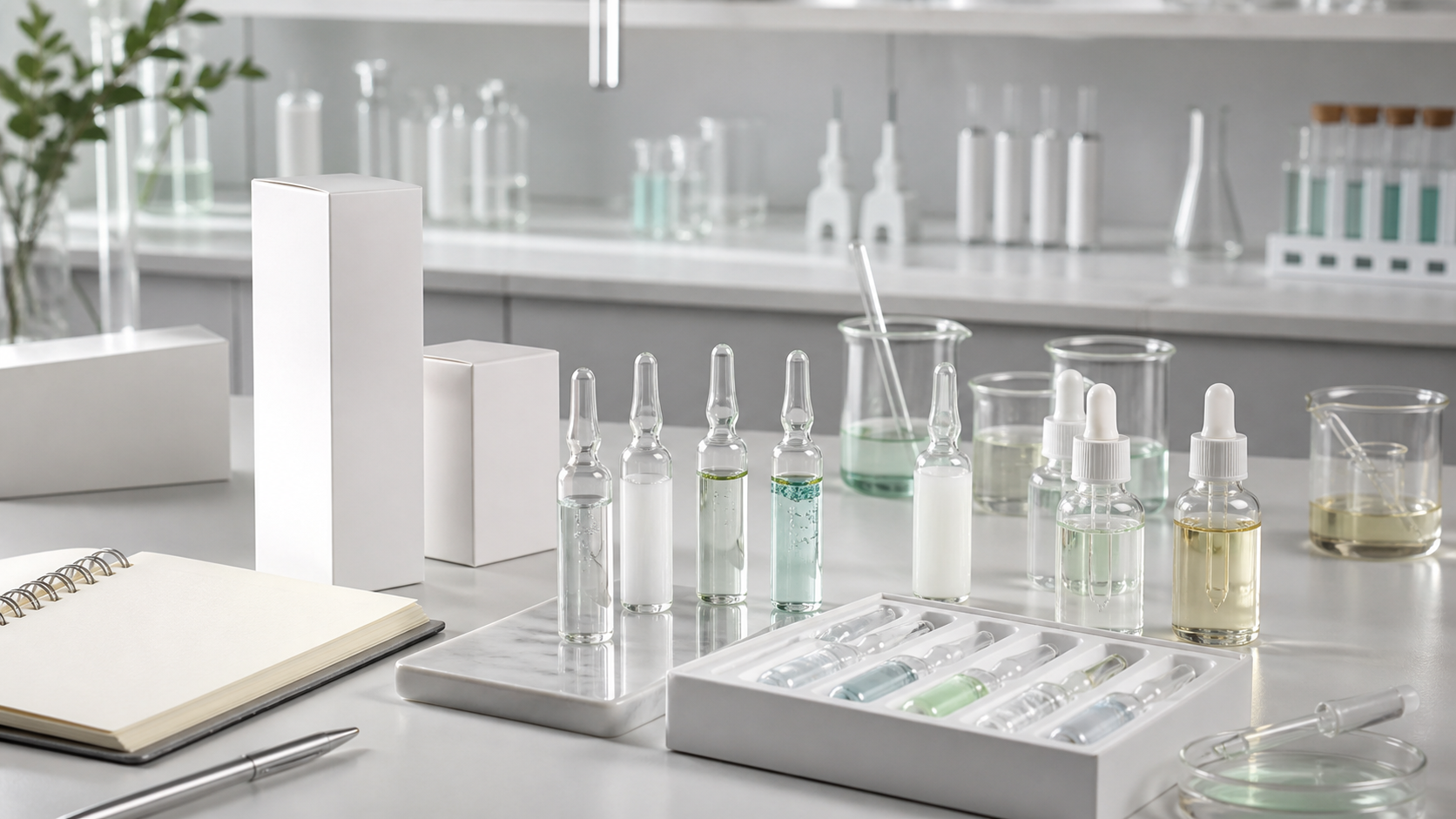
Quick Summary
- Skincare ampoules should be planned around dose size, formula viscosity, sensory profile, packaging type, filling method, and launch channel.
- Private label skincare ampoules can shorten development time, while custom formulation is better for brands that need a more differentiated texture, ingredient story, or routine position.
- Packaging sourcing is critical because glass ampoules, vials, droppers, tubes, and single-dose packs all create different leakage, breakage, filling, and artwork requirements.
- Sample development should include formula feel, appearance, packaging fit, fill weight, stability direction, and written approval before mass production.
- Compliance and claim requirements vary by target market, so brands should confirm local obligations before launch.
Why Ampoules Are Different from Ordinary Serums
An ampoule is often positioned as a focused skincare step: a small bottle, vial, or dose that feels more concentrated or special than a daily serum. That positioning can work well for spa lines, premium private label skincare, Amazon bundles, discovery kits, DTC launches, and distributor-led product ranges. But the manufacturing brief should not simply say “make a serum in a smaller bottle.”
The format changes the project. A single-dose glass ampoule needs controlled fill volume, breakage protection, secondary packaging, and clear use instructions. A dropper-style ampoule needs viscosity control, closure compatibility, and shelf presentation. A tube or vial format may be easier for e-commerce and travel, but still needs leakage checks and artwork space. These decisions affect MOQ, unit cost, sample development, quality control, and export packing.
A practical OEM/ODM manufacturing service partner can help the brand compare format options before the formula is locked. That early alignment reduces repeated revisions and avoids approving a formula that does not work with the intended pack.
Choose the Right Ampoule Development Route
Beauty brands usually choose between three routes: stock private label formula, modified formula, and full custom formulation. Each route can work, but the decision should match the launch timeline, product positioning, target price, and level of differentiation required.
| Development Route | Best For | Main Buyer Decision |
|---|---|---|
| Stock private label ampoule | Faster launch, lower development complexity, starter line, gift set, or distributor catalogue. | Choose formula base, fragrance direction if applicable, fill size, packaging, artwork, MOQ, and target markets. |
| Modified ampoule formula | Brands that need adjusted viscosity, sensory feel, color, ingredient direction, or positioning without starting from zero. | Define exactly what should change and approve new samples before confirming cost and production timing. |
| Custom formulation | Premium DTC brands, spa concepts, hero products, or brands needing a more distinctive ampoule texture or story. | Prepare a detailed formula brief, benchmark products, packaging direction, target cost, sample schedule, and claim limits. |
For many first launches, private label skincare development is the most efficient route because the brand can focus on packaging, channel fit, and launch planning. When the brand needs a unique skin feel, ingredient direction, or product architecture, custom formulation support can help build the ampoule from a clearer technical brief.
Define the Product Brief Before Sampling
A strong ampoule brief should explain the product role in the customer routine. Is the ampoule a daily hydrating step, a short-course intensive routine, a spa treatment add-on, a seasonal kit, a travel-size product, or a premium discovery item? Each answer changes formula texture, fill size, packaging, carton planning, and content strategy.
The brief should also define target users, sales channel, destination market, benchmark products, preferred texture, fragrance preference, excluded ingredients, packaging references, unit size, launch quantity, reorder forecast, and expected claims direction. Claims should stay cosmetic and supportable, such as “helps skin feel hydrated,” “lightweight texture,” or “supports a smoother-looking routine,” depending on formula and market review. Avoid medical treatment language or guaranteed results.
Packaging Sourcing for Ampoules
Ampoule packaging must be selected with the formula, not after it. Glass ampoules can signal premium single-dose use, but they require breakage review, opening design, carton protection, and clear handling instructions. Vials and droppers can feel more familiar for skincare, but dropper size, cap torque, bottle neck, and formula viscosity must match. Tubes and small bottles may be easier for marketplace and travel sales, but still need leakage and decoration checks.
Through cosmetic packaging sourcing and customization, buyers can compare glass ampoules, vials, mini bottles, droppers, tubes, cartons, inserts, trays, and outer boxes. Stock packaging may support a faster launch and more predictable cost. Custom components, special decoration, molded trays, or premium gift boxes usually need more lead time and clearer MOQ planning.
For export projects, packaging also affects carton strength, product protection, weight, shipping method, and customs documentation. A good cosmetic OEM/ODM manufacturer should help the buyer check packaging feasibility before artwork and purchase orders are finalized.
Sample Development and Approval Workflow
Sample development should test both formula and format. A lab sample in a beaker may feel promising, but the final product must be easy to fill, stable in the selected pack, and practical for the buyer’s sales channel. Brands should review appearance, odor, color, viscosity, spread, absorption feel, residue, dose amount, and packaging function together.
Written feedback is important. Instead of saying “make it more premium,” the buyer should explain whether the requested change is about viscosity, dry-down speed, tackiness, fragrance strength, color clarity, dispensing, or packaging presentation. The factory can then adjust the formula or component choice more accurately.
Buyer Checklist Before Ordering Ampoules
- Define the ampoule role: daily routine, intensive course, spa use, discovery kit, travel product, or premium gift set.
- Choose the formula route: stock private label, modified formula, or custom formulation.
- Confirm fill size, packaging type, secondary carton, tray or insert, and target unit cost.
- Test formula samples in the intended packaging, not only in lab containers.
- Check leakage, breakage, filling accuracy, closure performance, label space, and carton protection.
- Approve formula, fragrance, color, viscosity, packaging sample, artwork, batch code position, and packing method in writing.
- Review claims, ingredients, labels, importer duties, and required documents for each target market.
- Plan reorder timing around component lead time, mass production, quality control, and export support.
Quality Control and Compliance Considerations
Quality control for skincare ampoules should cover raw material review, batch appearance, odor, color, viscosity, fill weight, closure or sealing checks, packaging cleanliness, leakage checks, label placement, carton count, retained samples, and finished-goods inspection. If the formula is sensitive to light, air, or packaging interaction, the buyer should discuss stability direction and packaging compatibility early.
Mooyam’s quality control and compliance support helps overseas buyers align manufacturing standards, sample approval references, inspection steps, and practical documentation. However, cosmetic compliance requirements vary by target market. Ingredient restrictions, permitted claims, label language, responsible-person requirements, import documents, and registration or notification rules should be confirmed for each destination.
Common Mistakes to Avoid
Choosing the package before testing the formula
A beautiful ampoule pack can fail if the formula is too viscous, the closure leaks, the glass breaks too easily, or the filling process is inefficient. Formula and packaging should be reviewed as one system.
Using treatment-style claims
Ampoule positioning can sound intensive, but it should remain cosmetic unless the brand has market-specific support and legal review. Avoid disease, medical, or guaranteed performance claims.
Ignoring secondary packaging
Ampoules often need trays, cartons, inserts, dividers, or protective packing. Secondary packaging affects shelf impact, shipping safety, artwork space, MOQ, and total cost.
Approving samples without a reorder plan
Brands should consider repeat orders before the first PO. Component lead times, decoration schedules, formula materials, inspection, and export shipping can all affect inventory planning.
How Mooyam Cosmetic Supports Ampoule Projects
Mooyam Cosmetic supports overseas B2B buyers with cosmetic OEM manufacturing, cosmetic ODM manufacturing, private label skincare, custom formulation, sample development, packaging sourcing, mass production, quality control, and export support. For skincare ampoule projects, our team can help clarify the product brief, recommend formula routes, compare packaging options, coordinate samples, and prepare production standards.
We do not provide retail single-unit sales or guarantee regulatory approval. Our role is to help beauty brands, DTC sellers, Amazon sellers, distributors, salon/spa buyers, and sourcing managers move from product concept to controlled cosmetic manufacturing with clear approvals and realistic production planning.
Develop Skincare Ampoules with Mooyam Cosmetic
Looking for a reliable cosmetic OEM/ODM manufacturer in China? Contact Mooyam Cosmetic to discuss your ampoule product idea, formula requirements, packaging options, MOQ, sample development, and production plan.
FAQ
Are skincare ampoules the same as serums?
Not exactly. Many ampoules are serum-like topical skincare products, but the ampoule format usually emphasizes small-dose use, focused routine positioning, special packaging, or kit presentation. The manufacturing plan should address both formula and packaging.
Can a brand launch ampoules with private label formulas?
Yes. Private label skincare can be a practical route when the brand wants a faster launch. The buyer still needs to approve packaging, artwork, claims, quality standards, MOQ, and target-market responsibilities.
When should a brand choose custom formulation for ampoules?
Custom formulation is useful when the brand needs a distinctive texture, ingredient direction, sensory profile, fill format, or premium product story that cannot be achieved with an existing base.
What packaging is common for cosmetic ampoules?
Common options include glass ampoules, vials, droppers, mini bottles, tubes, sachets, trays, cartons, and gift-set boxes. The best choice depends on formula viscosity, dose size, channel, safety, cost, and shipping needs.
What should buyers test before mass production?
Buyers should test formula feel, appearance, viscosity, odor, packaging compatibility, leakage, breakage risk, filling accuracy, label placement, carton protection, and any stability direction relevant to the product.
Can a manufacturer guarantee regulatory approval?
No. A manufacturer can support production documents and practical compliance discussion, but requirements vary by target market. Brands, importers, or responsible parties should confirm local obligations before selling.
How long does ampoule development take?
Timing depends on formula route, packaging availability, sample rounds, artwork approval, component lead time, mass production schedule, quality control, and export shipping. Custom packaging or custom formulation usually requires more time than stock routes.