Yes, a cosmetic manufacturer can help create a new formula, but the answer depends on what the buyer means by “new.” Some brands need a fully custom formulation from the first lab sample. Others need an ODM formula adjusted for texture, fragrance, ingredient story, packaging, or target price. A practical manufacturer should explain the difference before quoting.
For overseas beauty brands, Amazon sellers, DTC founders, distributors, and private label buyers, formula creation is both a creative and operational decision. The formula must fit the product concept, target market, packaging, MOQ, sample development timeline, bulk production plan, quality control expectations, and export support requirements.
Quick Summary
- A cosmetic manufacturer can usually help create a new formula through stock formula selection, ODM adjustment, or full custom formulation.
- The right route depends on differentiation needs, launch speed, MOQ, testing scope, target cost, packaging, and target-market requirements.
- Buyers should prepare product goals, benchmark texture, ingredient preferences, claims direction, packaging ideas, and budget before requesting samples.
- Mooyam Cosmetic supports B2B cosmetic OEM/ODM projects only, including private label skincare, custom formulation, sample development, quality control, bulk production, and export support.
What “Creating a New Formula” Can Mean
Many buyers use the phrase “new formula” in different ways. One brand may want a completely original serum with a specific texture, ingredient story, and sensory profile. Another brand may only need a proven cleanser base with a different fragrance and packaging. A third brand may have a benchmark product and want a similar product direction without copying the formula, label, or protected brand assets.
A reliable cosmetic OEM manufacturer should clarify this early. If the buyer needs speed and lower complexity, an existing private label skincare formula or modified ODM base may be enough. If the brand needs a unique claim direction, texture, active blend, or channel positioning, a deeper custom formulation process may be the better choice.
Formula Development Routes Compared
| Route | Best For | Buyer Tradeoff |
|---|---|---|
| Stock or private label formula | Fast market testing, low MOQ skincare launches, Amazon or DTC starter lines. | Less uniqueness, but faster sample approval and easier cost control. |
| Modified ODM formula | Brands that want texture, fragrance, ingredient, color, or positioning adjustments. | More flexible than stock, but may need extra sample rounds and checks. |
| Full custom formulation | Hero products, premium differentiation, special sensory targets, or clear benchmark gaps. | Highest development value, but usually longer timeline and more technical review. |
| Buyer-owned formula OEM | Brands with existing formula, specification, or previous production standard. | Requires complete documentation, feasibility review, and production transfer checks. |
What a Manufacturer Needs Before Sampling
Formula creation becomes faster when the buyer sends a clear brief. At minimum, share product type, target customer, sales channel, target market, price tier, texture preference, fragrance direction, ingredient preferences, packaging idea, target MOQ, expected launch date, and any ingredients or claims to avoid.
Benchmark products can be useful, but they should be used for direction, not copying. A brand can say it likes a light gel texture, non-sticky after-feel, fragrance-free direction, fast absorption, richer cream cushion, or a premium pump format. The manufacturer can then create a manufacturable direction that fits the buyer’s project instead of imitating another brand.
How Sample Development Usually Works
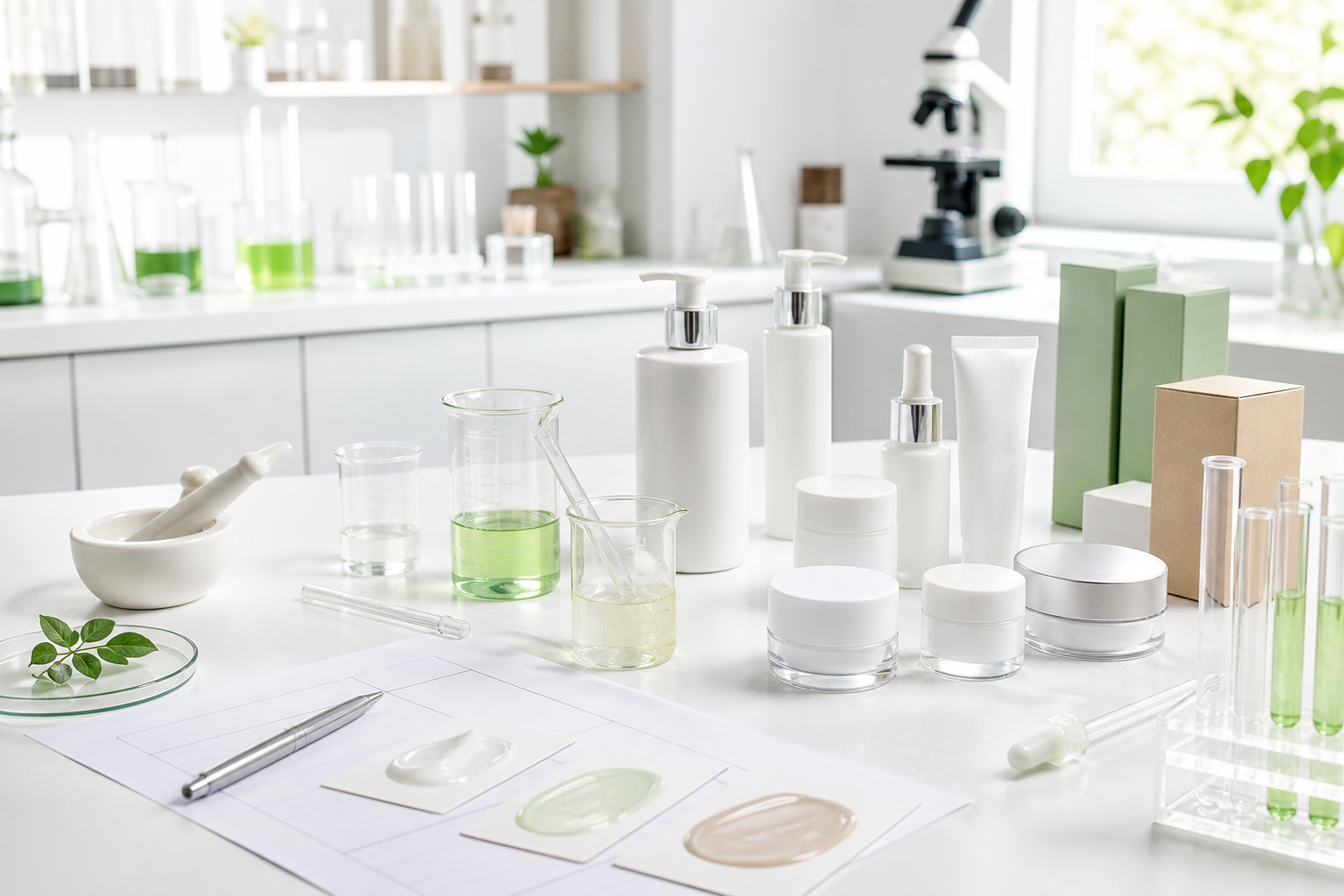
For a stock or private label route, the factory may send existing sample options first. The buyer compares texture, scent, color, packaging fit, and customer positioning. If the base is suitable, the work moves toward packaging, artwork, MOQ, quotation, and production confirmation.
For ODM adjustment or custom formulation, the lab prepares prototypes based on the brief. The buyer should test samples in the intended routine and provide concrete feedback. Helpful comments include “reduce tack after five minutes,” “make the cream less heavy,” “lower fragrance intensity,” “improve pump dosing,” or “keep the serum clear in this bottle.” Vague feedback slows the process and can create unnecessary revisions.
Mooyam Cosmetic connects formula sampling with OEM/ODM service planning, so the buyer can review formula route, packaging sourcing, MOQ, testing discussion, artwork timing, bulk production, and export support together.
Packaging Must Be Discussed Early
A formula is not complete until it works with packaging. A thick cream may not suit a small pump. A watery toner may require a bottle and cap that resist leakage. A serum may need a dropper or airless pump that dispenses consistently. A jar may look premium but may not fit the buyer’s hygiene story or shipping needs.
Early packaging sourcing and customization helps control these issues. Buyers can compare bottles, tubes, jars, pumps, droppers, labels, cartons, decoration methods, component MOQ, and lead time before approving the final sample. This reduces the risk of approving a formula that later fails filling or packaging compatibility review.
Quality Control and Compliance Boundaries
Formula development should include quality control thinking from the beginning. Depending on product type, this may include appearance, odor, color, viscosity, pH where relevant, microbial control, stability observation, packaging compatibility, fill weight, leakage, and retained samples. Mooyam’s quality control and compliance support helps buyers understand practical factory checks and documentation discussion.
Regulatory and claim requirements vary by destination market, sales channel, importer role, product type, ingredients, and label language. A responsible cosmetic ODM manufacturer can support product information and manufacturing records, but should not promise universal regulatory approval or make medical claims for cosmetic products.
Buyer Checklist Before Asking for a New Formula
- Define whether you need private label skincare, an ODM adjustment, full custom formulation, or OEM production from your own formula.
- Share target market, sales channel, customer profile, launch date, target unit cost, and expected order quantity.
- Prepare benchmark texture and packaging references without asking the manufacturer to copy another brand.
- List ingredient preferences, restricted ingredients, fragrance direction, color, viscosity, and claim boundaries.
- Decide whether low MOQ, fast sampling, unique sensory profile, or premium packaging is the main priority.
- Review sample feedback by texture, absorption, fragrance, color, packaging function, and routine fit.
- Confirm quality control expectations, artwork timing, export support, and target-market compliance review before bulk production.
How Mooyam Supports Formula Projects
Mooyam Cosmetic supports overseas B2B buyers with private label skincare options, cosmetic ODM manufacturer formula adjustment, cosmetic OEM manufacturer production planning, custom formulation, packaging sourcing, sample development, bulk production coordination, quality control, and export support. The goal is to help brands choose a development route that fits both product positioning and manufacturing reality.
If a buyer needs a fast first launch, Mooyam may recommend a proven formula base with suitable packaging. If the brand needs a hero product, Mooyam can discuss a custom route with clearer sample and testing expectations. In both cases, the project should stay focused on a realistic product brief, not an unlimited list of features.
Discuss Your New Formula with Mooyam Cosmetic
Looking for a reliable cosmetic OEM/ODM manufacturer to create or adapt a skincare formula? Contact Mooyam Cosmetic with your product idea, formula requirements, packaging options, MOQ target, sample development needs, production timeline, quality control expectations, and export market. We support brand and wholesale OEM/ODM projects only, not retail orders.
FAQ
Can a cosmetic manufacturer create a completely new formula?
Yes, many manufacturers can support custom formulation when the buyer provides a clear product brief, target market, texture direction, packaging idea, budget, and launch schedule.
Is custom formulation always necessary?
No. Private label skincare or modified ODM formulas may be better when speed, cost control, and lower MOQ are more important than a fully unique formula.
How many samples are needed before approval?
It depends on formula complexity and feedback quality. Simple adjustments may need fewer rounds, while custom formulas often need more testing and revision.
Can I send a benchmark product?
Yes. Benchmarks help explain texture, packaging, and market position, but the goal should be original development, not copying another brand’s formula or packaging.
Does packaging affect formula development?
Yes. Viscosity, filling method, light exposure, leakage risk, pump dosing, label area, and carton structure can all affect formula and production decisions.
Can Mooyam guarantee regulatory approval?
No responsible manufacturer should guarantee approval in every market. Requirements vary by destination market, ingredient, claim, label, importer role, and sales channel.
Does Mooyam accept retail orders for finished skincare?
No. Mooyam Cosmetic serves B2B beauty brands, private label buyers, distributors, and wholesale OEM/ODM manufacturing projects only.