Private label skincare pricing is one of the first questions buyers ask, but it is also one of the easiest areas to misunderstand. A low unit price may look attractive in a spreadsheet, while a complete launch budget also depends on formula choice, packaging sourcing, sample development, artwork, testing, MOQ, filling method, and export support.
This guide explains what overseas beauty brands, Amazon sellers, DTC startups, distributors, and private label buyers should expect when requesting prices from a cosmetic OEM manufacturer or cosmetic ODM manufacturer. Mooyam Cosmetic supports brand and wholesale OEM/ODM projects only; we do not accept retail orders.
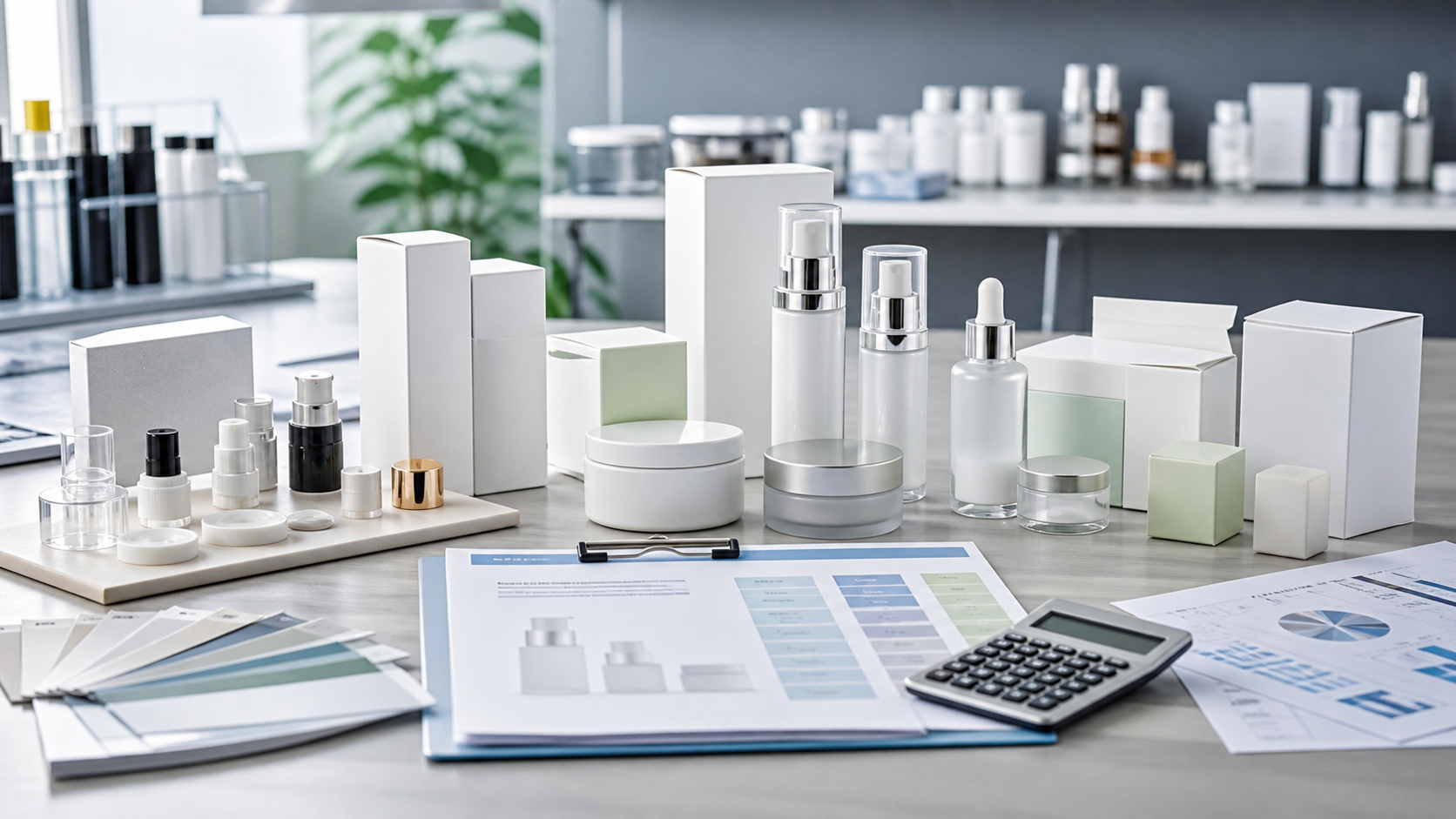
- Private label skincare pricing is shaped by formula route, packaging, MOQ, testing, filling process, and export requirements.
- Stock formulas usually help brands move faster, while custom formulation may require more sampling, testing, and development budget.
- Packaging can affect both unit price and launch timing, especially when custom molds, decorated bottles, cartons, or low MOQ sourcing are needed.
- The best quotation compares the full project scope instead of only the product unit cost.
What Private Label Skincare Pricing Usually Includes
A realistic private label quote should separate the major cost drivers instead of hiding everything behind one vague unit price. Buyers usually need to understand the formula base, bulk production quantity, primary packaging, secondary packaging, decoration method, filling and assembly work, quality control, export packing, and freight terms. When these items are not clearly defined, two supplier quotes can look similar while covering very different work.
For example, one supplier may quote a ready stock formula in a standard bottle with simple labeling. Another may include custom fragrance adjustment, an airless bottle, carton, shrink seal, stability testing, and export carton packing. Both may be valid, but they cannot be compared line by line unless the project scope is equal.
Mooyam Cosmetic usually starts by clarifying the buyer’s target market, desired product type, texture benchmark, ingredient preferences, claim direction, expected MOQ, packaging style, and launch schedule. This allows our team to recommend a practical private label skincare route rather than forcing a brand into a solution that does not fit its budget or channel.
Main Factors That Shape Your Product Price
Formula Type and Development Route
Stock formulas often have a lower development barrier because the base has already been created and can be sampled quickly. They can work well for brands that need a faster launch, controlled budget, and proven texture direction. Custom formulation gives the brand more control over sensorial feel, active direction, ingredient restrictions, fragrance, viscosity, and marketing story, but it normally requires more lab work and validation.
Custom formula development can still be efficient when the buyer prepares a focused brief. A clear benchmark, target price, ingredient avoid list, sales market, and packaging preference help the R&D team make better first samples. When a brief is too broad, the project can move through many unnecessary sample rounds, which increases both time and internal cost.
Packaging Choice and Decoration
Packaging is often the largest swing factor in private label skincare pricing. A standard jar, tube, or bottle with a label is usually more economical than a custom-colored airless pump, special cap, printed carton, metallic finish, or unique applicator. Decoration choices such as silk screen, hot stamping, matte coating, gradient spray, label material, and carton structure also affect MOQ and lead time.
Good packaging sourcing for private label skincare should balance brand image with commercial practicality. A startup brand may benefit from a clean standard package at first, then upgrade to custom packaging after sell-through data confirms demand.
MOQ and Batch Size
MOQ affects price because raw material purchasing, packaging procurement, filling setup, line cleaning, inspection, and documentation all require fixed work. A low MOQ can reduce inventory pressure, but the unit cost may be higher. A larger bulk production run may reduce unit price, but it also requires more cash flow and greater demand confidence.
When a supplier advertises low MOQ, buyers should ask which parts of the project are low MOQ: formula, bottle, cap, carton, label, decoration, outer carton, or all of them together. One component with a higher MOQ can drive the real order quantity.
Typical Quote Areas to Compare
| Quote Area | What Buyers Should Check | Pricing Impact |
|---|---|---|
| Formula | Stock base, modified base, or full custom formulation; fragrance, texture, active direction, and restricted ingredients. | Custom formulation and complex active systems usually require more sampling, testing, and raw material control. |
| Packaging | Bottle, jar, tube, pump, cap, carton, label, decoration method, and compatibility with the formula. | Custom packaging can improve shelf appeal but may raise MOQ, lead time, and tooling or decoration cost. |
| MOQ | Minimum quantity for formula production, packaging sourcing, decoration, and final filling. | Lower MOQ reduces inventory risk but can increase unit cost because fixed setup work is spread over fewer units. |
| Testing and QC | Stability, compatibility, appearance, odor, filling weight, microbial checks where applicable, and retained samples. | More demanding markets and claims may require broader checks; requirements vary by target market. |
| Export Support | Carton packing, product information, shipment coordination, and documents required by the buyer or importer. | Clear export preparation reduces launch risk and avoids unexpected document or packing changes near shipment. |
Why the Cheapest Quote May Not Be the Best Quote
A very low price can be useful only if the scope is transparent and the quality expectations are realistic. Problems appear when the quote excludes packaging decoration, sample revision, formula testing, carton packing, or important quality control steps. Buyers may then face extra fees after the project has already started.
Professional B2B buyers should ask whether the quotation includes sample development, final sample approval, ingredient and packaging confirmation, artwork proofing, production inspection, filling weight checks, batch records, retained samples, and export carton labeling. These details may not be exciting, but they protect the buyer during repeat orders and overseas distribution.
How to Prepare for an Accurate Private Label Quote
The best way to receive a useful quote is to provide a practical launch brief. Include the product category, target customer, market region, price tier, preferred texture, fragrance direction, ingredient preferences, packaging reference, order quantity, timeline, claim direction, and sales channel. If you are not sure about these points, an experienced factory can help you narrow the options.
Mooyam Cosmetic can support both private label skincare programs and OEM/ODM cosmetic manufacturing projects. For brands that need more differentiation, our custom formulation support can help turn a product concept into lab samples, then into scalable bulk production.
- Confirm whether you need stock formula, formula modification, or full custom formulation.
- Define the target market, sales channel, expected retail price, and launch quantity.
- Ask if the quoted MOQ applies to every packaging component or only to the filling quantity.
- Request a separate view of formula, packaging, decoration, testing, and export packing where possible.
- Check whether sample development, sample revision, final approval, and retained samples are included.
- Review artwork, ingredient list, claims, and labeling expectations before mass production. Requirements may vary by market.
- Ask how the supplier handles quality control during raw material receipt, filling, packing, and shipment preparation.
Quality Control and Export Details to Budget For
Quality control is not only a factory slogan. It includes raw material checks, packaging inspection, formula batch control, filling weight monitoring, appearance review, odor and color checks, leakage checks, carton inspection, and retained sample management. Buyers should also ask how nonconforming packaging or formula batches are handled before shipment.
For overseas projects, quality control and compliance review should be planned before labels and cartons are printed. A factory can help prepare product information and coordinate export support, but final market requirements depend on the destination country, importer responsibilities, claims, and sales channel.
Work With Mooyam Cosmetic
Looking for a reliable cosmetic OEM/ODM manufacturer for private label skincare pricing and product planning? Mooyam Cosmetic can help with formula selection, custom formulation, low MOQ planning, packaging sourcing, sample development, bulk production, quality control, and export support. Contact us to discuss your product idea, packaging options, MOQ, and quotation needs. We serve brand and wholesale OEM/ODM clients only, not retail orders.
FAQ
What is the main factor in private label skincare pricing?
The main factors are formula route, packaging choice, MOQ, decoration, testing scope, filling process, and export preparation. A quote is only useful when these details are clearly defined.
Is a stock formula always cheaper than custom formulation?
Usually it is faster and more economical to start with a stock formula, but the final price still depends on packaging, MOQ, decoration, and testing requirements.
Can Mooyam Cosmetic support low MOQ private label skincare?
Yes, Mooyam Cosmetic can discuss low MOQ options for suitable projects. MOQ depends on formula type, packaging availability, decoration method, and production planning.
Why does packaging affect the quote so much?
Packaging includes the bottle or jar, pump or cap, label, carton, decoration, compatibility, and supplier MOQ. Custom packaging can raise cost and lead time even when the formula is simple.
Should I compare only unit price between suppliers?
No. Compare the full scope, including samples, formula work, packaging, testing, quality control, export packing, and after-sales communication. A low unit price may exclude important work.
Can a factory guarantee compliance in my target market?
No responsible factory should make a blanket guarantee. Requirements vary by target market, claims, importer role, and sales channel, so labels and product information should be reviewed for the intended destination.
What should I send before asking for a quote?
Send the product type, target market, texture preference, ingredient direction, packaging reference, estimated quantity, timeline, claim ideas, and budget range if available.