
A complete body care product line can help a beauty brand increase basket size, support seasonal campaigns, and create a stronger shelf story. But adding more products is not automatically better. A body care line should be planned around consumer need, manufacturing feasibility, MOQ, packaging compatibility, and a clear launch sequence.
This guide is for international beauty brands, DTC teams, Amazon sellers, distributors, and private label buyers planning a body care product line with a cosmetic OEM manufacturer or cosmetic ODM manufacturer. Mooyam Cosmetic works on B2B OEM/ODM projects and does not accept retail orders.
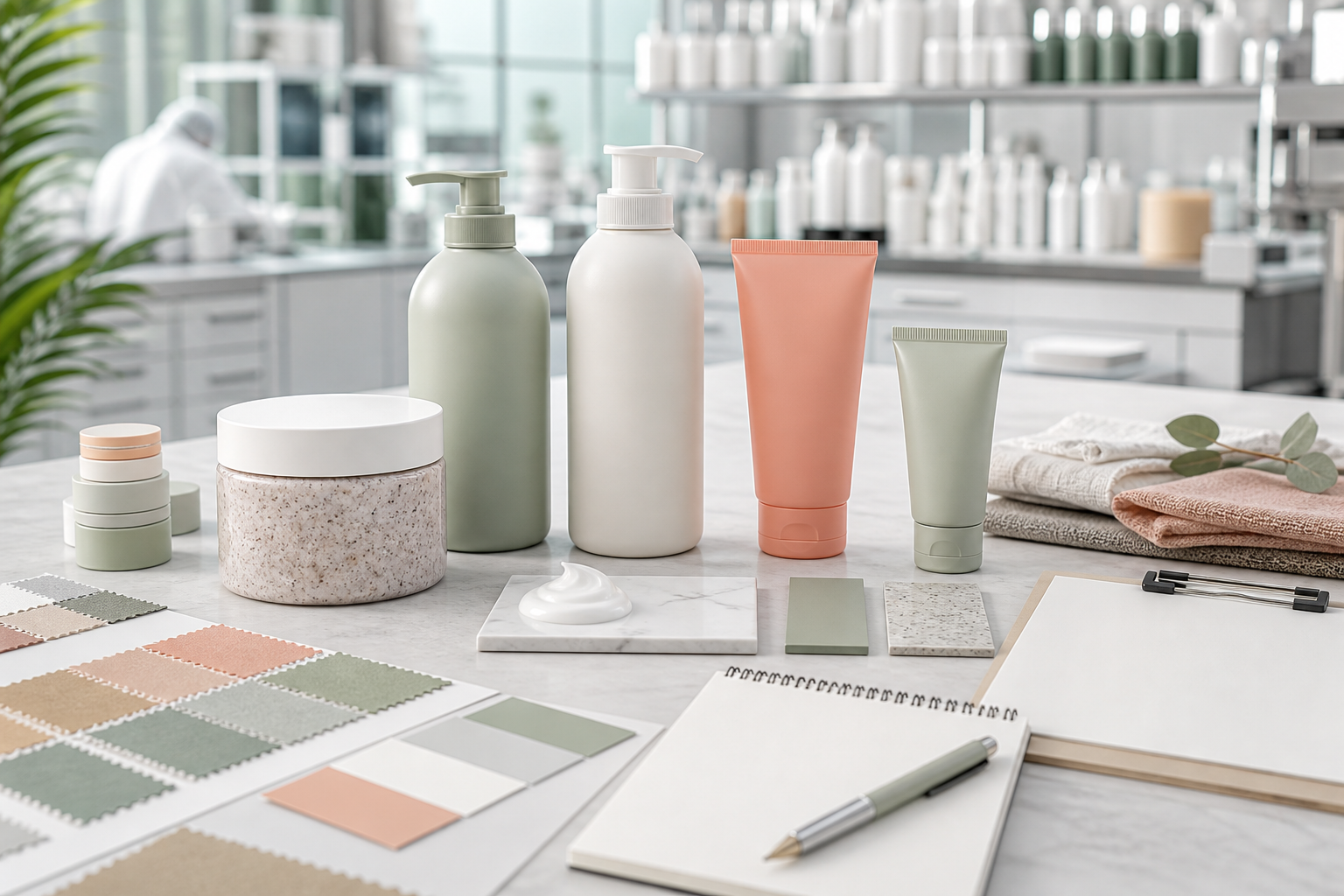
Quick Summary
- A body care product line should be built from a focused hero SKU, supporting products, and a realistic MOQ plan.
- Formula families, fragrance systems, packaging sourcing, and decoration methods should be aligned before sampling.
- Line planning should include launch priority, bundle strategy, quality control, export support, and market-specific label requirements.
- Mooyam Cosmetic can support private label skincare and body care development from sample development to bulk production.
What Counts as a Complete Body Care Product Line?
A complete body care line does not need ten products at launch. For many brands, a practical line starts with three to five connected SKUs: body wash, body lotion, body scrub, hand cream, and foot cream. A spa or distributor line may add massage cream, body oil, body butter, or travel sizes later.
The key is that the products should make sense together. They can share a fragrance direction, ingredient story, skin-feel promise, packaging system, or usage routine. If each SKU feels unrelated, buyers may face higher MOQ pressure without gaining a stronger brand position.
For a new brand, Mooyam Cosmetic often recommends planning the full roadmap but launching the first phase carefully. This allows the brand to test market response, manage cash flow, and reduce inventory risk while keeping a clear path for expansion.
Start With the Line Architecture
Before requesting samples, define the role of each SKU. A body wash may act as the entry product, a body lotion may drive daily repeat use, and a body scrub may create a higher perceived value for bundles. Hand cream and foot cream can support gift sets, salon channels, or targeted care collections.
Line architecture also helps the factory recommend the right development path. Some products may use private label bases with adjusted fragrance and packaging. Others may need custom formulation because the texture, sensory profile, or ingredient story is central to the brand.
| Line Role | Typical SKU | Planning Question |
|---|---|---|
| Hero product | Body lotion, body butter, or body wash | Which SKU best communicates the brand promise and has repeat-purchase potential? |
| Routine builder | Scrub plus lotion, wash plus lotion | Which products naturally work together in a bundle or set? |
| Targeted care | Hand cream, foot cream, elbow or dry-area cream | Does the product solve a clear cosmetic care need without medical claims? |
| Channel extension | Travel sizes, spa sizes, distributor packs | Which sizes fit the sales channel and packaging MOQ? |
Formula Family and Sensory Consistency
A strong product line usually has a consistent sensory language. If the body wash is fresh and lightweight but the lotion is heavy and strongly fragranced, the routine may feel disconnected. Consistency does not mean every formula is the same. It means the product family shares a recognizable point of view.
During custom formulation, buyers should define the desired after-feel for each SKU: creamy, fast-absorbing, cushiony, cooling, spa-like, fragrance-free, or rich. The factory can then develop samples that fit both individual product performance and the wider body care story.
Claims should remain practical. Cosmetic language may discuss moisturizing feel, smoother-looking skin, soft touch, cleansing experience, exfoliating feel, or comfort after use. Requirements for claims, labels, warnings, and ingredient restrictions vary by target market, so compliance should be reviewed before artwork approval.
Packaging System, MOQ, and Cost Control
Packaging decisions can make or break a body care product line. A coordinated set may use the same bottle family across different sizes, a shared color palette, or consistent caps and pumps. This improves visual identity and can simplify packaging sourcing, but it must be balanced against MOQ and component availability.
Low MOQ planning is especially important when launching multiple SKUs. Each formula, fragrance, size, and decoration version can create a separate MOQ. A brand may prefer four products, but if each has custom packaging, the investment may become too high. A practical alternative is to use stock components for phase one, then move to custom molds or premium decoration after sales data is available.
| Cost Driver | Why It Matters | Practical Control Method |
|---|---|---|
| Number of formulas | Each formula needs development, testing, and production setup | Start with a focused product family and expand after validation |
| Packaging MOQ | Bottles, tubes, jars, pumps, labels, and boxes may have separate minimums | Use available stock components where brand positioning allows |
| Decoration method | Printing, labels, hot stamping, and cartons affect cost and lead time | Choose decoration that fits the first launch quantity |
| Fragrance variants | Multiple scents multiply SKU complexity and inventory risk | Launch one or two signature scents first |
Recommended Development Workflow
A body care line should move through staged decisions. First, confirm the product map and target price range. Second, select formula route and packaging options. Third, approve lab samples with structured feedback. Fourth, test formula and packaging compatibility. Fifth, lock artwork, batch standards, quality control checkpoints, and shipping requirements.
Bulk production should not begin until the buyer has approved final samples and component standards. For multi-SKU launches, the factory should also confirm whether products ship together, whether cartons need mixed packing, and whether labels or outer boxes require market-specific language.
Buyer Checklist for a Body Care Line
- Choose the first-phase SKU count based on budget, MOQ, and sales channel, not only product ideas.
- Define one hero product and the supporting SKUs that complete the routine.
- Confirm formula route: stock private label base, adjusted base, or custom formulation.
- Align fragrance, texture, color, and packaging so the product family feels consistent.
- Check packaging sourcing lead times before promising a launch date.
- Review low MOQ by product, fragrance, size, and decoration method.
- Confirm quality control standards for each SKU before bulk production.
- Prepare export support needs, carton marks, product information, and target market label requirements early.
How Mooyam Cosmetic Supports Product Line Planning
Mooyam Cosmetic helps B2B buyers evaluate body care line feasibility before they commit to too many SKUs. Our team can discuss product selection, private label skincare and body care options, custom formulation, packaging sourcing, sample development, low MOQ planning, bulk production, quality control, and export support.
Useful service links for planning your project: OEM/ODM manufacturing service, private label skincare support, custom formulation development, customized packaging sourcing, quality control and compliance support, and contact Mooyam Cosmetic.
When you contact our team, share your target market, preferred product list, benchmark textures, packaging direction, expected order quantity, timeline, and channel strategy. The more specific the brief, the more practical the OEM/ODM solution can be.
FAQ
How many products should a new body care line launch with?
Many brands start with three to five SKUs. The right number depends on budget, MOQ, packaging availability, sales channel, and how clearly the products work together.
Can Mooyam Cosmetic help choose products for a line?
Yes. Mooyam Cosmetic can discuss product combinations such as body wash, lotion, scrub, hand cream, and foot cream based on your market, price point, and launch plan.
Is custom formulation necessary for every SKU?
No. Some SKUs may use private label bases, while others may need custom formulation. The best route depends on positioning, performance needs, MOQ, and timing.
How does packaging affect MOQ?
Packaging components, decoration methods, labels, boxes, pumps, and caps may each have minimum order quantities. Coordinated packaging should be planned early.
Can one fragrance be used across the full line?
It may be possible, but the fragrance should be checked in each formula because wash-off and leave-on products can hold scent differently and may face different market requirements.
What should buyers approve before bulk production?
Buyers should approve final formula samples, packaging samples, artwork, label information, quality criteria, carton requirements, and shipment plan.
Does Mooyam Cosmetic handle retail orders?
No. Mooyam Cosmetic supports B2B OEM/ODM manufacturing projects for brands, wholesale buyers, distributors, and private label teams.
B2B Project CTA
Planning a body care product line for your beauty brand? Contact Mooyam Cosmetic to discuss product selection, formula requirements, packaging options, MOQ, sample development, quality control, and bulk production. We support brand and wholesale OEM/ODM projects only.