
Choosing a color cosmetics manufacturer in China is different from sourcing a simple skincare stock formula. Makeup projects involve shade accuracy, pigment control, texture performance, component fit, artwork timing, and market-specific color additive review. For overseas beauty brands, Amazon sellers, DTC founders, distributors, and private label buyers, the right factory should be able to connect creative color ideas with manufacturable OEM/ODM execution.
This guide explains how to evaluate a color cosmetics manufacturer before you place a sample or bulk order. Mooyam Cosmetic supports B2B cosmetics and makeup OEM/ODM projects only; we do not accept retail orders.
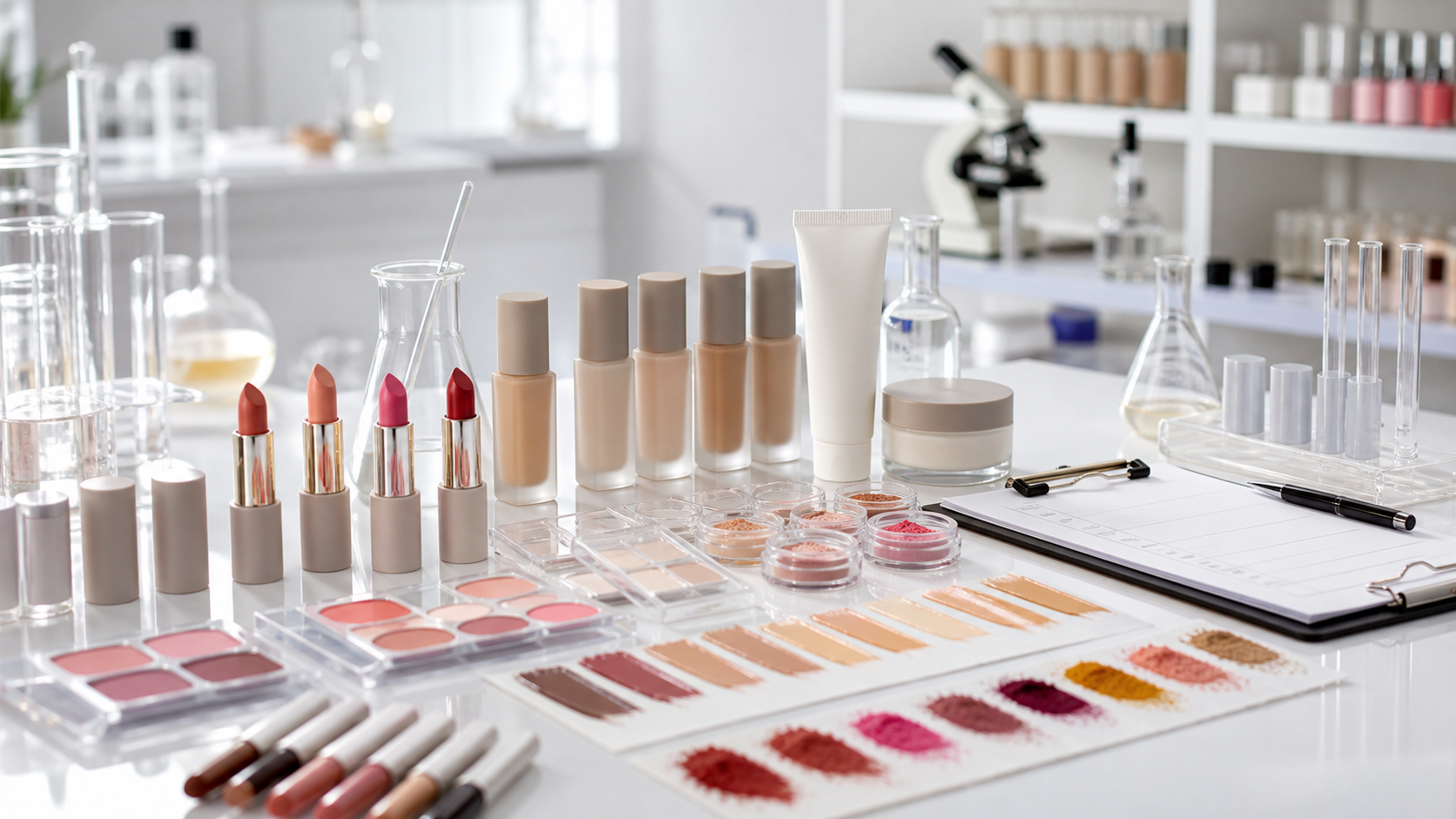
- A good color cosmetics manufacturer should combine formula capability, shade matching, packaging sourcing, quality control, and export support.
- Buyers should check category experience across lipstick, foundation, blush, mascara, eyeshadow, concealer, and hybrid makeup formats.
- Shade standards, pigment dispersion, component compatibility, MOQ, and claims review should be confirmed before bulk production.
- Mooyam Cosmetic helps B2B buyers develop private label makeup and custom formulation projects through OEM/ODM cooperation.
What a Color Cosmetics Manufacturer Should Provide
A professional makeup factory should do more than fill products into attractive packaging. The supplier needs to understand how pigments behave in different bases, how shade approvals are controlled, how packaging affects formula performance, and how production quality is checked at scale. A lipstick, liquid foundation, setting spray, blush stick, eyeshadow palette, and lip oil all require different technical controls.
For buyers comparing suppliers in China, the first question is whether the factory can support your actual product format. A skincare-focused factory may be strong in creams and serums but weak in shade matching or pressed powder. A color cosmetics manufacturer should be able to discuss pigment selection, texture goals, stability, filling method, packaging parts, decoration options, and sample revision logic before quoting.
Choose the Right Manufacturing Route
Private Label Makeup
Private label can be practical when a brand wants faster launch timing and is comfortable working from mature formula directions. It may suit starter lipstick shades, lip gloss, mascara, loose powder, or a basic complexion product if the formula and packaging match your market needs. The buyer should still review ingredients, claims, shade standards, and packaging details before approval.
ODM Development
A cosmetic ODM manufacturer can adjust an existing development direction to match your desired finish, shade family, fragrance level, applicator, or packaging. ODM is useful when you need differentiation but do not want the time and cost of starting from zero. This route often works well for hybrid makeup, lip-and-cheek products, setting spray, serum concealer, and foundation extensions.
OEM or Custom Formulation
A cosmetic OEM manufacturer or custom formulation project may be better when your brand has a defined brief, benchmark, ingredient story, shade map, or owned formula concept. This route needs clearer decisions around target market, performance claims, testing expectations, packaging, MOQ, and production lead time. Mooyam Cosmetic can help buyers compare OEM/ODM service options before choosing the route.
Key Evaluation Criteria for Makeup Suppliers
| Evaluation Area | What to Ask | Why It Matters |
|---|---|---|
| Category experience | Which color cosmetics formats has the factory produced recently? | Real category knowledge reduces sampling delays and scale-up surprises. |
| Shade control | How are lab standards, bulk standards, lighting, and shade revisions managed? | Color mismatch can create returns, channel complaints, and launch delays. |
| Formula route | Can the supplier offer private label, ODM adjustment, and custom formulation? | The route affects cost, MOQ, differentiation, and development time. |
| Packaging fit | Can components, applicators, pans, pumps, wipers, caps, and cartons be tested? | Packaging problems can cause leakage, breakage, poor pickup, or filling issues. |
| Quality system | What checks are used for pigment dispersion, fill weight, appearance, odor, and packaging? | Bulk quality must match the approved sample, especially for repeat orders. |
Shade Matching and Pigment Control
Color cosmetics buyers should never approve a shade only from a phone photo. Shade standards should be reviewed under consistent lighting, with physical samples retained by both buyer and factory. Complexion products may require undertone logic, oxidation checks, dry-down observation, and shade spacing. Lip and cheek products may need payoff review on different skin tones and in different application amounts.
Color additive rules vary by target market and intended use area. A pigment that is suitable for one product type or market may not automatically be suitable for eye, lip, or multi-use claims elsewhere. Buyers should confirm requirements for the destination market before approving final INCI, claims, and artwork. Mooyam Cosmetic can support quality control and compliance preparation, but market-specific regulatory review remains necessary.
Packaging, MOQ, and Cost Factors
Packaging sourcing is a major part of makeup manufacturing. A lipstick mechanism, mascara wiper, powder pan, cushion compact, foundation pump, lip gloss applicator, or eyeshadow palette can affect both user experience and production stability. Buyers should discuss component availability, decoration MOQ, mold needs, carton structure, lead time, and reorder availability before locking the launch calendar.
MOQ depends on formula batch size, shade count, packaging components, decoration method, and whether the project uses stock or custom packaging. A low MOQ launch is usually easier when the brand starts with fewer shades, available components, and practical decoration. For more advanced launches, customized packaging can strengthen brand positioning but should be planned early.
Buyer Checklist Before Requesting Samples
- Define the product format: lipstick, lip gloss, foundation, blush, mascara, eyeshadow, concealer, powder, or hybrid makeup.
- Choose whether the route is private label skincare and cosmetics, ODM adjustment, or custom formulation.
- Prepare target market, sales channel, desired claims, benchmark products, shade references, and packaging expectations.
- Ask how shade matching, pigment dispersion, oxidation, viscosity, filling weight, and packaging function will be checked.
- Confirm MOQ by formula, shade, component, decoration, carton, and finished product quantity.
- Review label language, ingredient restrictions, color additive rules, and import document needs for the target market.
How Mooyam Cosmetic Supports Color Cosmetics Projects
Mooyam Cosmetic helps overseas beauty brands develop and manufacture makeup through OEM/ODM cooperation. Our team can support product brief review, custom formulation, shade matching, packaging sourcing, sample development, bulk production planning, quality control, and export support. We work with brand owners, private label buyers, distributors, Amazon sellers, and wholesale B2B clients.
Looking for a reliable color cosmetics manufacturer in China? Send Mooyam Cosmetic your product idea, shade plan, formula requirements, packaging direction, MOQ expectation, and target market. Contact us to discuss a practical B2B manufacturing solution. We serve brand and wholesale projects only, not retail orders.
FAQ
What should I ask a color cosmetics manufacturer first?
Start with product format, formula route, shade count, packaging options, MOQ, sample lead time, quality checks, and target market requirements.
Can I start with low MOQ makeup production?
Low MOQ may be possible when the project uses practical formula choices, available components, limited shades, and standard decoration methods.
Why is shade approval important?
Color differences are highly visible to consumers. Physical shade standards help control lab samples, bulk production, repeat orders, and customer expectations.
Can one makeup product be used on lips, eyes, and cheeks?
It depends on formula, pigments, claims, and destination market rules. Multi-use concepts need regulatory and safety review before artwork approval.
Does packaging affect makeup formula performance?
Yes. Pumps, wipers, pans, sticks, caps, and applicators can affect filling, pickup, leakage, drying, breakage, and consumer use.
Can Mooyam Cosmetic help with packaging sourcing?
Yes. Mooyam Cosmetic can help compare packaging components, decoration options, cartons, labels, and export packing for B2B OEM/ODM projects.
Does Mooyam accept retail makeup orders?
No. Mooyam Cosmetic supports cosmetic OEM/ODM manufacturing for brands, distributors, private label buyers, and wholesale clients only.