Vegan skincare manufacturing is no longer only a niche trend. Many overseas beauty brands now ask whether their cleanser, toner, serum, cream, mask, body care, or private label skincare line can be developed without animal-derived ingredients. For B2B buyers, the challenge is turning a vegan positioning into a clear manufacturing brief without making unsupported certification, sustainability, or performance claims.
This article explains what brands should consider before developing vegan skincare with a cosmetic OEM/ODM manufacturer. Mooyam Cosmetic supports brand and wholesale OEM/ODM projects only; we do not accept retail orders.
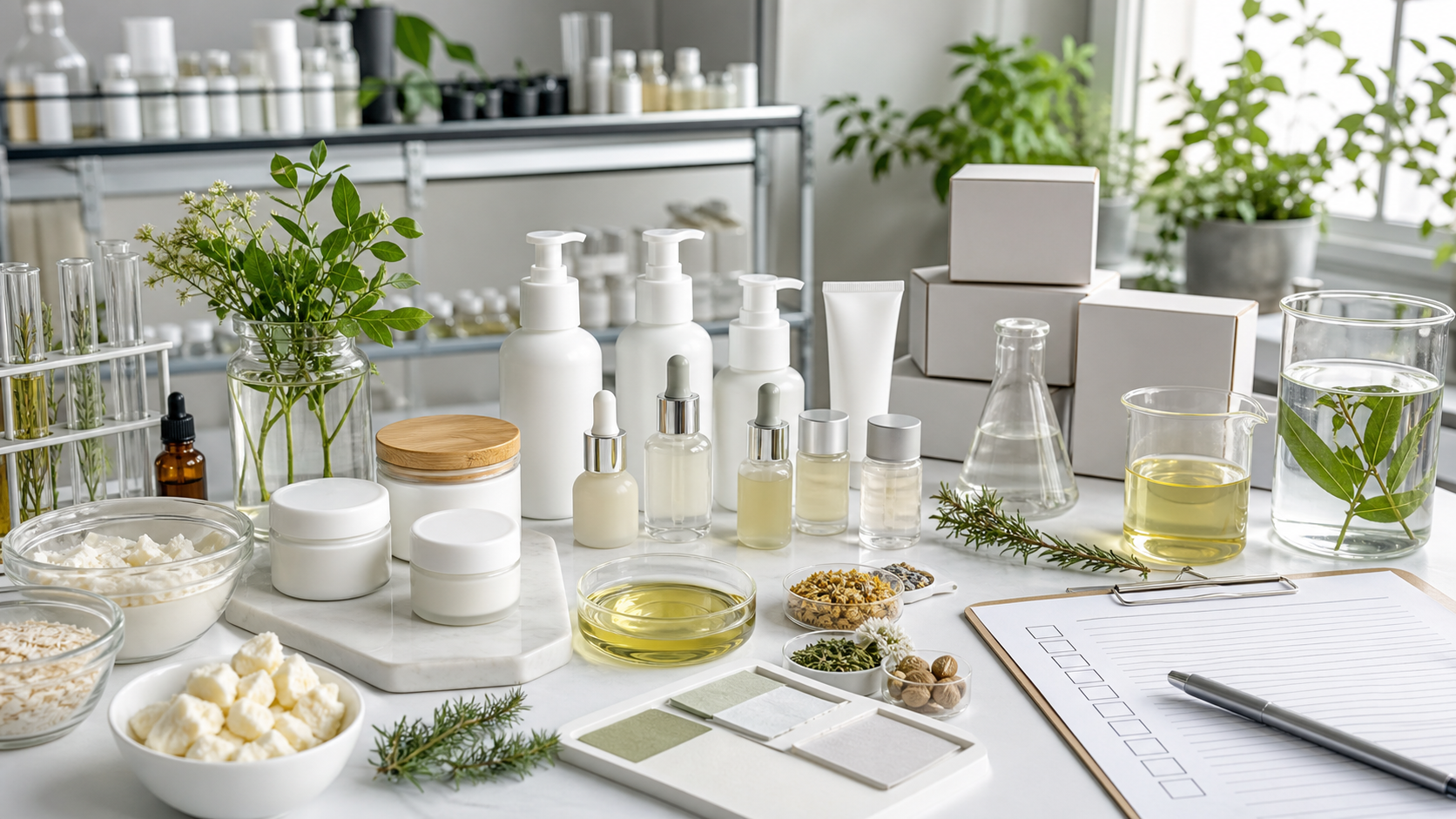
- Vegan skincare manufacturing starts with ingredient screening, formula route, supplier documentation, packaging choices, and claim control.
- Vegan does not automatically mean natural, organic, cruelty-free, sustainable, hypoallergenic, or regulation-approved in every market.
- Buyers should confirm raw material origin, cross-contact controls, MOQ, packaging sourcing, sample development, bulk production checks, and export support.
- Mooyam Cosmetic can help B2B brands develop practical vegan-positioned skincare through OEM/ODM cooperation.
What Vegan Skincare Manufacturing Means
In a manufacturing context, vegan skincare generally means the formula is designed without intentionally added animal-derived ingredients such as beeswax, lanolin, collagen from animal sources, certain keratin materials, some milk derivatives, or other ingredients that do not fit the brand’s vegan policy. However, the exact definition can vary by brand, certification body, sales channel, and destination market.
This is why buyers should not simply ask for a vegan formula and assume every detail is solved. A professional factory needs a written brief that defines ingredient restrictions, claim language, certification expectations if any, target market, product category, packaging preference, MOQ, and launch timeline. If third-party certification is required, the brand should confirm the certifier’s rules before final formula approval.
Vegan, Natural, Clean, and Cruelty-Free Are Not the Same
One common mistake is mixing different marketing concepts together. Vegan describes ingredient origin. Natural usually refers to an ingredient story or source preference. Clean beauty is a brand-defined claim with different meanings in different channels. Cruelty-free relates to animal testing policies and may require separate documentation or certification depending on the market. Sustainable packaging is another separate topic.
For overseas buyers, the safest approach is to define each claim separately. A vegan moisturizer can include synthetic ingredients. A natural-positioned serum may not be vegan if it uses animal-derived wax or proteins. A vegan formula does not automatically meet every retailer’s restricted-substance list. Cosmetic requirements vary by target market, so claims, labels, and documentation should be reviewed before printing.
Ingredient and Supplier Checks
Vegan formulation begins with raw material review. Buyers should ask how the factory screens ingredient origin, whether supplier documentation is available, and whether substitutes are needed for texture, film, viscosity, or sensory performance. Replacing an animal-derived ingredient is not always a one-for-one exchange; the formula may need a different emulsifier, thickener, wax, conditioning agent, or skin-feel system.
For example, a vegan lip balm or body butter may need plant waxes instead of beeswax. A cream may use plant-based emollients rather than lanolin derivatives. A serum may need a plant-origin or synthetic alternative to an animal-origin active story. Mooyam Cosmetic can help buyers review custom formulation options and compare practical ingredient routes.
| Decision Area | Buyer Should Confirm | Factory Control Point |
|---|---|---|
| Ingredient policy | Which animal-derived ingredients are not allowed? | Raw material origin review and supplier documentation request. |
| Formula route | Private label, ODM adjustment, or custom vegan formulation? | Feasibility, sample rounds, texture adjustment, and stability planning. |
| Claim language | Will the product claim vegan, plant-based, cruelty-free, clean, or natural? | Separate wording review and market-specific compliance discussion. |
| Packaging | Standard pack, recyclable story, refill concept, carton, or low MOQ option? | Component availability, decoration MOQ, compatibility, and export packing. |
| Production quality | What inspections are required before shipment? | Batch records, appearance, odor, viscosity, filling weight, packaging function, and retained samples. |
Private Label or Custom Vegan Formula?
A private label skincare route may be suitable when a brand wants a faster vegan-positioned launch using existing formula directions that already fit the ingredient policy. Buyers should still confirm the formula’s ingredient origin, packaging, claims, MOQ, and documentation before approval. This route can work for simple cleansers, toners, creams, masks, body lotions, or starter skincare sets.
Custom formulation is better when the brand needs a more specific texture, active story, target price, restricted ingredient list, fragrance direction, or market position. A vegan barrier cream, botanical serum, gentle cleanser, or body butter may require multiple rounds of sample development to balance skin feel, stability, cost, and claim boundaries. A cosmetic ODM manufacturer can also offer a middle route by adjusting existing concepts to match vegan positioning.
Packaging and MOQ Considerations
Packaging should match both the formula and the brand story. Many vegan skincare brands prefer minimal, recyclable-looking, refillable, or lower-plastic packaging, but these choices can affect MOQ, component lead time, decoration method, and cost. A low MOQ launch is usually easier with available bottles, pumps, tubes, jars, cartons, and labels rather than custom molds or uncommon materials.
Packaging compatibility still matters. Plant-oil-rich formulas may interact differently with pumps or liners. A natural-looking label may need adhesive testing. A refill concept may need stronger quality and logistics planning. Mooyam Cosmetic can support packaging sourcing so the brand can compare appearance, compatibility, MOQ, decoration, and export durability before bulk production.
Quality Control and Documentation
Vegan skincare projects should use the same production discipline as any other cosmetic project. Raw materials and packaging should be checked before use. During manufacturing, quality control may include appearance, odor, pH where relevant, viscosity, mixing records, filling weight, coding, packaging function, carton condition, and retained samples. Additional supplier declarations may be requested when the buyer has a specific vegan claim or retailer requirement.
Claims should be written carefully. A vegan product should not promise medical results, guaranteed skin benefits, or universal regulatory approval. Requirements vary by target market, and importers may request different documents. Mooyam Cosmetic can support quality control and compliance coordination within the project scope, while the buyer confirms market-specific obligations.
Buyer Checklist Before Developing Vegan Skincare
- Define exactly what vegan means for your brand and sales channel.
- Separate vegan, cruelty-free, natural, clean, organic, and sustainable claims instead of treating them as one claim.
- Prepare product type, target market, ingredient avoid list, benchmark texture, packaging reference, and MOQ expectation.
- Ask whether the project should use private label, ODM adjustment, or deeper custom formulation.
- Confirm raw material origin documentation needs before approving final formula and artwork.
- Review packaging sourcing, decoration MOQ, label material, carton strength, and export packing requirements.
- Check stability, compatibility, microbial control, filling weight, appearance, odor, and retained sample procedures before shipment.
How Mooyam Cosmetic Supports Vegan Skincare Projects
Mooyam Cosmetic works with overseas beauty brands, skincare startups, Amazon sellers, distributors, DTC teams, and private label buyers on OEM/ODM skincare manufacturing. We can help review product briefs, compare vegan-compatible formula routes, develop samples, source packaging, plan low MOQ where practical, manage bulk production, and support export documentation.
For buyers who need a full development path, our OEM/ODM service can connect formula discussion, sample approval, packaging, quality control, and production planning in one project flow.
Looking for a reliable cosmetic OEM/ODM manufacturer for vegan-positioned skincare? Send us your product idea, target market, ingredient restrictions, packaging direction, MOQ expectation, and launch schedule. Contact Mooyam Cosmetic to discuss a practical B2B manufacturing solution for your brand. We serve brand and wholesale buyers only, not retail orders.
FAQ
Can vegan skincare be developed through private label manufacturing?
Yes, if the existing formula route fits the brand’s vegan ingredient policy and target market requirements. Buyers should still verify documentation, claims, and packaging.
Is vegan skincare always natural?
No. Vegan refers to ingredient origin, while natural refers to a different positioning. A vegan formula can include synthetic cosmetic ingredients.
Does vegan mean cruelty-free?
Not automatically. Cruelty-free is a separate claim and may require separate documentation, retailer review, or third-party certification depending on the market.
Can Mooyam Cosmetic help replace animal-derived ingredients?
Yes. Mooyam Cosmetic can help review alternative emollients, waxes, thickeners, conditioning agents, and active stories during sample development.
Does vegan skincare require special packaging?
Not always. Packaging should match the formula, brand story, MOQ, cost target, and export needs. Sustainable or refill concepts require separate planning.
What documents should buyers ask for?
Depending on the project, buyers may request ingredient information, supplier declarations, batch records, product specifications, and export-related documents. Needs vary by market.
Can Mooyam guarantee vegan certification?
No. Certification depends on the chosen certifier and project scope. Mooyam can support manufacturing information, while certification requirements must be confirmed separately.
Does Mooyam accept retail vegan skincare orders?
No. Mooyam Cosmetic supports B2B OEM/ODM manufacturing for brands, distributors, private label buyers, and wholesale clients only.