Good private label packaging is not only a creative decision. For overseas beauty brands, labels, boxes, and bottles affect sampling speed, MOQ, filling compatibility, export packing, shelf presentation, and the number of revisions needed before bulk production. A strong design brief helps the cosmetic OEM manufacturer understand what must look premium and what must work reliably on the production line.
Mooyam Cosmetic supports business clients with cosmetic OEM/ODM service, private label development, packaging coordination, sample review, and bulk production planning. We work with brands, distributors, Amazon sellers, DTC teams, and sourcing managers; we do not accept retail orders.
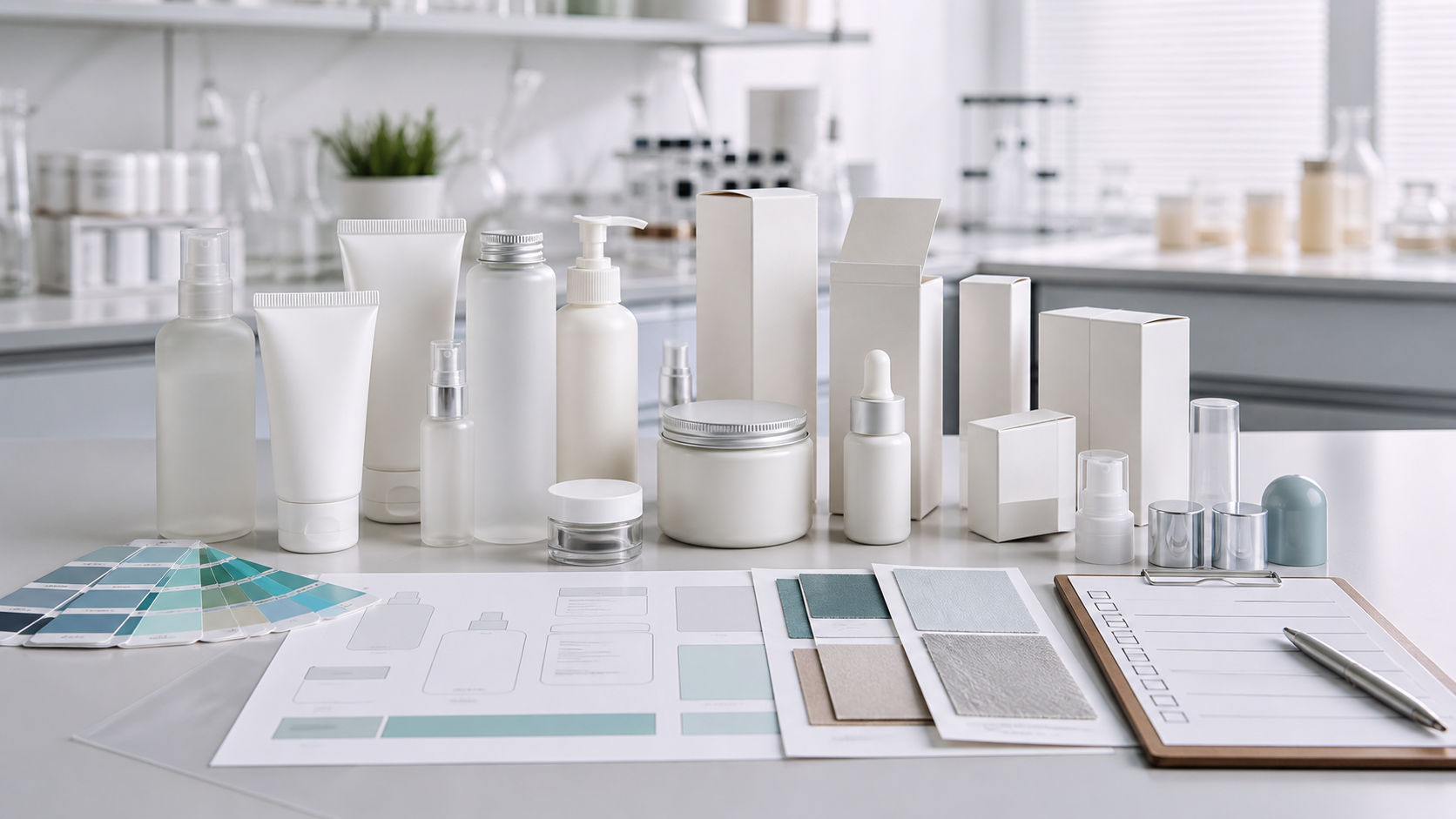
- Label, box, and bottle design should be planned together because each part affects filling, artwork, MOQ, cost, and shipping.
- Buyers should confirm container size, label area, decoration method, carton structure, barcode, language, and target-market claim limits before final proofing.
- A practical packaging brief reduces sample delays, color mismatch, label lifting, carton weakness, and last-minute artwork changes.
- Mooyam Cosmetic helps B2B buyers connect packaging sourcing with private label skincare, custom formulation, quality control, and export support.
Why Packaging Design Matters in OEM/ODM Projects
Packaging is often the first thing a customer sees, but for a manufacturer it is also a technical input. A serum formula may require a compatible dropper or pump. A cream may need a jar liner that resists leakage. A cleanser tube needs a cap and shoulder design that can handle filling, sealing, and shipping. If the label, bottle, and box are designed separately, the final product may look inconsistent or create production problems.
For a private label buyer, the goal is not to copy a famous retail product. The goal is to create a manufacturable brand presentation that fits the formula, price tier, MOQ, and sales channel. A cosmetic ODM manufacturer can help compare stock packaging, semi-custom decoration, and fully custom packaging routes, but the buyer still needs to provide a clear brand direction and approval process.
Start With the Product and Formula Route
Before choosing a bottle or box, confirm the product type, fill volume, texture, viscosity, and usage style. A lightweight toner, an oil serum, a body lotion, and a clay mask all need different dispensing systems and closure controls. If your project includes custom formulation, the packaging should be reviewed before final stability and compatibility testing because formula and package influence each other.
Brands developing private label skincare can often start with proven packaging shapes to control cost and lead time. More customized components can be added later when sales volume supports higher MOQ. This staged approach is especially useful for startup brands that need low MOQ production without losing a professional look.
Label, Box, and Bottle Decisions to Align
| Packaging Area | Buyer Decision | Manufacturing Checkpoint |
|---|---|---|
| Bottle or primary container | Material, shape, fill volume, color, pump or cap, transparency, and decoration style. | Formula compatibility, filling behavior, leakage risk, component availability, and MOQ. |
| Label | Label size, material, finish, adhesive, barcode, required language, and claim wording. | Label area, curved-surface fit, adhesion, scuff resistance, batch code position, and artwork proof. |
| Outer box | Carton size, paper weight, insert need, finish, opening style, and retail presentation. | Product fit, compression strength, shipping protection, printing tolerance, and export carton packing. |
| Visual system | Color palette, line extension logic, SKU differentiation, and premium or clinical mood. | Color proofing, material consistency, supplier lead time, and repeat-order control. |
Design Tips for Private Label Buyers
Keep the Brand System Simple Enough to Produce
A clean visual direction is easier to manage than a design with too many finishes, special papers, metallic effects, and small text areas. Premium does not always mean complicated. A simple label with good spacing, correct material, and consistent color can look more reliable than a crowded design that is difficult to print repeatedly.
Build a SKU System Before Adding More Products
If you plan to launch a cleanser, serum, cream, and mask, decide how customers will recognize each SKU. Color bands, short product names, icons, or bottle shapes can help, but the system should stay clear on both desktop product pages and small marketplace thumbnails. A good SKU system also helps distributors and warehouse teams avoid picking errors.
Match Claims to the Target Market
Cosmetic labeling rules and claim boundaries vary by target market. Avoid drug-like promises, guaranteed results, or unverified certification marks. Before printing, check INCI format, net content, responsible party details, warnings, barcode, country-of-origin needs, and language requirements with the importer or regulatory consultant for the destination market.
How Packaging Sourcing Fits the Manufacturing Timeline
Packaging should be discussed early, not after formula approval. Stock components can shorten the timeline, but color customization, special pumps, molded bottles, foil stamping, embossing, or unique carton structures may extend lead time. Through packaging sourcing and customization, Mooyam Cosmetic can help buyers compare feasible component routes for sampling, pilot orders, and bulk production.
During sample development, the factory should check whether the selected container fills cleanly, closes correctly, dispenses the right amount, and protects the product during shipping. If artwork is not final, a blank or temporary label can be used for formula and package compatibility checks, but final production should wait for approved artwork and packaging proof.
Buyer Checklist Before Approving Packaging Design
- Confirm product type, fill volume, viscosity, fragrance direction, and target retail price.
- Decide whether the first order should use stock packaging, decorated stock packaging, or fully custom components.
- Prepare label dielines, box dielines, barcode, batch code area, INCI, warnings, and target-market language.
- Ask for MOQ, packaging lead time, sample cost, color proofing method, and reorder requirements.
- Review label adhesion, pump dosing, cap fit, carton strength, and export carton packing before bulk production.
- Keep a signed final sample or golden sample for production comparison and quality control and compliance review.
Common Mistakes to Avoid
Many packaging delays come from incomplete briefs. Buyers may approve a beautiful mockup before confirming container availability, label size, formula compatibility, or MOQ. Other common mistakes include using very small type, placing barcodes on curved surfaces, choosing labels that lift on oily products, requesting too many custom colors for a low MOQ order, or changing artwork after packaging has entered production.
Another risk is separating design from manufacturing. A designer may create a visual concept without knowing filling limits, carton structure, component MOQ, or export packing needs. Sharing the design files with the factory early helps prevent expensive adjustments later.
Work With Mooyam Cosmetic
Looking for a reliable cosmetic OEM/ODM manufacturer to develop packaging for your skincare or cosmetic line? Mooyam Cosmetic can support custom formulation, private label skincare, low MOQ planning, packaging sourcing, sample development, bulk production, quality control, and export support for business buyers. Contact us to discuss your product idea, formula requirements, packaging options, MOQ, and launch schedule.
FAQ
Can Mooyam Cosmetic help source labels, boxes, and bottles?
Yes. We can help B2B buyers compare packaging options, decoration methods, MOQ, lead time, and compatibility with the selected formula and filling process.
Should packaging design start before formula sampling?
It should start early enough to guide container selection, but final artwork can be locked after formula direction, fill volume, and target-market labeling needs are clear.
What is the safest packaging route for a startup brand?
Many startups begin with stock or semi-custom packaging to control MOQ and timing, then move to more customized components after sales volume becomes predictable.
Can I use my own packaging supplier?
In many OEM projects, buyers can provide packaging, but the components still need compatibility checks, filling tests, delivery planning, and quality inspection before production.
What files are needed for label and box printing?
Buyers usually need final dielines, editable artwork, color references, barcode, ingredient list, warnings, net content, and any required market-specific language.
Does packaging affect MOQ and cost?
Yes. Custom color, molds, decoration, cartons, special finishes, and minimum component orders can all affect project cost and production quantity.