Cosmetic packaging problems can turn a good formula into a difficult launch. Leaking pumps, label lifting, scratched bottles, weak cartons, wrong caps, color mismatch, and poor export packing may cause delays, extra cost, and buyer complaints. For overseas beauty brands, packaging risk should be controlled before bulk production, not after finished goods arrive at the warehouse.
Mooyam Cosmetic works with brand owners through OEM/ODM cosmetic manufacturing, packaging sourcing, sample development, production inspection, and export support. Our focus is B2B private label and custom projects; we do not sell retail products.
- Most cosmetic packaging problems come from weak briefs, poor component matching, late artwork changes, or insufficient compatibility checks.
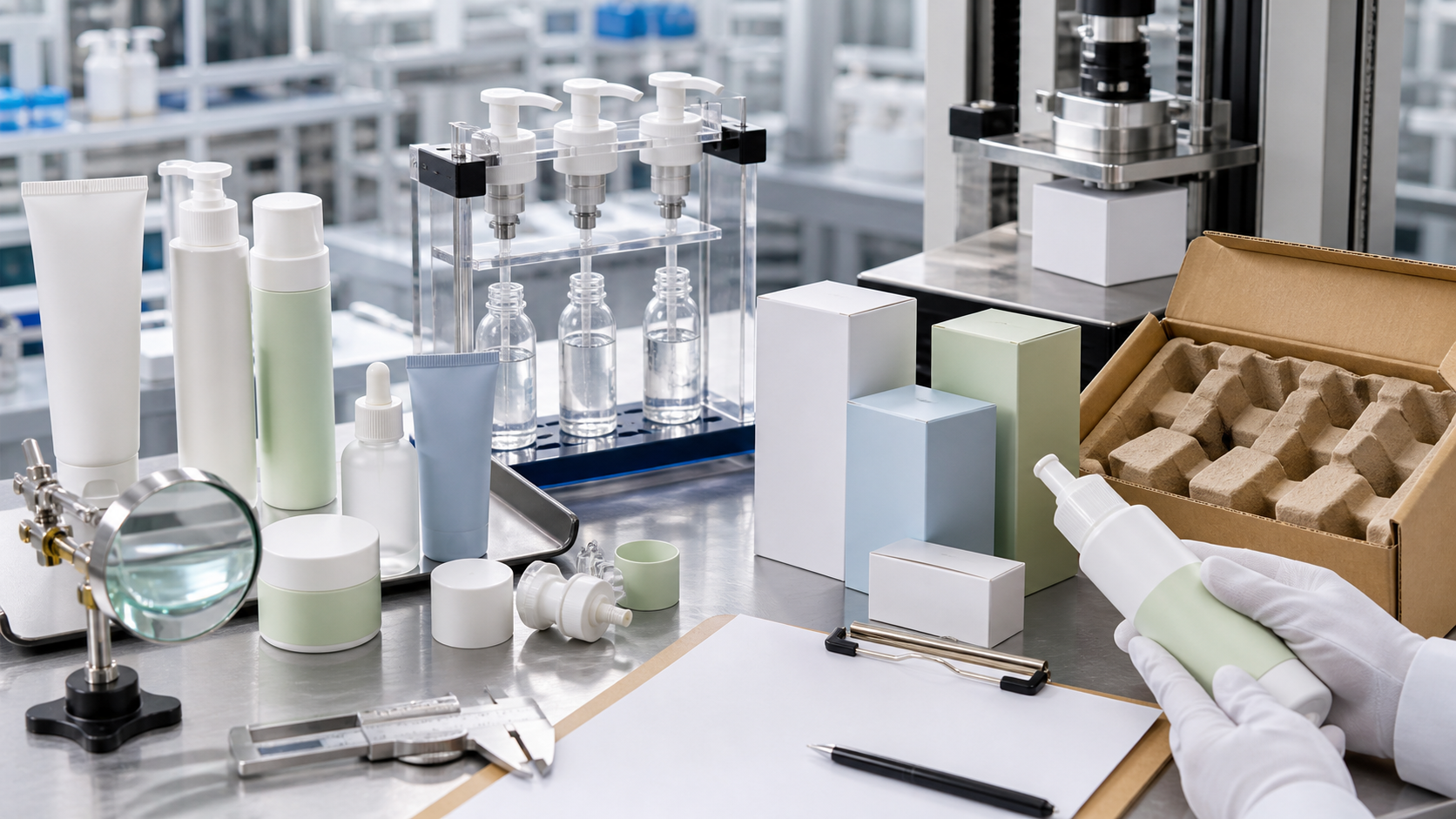
- Buyers should test leakage, dispensing, label adhesion, carton fit, print color, transport protection, and coding position before mass production.
- Packaging risk control should connect formula development, MOQ planning, supplier evaluation, quality control, and export packing.
- Mooyam Cosmetic helps B2B buyers prevent packaging problems during private label skincare and cosmetic OEM/ODM projects.
Why Packaging Problems Happen
Packaging looks simple from the outside, but every component has a technical role. A pump must match product viscosity. A tube must seal correctly after filling. A label must stay flat on the bottle surface. A carton must protect the product and communicate the brand clearly. When these points are not checked together, small issues can become expensive production problems.
A cosmetic OEM manufacturer may receive a formula brief, a packaging picture, and an urgent launch date, but no clear information about target market, filling volume, cap style, artwork deadline, or shipping method. In that situation, the risk of revision increases. A cosmetic ODM manufacturer can recommend proven packaging routes, but the buyer still needs to approve practical tradeoffs between appearance, MOQ, timing, and quality control.
Common Packaging Problems and Prevention Steps
| Problem | Likely Cause | Prevention Step |
|---|---|---|
| Leakage around pump, cap, or tube seal | Poor component fit, wrong gasket, weak sealing, product viscosity mismatch, or rough shipping route. | Run filling, closure, inversion, drop, and transport packing checks before approving bulk components. |
| Label lifting or wrinkling | Wrong label material, curved surface, oily formula residue, low adhesion, or humidity exposure. | Match label stock and adhesive to container material; test after filling and storage. |
| Scratches or color inconsistency | Weak surface finish, unstable decoration process, poor handling, or unclear color standard. | Approve color proof, define acceptable tolerance, inspect incoming packaging, and protect parts during assembly. |
| Carton crushing or poor retail fit | Thin paper, incorrect insert, loose product fit, or export carton weakness. | Confirm carton structure, paper weight, inner support, master carton packing, and shipping test expectations. |
| Wrong artwork or missing label information | Late file change, unclear version control, or market labeling requirements not reviewed. | Lock final artwork, barcode, INCI, warnings, batch code area, and target-market wording before printing. |
Connect Packaging to Formula Development
Packaging should not be chosen only by appearance. The package must suit the formula. A watery toner may work with a fine mist sprayer, while a thicker lotion may need a stronger pump. An oil serum may require better closure control and label material. A mask jar may need a liner, inner cover, or spatula depending on brand positioning and hygiene expectations.
If your project uses custom formulation, ask the factory to review packaging during sample development. Formula stability, packaging compatibility, preservative system, color, odor, and dispensing behavior should be monitored together. For export projects, requirements can vary by destination market, so labeling and claims should be reviewed before printing.
How MOQ and Packaging Sourcing Affect Risk
Low MOQ projects often use available stock packaging because it reduces cost and lead time. That can be a smart choice, but buyers still need to confirm component quality and continuity for repeat orders. Fully custom packaging may look more distinctive, but it can require higher MOQ, longer tooling time, and stricter approval control.
Through customized packaging support, Mooyam Cosmetic helps buyers compare stock packaging, decorated stock packaging, and custom component options. The right route depends on product category, price target, sales channel, launch schedule, and reorder forecast. Packaging should support the business model, not create inventory pressure before the brand has demand.
Quality Control Checks Before Bulk Production
Before moving from approved sample to bulk production, the buyer and factory should agree on the packaging inspection standard. This includes incoming component checks, formula/package compatibility, filling weight, closure torque, pump output, label position, coding position, carton assembly, master carton packing, and retained samples. Clear standards help avoid disagreement after production is finished.
Mooyam Cosmetic provides quality control and compliance coordination for business clients. We do not promise regulatory approval because cosmetic requirements depend on the target market, importer responsibility, formula, labeling, and claim wording. However, early review can reduce avoidable packaging and documentation errors.
Packaging Risk Checklist for Buyers
- Share product type, formula texture, fill volume, target market, sales channel, and expected order quantity.
- Confirm whether the project uses private label skincare, OEM with buyer formula, or ODM formula development.
- Request packaging samples before final artwork printing, especially for pumps, droppers, tubes, jars, and cartons.
- Test leakage, dispensing, label adhesion, cap fit, carton protection, and product fit under realistic shipping conditions.
- Lock artwork version, barcode, INCI, warnings, batch code position, and carton dieline before packaging production.
- Keep approved packaging samples and finished product samples as references for production inspection and repeat orders.
How a Factory Can Help Prevent Packaging Problems
A reliable factory should not simply accept any packaging idea without review. It should ask practical questions about formula compatibility, MOQ, filling method, decoration process, lead time, artwork files, target market, and shipping route. It should also explain where cost or timing may change if the buyer requests a special cap, custom color, unique carton, or additional insert.
For startup brands, the best solution is often a balanced one: professional stock packaging, clean label design, controlled MOQ, and enough testing to reduce obvious risk. For growing brands, custom molds, special decoration, and upgraded cartons may be worthwhile when order volume and brand positioning justify the investment.
Work With Mooyam Cosmetic
Looking for a cosmetic OEM/ODM manufacturer that can help prevent packaging problems before production? Mooyam Cosmetic supports private label skincare, custom formulation, low MOQ planning, packaging sourcing, sample development, bulk production, quality control, and export support for overseas business buyers. Contact us to discuss your packaging requirements and production plan.
FAQ
What is the most common cosmetic packaging problem?
Leakage, label lifting, pump mismatch, carton weakness, and artwork errors are common. The main cause is usually insufficient testing before bulk production.
Can packaging be tested during sample development?
Yes. Packaging should be reviewed during sample development whenever possible, especially when formula viscosity, oil content, fragrance, or filling method may affect component performance.
Does low MOQ increase packaging risk?
Low MOQ does not automatically increase risk, but it can limit custom component choices. Buyers should choose proven stock packaging and test it carefully.
Who is responsible for final label compliance?
The brand owner or importer usually carries responsibility for target-market compliance. The factory can help review practical packaging and documentation points, but requirements vary by market.
Can I change packaging after formula approval?
It is possible, but the new package may require compatibility checks, artwork updates, cost review, and timeline adjustment before production.
How can brands reduce packaging delays?
Prepare a clear packaging brief, approve samples early, lock artwork versions, confirm MOQ and lead time, and define quality standards before bulk packaging production.
Does Mooyam Cosmetic accept retail orders?
No. Mooyam Cosmetic serves brands, distributors, Amazon sellers, DTC teams, and other business buyers through OEM/ODM manufacturing cooperation.