Natural skincare can be attractive for beauty brands, but it is also one of the easiest categories to misunderstand. Buyers may expect a gentle formula story, recognizable plant-derived ingredients, and clean label positioning, while the factory still has to control stability, preservation, sensory feel, packaging compatibility, claims language, and export documentation.
Mooyam Cosmetic works with overseas brands through cosmetic OEM manufacturing, cosmetic ODM manufacturing, private label skincare, and custom formulation projects. This guide explains how a natural skincare manufacturer should help buyers turn a marketable concept into a realistic product plan for sampling and bulk production. Mooyam Cosmetic serves brand and wholesale OEM/ODM projects only; we do not accept retail orders.
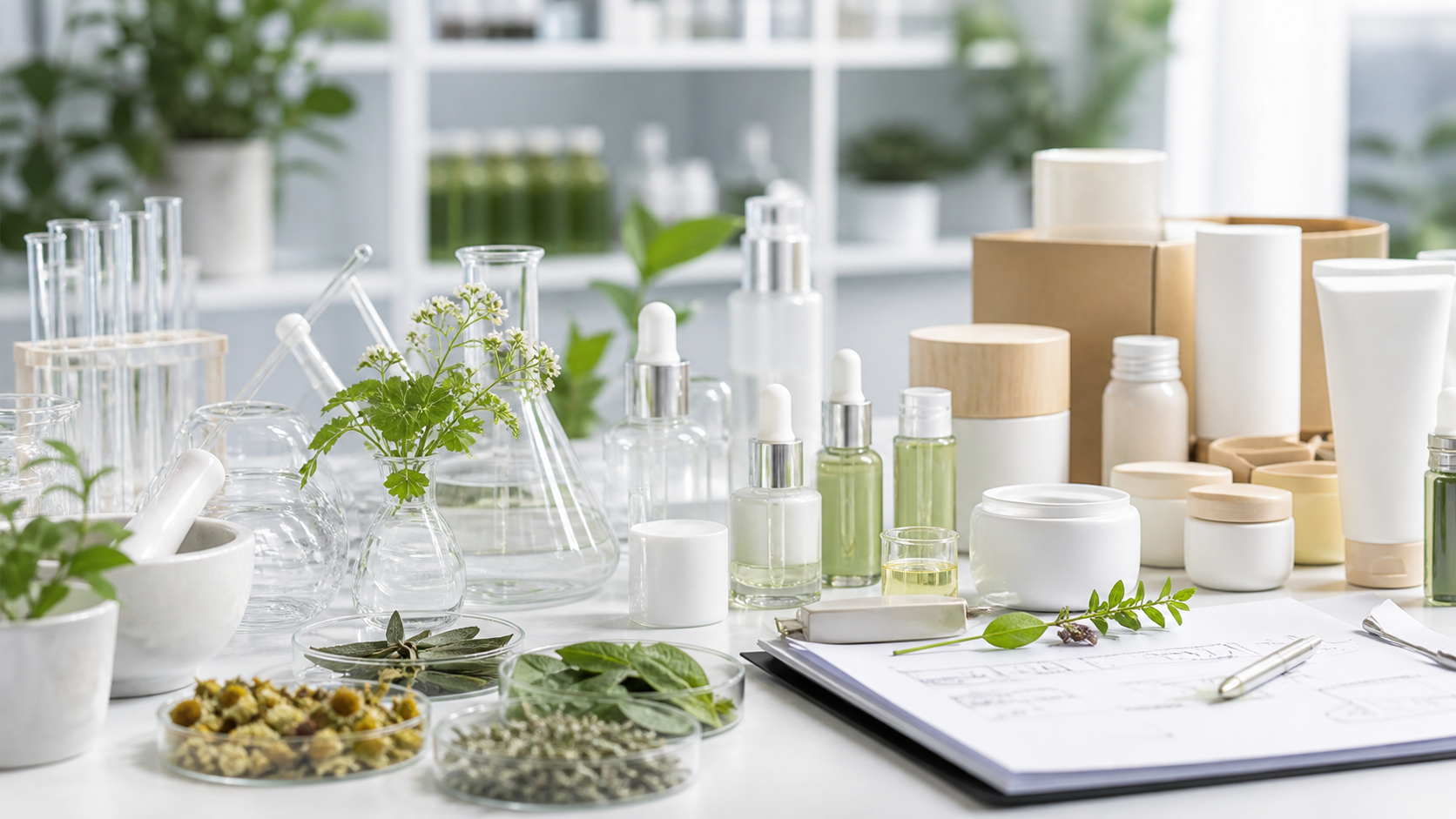
- Natural skincare manufacturing is not only about using botanical ingredients; it requires formula stability, preservative strategy, packaging compatibility, and responsible cosmetic claims.
- Buyers should define target market, ingredient preferences, restricted ingredients, texture benchmark, packaging route, MOQ expectations, and testing requirements before sample development.
- A cosmetic OEM manufacturer can support raw material review, custom formulation, low MOQ planning, packaging sourcing, quality control, and export support.
- Natural-positioned products should avoid medical promises and should be reviewed against the rules of the destination market before printing labels or cartons.
What Natural Skincare Manufacturing Means for B2B Buyers
For a brand owner, natural skincare usually means a product story built around plant-derived ingredients, gentle positioning, simple routines, and ingredient transparency. For a cosmetic factory, it means a more detailed technical brief. The team must understand which ingredients are important to the brand, which ingredients are not acceptable, what claims are planned, and what target market rules may affect the final product.
A good natural skincare manufacturer should not simply add a botanical extract to a stock base and call the project finished. The formula still needs a stable emulsifier system, suitable preservative approach, controlled odor and color, compatible packaging, and a clear production standard. If the product will be sold through Amazon, DTC, salon, spa, distributor, or retail channels, the artwork and product information also need to match that channel’s expectations.
Key Formula Decisions Before Sampling
Define the Natural Positioning
Some brands want a plant-focused serum, some want a moisturizer with naturally derived emollients, and others want a full private label skincare line with cleanser, toner, cream, mask, and body care products. The more specific the positioning, the easier it is to select a practical formula route. Buyers should decide whether natural means botanical actives, naturally derived surfactants, fragrance-free direction, essential oil story, vegan positioning, minimalist INCI, or a combination of these ideas.
Check Ingredient Restrictions Early
Ingredient restrictions should be shared before lab work begins. A buyer may want to avoid certain preservatives, fragrance allergens, colorants, silicones, mineral oil, animal-derived ingredients, or region-specific restricted materials. Requirements vary by target market, so the brand should confirm local compliance expectations before final artwork approval. A factory can help screen ingredients, but it should not promise universal regulatory approval without market-specific review.
Balance Story, Sensory Feel, and Stability
Natural-positioned products still need to feel good in daily use. A cream that pills, a serum that darkens quickly, or a cleanser that smells unstable will weaken the brand story. During custom formulation, Mooyam Cosmetic can adjust texture, absorption, fragrance level, viscosity, pH, and packaging match so the product remains manufacturable and comfortable for the intended consumer.
| Decision Area | Buyer Question | Factory Control Point |
|---|---|---|
| Product concept | Is the product a hero serum, daily moisturizer, cleanser, mask, or full routine? | Formula base, active selection, sample route, and cost direction. |
| Natural claim boundary | Which words will appear on the label, website, or sales sheet? | Claims review, ingredient support, and target-market caution. |
| Preservation | Are there ingredients the brand wants to avoid? | Microbial risk control, pH range, preservative efficacy, and stability monitoring. |
| Packaging | Will the formula use jar, tube, airless pump, dropper, or refill pack? | Compatibility, light exposure, leakage, filling speed, and MOQ. |
| Commercial target | Is the project low MOQ, premium, spa, DTC, Amazon, or distributor-led? | Cost control, packaging sourcing, bulk production planning, and export support. |
How the OEM/ODM Development Process Works
The process normally starts with a buyer brief. Useful details include product type, target audience, benchmark texture, active direction, avoid list, target price, packaging preference, order quantity, destination market, and launch schedule. With this information, the factory can recommend whether the project should use an ODM base with adjustments, a private label formula, or a full custom formulation route.
After the first samples, the buyer should provide specific feedback. Instead of saying the sample is not premium enough, describe whether the issue is absorption, tack, odor, richness, finish, color, viscosity, or packaging dose. Clear feedback reduces unnecessary revision cycles and helps the factory protect timing for stability checks, artwork proofing, packaging procurement, and production scheduling.
Once the final sample is approved, the brand should lock formula, packaging, artwork, label copy, order quantity, inspection requirements, and shipping plan. Changing packaging or claims after stability testing can create delays because the product may need additional compatibility review.
Natural Skincare Packaging Considerations
Packaging should support both the formula and the brand position. Light-sensitive botanical ingredients may need opaque or amber packaging. Lightweight lotions may work well in tubes or pumps, while richer creams may use jars or airless containers. Brands planning gift sets or distributor cartons also need to consider carton strength, label adhesion, leakage risk, and export packing.
Mooyam Cosmetic supports packaging sourcing and customization for private label and OEM/ODM projects. The right packaging choice should be confirmed before final testing, because the container is part of the finished product system.
Quality Control Risks to Manage
Natural-positioned formulas may face color drift, odor change, separation, preservation weakness, extract sediment, pH movement, or packaging compatibility issues. These risks are not reasons to avoid the category, but they must be managed through raw material inspection, formula batch records, stability testing, microbial checks, filling weight control, packaging inspection, and retained samples.
Brands should ask how the factory controls incoming raw materials, production hygiene, batch records, packaging inspection, and finished goods checks. Mooyam Cosmetic explains these controls through its quality control and compliance support process so overseas buyers can plan with more confidence.
Buyer Checklist Before Requesting a Quote
- Define the product type, target market, target user, and sales channel.
- Share natural-positioning requirements, ingredient preferences, and ingredients to avoid.
- Prepare benchmark textures and packaging references without asking the factory to copy another brand.
- Confirm whether the project needs custom formulation development or an adjusted ODM/private label base.
- Ask about low MOQ, sample development time, packaging lead time, bulk production schedule, and export support.
- Review cosmetic claims and label language for the destination market before printing.
- Plan stability, compatibility, microbiology, inspection, and retained-sample requirements.
How Mooyam Cosmetic Supports Natural Skincare Projects
Mooyam Cosmetic helps brand buyers evaluate product concepts, formula routes, packaging options, MOQ, sampling steps, testing needs, and production handover. Buyers can start with our OEM/ODM service for full manufacturing cooperation, choose private label skincare options for faster line planning, or request a custom formula when the brand needs a unique texture or ingredient story.
Develop Natural Skincare With Mooyam Cosmetic
Looking for a reliable cosmetic OEM/ODM manufacturer for a natural-positioned skincare line? Contact Mooyam Cosmetic to discuss your product idea, formula requirements, ingredient preferences, packaging options, MOQ, sample development, quality control, bulk production, and export support. We work with brand owners, distributors, Amazon sellers, DTC teams, and wholesale buyers, not retail customers.
FAQ
Can natural skincare be produced as a private label product?
Yes. Many natural-positioned products can be developed through private label skincare or ODM cooperation when the buyer defines the product type, claims direction, packaging, and MOQ.
Does natural skincare always need a custom formula?
No. Some projects can start from an existing base with adjustments. A custom formulation route is more suitable when the brand needs a unique texture, active system, avoid list, or claim strategy.
What should buyers prepare before sampling?
Prepare target market, product type, benchmark texture, ingredient preferences, restricted ingredients, packaging style, target cost, and launch schedule.
Are natural ingredients automatically safer or easier to formulate?
No. Botanical and naturally derived ingredients still require compatibility, preservation, stability, and claims review.
Can Mooyam Cosmetic help source packaging?
Yes. Mooyam Cosmetic can coordinate bottle, tube, jar, pump, carton, label, and export packing options for OEM/ODM projects.
Can a factory guarantee compliance in every market?
No responsible factory should make that promise without market-specific review. Cosmetic requirements vary by destination market, claim type, ingredient list, and sales channel.
Does Mooyam Cosmetic accept retail orders?
No. Mooyam Cosmetic supports brands and wholesale buyers through cosmetic OEM/ODM manufacturing and private label projects only.