Sampling is where a cosmetic project becomes real. A formula may look clear in a brief, a jar may look premium in a catalog, and a launch schedule may look simple on paper, but beauty brands should test real samples before committing to bulk production.
For overseas buyers working with a cosmetic OEM manufacturer or cosmetic ODM manufacturer, the question is not only whether one lab sample feels acceptable. The better question is how many samples, sample types, and review rounds are needed before your team can approve formula, packaging, artwork, quality control expectations, and export-ready production details with confidence.
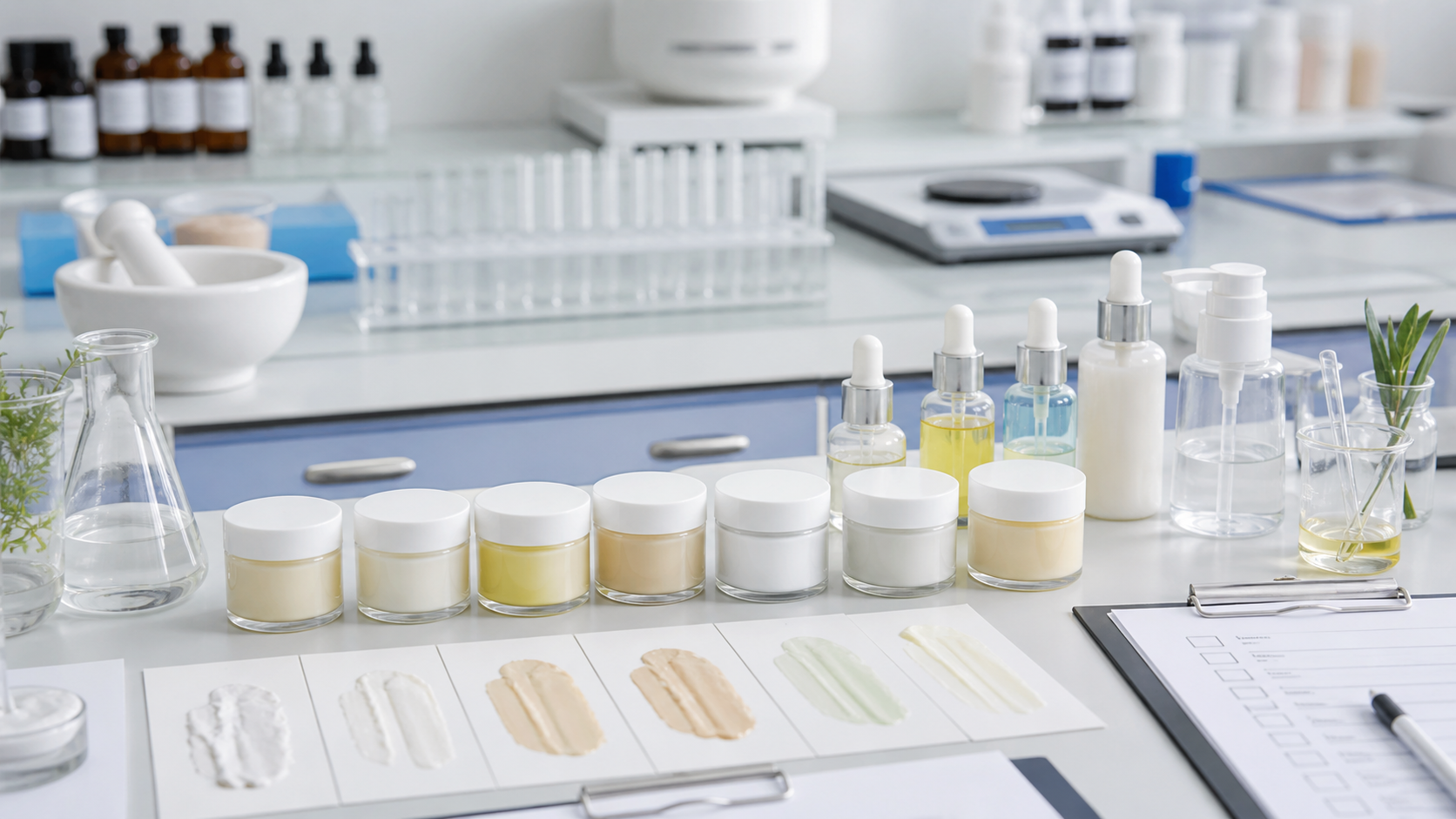
- Most B2B cosmetic projects need more than one sample because formula feel, packaging fit, artwork, stability, and production references are checked at different stages.
- A practical plan usually includes first lab samples, revised formula samples, packaging compatibility samples, artwork proofs, final approval samples, and retained references.
- Simple private label skincare projects may need fewer rounds than custom formulation projects, but buyers should still document what was approved.
- Mooyam Cosmetic supports brands with sample development, packaging sourcing, quality control, bulk production planning, and export support for wholesale OEM/ODM projects only.
Why Sample Quantity Matters Before Production
One sample rarely answers every production question. It may help your marketing team judge texture and scent, but it may not confirm pump dosing, carton fit, label adhesion, batch color tolerance, fill weight, or how the product behaves after storage. If the buyer approves production from too little evidence, small issues can become expensive during bulk production.
Testing several samples does not mean creating endless revisions. The goal is to define a controlled sample path: what each sample is for, who should review it, what feedback matters, and when the project is ready to lock. This is especially important when a brand is combining private label skincare, custom formulation, low MOQ production, customized packaging, and international shipment in one project.
A Practical Sample Plan for Cosmetic Buyers
The right number depends on product type, formula route, packaging complexity, claims, target market, and launch risk. A simple stock formula with standard packaging may move faster. A custom serum, sensitive-skin cream, sunscreen-related product, color cosmetic, or multi-SKU launch usually needs more sample evidence before production approval.
| Sample Type | Typical Quantity to Review | Main Purpose | Buyer Decision |
|---|---|---|---|
| First lab formula samples | 2-4 formula directions or textures | Compare texture, viscosity, scent, color, absorbency, sensory feel, and product positioning. | Choose the closest direction and give precise feedback. |
| Revised formula samples | 1-3 revised versions per feedback round | Confirm requested changes such as lighter texture, lower fragrance, better spread, different color, or adjusted active story. | Approve one version or request a final focused adjustment. |
| Packaging fit samples | 3-10 filled or semi-filled units when possible | Check pump output, leakage, jar seal, tube recovery, dropper dose, label area, carton fit, and user experience. | Approve component choice before ordering bulk packaging. |
| Artwork and label proofs | 1-2 proof rounds per SKU | Review logo placement, INCI area, barcode, batch code position, warning text, language, and print tolerance. | Approve files for printing after market-specific review. |
| Final approval samples | 2-6 approved references per SKU | Lock formula, packaging, odor, appearance, fill level, and visual standard before production. | Sign off on the reference used for QC and production comparison. |
| Retained and shipment samples | Factory retained samples plus buyer reference units | Support quality traceability after production, shipment, and reorder discussion. | Keep records for future comparison and complaint handling. |
How Many People Should Review the Samples?
Assign reviewers by role and keep feedback structured. Practical notes about texture, pump output, carton fit, or channel requirements help the factory adjust samples faster than broad personal preferences.
| Reviewer | What to Check | Useful Feedback Format |
|---|---|---|
| Founder or brand owner | Product story, target customer fit, price tier, benchmark match, and launch direction. | Rank versions and explain the business reason behind the choice. |
| Product or marketing team | Texture, fragrance, routine fit, hero ingredient story, and claim wording. | Use a score sheet for feel, appearance, scent, and market positioning. |
| Procurement team | MOQ, component availability, packaging lead time, unit cost, and reorder risk. | Confirm which choices affect quotation and timeline. |
| Quality or regulatory reviewer | Label information, claims boundary, test plan, formula restrictions, and target-market notes. | Mark required changes before printing or production approval. |
| Sales channel team | Amazon, DTC, salon, distributor, or retail shelf expectations. | Check if packaging, size, carton, and product positioning fit the channel. |
What Buyers Should Test on Each Sample
Formula Feel and Use Experience
Apply the product in a realistic routine, not only on the back of the hand. For skincare, check spread, absorption, tack, shine, scent after several minutes, residue, layering with cream or sunscreen, and how the product feels in warm and cool conditions. For makeup, check payoff, finish, wear feel, shade match, transfer, and removal. Avoid making medical or guaranteed performance claims; keep evaluation tied to cosmetic use and buyer requirements.
Packaging Function and Compatibility
Packaging can change the user experience and production risk. A serum may need a controlled dropper, an airless bottle, or a pump with suitable output. A cream jar needs a secure liner and compatible inner surface. Tubes need recovery, sealing, and decoration checks. Buyers can review packaging sourcing and customization early so the final formula is tested with realistic components.
Label, Claims, and Market Requirements
Artwork should be reviewed before final print approval. Ingredient names, net content, responsible party details, warning language, barcode placement, batch code area, and claim wording may vary by target market. Mooyam can support general production and documentation coordination, but buyers should confirm market-specific legal requirements with qualified local advisors when needed. Our quality control and compliance FAQ explains common factory-side checks.
Production Reference and QC Standard
The approved sample becomes the reference for production comparison. It should be clearly named, dated, photographed, and stored. For bulk production, the factory checks raw material records, batching conditions, filling weight, appearance, odor, packaging condition, coding, carton packing, and retained samples. This helps align the buyer and manufacturer if a future reorder or complaint review is needed.
Sample Strategy by Project Type
Different projects need different sample depth. A standard private label toner may move faster than a custom cream in new airless packaging, while a multi-SKU launch needs consistency across formula feel, fragrance, cartons, and shelf appearance.
- Simple private label product: usually focus on selecting one stock or lightly adjusted formula, confirming packaging, and approving artwork.
- Custom formulation project: plan more lab rounds because texture, active blend, pH, preservative system, viscosity, and stability expectations may need adjustment.
- Packaging-heavy launch: test real packaging samples before final approval, especially for pumps, droppers, tubes, jars, labels, cartons, and travel sizes.
- Multi-SKU product line: review samples together so scent direction, texture family, color palette, label layout, and carton hierarchy feel consistent.
- Export project: confirm outer carton, barcode, batch code, document needs, and market-specific label points before shipment planning.
Buyer Checklist Before Approving Production
- Confirm the approved formula sample code, date, version number, and final sensory target.
- Check packaging compatibility, pump or dropper output, leakage risk, label adhesion, carton fit, and carton durability.
- Review artwork, INCI list, net content, barcode, batch code area, warning text, and target-market language.
- Clarify MOQ, production lead time, packaging lead time, sample approval deadline, and export support needs.
- Ask which stability, compatibility, microbial, filling, and packaging checks are included for the project.
- Keep buyer-side reference samples and make sure the factory retains approved samples for future comparison.
- Document the final approval in writing before bulk production starts.
How Mooyam Cosmetic Supports Sample Development
Mooyam Cosmetic works with beauty brands, Amazon sellers, DTC teams, distributors, and private label buyers on wholesale cosmetic projects. Through our OEM/ODM service workflow, we help buyers move from product idea to sample development, packaging coordination, quality control, and bulk production.
If you need a fast route, our private label skincare programs can help you compare ready formula directions and suitable packaging options. If your product needs a unique texture, active story, or benchmark feel, our custom formulation support can create a more tailored development path.
We do not sell retail orders. Mooyam Cosmetic supports brand and business clients with low MOQ discussion, packaging sourcing, sample development, bulk production planning, quality control, and export support.
Work With Mooyam Cosmetic
Looking for a reliable cosmetic OEM/ODM manufacturer for your next skincare or cosmetic project? Contact Mooyam Cosmetic to discuss your product idea, formula requirements, packaging options, sample plan, MOQ, production timeline, and wholesale OEM/ODM solution.
FAQ
How many cosmetic samples should a brand test before production?
There is no single number for every project. Many brands review several formula versions, packaging fit samples, artwork proofs, and final approval samples before production. The count depends on formula complexity, packaging choice, SKU count, target market, and launch risk.
Is one approved lab sample enough for bulk production?
Usually not. One formula sample may confirm texture, but it may not confirm packaging compatibility, filling behavior, label layout, carton fit, or QC reference standards. Buyers should approve the full product system, not only the liquid or cream.
Do custom formulation projects need more samples than private label projects?
Often yes. Custom formulation may require more rounds because texture, active blend, fragrance, viscosity, color, pH, packaging, and stability expectations are being developed specifically for the brand.
Can packaging samples be checked before the formula is final?
Yes, early packaging review is useful for size, appearance, decoration, and cost. Final compatibility should still be checked with the approved formula because viscosity, ingredients, and filling behavior can affect packaging performance.
What should be documented when a sample is approved?
Record the sample code, version, date, formula direction, packaging component, artwork version, approval comments, test requirements, and any remaining production notes. This record helps both buyer and factory avoid confusion.
Can Mooyam Cosmetic help with low MOQ sample projects?
Mooyam Cosmetic can discuss low MOQ options for suitable OEM/ODM and private label skincare projects. Feasibility depends on formula route, packaging availability, decoration method, raw material minimums, and production planning.