
Subscription box beauty brands need products that are easy to sample, safe to ship, consistent across recurring batches, and clear enough for subscribers to understand quickly. The best manufacturing plan starts with the box model, then aligns formula route, mini-size packaging, sample development, quality control, kitting needs, mass production, and export support with a cosmetic OEM/ODM manufacturer.
Beauty product manufacturing for subscription box brands means developing skincare, body care, lip care, masks, sachets, tubes, jars, and discovery-size products for monthly boxes, seasonal boxes, retail sample programs, or DTC trial kits through a controlled OEM or ODM workflow.
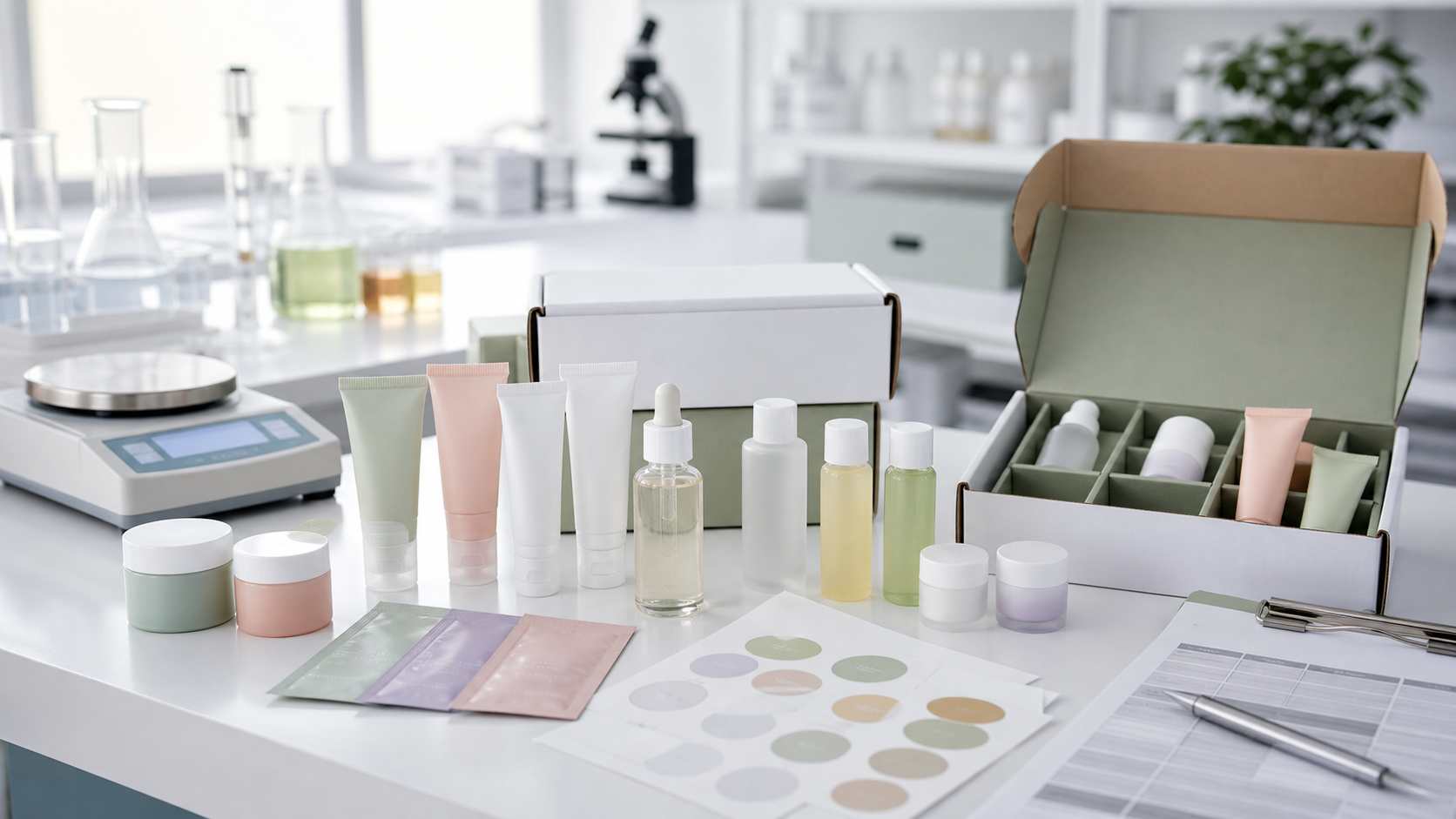
Quick Summary
- Subscription box buyers need small, attractive, shipment-ready products with reliable repeat supply.
- A cosmetic OEM manufacturer or cosmetic ODM manufacturer can help connect formula choice, packaging sourcing, sample development, mass production, quality control, and export support.
- Private label skincare is often practical for fast box cycles, while custom formulation suits signature boxes or exclusive brand collaborations.
- Compliance, label language, claims, importer duties, and ingredient rules vary by target market, so buyers should confirm requirements before launch.
Why Subscription Box Manufacturing Is Different
A subscription box project is not the same as a single retail product launch. The buyer may need several mini SKUs, a tight monthly schedule, controlled unit cost, fast sample approval, predictable carton dimensions, and a product experience that works even when the subscriber has never heard of the brand before.
For beauty boxes, the product must be simple to explain and practical to use. A 10 ml serum, 15 ml cleanser, mini mask, sachet set, lip balm, hand cream, or travel-size lotion may need to create a strong first impression in a small format. That creates manufacturing pressure: the formula must fill cleanly, packaging must survive fulfillment, and batches must remain consistent across repeated cycles.
A strong cosmetic OEM/ODM service partner helps turn the subscription calendar into a production plan. This includes SKU selection, sample timing, packaging sourcing, artwork deadlines, QC checkpoints, carton planning, and export coordination.
Choose the Right Product Route
Many subscription box buyers start with private label skincare because it can reduce development time. A stock formula can be matched with a mini tube, sachet, jar, bottle, or trial kit and adjusted where feasible for fragrance, texture, color, or positioning. This route works well for rotating discovery boxes and low-risk testing.
Modified formulas are useful when a box operator or partner brand wants a more distinctive feel without building every detail from zero. Full custom formulation is better when the box needs an exclusive product, a hero collaboration, or a signature formula story. Custom work needs more sample rounds, more stability review, and a more realistic launch calendar.
The decision should match the box promise. If the box sells discovery and variety, private label or modified formulas may be enough. If the box sells exclusivity or a branded collection, custom formulation may justify the extra time.
Subscription Box Models and Manufacturing Priorities
| Box Model | Common SKU Need | Manufacturing Priority | Buyer Risk to Control |
|---|---|---|---|
| Monthly discovery box | Mini skincare, sachets, masks, lip care, hand cream, trial sets | Fast sample approval, available packaging, stable repeat production | Late artwork, component shortage, inconsistent subscriber experience |
| Seasonal premium box | Higher-value mini or full-size hero products | Stronger formula story, refined packaging, giftable presentation | Over-complex customization, long packaging lead time, high unit cost |
| Brand collaboration box | Exclusive formula, limited shade, co-branded set, special carton | Custom formulation, clear approvals, strict QC and artwork control | Claim review delays, color or fragrance drift, late sample feedback |
| DTC trial kit | Starter routine, routine step set, refill incentive, sample bundle | Formula compatibility across SKUs, kit layout, reorder planning | Weak product sequence, poor packaging fit, slow second production run |
Packaging Sourcing and Kitting Decisions
Packaging is central to subscription box economics. Mini bottles, tubes, jars, sachets, sticks, pumps, cartons, sleeves, divider inserts, and outer mailers all affect unit cost, MOQ, volume weight, fulfillment speed, and damage rate. Beautiful packaging is not enough if it leaks, dents, shifts inside the box, or cannot be filled efficiently.
With packaging sourcing and customization support, buyers can compare stock components and customized options before committing to artwork. Stock mini packs are often the safest choice for tight subscription deadlines. Special colors, printed tubes, custom cartons, molded trays, or premium finishes need more lead time and clearer volume forecasts.
Kitting should be discussed early. Some buyers ask the factory to deliver finished goods only, while others need set packing, carton labels, inner dividers, display-ready packs, or freight-forwarder handoff. These requirements affect the quotation and production schedule.
Sample Development for Fast Box Calendars
Subscription box teams often work on several future boxes at the same time. To avoid confusion, each sample should have a code, date, formula route, packaging reference, target fill size, fragrance note, texture note, and decision status. Feedback should be consolidated before it goes back to the factory.
Sample development should test the actual mini format, not only a lab sample in a generic container. A lotion may feel good but fail in a mini pump. A mask may look attractive but crease a sachet film. A serum may need a different viscosity for a small dropper bottle. These small details matter when thousands of boxes are packed and shipped.
For recurring programs, retain approved samples from each batch. This helps compare color, odor, viscosity, fill level, packaging, and label placement before mass production and future reorders.
Quality Control, Compliance, and Export Support
Quality control for subscription box products should cover raw materials, packaging inspection, fill weight, appearance, odor, viscosity or pH where relevant, label placement, cap closure, leakage, carton count, retained samples, batch coding, and finished goods inspection. Exact checks depend on the product format and buyer requirements.
Mooyam’s quality control and compliance support helps overseas buyers understand manufacturing documents and practical inspection points. However, cosmetic requirements vary by target market. Ingredient restrictions, claims language, warnings, responsible party rules, notification or registration needs, and importer duties should be confirmed for each destination.
Export support may include packing list coordination, commercial invoice details, carton marks, HS code discussion, shipping dimensions, pallet planning, and freight-forwarder communication. These details are especially important when a subscription box company ships to multiple countries or uses a third-party fulfillment center.
Procurement Checklist for Subscription Box Buyers
- Define the box model: monthly discovery, seasonal premium, collaboration, DTC trial kit, or distributor sample program.
- List exact SKUs, fill sizes, formula types, fragrance direction, texture preferences, and target unit cost.
- Choose the route for each SKU: stock private label, modified formula, or full custom formulation.
- Confirm mini packaging, decoration, labels, carton inserts, kitting needs, MOQ, and reorder forecast.
- Request formula and packaging samples together, then test leakage, dispensing, fill appearance, and subscriber unboxing flow.
- Approve final formula, packaging, artwork, batch code location, QC standard, carton marks, and shipping documents in writing.
- Review claims, ingredient limits, label language, importer responsibilities, and market-specific rules before mass production.
- Plan the next reorder before the first box ships if the product may become a recurring favorite.
Common Mistakes to Avoid
Choosing too many custom items for a tight calendar
A subscription box may need speed more than complexity. Too many custom formulas, custom packs, and special cartons can make the launch fragile. Use customization where it matters most.
Approving formula and packaging separately
The formula must be tested in the final or near-final pack. Mini components can behave differently from full-size packs during filling, storage, and shipping.
Ignoring fulfillment and carton constraints
A product that looks good on a lab table may not fit the box layout, divider insert, shipping carton, or warehouse process. Share dimensions and packing rules early.
Waiting too long to plan reorders
If a SKU performs well, buyers may need a repeat batch quickly. Confirm component lead time, raw material availability, and production windows before the first shipment leaves.
How Mooyam Cosmetic Supports Subscription Box Projects
Mooyam Cosmetic supports overseas B2B buyers with cosmetic OEM manufacturing, cosmetic ODM manufacturing, private label skincare, custom formulation, sample development, packaging sourcing, mass production, quality control, and export support. For subscription box brands, we can help review SKU ideas, recommend formula routes, source mini packaging, prepare samples, control approvals, and coordinate production for recurring beauty programs.
We do not provide retail single-unit sales or guarantee regulatory approval. Our role is to help subscription box operators, DTC brands, distributors, sourcing managers, and private label buyers move from product idea to controlled cosmetic manufacturing with practical timelines and clear approval records.
Plan Your Subscription Box Beauty Products
Looking for a reliable cosmetic OEM/ODM manufacturer in China? Contact us to discuss your product idea, formula requirements, packaging options, MOQ, sample development, and production plan.
FAQ
Can a cosmetic manufacturer produce mini products for subscription boxes?
Yes. A manufacturer can support mini tubes, bottles, jars, sachets, masks, lip care, hand cream, and skincare trial kits, depending on formula, packaging availability, MOQ, and project schedule.
Is private label suitable for subscription box beauty products?
Often yes. Private label can help subscription box buyers move faster by using an existing formula route with selected packaging, artwork, fill size, and packing method.
When should a buyer choose custom formulation?
Custom formulation is useful for exclusive collaborations, signature boxes, or a product story that cannot be achieved with a standard formula. It usually needs more time for sample development and approval.
What information should I send before asking for a quotation?
Send product type, formula route, fill size, packaging preference, quantity, target market, box schedule, kitting needs, artwork timing, quality expectations, and shipping destination.
Can Mooyam help with packaging sourcing for mini sizes?
Yes. Mooyam can help compare stock and customized mini bottles, tubes, jars, sachets, cartons, labels, and set packaging based on MOQ, timeline, formula compatibility, and budget.
How can subscription box buyers reduce production delays?
Use available packaging where possible, approve samples in writing, avoid late artwork changes, confirm claims early, and align production timing with fulfillment and export schedules.
Who is responsible for compliance in the destination market?
The brand owner, importer, distributor, or responsible party should confirm local obligations. A manufacturer can provide production and technical support, but requirements vary by target market.