
Cosmetic OEM for boutique retailers and concept stores helps small retail buyers launch curated beauty products without building their own factory or lab. The best approach is to start with a focused retail assortment, then align formula route, packaging sourcing, sample development, mass production, quality control, and export support with a cosmetic OEM/ODM manufacturer.
In this context, boutique retail OEM means developing branded or private label skincare, body care, lip care, masks, travel sizes, or giftable sets for a physical or online retail concept. The goal is not a large generic product catalog; it is a tight selection that fits the store identity, shelf space, price point, customer story, and reorder rhythm.
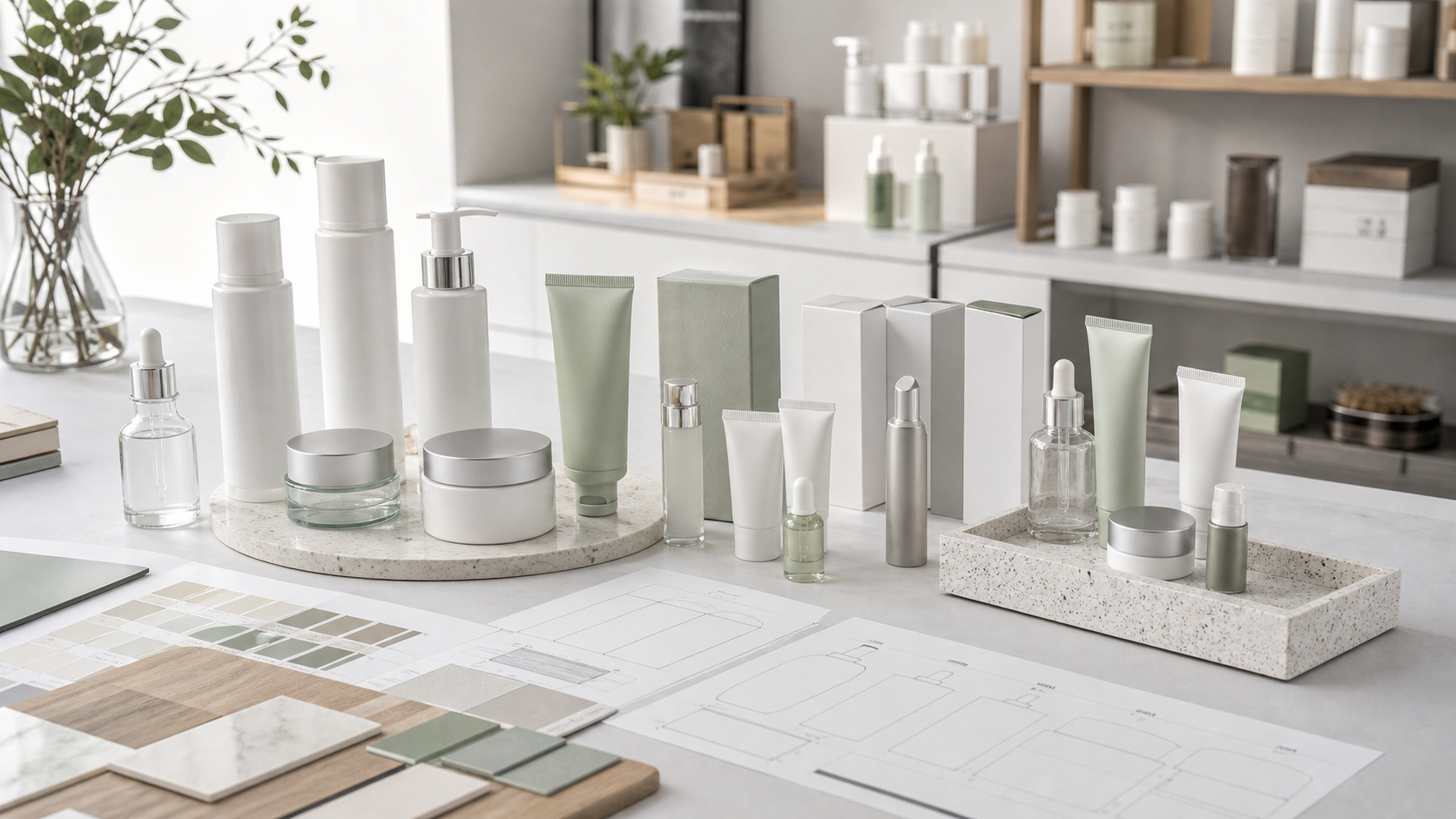
Quick Summary
- Boutique retailers need retail-ready SKUs that look coherent on shelf, feel easy to explain, and can be reordered reliably.
- A cosmetic OEM manufacturer or cosmetic ODM manufacturer can support private label skincare, custom formulation, packaging sourcing, sample development, mass production, quality control, and export support.
- Stock formulas can help a retailer launch faster, while custom formulation is better for signature products or exclusive collections.
- Claims, labels, ingredient rules, importer duties, and compliance documents vary by target market, so buyers should confirm local requirements before launch.
Why Boutique Retail OEM Is Different
A boutique retailer or concept store usually has less shelf space than a chain retailer and less inventory tolerance than a distributor. Every SKU must justify its place. Products need to be visually consistent, easy for staff to explain, and suitable for gift buying, discovery, repeat purchase, or a store-owned private label range.
This makes the manufacturing plan different from a basic private label launch. A boutique buyer may need smaller product families, elegant packaging, tester units, display-ready cartons, clear batch records, and a practical reorder schedule. The product should support the retail story without creating slow-moving stock or operational complexity.
Mooyam’s OEM/ODM manufacturing service helps buyers connect retail concept, formula route, packaging, sampling, production, QC, and export communication into one manageable project.
Start with the Store Concept and SKU Role
Before asking for a quotation, define how the product will live in the store. Is it a checkout impulse item, a routine-building skincare product, a premium gift, a travel-friendly SKU, or an exclusive hero item? This decision affects formula complexity, pack size, decoration, MOQ, sample approval, and reorder planning.
For many boutique retailers, a small assortment is stronger than a wide product line. Three to six SKUs can be enough when each item has a clear role, attractive packaging, and a realistic sales plan.
| Retail SKU Role | Best Use Case | OEM/ODM Planning Focus | Risk to Control |
|---|---|---|---|
| Hero product | Main item that defines the store-owned beauty story | Stronger formula story, refined sample feedback, premium packaging | Overly complex custom work or unclear claim direction |
| Support product | Completes a simple routine beside the hero SKU | Matched texture, fragrance direction, visual coherence, manageable MOQ | Too many similar SKUs that confuse customers |
| Giftable set | Holiday, event, hotel shop, spa boutique, or concept-store gifting | Set packaging, carton structure, mini formats, insert layout | Late packaging lead time or poor carton fit |
| Tester or discovery SKU | Sampling, staff recommendation, checkout trial, or loyalty gift | Mini packaging, fill accuracy, clear batch control, low unit cost | Weak packaging durability or no reorder forecast |
Choose the Right Formula Route
Private Label or Stock Formula
Private label skincare is often the most practical starting point for boutique retailers. It can reduce development time, lower project complexity, and help the buyer test a store-owned product concept before committing to a larger custom range. Stock formulas may work well for cleansers, moisturizers, hand creams, lip care, body care, masks, and small routine sets.
Modified Formula
A modified formula can adjust fragrance, texture, color, viscosity, ingredient story, or skin feel while keeping development more efficient than a fully custom project. This route is useful when the retailer needs a distinctive product but still wants a controlled timeline.
Custom Formulation
Full custom formulation is best for a signature item, premium concept, exclusive collaboration, or hero product that must not feel generic. Buyers should prepare benchmark products, target price, preferred texture, avoid lists, packaging direction, and claim boundaries before sampling begins.
Packaging Sourcing for Retail Shelves
Boutique retail packaging must do more than hold the formula. It must fit the shelf, communicate price level, survive handling, support testers or samples, and look coherent beside other curated products. Bottles, tubes, jars, airless pumps, cartons, sachets, labels, sleeves, and display trays should be selected with shelf space and staff workflow in mind.
With Mooyam’s packaging sourcing and customization support, buyers can compare stock components, custom colors, printing methods, carton materials, label areas, and MOQ limits. Stock packaging may support faster launch and lower risk. Custom decoration can strengthen the retail identity, but it usually needs earlier artwork approval and a more realistic lead time.
For concept stores, tester planning also matters. If customers try texture in-store, the buyer may need tester labels, sample sachets, mini jars, or display guidance. These details should be discussed before the final quotation because they affect component count and packing work.
Sample Development and Retail Feedback
Sample development should include both formula feel and retail presentation. A lab sample in a plain container can confirm texture, but it cannot fully show how the product looks on shelf, how staff explain it, or how it fits a gift set. Ask for formula samples and packaging references together whenever possible.
Feedback should be structured. Instead of saying a sample feels premium or not premium enough, describe texture, absorption, fragrance level, color, viscosity, target shelf price, packaging comments, and which customer group will buy it. This helps the cosmetic ODM manufacturer or OEM team adjust the project efficiently.
Approved samples should be retained for comparison before mass production and reorders. For retail buyers, batch consistency protects staff confidence and repeat purchase because customers often come back for the same sensory experience.
Procurement Checklist for Boutique Retail Buyers
- Define the retail concept, customer profile, price range, shelf space, and target launch season.
- Build a focused SKU map: hero product, support products, gift set, tester unit, or discovery size.
- Choose the formula route for each SKU: stock private label, modified formula, or full custom formulation.
- Share target market and confirm that claims, labels, ingredient lists, warnings, and importer duties may vary by destination.
- Review packaging dimensions, decoration, carton structure, tester needs, batch code position, and display requirements.
- Request formula and packaging samples together, then collect staff or buyer feedback in one clear document.
- Approve formula, fragrance, color, packaging, artwork, fill size, QC standard, and mass production schedule in writing.
- Plan reorder timing before the first launch if the product is expected to become a permanent retail SKU.
Quality Control, Compliance, and Export Support
Retail projects require consistent appearance because products are compared side by side on shelves. Quality control should cover raw material checks, packaging inspection, color, odor, viscosity or pH where relevant, fill weight, label placement, cap closure, leakage, carton condition, retained samples, batch coding, and finished goods inspection.
Mooyam’s quality control and compliance support helps overseas buyers understand practical inspection points and manufacturing documents. However, a factory should not guarantee regulatory approval. Requirements vary by target market, and the brand owner, importer, distributor, or responsible party should confirm final obligations before sale.
Export support may include commercial invoice details, packing list coordination, carton marks, HS code discussion, shipping dimensions, pallet planning, and freight-forwarder communication. For boutiques that import directly, these details are important because delays can affect seasonal launches, store events, or retail campaign windows.
Common Mistakes to Avoid
Launching too many SKUs at once
A boutique assortment should be selective. Too many formulas, sizes, fragrances, and packaging styles can increase MOQ pressure and confuse customers. Start with the products that support the clearest retail story.
Choosing packaging before testing the formula
A beautiful pump, tube, or jar still needs compatibility checks with the final formula. Viscosity, leakage, filling behavior, cap closure, and user experience should be reviewed before production approval.
Treating testers as an afterthought
For physical retail, testers and discovery sizes can influence sell-through. Plan tester labels, hygiene expectations, sample packs, and staff use before mass production.
Ignoring reorders until inventory is almost gone
Retail launches need reorder planning. Packaging lead time, raw material availability, production windows, and export shipping can all affect when the next batch arrives.
How Mooyam Cosmetic Supports Retail OEM Projects
Mooyam Cosmetic supports overseas B2B buyers with cosmetic OEM manufacturing, cosmetic ODM manufacturing, private label skincare, custom formulation, sample development, packaging sourcing, mass production, quality control, and export support. For boutique retailers and concept stores, we can help turn a store concept into a focused product range with practical formula routes, packaging options, approval steps, and production planning.
We do not provide retail single-unit sales or make medical claims. Our role is to help brand owners, concept stores, boutique retail buyers, distributors, Shopify/DTC sellers, and sourcing managers develop cosmetic products through a controlled OEM/ODM workflow.
Plan Your Boutique Retail Beauty Line
Looking for a reliable cosmetic OEM/ODM manufacturer in China? Contact us to discuss your product idea, formula requirements, packaging options, MOQ, sample development, and production plan.
FAQ
Can a boutique retailer create its own skincare line?
Yes. A boutique retailer can develop a store-owned skincare or beauty line through private label, modified formula, or custom formulation, depending on budget, timeline, MOQ, and differentiation needs.
Is private label enough for concept stores?
Often yes for a first launch. Private label can help a concept store test customer demand quickly, especially when packaging and retail presentation are customized thoughtfully.
When should a retailer choose custom formulation?
Custom formulation is useful for a hero product, exclusive collaboration, premium positioning, or a product story that cannot be achieved with a standard formula. It usually needs more sampling and a longer calendar.
What packaging should boutique retailers consider?
Retail buyers should consider shelf fit, tester use, giftability, carton quality, label area, dispensing method, freight durability, MOQ, and how the packaging looks as a small assortment.
Can Mooyam help with testers or discovery sizes?
Yes. Tester units, mini sizes, sachets, sample kits, and display-ready packs can be discussed during packaging sourcing and quotation planning, depending on component availability and MOQ.
How can a boutique avoid slow-moving inventory?
Start with a focused SKU map, use realistic quantities, test staff and customer feedback, avoid too many variants, and plan reorders around actual sell-through rather than assumptions.
Who handles compliance for imported retail products?
The brand owner, importer, distributor, or responsible party should confirm destination-market requirements. A manufacturer can support documents and production information, but requirements vary by target market.