A cosmetic product does not move directly from an idea to a filling line. Between those points, the brand and manufacturer must define the brief, develop or select a formula, match packaging, complete appropriate testing, approve samples and release clear specifications. Missing one approval can create delays or expensive rework later.
This guide maps the cosmetic OEM manufacturing process for overseas beauty brands, procurement teams, Amazon and DTC sellers, distributors and private label buyers. It shows what each stage should produce, which decisions belong to the buyer and how a manufacturer can support an orderly launch. Mooyam Cosmetic handles B2B brand and wholesale projects only, not retail orders.
Quick Summary
- A useful product brief connects the target customer, formula, claims, packaging, cost and timeline.
- Choose private label, OEM or ODM scope before requesting samples.
- Approve formula and packaging as one system, supported by relevant testing.
- Bulk production should begin only after specifications, artwork and commercial terms are released.
- Quality control continues from incoming materials through filling, packing and shipment.
First Define the Manufacturing Model
Manufacturing terms are used differently across suppliers, so the project scope should be written down. In a private label skincare project, the brand usually selects an existing formula and customizes packaging and artwork. An OEM project may use a buyer-owned specification or a formula developed to the buyer’s brief. A cosmetic ODM manufacturer can contribute product concept, formula direction and packaging coordination.
Confirm responsibility for formula development, packaging sourcing, testing, artwork, regulatory documentation and export support. Also clarify formula use, confidentiality, tooling and approved references.
Stage 1: Create a Commercially Useful Product Brief
The brief is the control document for the cosmetic OEM manufacturing process. It should describe the target user, destination market, product function, texture, finish, fragrance, color, pack type, fill size, desired claims, target cost, expected quantity and launch date. Include ingredients to prioritize or avoid, but do not rely on a fashionable ingredient list without explaining the intended product experience.
Commercial context matters. A glass dropper serum for DTC sales has different shipping needs from an airless product supplied to a distributor. Claims, ingredient restrictions, labeling and responsible-party obligations should be reviewed for each destination.
Stage 2: Feasibility Review and Quotation
The cosmetic OEM manufacturer reviews whether the requested formula, package, quantity, cost and timing can work together. This may involve R&D, purchasing, production, quality and packaging teams. Feasibility questions should be resolved before a firm production promise is made.
A useful quotation separates formula, primary packaging, decoration, carton, testing, sample fees, tooling and freight terms. It also states MOQ per SKU, payment terms, lead-time assumptions and quotation validity. If custom ingredients or components have higher minimums than the finished quantity, the treatment of excess material should be clear.
| Decision | Buyer Input | Manufacturer Output | Approval Evidence |
|---|---|---|---|
| Project scope | Target market, channel and quantity | Recommended OEM, ODM or private label route | Agreed brief |
| Formula | Texture, finish, ingredients and claims direction | Feasibility, sample plan and costs | Sample standard |
| Packaging | Format, size, look and budget | Component options and minimums | Approved pack sample |
| Production | Forecast and launch date | MOQ, lead time and commercial terms | Purchase order |
Stage 3: Formula Selection or Custom Formulation
Stock and adjusted formulas
An existing base can shorten development and support a lower MOQ. The brand may select from available textures and make limited adjustments to fragrance, color or positioning where technically feasible. Even when a formula has previous production history, it must still be assessed with the chosen packaging and the project’s target-market requirements.
Custom formulation
A custom cosmetic formulation program starts from the approved brief. R&D develops prototypes and records buyer feedback across controlled iterations. Changes to viscosity, sensory feel, fragrance, color, ingredient system or target claims can influence preservation, stability, process conditions and packaging behavior.
Brands should consolidate feedback and identify decision-makers before sampling. The approved sample should be retained as a reference, supported by an agreed specification. A sample is not only a marketing object; it is the bridge between the development brief and repeatable bulk production.
Stage 4: Packaging Sourcing and Compatibility
Packaging development should run alongside formula work. Bottle or jar material, pump output, wiper, dip tube, closure, gasket and decoration can interact with the product. A highly viscous formula may not dispense through the selected pump. Some formula components may affect plastics, coatings, adhesives or printed decoration.
Through customized packaging and sourcing, buyers can compare stock components, decorated stock and fully custom options. Stock packaging usually supports lower minimums and faster launches. Custom molds and proprietary shapes require more time, tooling and commercial commitment.
Approve the physical component, color, decoration, artwork position and functional fit. Renderings are useful for design review but cannot replace leakage, dispensing and compatibility checks with real components.
Stage 5: Testing, Specifications and Documentation
The test plan should match the formula, package, intended use, claims and market. Depending on the product, it may include stability at defined conditions, temperature cycling, microbiological testing, preservative effectiveness evaluation, packaging compatibility, leakage, pump performance and other category-specific assessments. Requirements vary, and the appropriate program should be confirmed for the project.
At the same time, the team prepares or reviews the ingredient declaration, formula specification, packaging specification, artwork and available production or quality documents. A manufacturer’s documents do not automatically guarantee market authorization; the brand or responsible party must evaluate requirements in each target country.
Review Mooyam Cosmetic’s quality and compliance support when defining documentation and inspection expectations. Final claims should reflect the formula, evidence and market rules rather than being added after artwork is complete.
Stage 6: Pre-Production Approval
Before bulk materials are committed, the buyer and factory should confirm the commercial order and freeze the controlled references. This normally includes the final formula sample, formula and packaging specifications, component samples, artwork files, color standards, bill of materials, testing status, quantity, price, delivery terms and production schedule.
Late changes are expensive because multiple items are linked. A revised bottle can require new artwork and compatibility review. A new fragrance can change stability or ingredient labeling. A claim change can affect testing and market review. Use a documented change process rather than informal messages once the order is released.
Stage 7: Bulk Manufacturing and Filling
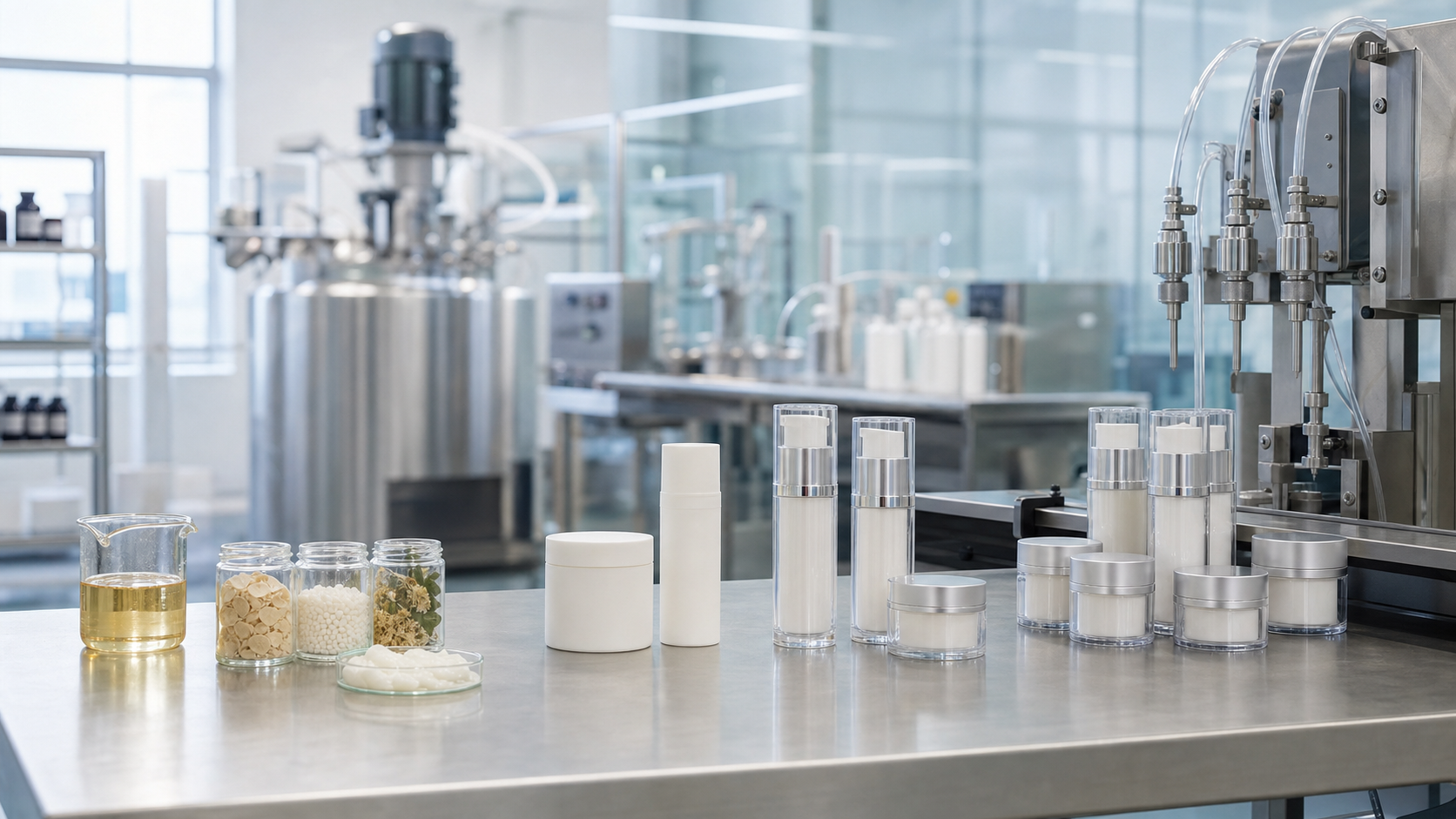
Production begins with approved raw materials and packaging components. Typical operations include material verification, weighing, controlled addition, mixing or homogenization, heating or cooling where required, in-process checks and transfer to a suitable holding system. The actual method depends on the product type and validated factory procedure.
After bulk acceptance, filling and packing follow released instructions. Teams monitor fill quantity, container cleanliness, closure fit, coding, label placement, carton assembly and line clearance. Any production-quantity tolerance should be stated in the purchase terms.
Stage 8: Finished-Product Quality Control
Quality control is not a final visual check added after filling. Incoming, in-process and finished-product controls form one system. Finished review may cover appearance, odor, relevant physical parameters, fill quantity, package function, leakage, print quality, coding, carton accuracy and sampling against the approved specification.
Nonconforming results should be documented, assessed and resolved before release. Retention samples and batch records support traceability and future investigation. The release decision should follow defined responsibilities, not shipment pressure.
Stage 9: Shipment, Export Support and Reorder Planning
After batch release, the factory and buyer coordinate packing lists, commercial documents, shipping marks, freight and agreed export support. Requirements depend on the destination, product and trade terms.
After launch, collect sales velocity, returns, leakage reports, customer feedback and inventory data. A reorder forecast helps secure packaging and raw materials before stock runs out. If the brand wants to change the formula, package or artwork, treat it as a controlled revision and confirm which testing or documents must be updated.
Typical Timeline and Main Buyer Gate
| Phase | Timing Depends On | Do Not Advance Until |
|---|---|---|
| Brief and feasibility | Decision speed and scope clarity | Requirements and budget align |
| Samples | Stock versus custom formula; revision count | Final sensory sample is approved |
| Packaging | Stock, decoration or custom tooling | Physical components and artwork are approved |
| Validation | Product category, test plan and market | Required evidence is reviewed |
| Bulk production | Material availability and factory schedule | Pre-production release is complete |
| Shipment | Inspection, booking and destination | Batch release and documents are ready |
A simple private label project may move faster than a fully custom product, but no responsible timeline should ignore sample approval, packaging lead time or necessary testing. Ask the supplier to state assumptions and critical-path items rather than giving one date without conditions.
Buyer Checklist Before Bulk Production
- Approved product brief, target market and manufacturing scope
- Final formula sample and controlled specification
- Physical packaging sample and compatibility plan
- Final artwork, ingredient declaration and coding position
- Testing status and target-market review responsibilities
- Purchase order, MOQ, price, quantity tolerance and payment terms
- Production, finished-inspection and release requirements
- Shipping terms, export documents and reorder forecast
Frequently Asked Questions
How long does the cosmetic OEM manufacturing process take?
Timing depends on formula scope, sample revisions, packaging, testing, material availability and order size. Ask for a stage-based schedule with approval gates rather than one unsupported lead time.
What should a brand prepare before contacting a manufacturer?
Prepare the target market, product type, user, texture, packaging idea, claims direction, quantity, cost range and launch date. A clear brief enables a useful feasibility response.
Can packaging be selected after the formula is finished?
It can, but parallel development is usually more efficient. The final formula and packaging still need compatibility and functional evaluation before production.
What is the difference between a lab sample and a production batch?
A lab sample confirms the development direction at small scale. Bulk manufacturing must reproduce the approved characteristics using controlled materials, equipment, process parameters and in-process checks.
Who approves the formula before production?
The buyer should provide documented approval against the agreed brief, while the manufacturer’s technical and quality teams confirm readiness under their procedures. Responsibilities should be written into the project workflow.
Can the formula or artwork change after the purchase order?
Changes may be possible, but they can affect cost, timing, testing, component orders and documentation. The change should be reviewed and approved before implementation.
Does the manufacturer guarantee compliance in every market?
No single manufacturing statement covers every country. Requirements vary by destination, product and claims. The brand or responsible party should complete appropriate market-specific review.
Move Your Product Brief into a Controlled Manufacturing Plan
Mooyam Cosmetic supports brands from feasibility and sample development through packaging, testing coordination, bulk production, quality control and export support. Explore our cosmetic OEM/ODM manufacturing service to understand the available project routes.
Our service is for beauty brands, wholesalers and distributors; we do not fulfill retail orders. Contact the Mooyam Cosmetic B2B team with your product brief, quantity, target market and launch timing.