
Low order quantities can make a skincare launch possible, but a small first order is not automatically a low-risk order. Beauty startups still need a viable formula, compatible packaging, realistic testing, clear artwork and enough margin to reorder. The practical goal is to reduce the initial commitment without removing the controls that protect product quality.
This guide explains how overseas brands can plan low MOQ cosmetic manufacturing with an OEM/ODM partner, compare the main development routes and prepare a brief that suppliers can quote accurately. Mooyam Cosmetic serves brand, wholesale and distribution projects; we do not accept individual retail orders.
Quick Summary
- Low MOQ should be evaluated by formula, packaging and component minimums鈥攏ot by one headline number.
- Stock formulas and stock packaging usually offer the fastest, most economical test route.
- Custom formulation can work at smaller volumes when the development scope is tightly controlled.
- Sampling, compatibility checks and documented approvals remain necessary before bulk production.
- A focused SKU plan gives startups more useful inventory and better purchasing leverage.
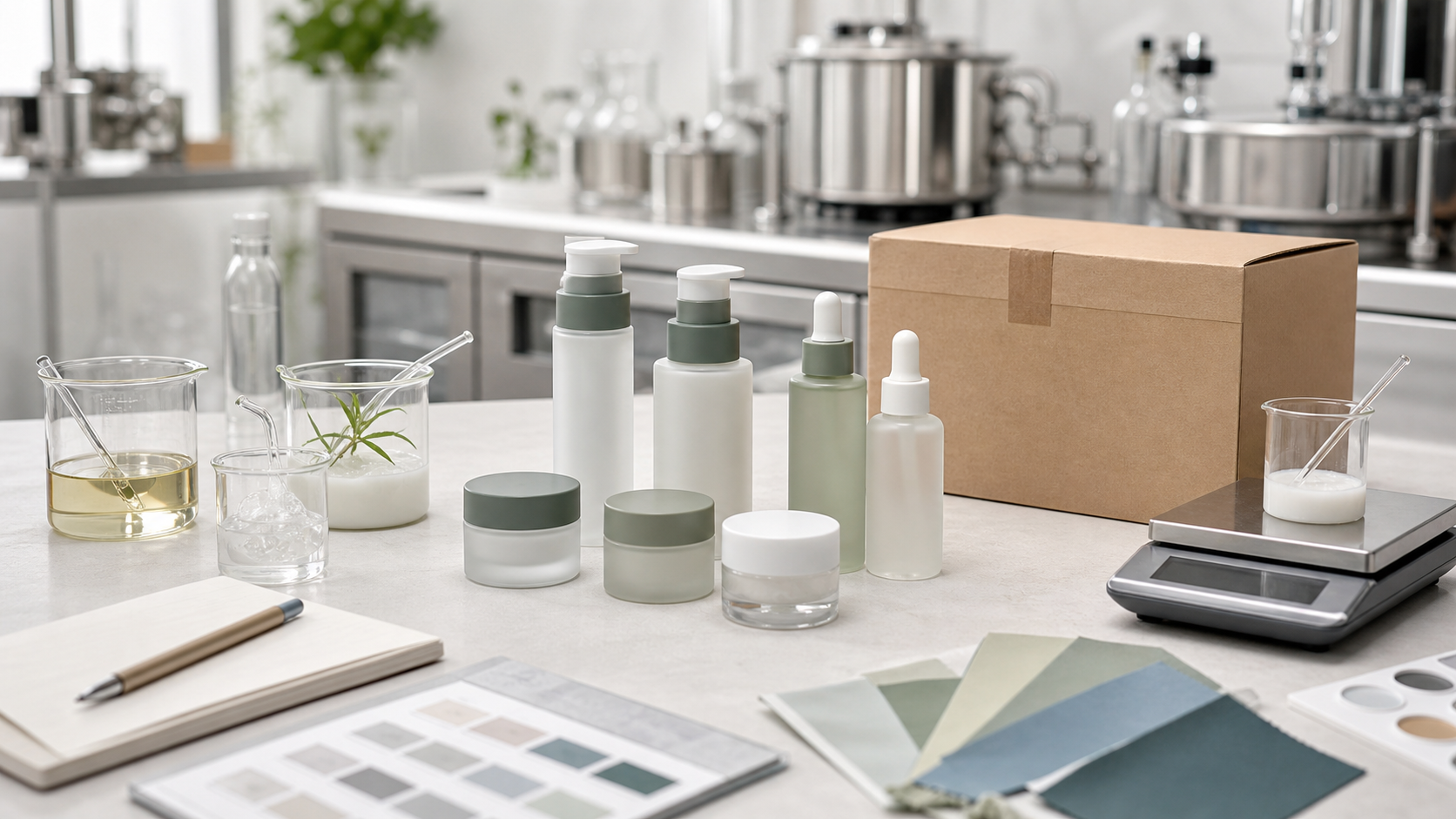
What Low MOQ Cosmetic Manufacturing Really Means
MOQ is the minimum quantity a supplier can produce or purchase efficiently. In cosmetics, several minimums may apply at the same time: formula batch size, bottle or jar order, decoration run, carton printing, label quantity and ingredient purchasing. The effective MOQ is therefore set by the least flexible part of the project.
For example, a factory may be able to fill 1,000 units, while a custom-color airless bottle supplier requires 5,000 pieces. The brand can change to a stock bottle, purchase excess components for a future reorder or raise the finished-goods quantity. A credible cosmetic OEM manufacturer should explain these dependencies instead of quoting a number without assumptions.
Low MOQ also does not mean zero development cost. Sample development, testing, artwork setup and freight are spread across fewer units, so the cost per unit is often higher. Startups should compare total cash exposure and market-learning value, not only the unit price.
Choose the Right Low-MOQ Development Route
| Route | Best Fit | MOQ and Cost Effect | Main Trade-off |
|---|---|---|---|
| Private label skincare | Fast market test with a proven base | Usually the lowest entry quantity and development cost | Less formula exclusivity |
| OEM with selected changes | Brands that need fragrance, color or texture adjustments | Moderate sampling and material minimums | Changes must remain technically compatible |
| Custom formulation | Differentiated positioning and a defined performance brief | More R&D, validation time and possible ingredient minimums | Higher upfront cost and longer timeline |
| ODM product development | Brands needing concept, formula and packaging coordination | Depends on how much is customized | Requires disciplined decision-making |
A cosmetic ODM manufacturer can help translate a commercial idea into a manufacturable product, while an OEM route generally begins with a clearer product specification from the buyer. The labels are less important than the agreed scope. Confirm who owns the brief, formula work, testing plan, packaging sourcing and final approvals.
Build a Focused First Product Line
Start with one customer problem
A startup often loses its MOQ advantage by launching too many products, sizes or fragrances at once. A three-product routine can require three formula batches, multiple component orders and separate artwork checks. One hero product, or a tightly coordinated two-SKU set, concentrates inventory and gives cleaner sales feedback.
Define the target customer, market, sales channel, expected retail price and product role. Amazon sellers may prioritize durable packaging and fulfillment dimensions. DTC brands may place more weight on unboxing, repeat purchase and visual differentiation. Distributors may need language variants and broader export support.
Set the target cost from the retail model
Work backward from the planned retail and wholesale prices. Include formula, primary packaging, printed box, labels, testing, freight, duties, platform fees, fulfillment and promotional allowances. A package that looks affordable at the factory gate may be expensive to ship or may require a decoration MOQ that exceeds the first production plan.
Give the supplier a target range rather than asking for the cheapest possible product. This helps the team balance formula complexity, pack format and order quantity without quietly removing essential quality control.
Packaging Is Often the Real MOQ Driver
Stock packaging is the most direct way to keep a first order flexible. A standard bottle or jar can still support brand identity through labels, screen printing, color-matched cartons or a carefully selected cap. Fully custom molds, unusual capacities and proprietary components are better considered after demand is proven.
Use cosmetic packaging sourcing support early, because the formula and package must be evaluated together. Pump output, dip-tube length, wiper fit, closure torque, leakage and material compatibility can affect the user experience. Decoration samples should be checked for color, adhesion, alignment and abrasion resistance.
Ask whether unused packaging can be stored for a reorder, how long components remain available and whether decoration minimums differ from bottle minimums. Excess packaging ties up cash and can become obsolete if artwork changes.
Sample Development Without Endless Revisions
Efficient sample development begins with a written brief. Include product type, target texture, finish, fragrance direction, ingredients to include or avoid, claims direction, reference price, pack type, sales market and target launch date. References can communicate sensory preferences, but the goal should be an original, manufacturable specification鈥攏ot imitation of another brand.
Review each sample against the same scorecard. Record appearance, odor, spread, absorption, residue, pump or dispensing behavior and any required change. Combine feedback from decision-makers into one response. Repeatedly changing the product concept increases time, cost and the risk that an approved formula no longer matches the chosen package.
Before approving bulk production, confirm the final formula sample, ingredient list, specification, color or fragrance standard, packaging sample, artwork and testing plan. A low MOQ order should have the same clear approval trail as a larger order.
Quality Control for a Small First Order
Small quantities do not remove the need for incoming inspection, batch controls, filling checks and finished-product review. The relevant program may include raw-material identity and status checks, appearance and odor, viscosity or pH where appropriate, microbiological testing, stability work, packaging compatibility, fill weight, closure performance and leakage checks.
Exact tests depend on the formula, packaging, claims and destination market. Regulatory and labeling requirements vary by market, so brands should confirm their obligations with qualified advisers before sale. Review Mooyam Cosmetic’s quality control and compliance approach when preparing the project requirements.
For a reorder, retain the approved reference and define acceptable ranges. Consistency matters more as sales expand, and early batch records make deviations easier to investigate. Low MOQ is a launch format, not a reason to accept undocumented production.
How to Compare Low-MOQ Quotations
| Quotation Item | Question to Ask | Why It Matters |
|---|---|---|
| Finished quantity | Is the MOQ per SKU, shade, fragrance or total order? | Prevents a misleading combined quantity |
| Formula | Is it stock, adjusted or fully custom? | Clarifies R&D cost and ownership expectations |
| Packaging | Are decoration, pump and carton included? | Avoids missing component costs |
| Testing | Which tests are included, optional or buyer-arranged? | Supports realistic risk and timeline planning |
| Lead time | When does timing begin and what approvals are required? | Separates sampling time from production time |
| Reorder | Can the same formula and components be supplied again? | Protects continuity if the launch sells through |
Compare suppliers on the same written specification. One quote may exclude testing and cartons while another includes them. Ask about payment terms, overrun or underrun tolerance, sample fees, tooling, storage, freight terms and the process for handling nonconforming goods.
Buyer Checklist Before Placing a Low-MOQ Order
- Target market, sales channel and responsible regulatory review
- One clear hero-product brief and realistic launch quantity
- Target retail price, landed-cost range and margin model
- Stock versus custom formula decision
- Stock packaging options and decoration minimums
- Consolidated sample evaluation and approval records
- Testing, compatibility and finished-product inspection plan
- Reorder forecast, component continuity and export support needs
Frequently Asked Questions
What is a typical low MOQ for cosmetics?
There is no universal quantity. It varies by product category, formula batch, packaging, decoration and supplier. Ask for a breakdown by SKU and component so the quoted minimum can be evaluated accurately.
Can I use a custom formula with a low MOQ?
Often yes, if the formula scope and ingredient choices are practical. Custom raw materials, complex actives or unusual packaging can raise minimums and validation requirements.
Is private label always cheaper than OEM?
Private label usually reduces R&D time and sample iterations, but total cost still depends on packaging, testing and order size. Compare the complete landed project, not only the bulk formula.
Can several products share one MOQ?
Usually each formula or SKU has its own production minimum. Some packaging purchases may be shared when products use the same components, but this must be confirmed before quotation.
How can a startup lower packaging MOQ?
Choose stock components, standard capacities and simple decoration. Labels or cartons can create differentiation without committing to a custom mold or a large color-coating run.
Should a low-MOQ order receive stability testing?
Testing needs depend on the formula, package, claims and market鈥攏ot only quantity. A small launch can still create customer complaints and inventory loss if compatibility or stability is ignored.
When should a startup move to a larger production run?
Consider scaling after sales velocity, repeat purchase, returns and forecast accuracy are understood. A larger order should improve unit economics without creating excessive inventory risk.
Plan a Practical Low-MOQ Cosmetic Project
Mooyam Cosmetic supports international beauty brands with cosmetic OEM/ODM manufacturing services, formula selection, packaging coordination, sample development, bulk production and export support. Share your target market, product brief, quantity, cost range and launch timing so our team can evaluate a suitable route.
We serve brands, wholesalers and distributors, not retail consumers. Contact our B2B project team to discuss feasibility and next steps.