Crowdfunded beauty products need manufacturing support before the campaign goes live, not only after orders arrive. A cosmetic OEM/ODM factory can help a founder prepare campaign samples, estimate MOQ scenarios, validate packaging, plan quality control, and turn pledge demand into a realistic mass production schedule.
For beauty brands using crowdfunding, manufacturing support means the factory helps connect the campaign promise with a product that can be sampled, approved, produced, packed, inspected, and exported without overpromising delivery dates or compliance outcomes.
Quick Summary
- Crowdfunding brands should involve a cosmetic OEM manufacturer or cosmetic ODM manufacturer before launch so formula, packaging, MOQ, and delivery assumptions are realistic.
- Campaign samples should represent the intended texture, packaging direction, and claim boundary, but brands should avoid promising final approval until testing and compliance review are complete.
- Private label skincare can help reduce lead time, while custom formulation gives stronger differentiation but needs more sample development time.
- Packaging sourcing, artwork proofing, mass production booking, quality control, and export support should be mapped before the campaign page is finalized.
- Compliance, label, ingredient, claim, and importer requirements vary by target market, so crowdfunding copy should stay careful and evidence-based.
Why Crowdfunded Beauty Products Need Early Factory Input
Crowdfunding can validate demand before a brand commits to a large order, but it also creates pressure. Backers expect a clear product story, an attractive sample, transparent delivery timing, and regular updates. If the manufacturing plan is built only after the campaign succeeds, the brand may discover that MOQ, packaging lead time, formula testing, or export documents do not match the promised timeline.
Early factory input reduces that risk. Mooyam’s OEM/ODM manufacturing support can help overseas founders and sourcing managers understand what can be prepared before launch, what must wait until final order quantities are known, and what should not be promised until the project is technically confirmed.
Start with a Campaign-Ready Product Brief
A crowdfunding product brief should be more specific than a normal idea note. It needs to help the factory estimate sample direction, formula route, package type, cost range, MOQ, testing needs, and production timing. It should also help the brand decide what language is safe for a public campaign page.
Useful inputs include target market, product category, texture goal, benchmark products, preferred ingredients, avoid list, expected retail price, pledge tiers, estimated order range, packaging style, shipping destination, and campaign launch date. The brief should also identify what is fixed and what may change after backer demand is known.
Choose the Right Formula Route for Crowdfunding
Private Label Skincare for Faster Validation
Private label skincare can be a practical route when a founder needs a reliable starting point and a shorter development path. Stock or existing formula options may help the brand validate demand with lower formula uncertainty, especially for cleansers, moisturizers, body care, lip care, masks, or simple routine sets.
Modified Formulas for a More Distinctive Product
A modified formula can adjust fragrance, texture, color, viscosity, positioning ingredients, or skin feel while keeping development more predictable than a full custom route. This approach works when the campaign needs a distinctive story but cannot support a long development cycle.
Custom Formulation for Signature Campaigns
Custom formulation is best when the campaign is built around a unique hero product, a special sensory profile, or a proprietary brand concept. The tradeoff is time: custom projects usually require more sample development, stability observation, compatibility checks, and claim review before mass production.
How Manufacturing Support Changes by Campaign Stage
| Campaign Stage | Brand Decision | Factory Support | Risk to Control |
|---|---|---|---|
| Before launch | Choose product route, pledge offer, and target market | Formula direction, MOQ range, preliminary packaging sourcing, sample development plan | Unrealistic delivery timing or claims |
| Campaign content | Prepare product photos, benefit language, and reward tiers | Sample guidance, ingredient list support, packaging feasibility review | Promising final packaging or claims too early |
| Campaign live | Track demand ranges and communicate with backers | Update MOQ scenarios, component availability, production slot planning | Demand changes that affect cost or lead time |
| After funding | Confirm purchase order, artwork, and final quantity | Final sample approval, packaging order, production schedule, quality control plan | Late artwork changes or component delays |
| Fulfillment | Prepare shipment, backer updates, and reorder plan | Mass production, inspection, export support, carton details, document handover | Shipping surprises or missing import information |
Packaging Sourcing Must Match the Campaign Promise
Crowdfunding pages often show attractive packaging mockups, but the final component must still fit formula compatibility, MOQ, decoration method, filling process, carton structure, transport conditions, and target cost. A custom package may look strong in a campaign, but it can add tooling time, higher MOQ, and more proofing risk.
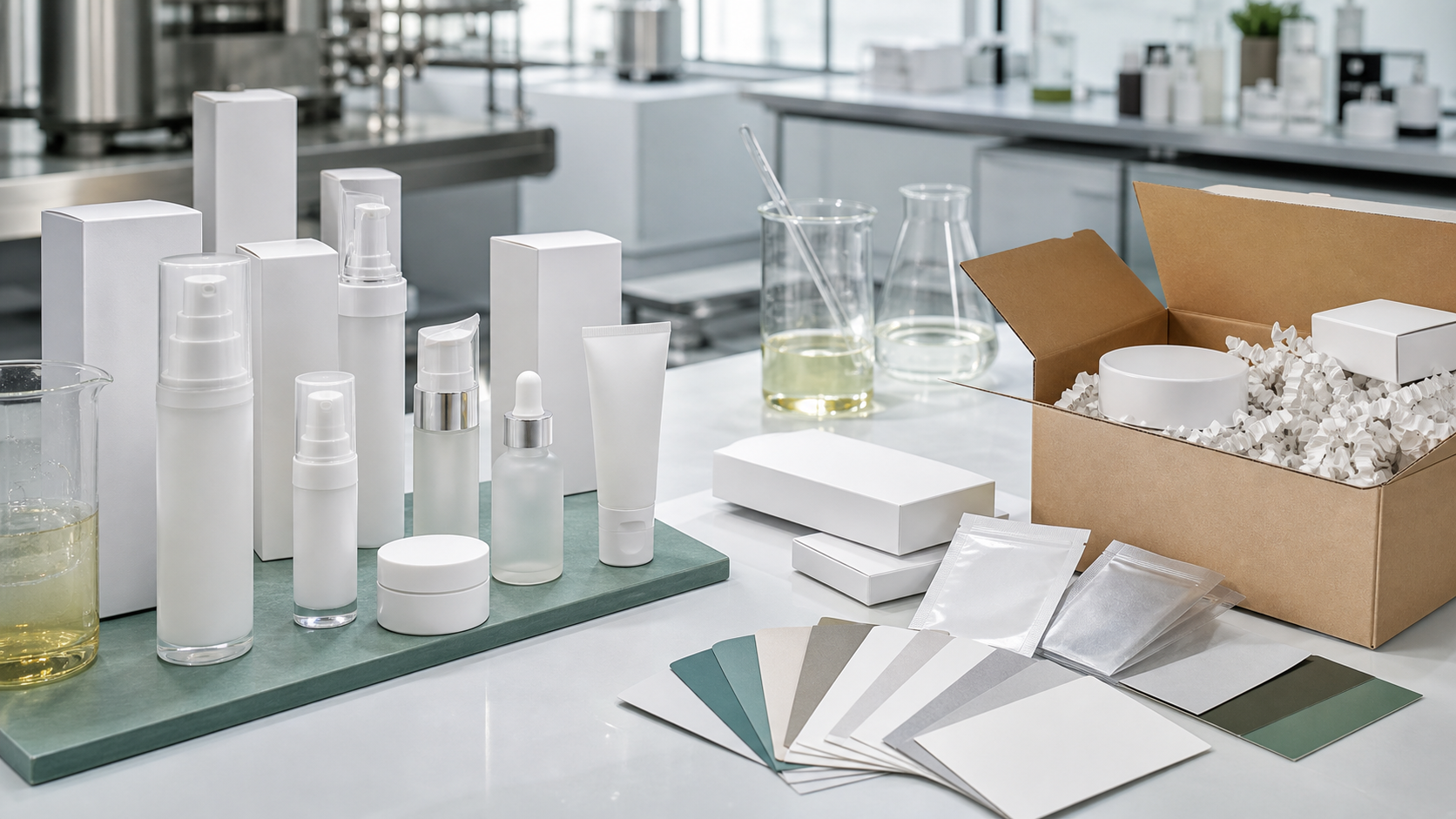
Mooyam’s packaging sourcing and customization support can help buyers compare stock bottles, jars, tubes, airless pumps, cartons, labels, sample sachets, set boxes, and shipping cartons. For many crowdfunded launches, a proven stock component with custom decoration is more reliable than a fully custom mold. The brand can upgrade packaging in later production runs after demand is clearer.
Sample Development for Backer Confidence
Campaign samples should be good enough to support photography, creator testing, investor discussions, and internal approval. However, a campaign sample should not be described as final unless the formula, packaging, artwork, testing direction, and QC standard are approved.
During sample development, buyers should provide structured feedback: texture, fragrance level, color, absorption, residue, packaging fit, pump or cap function, expected price, and claims to avoid. Clear feedback saves revision time and helps the cosmetic ODM manufacturer or OEM team prepare a practical production standard.
Crowdfunding Procurement Checklist
- Define the product category, campaign promise, target buyer, launch market, and expected pledge range.
- Choose the formula route: private label skincare, modified formula, or custom formulation.
- Confirm target MOQ scenarios: minimum funded quantity, expected quantity, and high-demand stretch quantity.
- Prepare benchmark products for texture direction without asking the factory to copy another brand.
- Ask for sample development timing before announcing a campaign delivery month.
- Validate packaging sourcing, decoration method, carton structure, batch code location, and shipping durability.
- Review claim language carefully; avoid medical claims, guaranteed results, or promises of regulatory approval.
- Confirm quality control checkpoints, retained samples, inspection expectations, export support, and reorder planning.
Quality Control and Compliance Boundaries
Quality control for crowdfunded beauty products should be planned early because a campaign can turn a small idea into hundreds or thousands of units quickly. Practical checkpoints may include raw material review, appearance, odor, color, pH or viscosity where relevant, fill weight, packaging inspection, leakage observation, label placement, carton condition, retained samples, batch records, and finished goods inspection.
Mooyam’s quality control and compliance support helps buyers understand manufacturing records and inspection points. Still, regulatory obligations vary by target market. A cosmetic factory can support product information and manufacturing documents, but the brand owner, importer, distributor, or responsible party should confirm final ingredient, label, notification, claim, and import requirements before selling.
Common Crowdfunding Manufacturing Mistakes
Promising delivery before checking lead time
Formula revisions, packaging proofing, component purchase, artwork approval, mass production, inspection, and export shipping all take time. Campaign timelines should include buffers instead of assuming perfect conditions.
Using campaign copy that sounds like a medical claim
Beauty brands should communicate cosmetic benefits carefully. Avoid treatment, cure, guaranteed improvement, or regulatory approval language unless the brand has market-specific support and review.
Ignoring demand range planning
A campaign may barely reach minimum funding or may exceed expectations. Buyers should ask the factory how MOQ, cost, packaging purchase, and production slot availability change under different quantity scenarios.
Changing packaging after funding
Backers may react badly if the final product looks different from the campaign page. If packaging may change, explain that clearly and keep approved samples, renderings, and artwork aligned with production reality.
How Mooyam Cosmetic Supports Crowdfunded Beauty Brands
Mooyam Cosmetic supports overseas founders, Amazon sellers, Shopify/DTC brands, distributors, private label buyers, and sourcing managers with cosmetic OEM manufacturing, cosmetic ODM manufacturing, private label skincare, custom formulation, sample development, packaging sourcing, mass production, quality control, and export support.
For crowdfunding projects, our team can help translate a campaign idea into a product brief, formula route, sampling plan, packaging options, MOQ scenarios, production schedule, and export handover. This helps the brand communicate more accurately with backers and avoid preventable manufacturing delays.
Plan Your Crowdfunded Beauty Product
Looking for a reliable cosmetic OEM/ODM manufacturer in China? Contact us to discuss your product idea, formula requirements, packaging options, MOQ, sample development, and production plan.
FAQ
When should a crowdfunding beauty brand contact a manufacturer?
Contact a manufacturer before the campaign launches. Early input helps the brand estimate MOQ, sampling time, packaging lead time, production timing, and export requirements before making public delivery promises.
Can I use private label skincare for a crowdfunding campaign?
Yes. Private label skincare can be useful when the brand needs a faster route and wants to validate demand before investing in a longer custom formulation project.
Is custom formulation possible for crowdfunded beauty products?
Yes, but custom formulation needs more time for brief review, lab samples, revisions, compatibility checks, and quality planning. The campaign timeline should reflect that development work.
Can a factory provide final regulatory approval?
No. A factory can support manufacturing information and quality records, but regulatory requirements vary by target market. The brand owner, importer, or responsible party should confirm final requirements.
How should I estimate MOQ before campaign results are known?
Ask for several scenarios: minimum funded quantity, expected quantity, and higher stretch-goal quantity. This helps compare unit cost, packaging sourcing, and production lead time before the campaign ends.
Should campaign samples use final packaging?
Final packaging is ideal, but not always possible before launch. If temporary sample packaging is used, the campaign should avoid implying that every visual detail is final.
What export support can a cosmetic manufacturer provide?
Export support may include packing lists, commercial invoice information, carton dimensions, production document handover, and coordination with the buyer’s freight forwarder. Import obligations still vary by destination market.