
R&D capability is one of the clearest signs that a cosmetic OEM/ODM manufacturer can support more than simple filling and packing. For beauty brands, strong R&D affects formula feasibility, sample quality, texture correction, packaging compatibility, stability risk, cost control, and the ability to scale from idea to bulk production.
This guide explains how overseas buyers can evaluate cosmetic R&D capability before choosing a supplier. It is written for skincare startups, Amazon and DTC sellers, private label buyers, distributors, and sourcing managers planning B2B projects with Mooyam Cosmetic. Mooyam supports brand and wholesale OEM/ODM cooperation only; we do not accept retail orders.
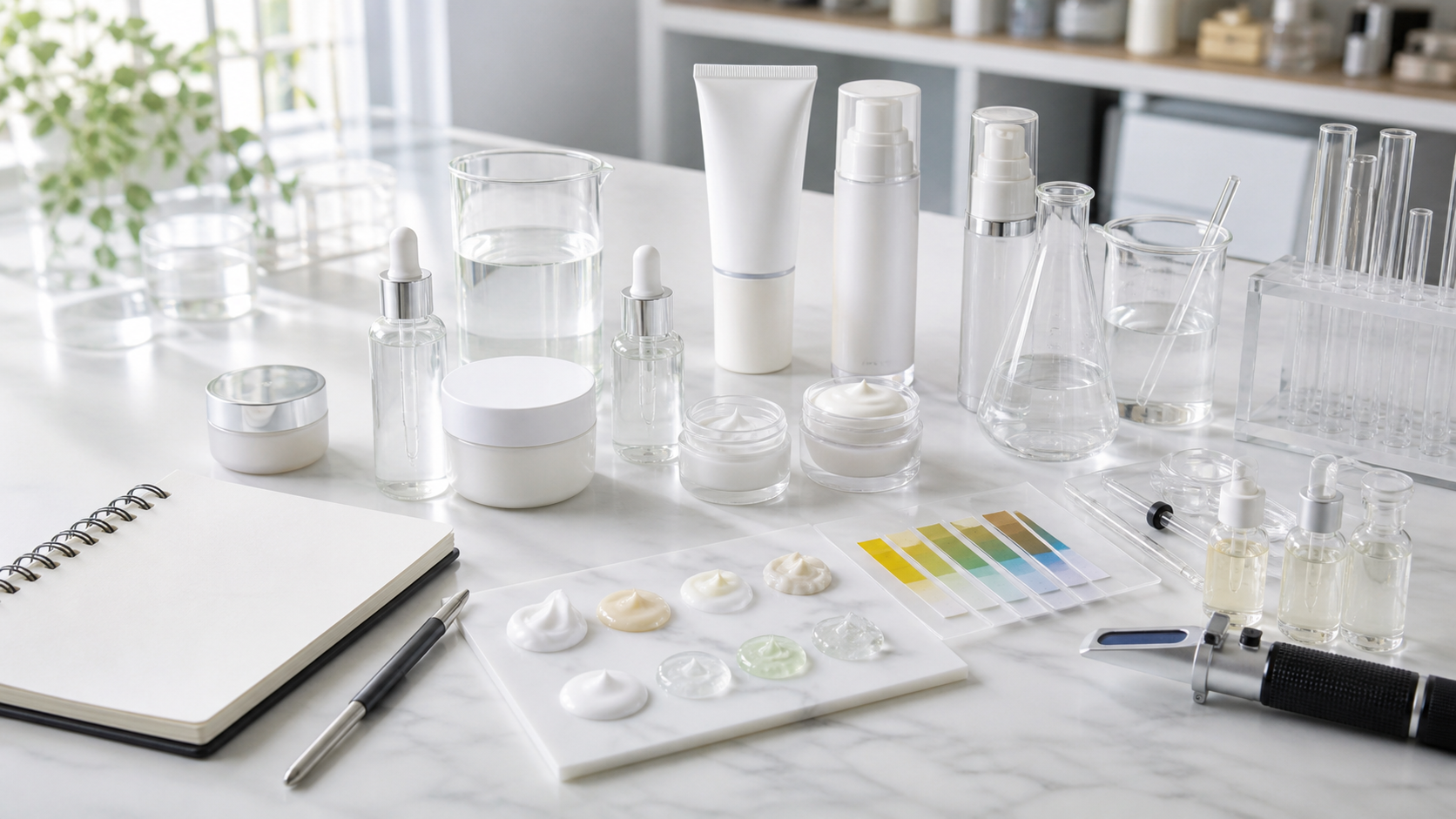
- R&D capability determines whether a factory can translate a buyer brief into a stable, manufacturable, market-ready cosmetic product.
- Buyers should evaluate formula route, sample revision process, ingredient knowledge, packaging fit, testing awareness, documentation, and production handoff.
- Strong R&D is useful for private label skincare, custom formulation, low MOQ launches, and more complex ODM product development.
- Mooyam Cosmetic supports cosmetic OEM manufacturer and cosmetic ODM manufacturer projects from idea review to sampling, packaging sourcing, QC, and bulk production.
What R&D Capability Means in Cosmetic Manufacturing
In cosmetic manufacturing, R&D is not only the lab team’s ability to mix ingredients. It includes product feasibility review, formula design, texture adjustment, ingredient compatibility, preservative strategy, stability planning, sample documentation, packaging fit, cost control, and communication with production and quality teams.
A factory with weak R&D may still produce simple stock formulas, but it may struggle when a brand needs a unique texture, ingredient story, sensitive-skin direction, new package, lower MOQ route, or multi-SKU product line. A factory with stronger R&D can explain what is realistic, what needs testing, what may increase cost, and what should be changed before mass production.
Why R&D Matters for Brand Buyers
For a new beauty brand, R&D capability affects speed and risk. A clear first sample can reduce revision rounds. Practical formulation advice can prevent the buyer from asking for an unstable ingredient combination. Early packaging checks can prevent leakage, clogging, label lifting, or pump failure. Better documentation can help the buyer keep decisions organized when preparing artwork, quality standards, and export information.
For established buyers, R&D matters because the supplier must support repeatable bulk production, formula improvement, cost optimization, line extensions, and reformulation when market requirements or ingredient availability change. The best R&D teams do not simply say yes to every request. They ask precise questions, explain tradeoffs, and help the buyer protect commercial goals.
| R&D Area | What Buyers Should Look For | Why It Matters |
|---|---|---|
| Brief review | The factory asks about target market, channel, claims, texture, packaging, MOQ, and price tier. | Prevents vague sampling and reduces wasted revisions. |
| Formula design | The team can explain private label, adjusted base, and fully custom formulation routes. | Helps buyers choose the right development model for cost, timing, and differentiation. |
| Sample revision | Feedback is converted into measurable changes such as viscosity, scent, color, spread, tack, or pH. | Improves sample quality and keeps development moving. |
| Packaging fit | Formula and package are checked together before final approval. | Reduces leakage, pump failure, filling problems, and compatibility issues. |
| Production handoff | Final formula, process notes, QC criteria, and approved samples are communicated clearly. | Supports consistent bulk production and quality control. |
How R&D Supports Private Label and Custom Formulation
Not every buyer needs a fully custom formula. For many startups, private label skincare can be a practical route because the base formula, production experience, and packaging options may already be established. R&D still matters because the buyer may need texture comparison, fragrance adjustment, color direction, package matching, claim review, or a low MOQ path.
For brands needing differentiation, custom formulation depends heavily on R&D strength. The lab must balance ingredient concept, sensory feel, preservative system, stability, packaging, cost, and production feasibility. A custom formula that looks impressive in a small beaker is not ready until it can be filled, stored, shipped, inspected, and produced consistently.
Sample Development: Where R&D Quality Becomes Visible
Sample development shows how the factory thinks. A strong team will ask for benchmark textures, but it should not copy another brand’s product. It should help translate the benchmark into a legal, manufacturable direction. It should also ask whether the product is for Amazon, DTC, distributors, spa channels, salon brands, or retail, because each channel may need different packaging, claims, carton strength, and launch quantities.
Good sample feedback is specific. Instead of asking to “make it better,” buyers should comment on absorption speed, shine, tack, scent level, color, viscosity, skin feel, residue, pump dose, dropper behavior, or rinse-off profile. A capable R&D team can convert that feedback into formula actions and explain the cost or stability impact of each change.
Packaging Sourcing and R&D Must Work Together
Formula and packaging cannot be evaluated separately. A serum may work in a lab bottle but string from a dropper. A cream may feel elegant in a jar but clog a pump. A cleanser may leak from a weak flip-top cap. A clay mask or scrub may need a wider opening, stronger liner, or different filling method.
Mooyam Cosmetic connects formula planning with packaging sourcing and customization, including bottles, jars, tubes, airless pumps, droppers, cartons, labels, and set packaging. This helps buyers compare appearance, MOQ, cost, lead time, compatibility, and export packing before committing to bulk production.
R&D Evaluation Checklist for Buyers
- Ask how the factory decides between stock formula, adjusted private label, and custom ODM development.
- Request examples of how sample feedback is handled, such as reducing tack, changing viscosity, improving pump flow, or adjusting scent.
- Check whether R&D reviews ingredient compatibility, pH, preservative strategy, color, odor, stability, and packaging fit.
- Confirm whether the factory can discuss low MOQ options without ignoring packaging MOQ and component lead time.
- Ask how approved samples, formula versions, batch standards, and QC criteria are controlled before production.
- Review how the team communicates claim boundaries and target-market requirements without making unsupported regulatory promises.
- Confirm that R&D, production, packaging, quality control, and export support can coordinate on one project timeline.
How R&D Reduces Bulk Production Risk
Bulk production risk often begins during early development. If the formula was not tested with the final packaging, the product may leak or dispense poorly. If the sample was approved without clear standards, the buyer may reject the bulk batch because texture, color, or scent feels different. If claims were not reviewed before artwork, cartons may need reprinting.
A strong R&D process supports quality control and compliance planning by defining what should be checked before and during production. This may include raw material review, batch records, pH, viscosity, appearance, odor, filling weight, packaging function, label placement, carton condition, retained samples, and shipment preparation. Requirements vary by market, formula type, and buyer channel.
| Project Stage | R&D Contribution | Buyer Benefit |
|---|---|---|
| Concept review | Checks feasibility, ingredient story, claim boundary, target cost, and product route. | Prevents unrealistic briefs and speeds up quotation. |
| Lab sample | Creates prototypes and adjusts texture, scent, color, viscosity, and sensory profile. | Improves approval quality and launch confidence. |
| Packaging match | Tests formula behavior with bottle, pump, jar, tube, label, and carton options. | Reduces leakage, filling, dispensing, and shipping risk. |
| Pre-production | Locks formula version, process notes, QC criteria, artwork status, and approved sample. | Supports repeatable bulk production. |
| Reorder or line extension | Reviews performance feedback, cost updates, ingredient changes, and new SKU opportunities. | Helps the brand scale with fewer surprises. |
Common Red Flags
Be careful if a supplier says every formula is easy, refuses to discuss tradeoffs, cannot explain why a sample changed, ignores packaging compatibility, or promises regulatory approval for all markets. Another red flag is a factory that treats R&D as separate from production and quality control. The buyer needs a finished product, not only a pleasant lab sample.
Buyers should also be cautious when a factory pushes unnecessary complexity. More actives, more botanical extracts, and more claims do not automatically create a better product. A practical cosmetic ODM manufacturer should help simplify the formula when needed and protect the product’s stability, cost, and customer experience.
Develop Products with Mooyam Cosmetic R&D Support
Looking for a reliable partner for cosmetic OEM/ODM service? Mooyam Cosmetic can help with formula route selection, private label skincare, custom formulation, sample development, packaging sourcing, low MOQ planning, bulk production, quality control, and export support. Contact us to discuss your product idea, formula requirements, packaging options, MOQ, and production solution. We support B2B brand and wholesale OEM/ODM projects only.
FAQ
What is cosmetic R&D capability?
It is the factory’s ability to evaluate product ideas, create or adapt formulas, adjust samples, review ingredient and packaging compatibility, plan testing, and support production handoff.
Do private label projects need R&D support?
Yes. Even when using an established formula, buyers may need texture adjustment, fragrance choice, packaging matching, claim review, sample approval, and QC planning.
How can buyers judge R&D quality before ordering?
Ask how the factory reviews briefs, handles sample feedback, checks stability risks, matches packaging, controls formula versions, and communicates with production and quality teams.
Is custom formulation always better than private label?
No. Custom formulation offers more differentiation, but private label can be faster and more cost controlled. The right route depends on launch goals, budget, MOQ, timeline, and brand positioning.
Can R&D help reduce manufacturing cost?
Yes. R&D can suggest practical ingredient choices, simpler textures, suitable packaging, and better production routes without sacrificing necessary product quality.
Does Mooyam Cosmetic accept retail product orders?
No. Mooyam Cosmetic works with beauty brands, distributors, private label buyers, Amazon and DTC sellers, and wholesale OEM/ODM projects only.
Related manufacturing guides: International brands should assess a factory’s experience serving international brands and review a custom serum development case study.