
Eyeliner pencil is still a practical color cosmetics item for brands because it combines daily-use demand, compact packaging, and clear shade differentiation. For an OEM/ODM project, the commercial result depends less on one trend word and more on formula feel, payoff, casing compatibility, sharpening behavior, and stable bulk production.
This guide is written for beauty brands, importers, distributors, and private label teams comparing eyeliner pencil manufacturing options. Mooyam Cosmetic supports cosmetic and makeup OEM/ODM development for brands and bulk buyers; we do not accept retail orders.
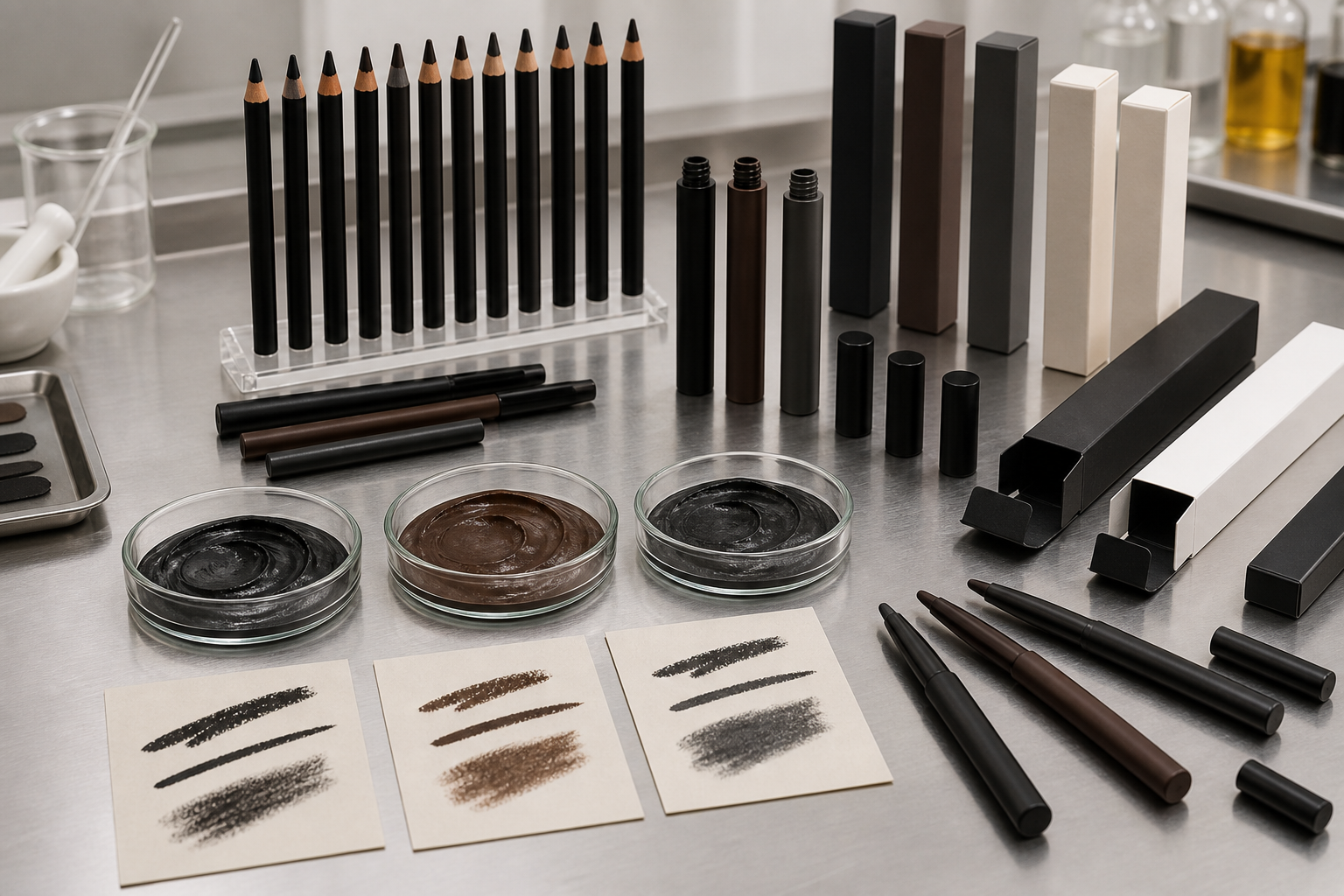
Related Mooyam resources: choosing a color cosmetics manufacturer, private label makeup manufacturing, and waterproof mascara development.
Quick Summary
- Eyeliner pencil projects should begin with the target use case: soft daily definition, smoky blending, long-wear waterproof wear, or precise tightline application.
- The key development decisions are wax balance, pigment dispersion, glide, payoff, hardness, transfer resistance, casing diameter, cap fit, and sharpening performance.
- Buyers should approve samples under real temperature, humidity, wear, and transport conditions before bulk production.
- Mooyam Cosmetic can support OEM/ODM formula development, shade matching, packaging sourcing, sample adjustment, production, filling/assembly, QC, and export-ready documentation for brand projects.
Why Eyeliner Pencil Still Works for Brand Launches
Many makeup categories depend on seasonal shades or viral textures, but eyeliner pencil has a more stable role in the consumer routine. It is easy to demonstrate, compact to ship, familiar across markets, and suitable for both entry-level and professional makeup users. For B2B buyers, that means the product can fit multiple brand positions: clean daily makeup, high-pigment color cosmetics, travel-friendly makeup, or affordable private label assortments.
The opportunity is not limited to black pencil. Brown, charcoal, espresso, taupe, burgundy, navy, and soft shimmer shades can support regional preferences and collection planning. A brand can also develop a pencil family around different textures: classic wooden pencil, automatic twist-up pencil, gel pencil, kajal-inspired pencil, or smudge-and-set pencil.
Choose the Right Eyeliner Pencil Format
The format should be selected before detailed formula work begins because casing and formula behavior affect each other. A creamy gel-style core may feel premium, but it can break during filling or sharpening if the hardness is not balanced. A firmer pencil may survive shipping well but feel dry if pigment dispersion and wax structure are not optimized.
| Format | Best For | OEM/ODM Watch Points |
|---|---|---|
| Wooden pencil | Classic definition, sharpenable point, broad retail price range | Core hardness, wood quality, cap fit, sharpening breakage, lacquer compatibility |
| Automatic pencil | Convenience-led daily use and travel makeup | Mechanism torque, core diameter, retractability, airtightness, fill stability |
| Gel pencil | Creamy payoff, smoky looks, long-wear claims | Oil/wax balance, transfer testing, sweating risk, heat resistance |
| Kajal-style pencil | Rich color, soft glide, expressive eye makeup markets | Regional claim review, smudge profile, eye-area ingredient restrictions |
Formula Development Priorities
Pigment Dispersion and Color Payoff
Eyeliner pencil buyers often judge samples in the first swipe. Strong payoff requires stable pigment dispersion, but too much pigment or poor wetting can create drag, crumble, or patchy lines. For black pencils, carbon black selection and dispersion quality matter. For brown and fashion shades, undertone accuracy should be checked on multiple skin tones and under different lighting.
Glide, Hardness, and Break Resistance
The pencil must glide smoothly without feeling greasy. Mooyam Cosmetic typically evaluates wax structure, oils, film formers, and pigment loading together because one adjustment can change the entire sensorial profile. A buyer should request at least two or three sample directions: firmer precise line, balanced daily glide, and creamy smoky payoff.
Wear, Transfer, and Removal
Long-wear performance should be defined carefully. “Waterproof,” “smudge-resistant,” and “long-lasting” are not the same test target. A product may resist humidity but still transfer on oily lids, or it may set firmly but require a stronger remover. For brand teams, the final claim should match test evidence and the consumer experience.
Packaging and Component Decisions
For eyeliner pencil OEM/ODM, packaging is not only visual. The component controls stability, filling, transport, and consumer use. Wooden pencils need reliable sharpening behavior and consistent lacquer finish. Automatic pencils need a smooth mechanism and a cap that protects the core from drying. Outer cartons should protect slim products from bending during transport and should leave enough printable area for INCI, shade, batch, and distributor information.
Mooyam Cosmetic can help buyers compare available casings, blank packaging, decoration options, and carton structures. For early-stage brands, standard packaging with customized color, label, or box design often reduces tooling pressure and helps move faster from approved sample to production.
OEM/ODM Workflow for Eyeliner Pencil Projects
| Stage | Buyer Input | Factory Output |
|---|---|---|
| Brief | Target market, format, shade range, price level, claim direction | Feasibility review, suggested formula route, packaging options |
| Sampling | Benchmark feel, shade references, packaging preference | Lab samples, shade adjustments, texture comparison |
| Testing | Approval criteria and destination market needs | Stability, compatibility, appearance, fill, and basic QC checks |
| Production | Final artwork, PO, approved shade standard | Bulk manufacture, assembly, inspection, packing, shipment support |
Quality Control Points Buyers Should Confirm
Because eyeliner pencil is used near the eye area, QC should be practical and strict. Confirm core appearance, color consistency, odor, glide, breakage, cap retention, casing defects, fill weight, batch coding, carton information, and packaging cleanliness. For automatic pencils, mechanism rotation and core advance should be checked from the first unit to the retained sample. For wooden pencils, sharpening tests should be repeated across several units rather than one perfect sample.
Stability testing should include heat exposure, low-temperature behavior, freeze-thaw where relevant, sweating observation, and packaging compatibility. Transport simulation is also useful because slim pencils can bend or crack if inner packing is weak.
Buyer Checklist Before Ordering
- Define whether the product is wooden, automatic, gel, kajal-style, waterproof, or standard daily wear.
- Approve black and brown shades separately; do not assume one formula base fits every shade.
- Test glide, payoff, smudge, transfer, breakage, sharpening, and removal on real users.
- Confirm packaging dimensions, cap fit, barcode area, shade label area, and carton protection.
- Review ingredient restrictions and cosmetic claims for the destination market before artwork printing.
- Ask the factory for retained samples, batch records, and QC inspection criteria before mass production.
MOQ, Sampling, and Launch Planning
MOQ depends on formula customization, shade count, component availability, decoration method, and carton printing. A simple private label project using available components may move faster, while a custom mechanism, new casing color, or large shade family requires longer coordination. To control risk, many brands start with two to four core shades, validate sales feedback, and then expand into seasonal colors or sets.
Buyers should also plan enough time for sample revisions. A small change in glide can affect wear. A stronger waterproof target can affect removal. A softer core can improve first-swipe payoff but raise breakage risk. The fastest successful projects usually have a clear benchmark, target price range, destination market, and approval checklist from the beginning.
Work With Mooyam Cosmetic
Mooyam Cosmetic is a cosmetic and makeup OEM/ODM factory for brand, distributor, and bulk private label projects. If you are developing an eyeliner pencil line, our team can help with formula direction, shade matching, packaging selection, sample adjustment, MOQ planning, production, QC, and export support. We do not sell single retail units.
FAQ
Can Mooyam Cosmetic develop both wooden and automatic eyeliner pencils?
Yes. Project feasibility depends on target texture, casing requirements, component availability, decoration method, and order quantity. The best format should be selected before detailed formula adjustment.
What shades should a new brand start with?
Most brands begin with black, deep brown, and one softer daily shade such as taupe or charcoal. Trend shades can be added after the core formula and packaging are validated.
Can eyeliner pencils be developed as waterproof?
Yes, but waterproof performance must be matched with suitable wear testing, packaging compatibility, and realistic removal expectations. Claims should be supported by evidence for the target market.
How long does sampling take?
Timing depends on the brief, formula route, packaging availability, and number of revisions. Buyers can shorten the process by sharing benchmarks, shade references, target price, and destination market requirements early.
Does Mooyam Cosmetic accept retail eyeliner pencil orders?
No. Mooyam Cosmetic focuses on OEM/ODM manufacturing, private label, and bulk production for beauty brands and distributors, not retail orders.
Trend Reference / Sources
These links are used only for trend, SEO, market, and compliance background. The article above is original B2B OEM/ODM procurement guidance written for cosmetic brand buyers.
- Google Trends comparison for eyeliner-related search interest.
- Google Search Central helpful content guidance for people-first content direction.
- Grand View Research color cosmetics market report for market-size and category context.
- FDA cosmetics labeling claims for U.S. cosmetic claim background.