Private label makeup manufacturing can help a beauty brand launch color cosmetics without building a factory, sourcing every component alone, or managing bulk filling from scratch. The opportunity is attractive, but makeup projects need more planning than simply choosing shades from a catalogue. Formula texture, color matching, packaging, MOQ, claims, stability, filling method and export requirements all affect whether the product can move from sample to repeat order.
This guide explains how overseas beauty brands, Amazon sellers, DTC founders, distributors and private label buyers can work with a cosmetic OEM manufacturer or cosmetic ODM manufacturer to develop a practical makeup line. Mooyam Cosmetic supports B2B brand and wholesale OEM/ODM projects only; we do not accept retail orders.
Quick Summary
- Private label makeup is fastest when the brand starts with proven base formulas, realistic shade plans and available packaging components.
- Color cosmetics need stronger shade, texture, filling and packaging checks than many simple skincare products.
- MOQ may be affected by pigment batches, compact pans, applicators, cartons, decoration methods and the number of shades.
- A clear product brief helps the manufacturer recommend private label, OEM or ODM routes without unnecessary sample rounds.
- Mooyam Cosmetic can support makeup OEM/ODM projects with formula planning, packaging sourcing, sample development, bulk production, quality control and export support.
What Private Label Makeup Manufacturing Means
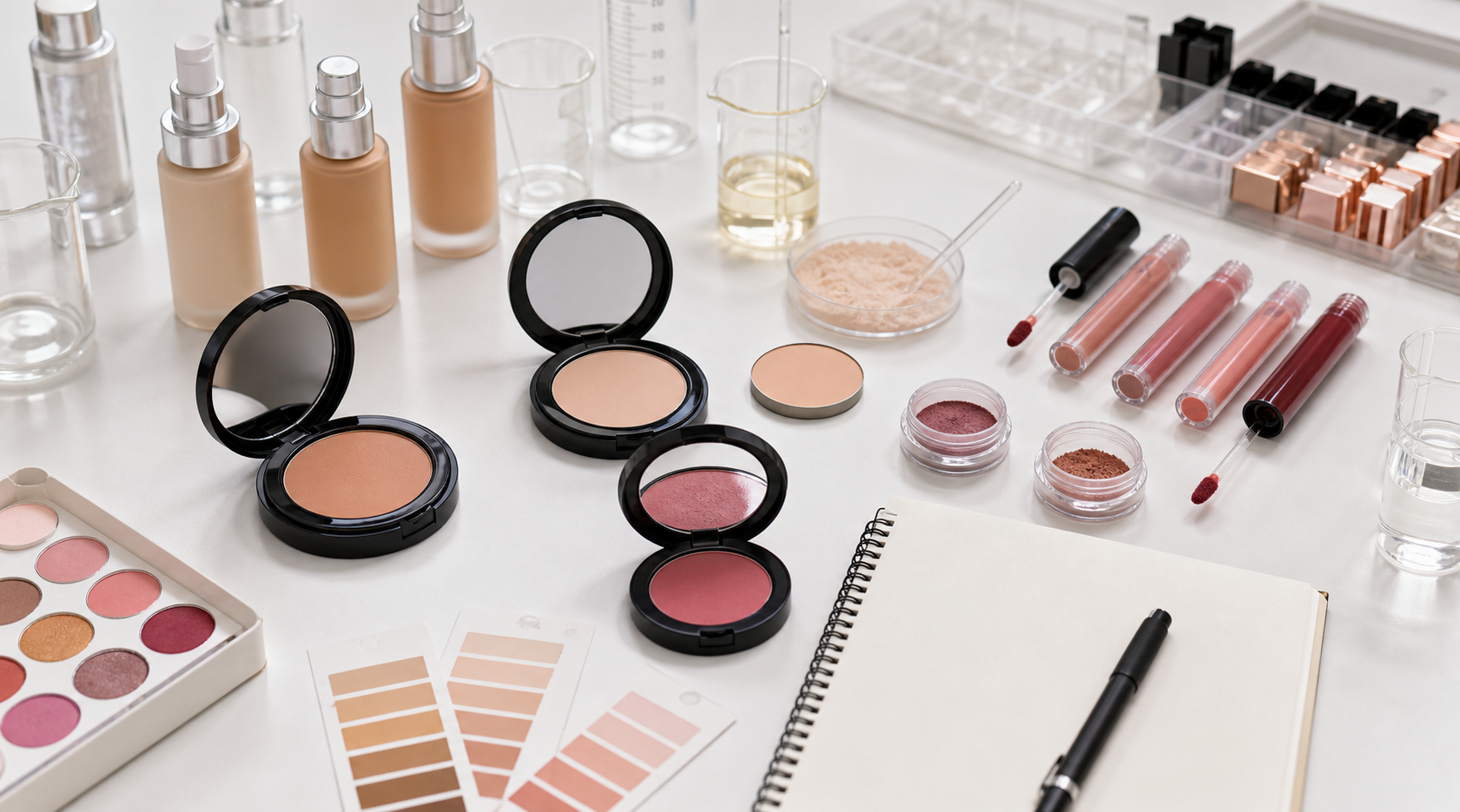
Private label makeup manufacturing usually means a factory provides existing or semi-developed formulas that a brand can customize with shade, fragrance if suitable, packaging, artwork and market positioning. The route is useful for buyers who want to launch faster, test a category or reduce early development risk. It can apply to lip gloss, lipstick, foundation, concealer, pressed powder, blush, highlighter, eyeshadow, mascara or makeup sets, depending on the factory capability.
OEM and ODM models may go deeper. In an OEM project, the brand may provide its own formula, benchmark or detailed technical requirements. In an ODM project, the manufacturer helps develop the product concept and formula route from a brief. Many makeup projects sit between these models: a buyer may start from a stock formula, adjust shade and texture, then build custom packaging for brand differentiation.
Choose the Right Makeup Product Route
A first makeup launch should not try to cover every color cosmetic category at once. Each shade and format adds sourcing work, approval steps and inventory risk. A focused product route is easier to sample, photograph, ship and reorder.
| Product Route | Best Fit | Manufacturing Checkpoints |
|---|---|---|
| Lip gloss or lip oil | DTC, creator brands, gift sets and fast color testing. | Viscosity, applicator pickup, leakage, shade dispersion, fragrance and fill weight. |
| Pressed powder, blush or highlighter | Brands needing visible shades and compact packaging. | Powder press strength, pan fit, fallout, drop resistance, color consistency and mirror quality. |
| Foundation or concealer | Brands with clear complexion positioning and shade demand. | Shade range, undertone, oxidation appearance, coverage, pump compatibility and claim limits. |
| Eyeshadow or makeup palette | Retail, distributor and seasonal collection launches. | Pan layout, color payoff, powder texture, applicator, carton strength and palette MOQ. |
Formula and Shade Planning
Define Texture Before Shade Expansion
Beauty brands often begin with a shade mood board, but the texture route should come first. A lip gloss may be glassy, cushiony, non-sticky, shimmered or high-pigment. A foundation may be sheer skin tint, medium coverage or soft matte. A blush may be powder, cream, stick or liquid. These decisions guide raw materials, filling equipment, packaging compatibility and sample testing.
After the texture direction is clear, shade planning becomes more controlled. For makeup, a supplier should work with approved shade standards, lab drawdowns or batch references, not only screenshots. Color can shift depending on base formula, pigment dispersion, pan pressing, lighting and packaging material. For international projects, brands should also consider target market preferences, undertone needs and color additive requirements, which may vary by destination market.
Avoid Overclaiming Makeup Benefits
Makeup claims should stay within cosmetic scope. Words such as smooth-looking, buildable color, soft-focus finish, hydrated feel or comfortable wear are usually easier to manage than medical, treatment or guaranteed-performance claims. Waterproof, SPF, non-comedogenic, long-wear or eye-area claims may require extra testing and market-specific review. A manufacturer can organize formula and QC information, but the brand or importer should confirm local rules before sale.
Packaging Sourcing for Makeup Projects
Packaging can decide whether a makeup project is feasible at low MOQ. Lip gloss tubes, mascara tubes, compact cases, pans, palettes, pumps, caps, applicators, cartons and labels may each have separate minimums and lead times. A simple stock component with custom decoration can be a practical first step. Custom molds may fit mature brands with repeat demand, but they can add tooling cost and longer development timelines.
For color cosmetics, packaging must match the formula. A high-viscosity gloss needs an applicator and wiper that control pickup. A foundation bottle needs a pump or airless system that handles viscosity without clogging. A pressed powder needs a pan, glue, compact and drop-resistance plan. Packaging should be reviewed during sample development, not after formula approval.
How the OEM/ODM Process Usually Works
A professional makeup project begins with a product brief. The brief should include product type, target customer, benchmark products, shade count, texture, packaging direction, claims, sales channel, launch market, target cost and estimated order quantity. With this information, the manufacturer can recommend stock formula, modified formula or custom formulation routes.
| Stage | Buyer Decision | Factory Support |
|---|---|---|
| 1. Brief review | Confirm format, shade count, claim direction, target price and market. | Recommend formula route, packaging options, MOQ and sampling schedule. |
| 2. Lab samples | Review texture, color, scent, payoff, applicator feel and benchmark fit. | Prepare samples, adjust shades, record revisions and test packaging compatibility. |
| 3. Pre-production | Approve final formula, shade standards, components, artwork and carton. | Confirm filling method, QC standards, retained samples and production plan. |
| 4. Bulk production | Approve inspection criteria and shipment requirements. | Manage bulk mixing, filling, assembly, packing, quality control and export support. |
MOQ, Cost and Supplier Evaluation
MOQ is not only a finished-product number. A makeup order may involve formula batch MOQ, pigment MOQ, component MOQ, decoration MOQ, carton MOQ and shade-by-shade production planning. A six-shade lip gloss line may require more operational work than one skincare serum, even if the fill size is smaller. Buyers should ask suppliers to explain MOQ by formula, shade, packaging component and decoration method.
When comparing suppliers, do not judge only by the lowest unit price. Review whether the factory understands shade standards, formula stability, filling, packaging sourcing, artwork checks and inspection records. A reliable partner should ask practical questions, explain tradeoffs and provide clear approval steps before bulk production.
How Mooyam Cosmetic Supports Makeup Buyers
Mooyam Cosmetic provides cosmetic OEM/ODM manufacturing service for B2B makeup and beauty projects, including product brief review, sample development, low MOQ discussion, bulk production and export support. Buyers who want faster brand launches can also review private label skincare and beauty manufacturing options, while brands needing a distinct texture or product story can discuss custom formulation development.
For project execution, our team can support cosmetic packaging sourcing and customization, including tubes, compacts, palettes, bottles, jars, cartons and decoration methods. Before production, buyers should review quality control and compliance considerations so claim language, testing expectations and market responsibilities are discussed early.
Buyer Checklist Before Requesting Samples
- Define the product category, target customer, sales channel and launch market.
- Decide whether you need stock formula, modified ODM formula or custom formulation.
- Prepare benchmark products, shade references, texture expectations and avoided ingredients.
- Confirm how many shades are commercially necessary for the first order.
- Ask for MOQ by formula, shade, packaging component, applicator, carton and decoration method.
- Test formula with the intended packaging before final approval.
- Review color consistency, stability, leakage, drop resistance, fill weight and retained sample standards.
- Keep claim wording within cosmetic scope and check requirements for the target market.
FAQ
Can a new brand start with private label makeup?
Yes. Many brands begin with private label makeup because it can reduce development time and help test demand. The brand still needs clear shade, packaging, MOQ and claim decisions.
What makeup products are best for a first launch?
Lip gloss, blush, highlighter, pressed powder or a focused complexion product can work well. The best choice depends on audience, channel, budget, packaging and shade complexity.
How many shades should I launch first?
Start with the fewest shades that make commercial sense. Too many shades can increase MOQ, approval time and inventory risk before demand is proven.
Can Mooyam Cosmetic help with packaging?
Yes. Mooyam can help source and customize packaging components such as lip gloss tubes, compacts, bottles, jars, palettes, cartons and labels.
Is custom formulation necessary for makeup?
Not always. Stock or modified formulas may be suitable for faster launch plans, while custom formulation is better when the brand needs unique texture, finish or performance targets.
What quality checks matter for makeup?
Useful checks include appearance, odor, color, viscosity or hardness, fill weight, shade consistency, packaging function, leakage, drop resistance, microbial review where relevant and retained sample comparison.
Does Mooyam Cosmetic accept retail orders?
No. Mooyam Cosmetic supports B2B brand, private label and wholesale OEM/ODM manufacturing projects only.
Develop Private Label Makeup with Mooyam
Looking for a reliable cosmetic OEM/ODM manufacturer for a private label makeup project? Contact Mooyam Cosmetic to discuss your product idea, shade plan, formula requirements, packaging options, MOQ, sample development, quality control and production solution.