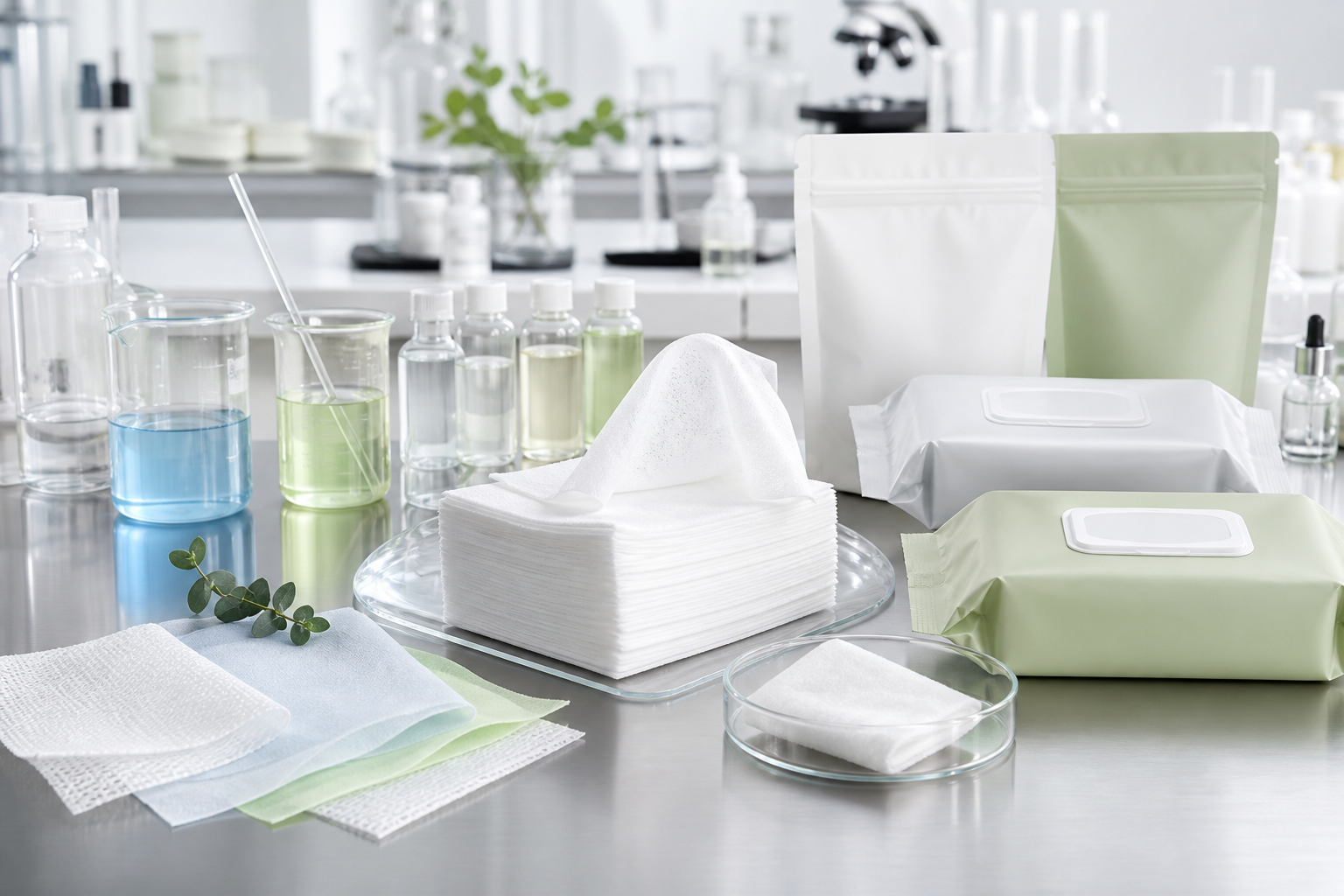
Makeup remover wipes can be a practical private label product when a brand wants convenience, travel use, and clear cleansing benefits in one SKU. For OEM/ODM buyers, the important decisions are not only fragrance and packaging design, but also sheet material, liquid load, preservative system, skin feel, claims, and seal integrity.
This guide is written for beauty brands, distributors, and bulk buyers planning makeup remover wipes with a cosmetic factory. Mooyam Cosmetic supports cosmetic and makeup OEM/ODM projects for brands and wholesale clients; we do not accept retail orders.
Related Mooyam resources: cleansing balm OEM/ODM development, choosing a color cosmetics manufacturer, and custom cosmetic packaging guidance.
Quick Summary
- Makeup remover wipes require coordinated development across nonwoven fabric, cleansing liquid, preservative system, wetness level, pouch seal, and claim language.
- Buyers should define the target use case first: daily light makeup removal, waterproof makeup support, sensitive-skin cleansing, travel packs, or professional kit use.
- QC should cover wipe count, sheet dimensions, liquid weight, microbial control, package leakage, reseal performance, odor, appearance, and compatibility over time.
- Mooyam Cosmetic can support OEM/ODM formulation, material selection, packaging sourcing, sample adjustment, production, QC, and export documentation for bulk brand orders.
Why Makeup Remover Wipes Still Fit B2B Beauty Lines
Although many consumers also use cleansing balms, oils, and micellar water, wipes continue to serve a different job: fast removal, portability, gym and travel use, and easy sampling. For brand teams, a wipe product can work as a standalone SKU, a travel kit component, a promotional set item, or a companion product for color cosmetics lines.
The category also gives buyers room to differentiate beyond a basic cleansing claim. A brand can choose fragrance-free wipes for sensitive skin positioning, high-wetness micellar wipes for face makeup removal, compact packs for travel, or larger soft sheets for spa and professional use. The key is to align the brief with realistic formula and packaging constraints before sampling begins.
Start With the Target Use Case
Different wipe concepts need different technical choices. A wipe for daily light makeup should feel mild and leave minimal residue. A wipe positioned for waterproof makeup needs stronger cleansing performance and careful eye-area comfort review. A travel pouch must resist leakage and drying during transport. These requirements should be written into the first OEM/ODM brief rather than added after samples are made.
| Concept | Buyer Goal | Factory Development Focus |
|---|---|---|
| Daily cleansing wipe | Convenient face makeup removal | Mild cleansing liquid, soft handfeel, low tacky residue |
| Micellar wipe | Fresh cleansing story and broad compatibility | Surfactant blend, pH, clarity, skin feel, preservative compatibility |
| Waterproof makeup wipe | Stronger removal performance | Oil phase or solubilizer balance, eye-area comfort, residue control |
| Travel pack | Portable cleansing for kits and sets | Pack size, reseal label, leakage prevention, drying resistance |
Formula Development: Liquid, Fabric, and Skin Feel
Cleansing Liquid and Mildness
The liquid system determines how the wipe removes makeup and how the skin feels afterward. Mooyam Cosmetic can develop directions using micellar-style cleansing, mild surfactants, humectants, soothing ingredients, or a light emollient phase depending on the target claim. Buyers should avoid requesting maximum removal strength without also defining residue, eye comfort, and after-feel requirements.
Nonwoven Fabric Selection
The wipe sheet affects softness, thickness, stretch, pickup, and cost. Common options include spunlace nonwoven, plant-derived fiber blends, embossed textures, and different basis weights. A softer and heavier sheet may support a more premium user experience, but it can raise cost and package bulk. A thinner wipe may improve price competitiveness, but buyers should test whether it tears, rolls, or feels rough during makeup removal.
Preservation and Wetness Level
Wet wipes need careful microbial control because the product combines water, skin contact, and repeated package opening. The preservative system must work with the cleansing liquid, sheet material, fragrance, and packaging. Liquid load should also be tested: too dry feels cheap and weak; too wet can leak, foam excessively, or leave a heavy finish.
Packaging Decisions for Private Label Wipes
Packaging controls both consumer experience and product stability. A small pack can suit travel and gift sets, while a larger count pack can support daily-use positioning. The closure system matters: poor reseal performance can dry out the top sheets before the consumer finishes the pack. For ecommerce and export, pack stiffness, carton protection, and leakage resistance should be reviewed before bulk approval.
Mooyam Cosmetic can help compare blank pouch structures, reseal labels, plastic lids, carton options, and artwork layouts. For early-stage brands, standard pouch molds and existing material structures usually shorten lead time. Custom pouch dimensions, special films, or new closure tooling should be planned earlier because they affect MOQ and schedule.
OEM/ODM Workflow for Makeup Remover Wipes
| Stage | What the Buyer Confirms | What the Factory Prepares |
|---|---|---|
| Brief | Use case, wipe count, skin feel, claims, price level, target market | Formula route, fabric suggestions, pack options, feasibility notes |
| Sampling | Benchmark samples, fragrance preference, sheet texture, packaging direction | Lab liquid samples, wipe mockups, material comparisons, adjustment plan |
| Testing | Approval criteria, destination-market claim limits, transport conditions | Stability, preservative review, leakage checks, appearance and odor checks |
| Production | Final artwork, purchase order, approved samples, shipping plan | Bulk filling, folding/packing, sealing, coding, QC inspection, export support |
Quality Control Points Buyers Should Not Skip
For makeup remover wipes, QC should be more specific than “looks good.” Confirm wipe count, individual sheet size, folding alignment, package net content, liquid weight, seal strength, reseal label adhesion, leakage, odor, color, pH where relevant, and appearance after heat and room-temperature storage. Retained samples from each batch should be kept for later comparison.
Buyers should also test actual makeup removal with the products their customers use. A wipe that removes light foundation may not remove waterproof mascara. A stronger cleansing system may remove makeup faster but feel too oily or irritating for some users. Clear approval criteria reduce subjective disputes during production.
Buyer Checklist Before Ordering
- Define target use: daily face makeup, waterproof makeup, sensitive skin, travel kit, or professional use.
- Confirm wipe fabric type, weight, texture, softness, and sheet dimensions.
- Approve cleansing liquid for removal power, after-feel, fragrance, pH, and eye-area comfort where relevant.
- Test package leakage, reseal performance, drying resistance, and carton protection.
- Review INCI, warnings, cosmetic claims, and destination-market labeling before artwork printing.
- Set QC standards for wipe count, liquid load, microbial control, odor, appearance, and retained samples.
MOQ and Launch Planning
MOQ depends on fabric choice, wipe size, pack count, pouch material, decoration method, formula customization, and whether the buyer uses existing packaging structures. Brands can often reduce launch risk by beginning with one or two pack sizes and a focused claim direction rather than developing too many variants at once.
A realistic timeline should include formula development, fabric selection, packaging confirmation, artwork review, sample adjustment, stability and compatibility checks, production scheduling, and shipping. Wipe projects are simple for consumers to understand, but they have several technical interfaces that must work together.
Work With Mooyam Cosmetic
Mooyam Cosmetic is a cosmetic and makeup OEM/ODM factory for brands, distributors, and bulk private label projects. If you are planning makeup remover wipes, we can support formula direction, fabric selection, pouch options, sampling, MOQ planning, bulk production, QC, and export documentation. We do not sell retail single units.
FAQ
Can Mooyam Cosmetic develop private label makeup remover wipes?
Yes. Mooyam Cosmetic supports OEM/ODM makeup remover wipes for brand and distributor projects, including formula development, fabric selection, packaging, sampling, production, and QC.
What is the difference between micellar wipes and regular cleansing wipes?
Micellar wipes usually use a micellar-style cleansing liquid designed for fresh, mild makeup removal. Regular cleansing wipes can use different surfactant, emollient, or fragrance directions depending on the target brief.
Can wipes be made for waterproof makeup removal?
Yes, but the cleansing system must be developed carefully to balance removal performance, eye-area comfort, residue, packaging compatibility, and claim support.
Can brands request biodegradable or plant-derived wipe materials?
Material options can be reviewed during development, but environmental claims must be accurate, evidence-based, and suitable for the destination market. Buyers should confirm claim language before artwork printing.
Does Mooyam Cosmetic accept retail orders for wipes?
No. Mooyam Cosmetic focuses on OEM/ODM manufacturing, private label, and bulk production for beauty brands and distributors, not retail orders.
Trend Reference / Sources
These links are used only for trend, SEO, market, and compliance background. The article above is original B2B OEM/ODM procurement guidance written for cosmetic brand buyers.
- Google Trends comparison for makeup remover wipes, cleansing wipes, and micellar wipes.
- Google Search Central helpful content guidance for people-first SEO direction.
- Grand View Research facial wipes market report for category context.
- FDA cosmetics labeling claims for U.S. cosmetic claim background.