Custom cosmetic packaging is often the first thing a buyer notices, but for a beauty brand it is also a manufacturing decision. A bottle, tube, jar, pump, cap, carton or label can affect formula compatibility, MOQ, lead time, filling speed, shipping safety, customer experience and total product cost. Good packaging is not only attractive; it must work with the formula and the supply chain.
This guide explains how overseas beauty brands, Amazon sellers, DTC founders, distributors and private label buyers can plan custom cosmetic packaging with a cosmetic OEM manufacturer or cosmetic ODM manufacturer. Mooyam Cosmetic supports B2B brand and wholesale OEM/ODM projects only and does not accept retail orders.
Quick Summary
- Custom cosmetic packaging should be planned together with formula, MOQ, filling method, artwork and target market requirements.
- Stock packaging with custom decoration is often the most practical route for new brands and low MOQ launches.
- Fully custom molds can create stronger differentiation but require higher budgets, longer lead times and stricter approval control.
- Packaging choices affect leakage risk, formula stability, freight cost, retail presentation and repeat order reliability.
- Mooyam Cosmetic can support packaging sourcing, private label skincare projects, custom formulation, quality control and export-ready production planning.
What Custom Cosmetic Packaging Includes
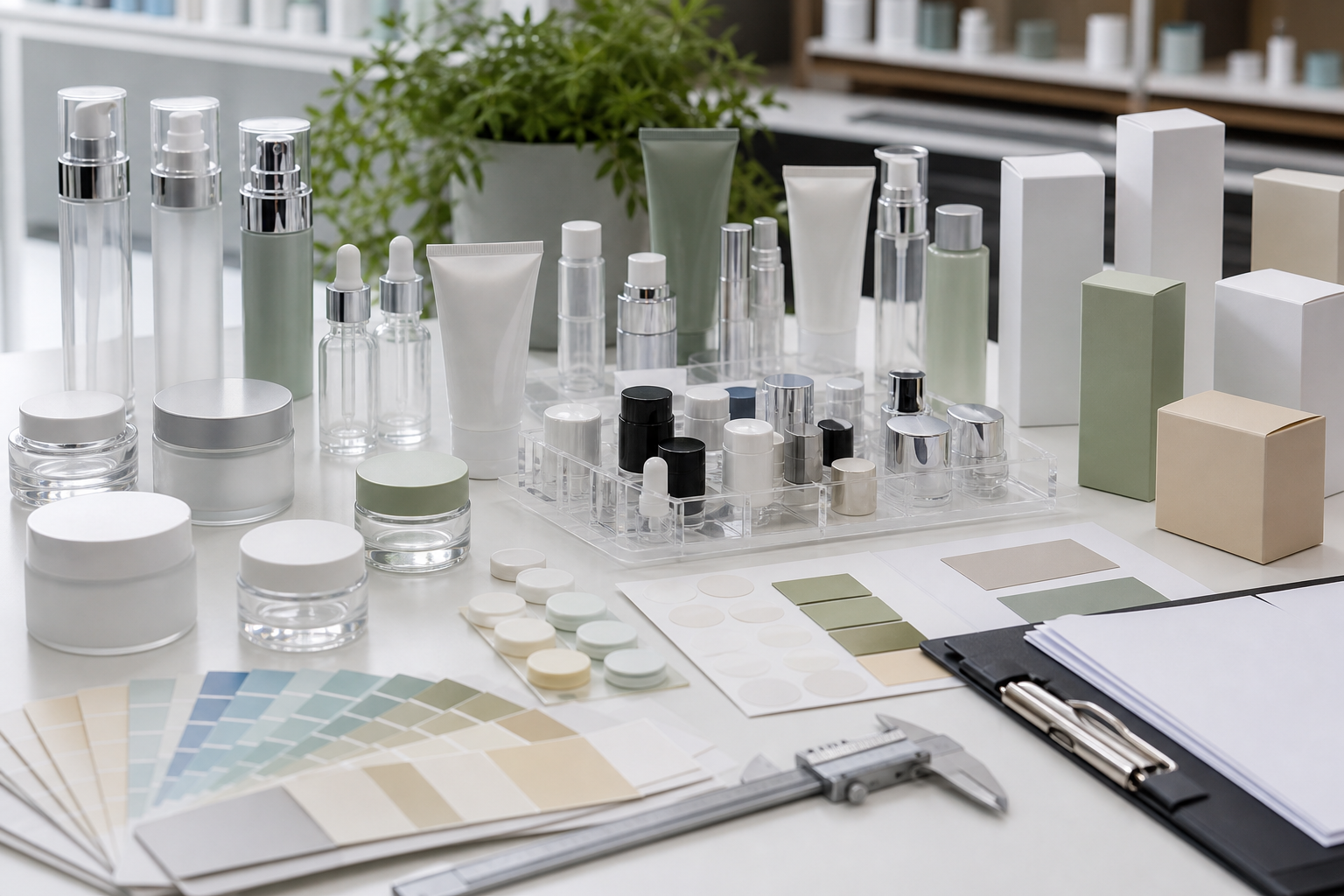
Custom cosmetic packaging can include primary packaging, secondary packaging and decoration. Primary packaging touches or directly holds the formula, such as bottles, jars, tubes, airless pumps, droppers, compacts, palettes, sachets and caps. Secondary packaging includes cartons, sleeves, trays, gift boxes, shipper cartons and set boxes. Decoration may include label printing, silk screen, hot stamping, coating, color matching, embossing, debossing or custom closures.
For B2B projects, packaging should be selected based on the formula and sales channel, not only visual preference. A premium glass dropper may look good, but it may not be ideal for a thick serum, travel kit or fragile e-commerce shipment. A tube may be cost-efficient, but it needs the right material, cap and seal for the formula. An airless pump can improve user experience, but MOQ and compatibility should be reviewed early.
Stock, Semi-Custom and Fully Custom Packaging
| Packaging Route | Best Fit | Buyer Considerations |
|---|---|---|
| Stock packaging | Fast private label skincare or makeup launches with practical MOQ. | Limited shape differentiation, but faster sourcing and simpler compatibility checks. |
| Semi-custom packaging | Brands that want color, print, cap or carton customization without tooling. | Good balance of brand appearance, cost and launch speed. |
| Custom mold packaging | Mature brands with repeat demand and a strong design requirement. | Tooling cost, higher MOQ, longer sampling, mold approval and component testing. |
| Set or kit packaging | Routine bundles, gift sets, distributor programs and retail promotions. | Insert fit, carton strength, barcode placement, SKU matching and freight volume. |
Match Packaging to Formula
Viscosity and Dispensing
Formula viscosity should guide dispensing. A watery toner may use a bottle with a reducer, mist pump or flip-top cap. A serum may use a dropper, pump or airless bottle depending on thickness and ingredient sensitivity. A cream may use a jar, tube or airless pump. A scrub or clay mask may need wider openings and stronger seal control. If the component is chosen before the formula is understood, the product may leak, clog, dispense poorly or create customer complaints.
Material Compatibility
Packaging material should be reviewed with the actual formula. Oils, fragrance, pigments, surfactants, acids, powders and high-viscosity products may interact differently with plastics, liners, pumps, rubbers, labels or coatings. Compatibility checks can include leakage observation, odor change, color change, pump function, cap torque, label adhesion and appearance after storage. The exact checks depend on product type and target market.
How Packaging Affects MOQ and Cost
Packaging MOQ is often separate from formula MOQ. A factory may be able to produce a low MOQ formula batch, but a custom bottle color, printed cap or special carton may require a larger component order. Buyers should ask for MOQ by bottle, cap, pump, carton, label, decoration process and finished product. This avoids surprise costs after the formula has already been approved.
Packaging can also affect freight cost. Glass jars, large cartons and heavy set boxes may raise shipping weight and breakage risk. Lightweight plastic bottles or tubes may reduce freight cost, but they still need reliable wall thickness, sealing and shelf appearance. The best choice balances brand positioning, product protection, sales channel and reorder planning.
Artwork, Label and Claim Planning
Artwork should not be started at the last minute. Labels and cartons need space for product name, net content, ingredient list, directions, warnings where relevant, batch code, responsible party information, country of origin, barcode and market-specific details. Requirements vary by country or region, so buyers should confirm final label obligations for the destination market.
Claim wording should also be reviewed before printing. Packaging should not promise medical treatment, guaranteed results, unverified certifications or unsupported regulatory approvals. A manufacturer can provide production information and quality control records, but the brand or importer remains responsible for checking market-specific compliance before sale.
OEM/ODM Packaging Workflow
| Stage | Buyer Provides | Factory Output |
|---|---|---|
| 1. Packaging brief | Product type, formula route, fill volume, brand style, market, MOQ and target cost. | Component recommendations, decoration options, MOQ and lead time estimate. |
| 2. Sample matching | Preferred bottle, tube, jar, pump, carton or benchmark packaging. | Physical component samples, formula fit review and packaging compatibility plan. |
| 3. Artwork approval | Logo file, label content, carton design, barcode and required market information. | Artwork checks, print proof coordination and pre-production confirmation. |
| 4. Bulk production | Final approved components, artwork, inspection criteria and shipment plan. | Component inspection, filling, packing, QC records and export support. |
Common Packaging Mistakes to Avoid
One common mistake is choosing a beautiful component that does not fit MOQ or lead time. Another is approving a formula in a lab jar, then switching to a pump bottle that changes dispensing performance. Some brands also underestimate carton and label lead time, especially when several SKUs or languages are involved. For e-commerce brands, ignoring leakage, drop resistance and shipper carton strength can create costly customer service problems.
Buyers should also avoid over-customizing the first order. A custom bottle, cap, carton, label material and set box can look impressive, but it may create too many moving parts before sales volume is proven. A stock or semi-custom route can be more practical for a first launch, then the brand can invest in custom tooling after repeat demand is clearer.
How Mooyam Cosmetic Supports Packaging Projects
Mooyam Cosmetic supports cosmetic OEM/ODM service projects where formula, packaging, MOQ and quality control need to be planned together. Buyers launching faster ranges can review private label skincare options, while brands needing a unique texture, ingredient direction or dispensing requirement can discuss custom formulation before choosing final components.
Our team can help with custom cosmetic packaging sourcing and customization, including bottles, jars, tubes, airless pumps, droppers, cartons, labels and set packaging. Before bulk production, buyers can review quality control and compliance support so packaging function, artwork, label content and inspection standards are discussed early.
Buyer Checklist Before Approving Packaging
- Confirm product type, fill volume, formula viscosity, target market and sales channel.
- Choose stock, semi-custom or fully custom packaging based on MOQ, budget and launch timing.
- Request component MOQ for bottle, cap, pump, tube, jar, carton, label and decoration method.
- Test the actual formula with the intended component before production.
- Review leakage, pump function, cap torque, label adhesion, carton strength and shipping protection.
- Approve artwork only after checking ingredient, claim and label responsibilities for the destination market.
- Keep a signed final sample or approved standard for repeat orders.
- Discuss reorder lead time, packaging stock and export documentation before bulk production.
FAQ
What is the easiest packaging route for a new beauty brand?
Stock packaging with custom decoration is often the easiest route because it can reduce tooling cost, lead time and MOQ pressure while still supporting brand presentation.
Can packaging be customized at low MOQ?
Some customization may be possible at low MOQ, especially labels, cartons or selected stock components. Fully custom molds or special colors usually require higher minimums.
Should I choose packaging before formula development?
Packaging direction can be discussed early, but final approval should consider actual formula viscosity, compatibility, filling method and stability observations.
What packaging is best for serum products?
Common options include droppers, pumps and airless bottles. The best option depends on viscosity, ingredient sensitivity, user experience, target cost and market positioning.
Can Mooyam Cosmetic help source cartons and labels?
Yes. Mooyam can support cartons, labels, boxes, set packaging and decoration methods as part of an OEM/ODM manufacturing project.
Do packaging claims need compliance review?
Yes. Label content and claims should be checked for the target market. Requirements vary, and brands should avoid medical claims or unsupported certification language.
How does packaging affect production lead time?
Custom colors, printing, special components, molds and cartons can extend lead time. Stock components usually support faster sample development and production planning.
Does Mooyam Cosmetic accept retail orders?
No. Mooyam Cosmetic works with B2B beauty brands, private label buyers, distributors and wholesale OEM/ODM projects only.
Plan Custom Cosmetic Packaging with Mooyam
Looking for a reliable cosmetic OEM/ODM manufacturer for packaging sourcing, sample development and bulk production? Contact Mooyam Cosmetic to discuss your formula, packaging options, MOQ, artwork, quality control and export support.