
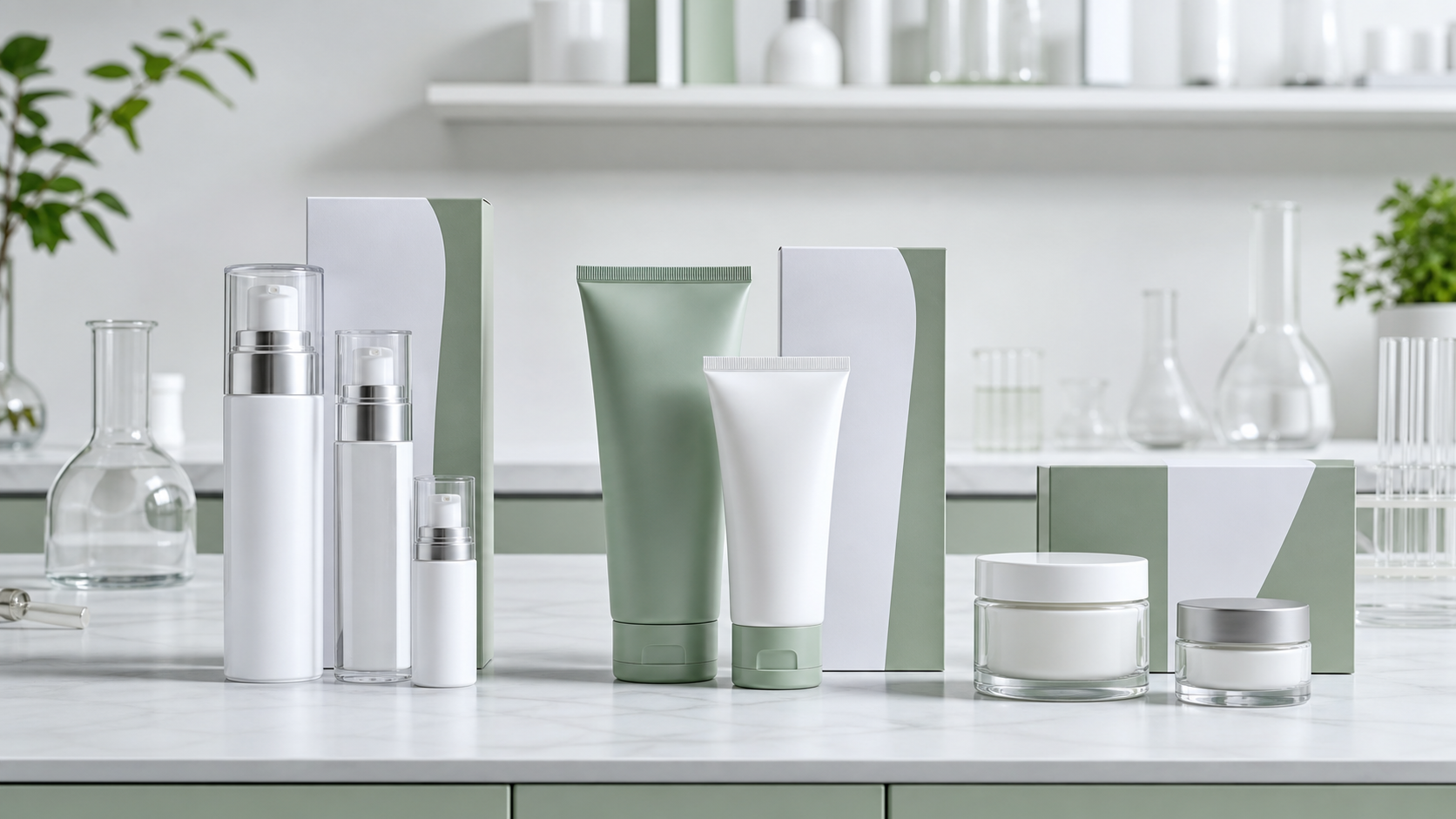
Airless pump bottles, tubes, and jars are three of the most common skincare packaging options, but they do not serve the same purpose. The best choice depends on formula texture, product positioning, cost target, user experience, MOQ, decoration, and quality control needs.
This packaging guide is written for overseas beauty brands, private label buyers, Amazon and DTC sellers, distributors, and sourcing teams planning a skincare launch with a cosmetic OEM manufacturer or cosmetic ODM manufacturer. Mooyam Cosmetic supports B2B skincare OEM/ODM projects and does not accept retail orders.
Quick Summary
- Airless pumps are strong for serums, lotions, and premium formulas that need controlled dispensing.
- Tubes are practical for cleansers, creams, masks, body care, and cost-efficient private label skincare launches.
- Jars can work well for rich creams, masks, and premium textures, but they need careful hygiene and compatibility review.
- Packaging should be selected during formula and sample development, not after the formula is approved.
Why Packaging Format Matters in Skincare Manufacturing
Packaging is more than a container. It affects how the formula is filled, how the consumer uses the product, how the brand appears on shelf, and how stable the product remains through storage and shipping. A beautiful component that does not match the formula can cause leaking, pump failure, product waste, high MOQ pressure, or delayed bulk production.
When planning private label skincare or a custom skincare line, packaging should be discussed at the same time as formula texture, target price, order quantity, and sales channel. A lightweight tube may be ideal for an Amazon bundle. A glass jar may fit a spa cream. An airless pump may better support a premium serum or lotion experience.
Airless Pump Bottles: Premium Control and Practical Protection
Airless pump bottles are popular for serums, lotions, eye products, emulsions, and premium skincare products. They offer controlled dispensing and can reduce direct user contact with the remaining product. They also create a clean, modern appearance that many brands associate with higher value.
The tradeoff is cost and compatibility. Airless components can be more expensive than simple tubes or jars, and the pump system must match the formula viscosity. If the formula is too thick, it may not dispense well. If it is too thin, leakage or inconsistent output may occur. Sample testing should include pump performance, fill weight, cap fit, leakage, storage position, and transport simulation where appropriate.
Airless packaging can be a strong choice for brands investing in custom formulation, especially when the formula story, texture, and price tier support the additional packaging cost.
Tubes: Flexible, Efficient, and Launch-Friendly
Tubes are among the most practical skincare packaging options. They are often used for facial cleansers, moisturizers, sunscreens, masks, hand creams, body lotions, scrubs, and travel-size products. Tubes can be lightweight, easy to ship, convenient for consumers, and suitable for both low MOQ tests and larger production runs depending on component availability.
For startup brands, tubes are often a sensible first packaging route because they balance cost, function, decoration, and user convenience. Decoration can include label, offset print, silk screen, hot stamping, matte finish, glossy finish, and carton pairing. However, the buyer still needs to check cap type, shoulder design, barrier layer, formula compatibility, seal quality, and decoration MOQ.
Jars: Rich Texture Presentation and Premium Feel
Jars are common for creams, balms, masks, exfoliating products, and thicker textures that are not ideal for pumps. They allow consumers to see and access the formula easily, and they can create a premium impression when paired with the right material, lid, liner, carton, and decoration.
The main considerations are hygiene, product exposure, and shipping durability. Because users open the jar and may touch the formula, the product design should consider preservative system, usage instructions, spatula options, inner lid, seal, and market-specific label expectations. Glass jars can feel premium but add weight and breakage risk. Plastic jars may be lighter and more flexible for DTC shipping.
| Packaging Type | Best Fit | Main Advantages | Buyer Watchouts |
|---|---|---|---|
| Airless pump bottle | Serums, lotions, eye products, premium emulsions | Controlled dispensing, modern look, reduced direct contact with bulk formula | Higher component cost, pump and viscosity compatibility, decoration MOQ |
| Tube | Cleansers, creams, masks, body care, travel products | Cost-efficient, lightweight, flexible decoration, easy user experience | Seal quality, cap fit, barrier needs, squeeze feel, tube MOQ |
| Jar | Rich creams, balms, masks, thick textures | Premium texture display, easy filling for thick products, strong shelf presence | User contact, inner lid or spatula needs, weight, leakage and breakage risk |
How Formula Texture Affects Packaging Choice
Formula and packaging should be developed together. A light serum may work well in a dropper or airless pump, while a cream mask may need a jar or tube. A cleanser may need a tube with the right flip cap. A lotion may need a pump that dispenses smoothly without clogging.
During sample development, ask the factory to test the formula in the intended component. The review should include filling behavior, dispensing, leakage, cap seal, product residue, oxidation concerns, stability observation, and consumer usage flow. This is especially important before approving bulk production because packaging problems are costly to fix after components are purchased.
MOQ, Cost, and Decoration Considerations
Packaging MOQ can be different from formula MOQ. A factory may support low MOQ filling, but the bottle supplier may require a higher minimum for a special color, pump, label, carton, or printed tube. This is why packaging sourcing should begin early.
If your brand needs fast launch and controlled risk, start with available components and use design details to differentiate the product. If your brand needs a custom mold, unique cap, or special finish, plan more time and budget. Mooyam Cosmetic can help compare standard and customized skincare packaging options based on formula, order quantity, and launch schedule.
Quality Control Checks Before Bulk Production
Packaging quality control protects the formula, the carton, and the customer experience. Depending on the product, checks may include appearance, dimensions, cap torque, pump output, leakage, drop resistance, decoration adhesion, label position, carton fit, fill weight, and compatibility with the formula.
For international projects, labeling and claims should be reviewed according to the target market. Requirements vary by country and sales channel, so brands should avoid assuming that one label format fits every destination. You can review Mooyam Cosmetic’s quality control and compliance support when preparing packaging and artwork.
Buyer Checklist: Choosing Between Pump, Tube, and Jar
- Define formula texture, viscosity, and target user experience before choosing the component.
- Confirm whether the product needs controlled dispensing, easy squeeze, or open-jar access.
- Compare component MOQ, decoration MOQ, carton MOQ, and lead time.
- Test formula compatibility inside the chosen packaging before bulk production.
- Review leakage, cap fit, pump output, label durability, and shipping risk.
- Match packaging cost to retail price, channel, and launch quantity.
- Prepare artwork, ingredient list, carton dieline, and target market notes early.
- Ask the manufacturer how packaging sourcing affects sample development and production timing.
How Mooyam Cosmetic Helps Brands Choose Packaging
Mooyam Cosmetic supports OEM/ODM skincare manufacturing from product planning to sample development, packaging sourcing, quality control, bulk production, and export support. We can help compare airless pump bottles, tubes, jars, cartons, labels, and decoration routes for your formula and target MOQ.
If you already have a formula, our team can discuss OEM production with packaging matching. If you need a new formula, we can coordinate formula and packaging decisions together so the final product is practical for production and suitable for your brand position.
Choose Skincare Packaging with Mooyam Cosmetic
Need help deciding between airless pump bottles, tubes, jars, or other skincare packaging formats? Mooyam Cosmetic supports private label skincare, custom formulation, low MOQ planning, packaging sourcing, sample development, quality control, and export support for B2B brand projects. Contact us to discuss your product idea and packaging requirements.
FAQ
Is an airless pump bottle better than a jar?
It depends on the formula and brand positioning. Airless pumps are useful for controlled dispensing and premium presentation, while jars are practical for thick creams, balms, and masks.
Are tubes good for private label skincare startups?
Yes. Tubes are often cost-efficient, lightweight, and suitable for cleansers, creams, masks, and body care. They can be a practical route for low MOQ launches.
Can all skincare formulas use airless pumps?
No. The pump must match formula viscosity and filling requirements. Very thick formulas may not dispense well, so compatibility testing is important.
Do jars create hygiene concerns?
Jars require careful formula preservation, usage instructions, and sometimes an inner lid or spatula. Requirements depend on product type and target market.
How early should packaging be chosen?
Packaging should be discussed during the product brief and sample development stage. Waiting until the formula is finished can create compatibility or MOQ problems.
Can Mooyam Cosmetic help source packaging?
Yes. Mooyam Cosmetic can help with packaging sourcing, component comparison, decoration options, sample matching, and production coordination for B2B skincare projects.
Does packaging affect MOQ?
Yes. Bottle, tube, jar, pump, label, carton, and decoration suppliers may each have different minimums. Packaging MOQ should be checked before final quotation.
Does Mooyam Cosmetic accept retail orders?
No. Mooyam Cosmetic serves brand, distributor, private label, OEM, and ODM manufacturing projects. We do not accept retail orders.