Choosing the first skincare products to launch is one of the most important decisions for a beauty startup. The right product mix can help a new brand explain its value clearly, control MOQ pressure, simplify packaging, and build repeat purchases. The wrong mix can create slow-moving inventory, too many sample rounds, and confusing marketing.
This guide explains practical skincare product options for startups working with a cosmetic OEM manufacturer, cosmetic ODM manufacturer, or private label skincare supplier. It is written for overseas brand owners, Amazon sellers, DTC founders, distributors, and sourcing managers planning a realistic first launch. Mooyam Cosmetic serves business and wholesale OEM/ODM projects only; we do not accept retail orders.
Quick Summary
- Startups should choose products that are easy to explain, practical to manufacture, and likely to support repeat purchase.
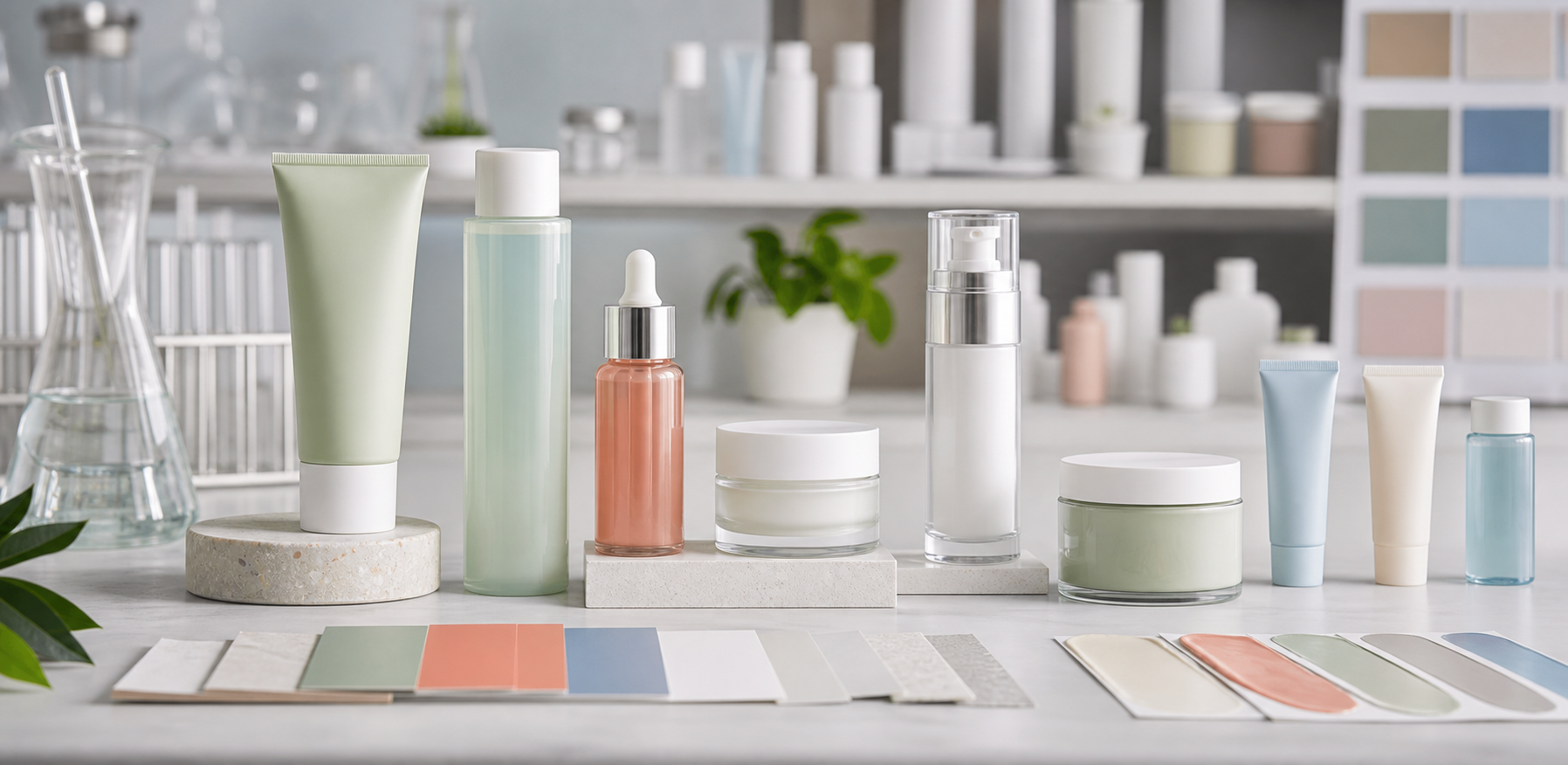
- A cleanser, serum, moisturizer, toner, mask, and body care item can form a flexible launch menu.
- Low MOQ, packaging sourcing, formula stability, and quality control should guide product selection as much as trend appeal.
- Mooyam Cosmetic can support private label, custom formulation, sample development, bulk production, and export support.
What Makes a Good First Skincare Product?
A good first product is not always the trendiest product. For a startup, it should be understandable to customers, realistic for the budget, compatible with available packaging, and easy to reorder. It should also fit the sales channel. A DTC brand may want a hero serum with strong storytelling. An Amazon seller may need a clearer search-driven product. A distributor may prefer a complete private label skincare set.
Before choosing products, define the target customer, sales market, price range, first-order quantity, launch date, and claims boundaries. Product requirements can vary by target market, especially for labeling, ingredient restrictions, sunscreen, acne, or therapeutic-style claims. Do not build the range around claims that have not been checked by qualified advisers.
1. Gentle Facial Cleanser
A facial cleanser is a strong starter product because it is easy for consumers to understand and can support daily use. It can be developed as a gel cleanser, cream cleanser, foam cleanser, mousse cleanser, cleansing balm, or mild exfoliating cleanser. For startups, a gentle daily cleanser usually has broader appeal than a narrow, aggressive concept.
From a manufacturing perspective, the key decisions are texture, foam level, fragrance, pH target, viscosity, packaging type, and target skin feel. Tubes and pump bottles are common choices. Buyers should also consider shipping conditions because leakage or cap weakness can damage the user experience before the product is even opened.
2. Hydrating Serum
A serum often works well as a hero product because it gives the brand a focused story. Hydration, barrier support, brightening appearance, oil balance, or sensitive-skin positioning can be considered, but wording should avoid medical claims and should match the target market’s rules. A serum can also create better perceived value than basic rinse-off products.
For OEM/ODM development, the buyer should define the desired viscosity, finish, skin feel, ingredient direction, packaging, and target price. Dropper bottles look premium but may not suit every formula. Airless pumps can improve user control and presentation, but cost and MOQ may differ. Mooyam’s custom formulation support can help brands compare serum directions and prepare samples for evaluation.
3. Daily Moisturizer
A moisturizer is a reliable repeat-purchase product for many skincare startups. It can be positioned as lightweight gel cream, richer cream, lotion, barrier-support cream, or day-and-night basic care. The format should match the brand’s climate, customer preference, and price point.
Important development points include emulsion stability, after-feel, viscosity, fragrance level, jar or pump compatibility, fill weight, and packaging protection. If the brand is trying to keep low MOQ manageable, it may be better to start with one well-tested moisturizer rather than separate day cream, night cream, and specialty cream SKUs.
4. Toner, Essence, or Mist
Toners and essences are useful for building sets and routines. They can also be lighter to ship and easier to explain as hydration, refreshment, or routine preparation products. For some markets, a toner is a familiar step; for others, a mist may be more intuitive.
The main factory considerations are formula clarity, fragrance, preservative system, bottle compatibility, spray pump performance, cap fit, and leakage testing. A simple hydrating toner can support private label skincare launches, while a more distinctive essence may require additional custom formulation work.
5. Face Mask
A face mask can add visual interest and bundle value. Options include cream mask, gel mask, clay mask, sleeping mask, sheet mask, and wash-off mask. For startups, the best choice depends on channel and usage story. A jar mask can look premium on a DTC site, while a sheet mask set can work well for sampling, gifts, or marketplace bundles.
Mask products need careful packaging review. Jars, sachets, tubes, and sheet mask pouches each have different MOQ, filling, artwork, and transport requirements. Buyers should discuss custom cosmetic packaging options early so the product format and packaging cost stay aligned.
6. Body Lotion or Hand Cream
Body care can be a smart addition when the brand wants a broader personal care range without jumping into highly complex claims. Body lotion, hand cream, body wash, and body scrub can support gift sets, salon channels, hotel amenities, and distributor programs. However, startups should avoid adding body care only to make the range look larger.
The best body care products have a clear reason to exist: daily hydration, fragrance layering, spa positioning, travel-size sets, or seasonal gifting. Tubes and pump bottles are common, and packaging MOQ should be reviewed before finalizing scent variations or sizes.
Side-by-Side Product Selection Guide
| Product Type | Why It Works for Startups | Development Watchpoint |
|---|---|---|
| Cleanser | Easy to understand and suitable for daily routines | Foam level, pH, tube or pump compatibility |
| Serum | Strong hero-product story and higher perceived value | Viscosity, ingredient positioning, package match |
| Moisturizer | Repeat-purchase potential and broad market appeal | Emulsion stability, after-feel, jar or airless choice |
| Toner or essence | Useful for bundles and complete routines | Clarity, fragrance, bottle seal, spray performance |
| Face mask | Good for merchandising, sets, and product discovery | Texture stability, pouch or jar MOQ, artwork complexity |
| Body care | Can extend the range into gifts or salon channels | Scent strategy, size options, packaging cost |
How Many Products Should a Startup Launch?
Many startups do best with three to five SKUs. A simple structure could be cleanser, serum, and moisturizer. A more complete routine could add toner and mask. A distributor or private label buyer may choose a larger set, but only if the sales plan and inventory capacity support it.
Low MOQ is helpful, but it does not remove the need for product discipline. Each SKU requires samples, artwork, packaging, quality checks, production time, and storage. A small, coherent range often performs better than a large range with unclear differences between products.
Private Label vs Custom Formulation for First Products
Private label is usually the faster route when a startup wants to test the market. The brand can select existing formula bases, coordinate packaging, and focus on presentation and sales. Custom formulation is better when the brand needs a distinctive texture, ingredient concept, or performance target that cannot be met by available formulas.
A mixed approach can work well. Use private label skincare for routine essentials, then use custom formulation for one hero product after the positioning is clearer. Mooyam’s OEM/ODM service can help buyers decide which route fits the product, MOQ, budget, and launch timeline.
Quality Control and Compliance Considerations
Product selection should include quality control from the beginning. Ask how the manufacturer checks raw materials, packaging, filling, appearance, odor, viscosity, fill weight, and finished goods. For products sold in different markets, requirements for labeling, claims, documentation, and importer responsibility may vary. A manufacturer can provide support, but the buyer should confirm market-specific obligations with qualified advisers.
Review Mooyam’s quality control and compliance guidance when preparing your product brief. It helps clarify what should be discussed before sample approval and bulk production.
Buyer Checklist Before Choosing Launch Products
- Define the target customer, channel, and price range.
- Choose three to five SKUs that create a clear routine or product story.
- Confirm whether each SKU should be private label or custom formulation.
- Check MOQ by formula, packaging, decoration, carton, and sample requirement.
- Review packaging sourcing before finalizing product sizes or variations.
- Plan sample feedback, stability review, artwork approval, and bulk production timing.
- Avoid claims that may create regulatory risk in the target market.
FAQ
What is the best first skincare product for a startup?
There is no single best product for every brand. A cleanser, serum, or moisturizer is often a practical starting point because each is easy to explain and fits daily routines.
Should a startup launch a full skincare line?
Usually, a focused line is safer. Three to five SKUs can create a complete routine without overwhelming the budget, MOQ, packaging work, and inventory plan.
Is private label skincare good for new beauty brands?
Yes. Private label can help startups launch faster and reduce early development risk, especially when the brand still needs to validate demand.
When should a brand choose custom formulation?
Choose custom formulation when the product needs a distinctive texture, ingredient direction, performance target, or market position that existing formula bases cannot support.
Can Mooyam help with low MOQ product planning?
Yes. Mooyam Cosmetic can discuss low MOQ options, packaging sourcing, sample development, and bulk production planning based on the product category and project scope.
Can one shipment include different products?
Often yes, depending on production schedule, packaging readiness, order quantities, and export arrangements. This should be confirmed during quotation and production planning.
Does Mooyam sell individual retail skincare products?
No. Mooyam Cosmetic focuses on business orders for brands, distributors, private label buyers, and OEM/ODM projects.
Build a Startup Skincare Line with Mooyam
Looking for a reliable cosmetic OEM/ODM manufacturer to plan your first skincare products? Mooyam Cosmetic can support private label skincare, custom formulation, packaging sourcing, sample development, low MOQ planning, bulk production, quality control, and export support. Contact us to discuss your product idea, formula requirements, packaging options, MOQ, and production solution.