
Blurring powder compacts are becoming a practical response to soft-focus complexion trends, warmer weather makeup needs, and buyer demand for portable oil-control formats. A good compact should reduce shine without looking chalky, heavy, or flat.
This guide explains how Mooyam Cosmetic helps B2B beauty brands develop pressed blurring powder compacts through OEM/ODM manufacturing. Mooyam Cosmetic is a cosmetics and makeup OEM/ODM factory, and we do not accept retail orders.
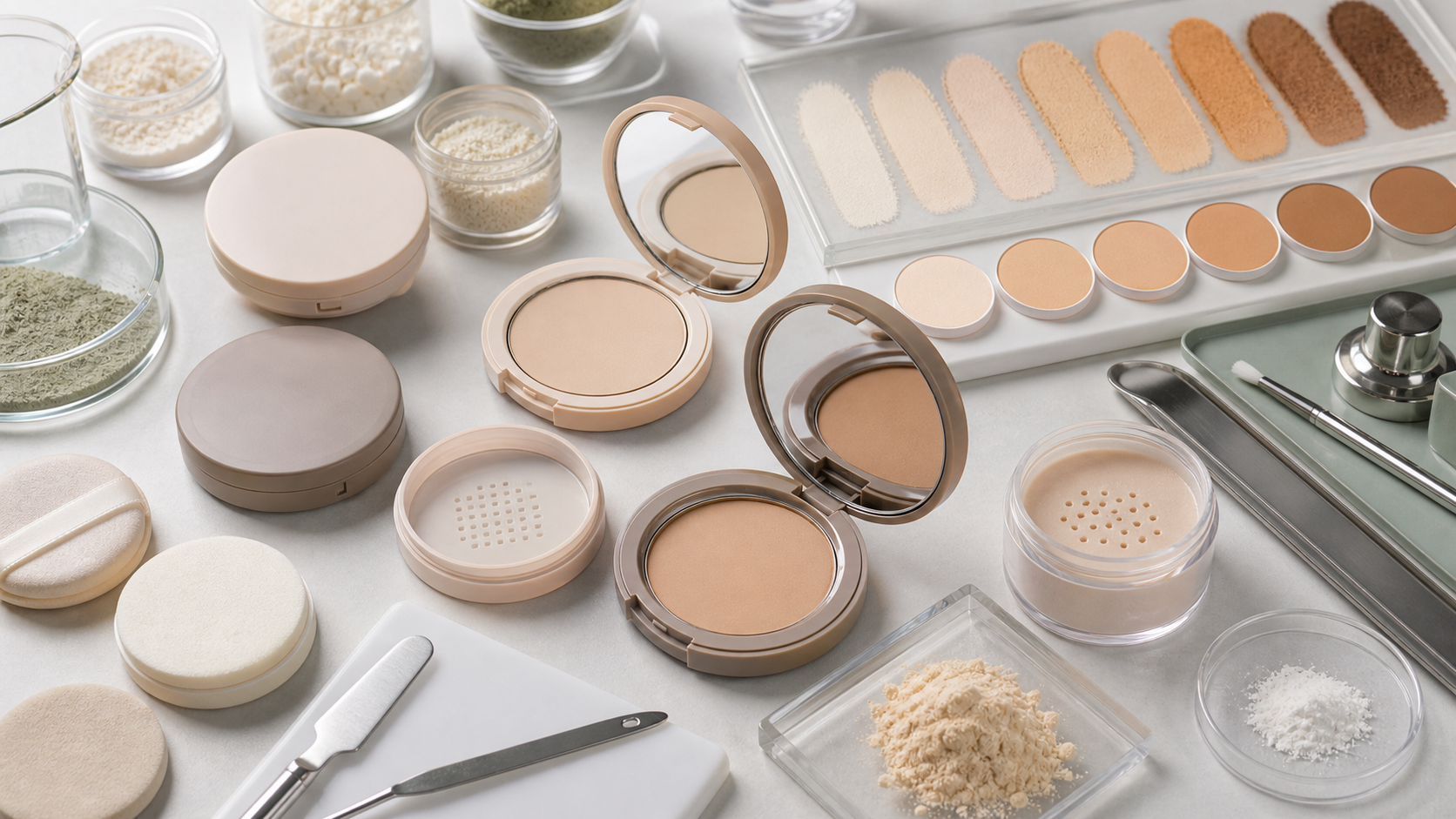
- Blurring powder compact projects should define finish, oil-control level, skin tone range, talc preference, puff feel, and packaging target before sampling.
- Soft-focus performance depends on powder particle blend, binder level, pigment choice, press strength, and payoff after repeated use.
- Shade planning should avoid a one-shade translucent assumption, especially for brands selling across multiple skin tones.
- Mooyam Cosmetic can support formula sampling, pan pressing, compact packaging, stability, drop testing, and production QC for private label or OEM/ODM buyers.
Why Blurring Powder Compact Fits Current Demand
Consumers want skin that looks smoother in real life and on camera, but they are less patient with heavy base products. A pressed powder compact answers that demand because it is portable, easy to reapply, and simple to sell as a complexion essential. For brands, it can sit beside skin tint, concealer, primer, and setting spray as a repeat-purchase item.
From a factory perspective, a blurring compact is not just pressed loose powder. It must combine slip, adhesion, absorbency, optical diffusion, shade compatibility, and pan strength. If the formula is too dry, it can look dusty. If it has too much binder, payoff becomes hard and the compact may glaze. If the shade is too pale, deeper skin tones may see ashiness.
Formula Strategy: Soft Focus Without Heavy Texture
Powder Base and Sensory Feel
The formula brief should define the desired balance between oil control and comfort. Silky powders can improve glide, porous powders can absorb sebum, and soft-focus ingredients can scatter light. A pressed compact also needs enough binder to hold the cake together without turning the surface hard after several uses.
Mooyam Cosmetic usually recommends comparing at least three sample routes: translucent oil-control, tinted soft-focus, and talc-free comfort powder. This lets the buyer review texture, pickup, shade cast, flashback, and packaging compatibility before choosing a final route.
Talc, Talc-Free, and Claim Planning
Some brands prefer talc-free positioning, while others use talc-based systems because of familiar slip and pressability. Either route needs raw material control, supplier documentation, and market-specific claim review. Claims such as clean, non-comedogenic, long-wear, or dermatologist tested should only be used when the brand has appropriate support for the intended market.
| Formula Route | Buyer Goal | OEM/ODM Checkpoint |
|---|---|---|
| Translucent oil-control powder | Universal setting and mid-day touch-up | White cast, flashback, pickup, oil absorption |
| Tinted soft-focus compact | Shade-inclusive complexion smoothing | Shade undertone, payoff, oxidation look, pan consistency |
| Talc-free comfort powder | Clean-positioned or talc-free brand brief | Press strength, texture, ingredient cost, claim wording |
| Sheer finishing powder | Premium soft-focus finish over makeup | Diffusion, cakiness, puff pickup, wear after reapplication |
Shade Range and Finish Design
A compact powder range should usually include more than one translucent shade. Translucent white may suit light skin but can appear gray on deeper tones. Honey, caramel, tan, and cocoa-tinted options may serve wider buyers, especially for brands selling in hot climates or online channels where inclusivity matters.
Finish also matters. A fully matte compact can look sophisticated but may feel dry on normal skin. A natural matte or satin-matte powder can be more forgiving. If the brand wants brightening, color-correcting, or pearl effects, the supplier should confirm color additive suitability and review shimmer level, press stability, and visual payoff.
Packaging and Pressing Decisions
The compact shell, mirror, puff, pan diameter, hinge, magnet, and refill option all affect the final experience. A thin on-the-go compact may suit mass retail, while a heavier refillable compact may support a premium line. The puff should be tested with the formula because a dense puff can pick up too much powder and a weak puff can feel cheap.
| Development Stage | Buyer Provides | Factory Output |
|---|---|---|
| 1. Brief | Finish, shade count, talc preference, market, benchmark | Formula route, component options, MOQ estimate |
| 2. Lab sample | Feedback on blur, shade, pickup, dryness and wear | Adjusted sample and shade drawdowns |
| 3. Pressing trial | Chosen pan and compact shell | Press pressure check, drop test, glazing review |
| 4. Production | Artwork, standard shade, inspection plan | Bulk pressing, QC records, packing and shipment support |
Buyer Checklist
- Define whether the powder should be translucent, tinted, talc-free, oil-control, natural matte, or satin-matte.
- Confirm target markets and any color additive or claim review requirements.
- Request samples across several skin tones, not only one light translucent shade.
- Test pickup with the proposed puff, brush, and direct pan use.
- Set requirements for pan hardness, drop resistance, glazing, mirror quality, hinge performance, and refill option.
- Ask for stability, micro, heavy metal or raw material documents where relevant to your market.
Quality Control for Repeatable Bulk Orders
Pressed powders need process control. Batch mixing time, sieve size, binder spray, pan fill weight, press pressure, and drying or resting time can all change payoff. The approved lab sample should be translated into a production standard with target color, texture, appearance, pan weight, and functional tests.
Mooyam Cosmetic can help buyers prepare shade standards, packaging samples, production inspection points, and shipment packing methods. This is especially important for powder compacts because cracked pans, loose mirrors, surface glazing, and shade variation are visible quality problems for distributors and online reviews.
If your brand is planning a blurring powder compact, send Mooyam Cosmetic your target finish, shade range, talc preference, benchmark texture, compact style, expected MOQ, and launch market. We can review formula route, packaging compatibility, sampling timeline, and QC planning for private label, OEM, or ODM production. Mooyam Cosmetic works with B2B buyers only and does not accept retail orders.
FAQ
Can a blurring powder compact be talc-free?
Yes, but talc-free systems need careful work on slip, press strength, cost, and payoff. Buyers should compare talc-free and talc-based samples before deciding.
How many shades should a powder compact range include?
It depends on brand positioning and target markets. Many brands should consider at least translucent, light, medium, tan, and deep options to reduce white cast and ashiness.
What causes a pressed powder to glaze?
Glazing can come from binder balance, hard pressing, oil transfer from repeated use, or incompatible applicators. Pressing trials and puff testing help reduce risk.
What tests are important before production?
Check shade consistency, pan hardness, drop resistance, pickup, payoff, flashback, oil-control feel, packaging hinge, mirror adhesion, puff quality, and bulk stability.
The links below are used only for trend, SEO direction, color, raw material, and compliance background. This article is original B2B OEM/ODM procurement guidance and is not copied, translated, or structured from the source pages.