
Ceramide barrier serum is a practical product direction for beauty brands that want skin-conditioning, daily-use skincare without relying on aggressive active claims. The opportunity is strongest when the formula, texture, packaging, and claim language are planned together from the first sample brief.
This guide explains how Mooyam Cosmetic approaches ceramide barrier serum OEM/ODM projects for brand owners, distributors, and private-label buyers. Mooyam Cosmetic is a cosmetics and makeup OEM/ODM factory; we manufacture for brands and do not accept retail orders.
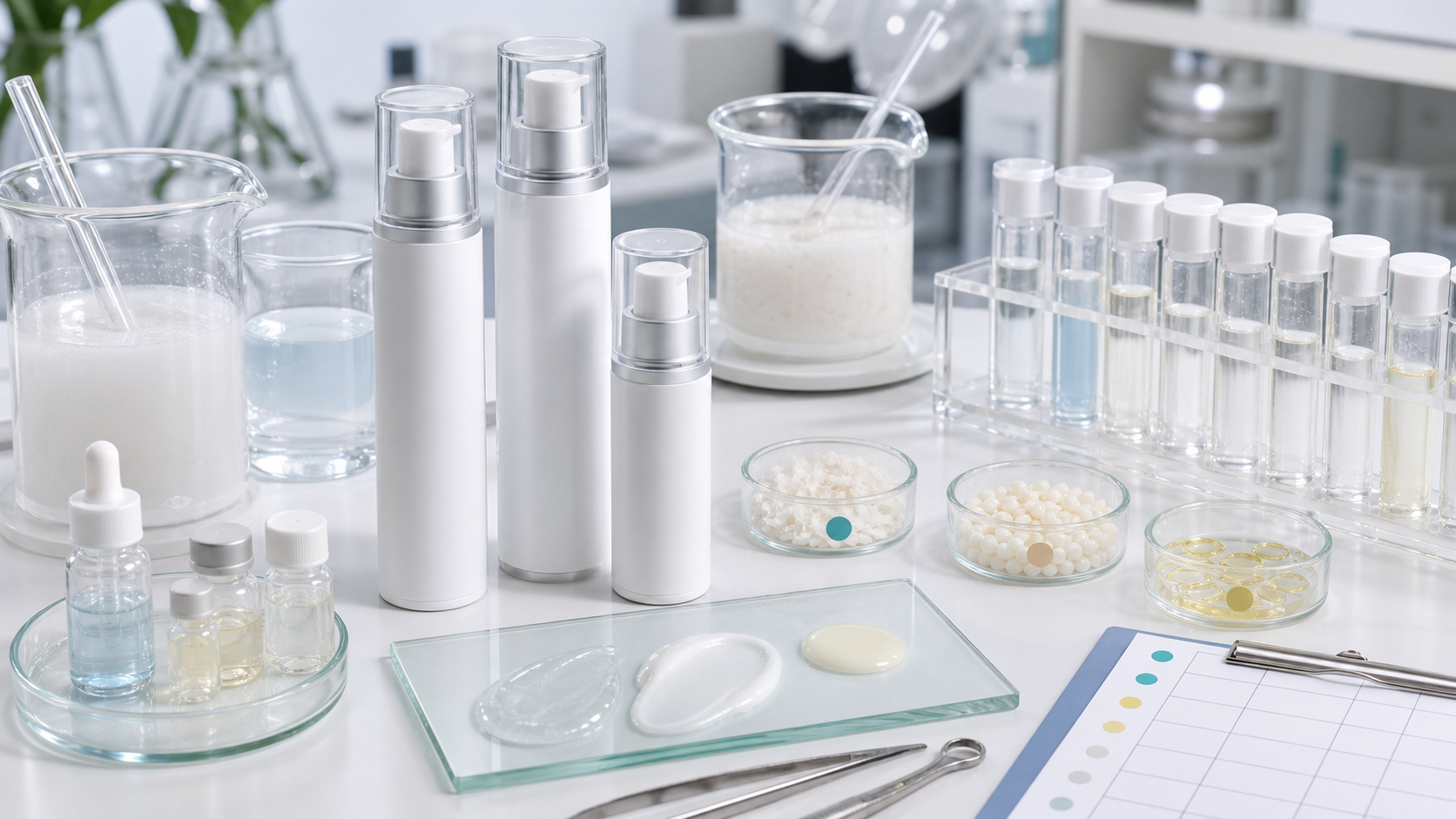
- Ceramide barrier serum development should start with texture, market, claim boundaries, packaging, and target cost before ingredient percentages are discussed.
- Useful formula routes include lightweight emulsion serum, milky lamellar serum, gel-cream serum, and oil-in-water lipid serum.
- Buyers should confirm ceramide type, lipid support system, pH, emulsifier strategy, preservative plan, stability testing, packaging compatibility, and label claims.
- Mooyam Cosmetic can support formula development, raw-material screening, sample revision, airless packaging matching, QC checks, filling, and OEM/ODM production.
Why Barrier Serums Fit 2026 Skincare Demand
Industry trend discussions continue to point toward barrier-first skincare, skin longevity, gentle active routines, and products that help consumers avoid over-treatment. For B2B buyers, ceramide barrier serum is attractive because it can be positioned as daily skincare, used across age groups, and paired with moisturizers, toners, masks, or treatment products in a brand line.
The challenge is that barrier language can easily become vague. A strong OEM/ODM brief should define what the product is meant to do in cosmetic terms: condition skin, support a comfortable feel, reduce the appearance of dryness, improve a smoother-looking surface, or help the routine feel less stripping. Mooyam Cosmetic helps buyers turn this positioning into a manufacturable formula instead of a generic ingredient list.
What Makes a Ceramide Serum Different?
A ceramide serum is usually lighter than a cream but richer than a watery essence. It may use ceramides together with cholesterol-like lipids, fatty acids, phytosphingosine, niacinamide, panthenol, beta-glucan, hyaluronic acid, squalane, or soothing botanical extracts. The exact system depends on the target skin feel, claims, market, budget, and packaging.
Ingredient Story vs. Formula Architecture
Buyers often ask for ceramide because it is recognizable, but the surrounding formula architecture matters just as much. A serum needs the right emulsifiers, thickeners, humectants, lipid dispersion method, and preservative system. Otherwise, it may separate, feel waxy, pill under moisturizer, or fail stability under heat.
Texture Expectations
Barrier serum can be watery-milky, cushiony, gel-cream, or lotion-like. Brands targeting humid climates may prefer fast absorption and low tack. Brands targeting dry climates may want a more comforting finish. The texture choice affects raw materials, manufacturing process, filling method, and consumer instructions.
OEM/ODM Formula Routes
| Formula Route | Best For | Development Checks |
|---|---|---|
| Milky lamellar serum | Barrier-focused brands, sensitive-skin direction, premium daily care | Emulsion stability, lipid dispersion, viscosity drift, airless pump flow |
| Lightweight emulsion serum | Humid markets, layering routines, makeup-friendly skincare | Absorption, tackiness, pilling, preservative performance |
| Gel-cream serum | Fresh skin feel, mass-market launches, visible cushion texture | Polymer compatibility, pump choice, freeze-thaw stability |
| Lipid-rich serum | Dry-skin positioning, night routines, premium nourishing lines | Greasy after-feel, oxidation control, fragrance masking, packaging seal |
Key Development Decisions
1. Ceramide Type and Use Level
Ceramide NP is common in cosmetic raw-material briefs, but the supplier form, solvent or carrier, recommended level, and processing conditions vary. Buyers should not compare formulas only by headline percentage. Ask how the ceramide is delivered, what supporting lipids are used, and whether the formula remains stable after heat, cold, and centrifuge checks.
2. Supporting Lipid System
Barrier serum often performs better when ceramides are paired with other lipid or skin-conditioning materials. The ratio of water phase, oil phase, humectants, emulsifiers, and film-formers determines whether the product feels elegant or heavy. Mooyam can help balance marketing appeal with manufacturability and cost.
3. Claims and Compliance
Cosmetic claims should stay truthful, supportable, and appropriate for the target market. “Supports skin barrier comfort” or “helps skin feel smoother and less dry” is generally safer than medical-style language such as treating eczema, curing irritation, or repairing damaged skin. Final wording should be reviewed against local rules before printing packaging.
Packaging Advice for Barrier Serum
Airless bottles are often a good fit because they support controlled dosing, reduce repeated product exposure, and match a premium serum image. Dropper bottles can work for thinner formulas but may be less suitable for milky or gel-cream textures. Tubes can reduce cost for larger sizes, while glass bottles may raise shipping and breakage considerations.
Packaging choice affects MOQ, lead time, filling speed, compatibility testing, and unit economics. Buyers planning a first launch may start with compatible stock airless packaging, then move to custom molds or decoration after sales validation.
OEM/ODM Workflow
| Stage | Buyer Input | Mooyam Cosmetic Output |
|---|---|---|
| Brief review | Target market, skin feel, claim direction, price tier, packaging idea | Formula route, ingredient recommendations, feasibility notes |
| Sample development | Feedback on viscosity, absorption, residue, scent, and pump feel | Lab samples and formula adjustment |
| Testing confirmation | Approved sample, target order quantity, artwork direction | Stability, compatibility, QC and production plan |
| Mass production | Final packaging, deposit, shipping requirements | Bulk manufacturing, filling, inspection and shipment support |
Buyer Checklist Before Sampling
- Define serum texture: milky, gel-cream, lightweight emulsion, or lipid-rich.
- Confirm target market and avoid disease-treatment or medical-style claims.
- Ask which ceramide form, carrier, and supporting lipid system will be used.
- Share preferred packaging early so viscosity and pump compatibility can be tested.
- Review fragrance-free, low-fragrance, or allergen-aware fragrance direction.
- Plan stability, compatibility, pH, viscosity, appearance, odor, and microbial checks.
- Confirm MOQ impact from packaging decoration, airless pump selection, and raw-material sourcing.
Send Mooyam Cosmetic your target market, desired texture, ingredient preferences, claim direction, packaging idea, and first-order quantity. We will review the project as a cosmetics and makeup OEM/ODM factory and recommend a practical sampling route. Mooyam Cosmetic works with brand and distributor projects; we do not accept retail orders.
FAQ
Can Mooyam develop a ceramide serum from a concept brief?
Yes. Mooyam Cosmetic can develop ODM samples based on the target texture, ingredient story, market, packaging, and cost range.
Is airless packaging required?
Not always, but airless packaging is often useful for serum dosing and premium positioning. The final choice depends on viscosity, cost, MOQ, and compatibility results.
Can a ceramide serum be fragrance-free?
Yes, but the base odor of lipid materials and preservatives should be checked. A fragrance-free sample may need raw-material adjustment to keep the scent acceptable.
What tests should buyers consider?
Common checks include stability, freeze-thaw, centrifuge, pH, viscosity, appearance, odor, microbial limits, preservative challenge where appropriate, and packaging compatibility.
These links are used only for trend, SEO direction, compliance, and ingredient background. The article above is original B2B OEM/ODM procurement content for beauty brand buyers and does not copy, translate, or follow the structure of the sources.