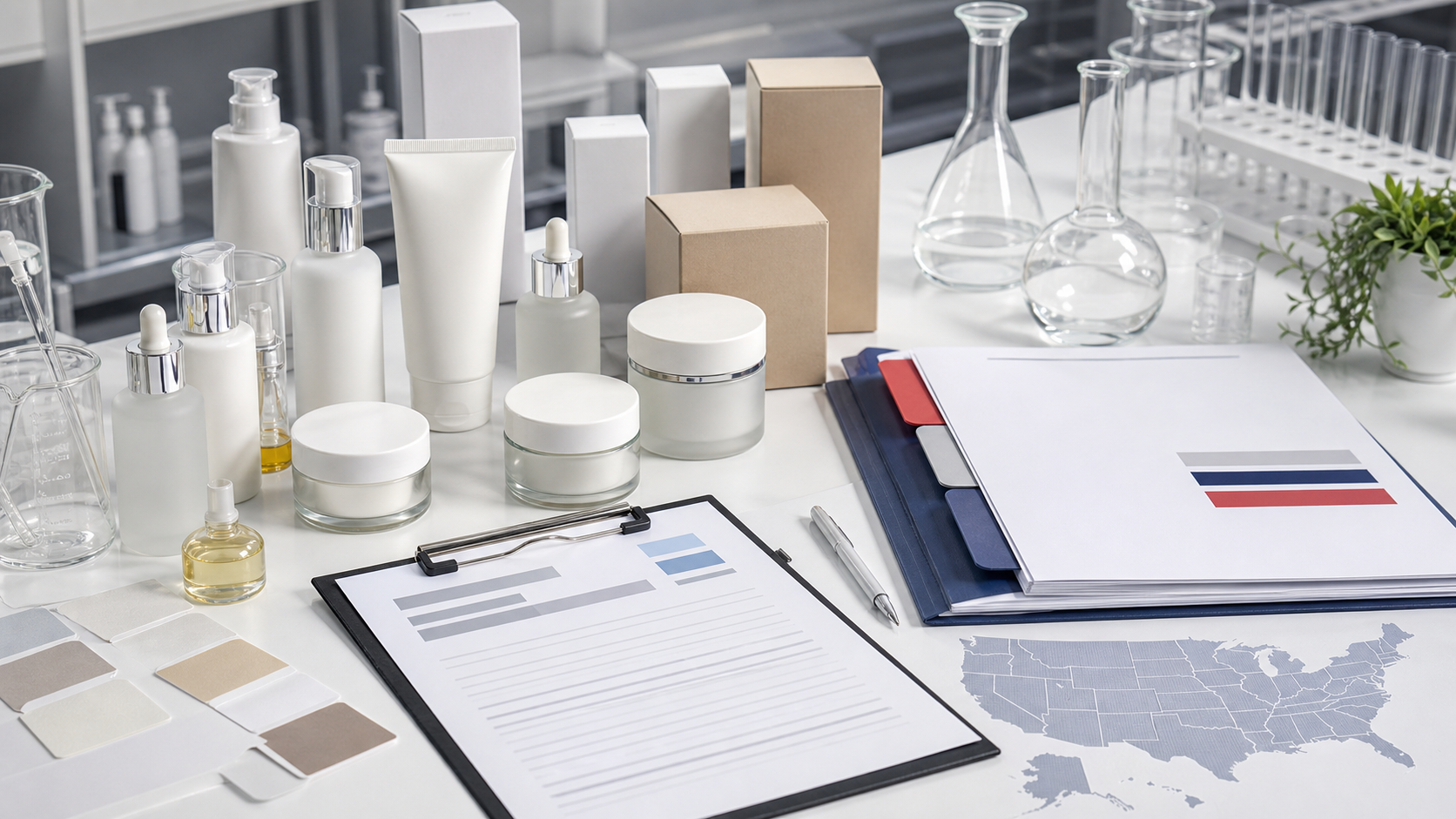
US beauty brands can work with a China cosmetic manufacturer successfully when the project brief, formula route, packaging plan, quality expectations, and export requirements are clear before sampling begins. The practical goal is not only to find a supplier, but to build a controlled OEM/ODM workflow that can move from sample development to mass production without avoidable delays.
For this article, a China cosmetic manufacturer means a factory partner that can support private label skincare, custom formulation, packaging sourcing, quality control, and export support for US-focused brand projects. Requirements for cosmetics, claims, labeling, testing, and import documentation vary by target market and product category, so buyers should confirm their US-market obligations with qualified regulatory support.
Quick Summary
- US brands should define product type, sales channel, price range, claims, packaging needs, and target launch timing before requesting samples.
- A cosmetic OEM manufacturer can produce according to a buyer’s formula, while a cosmetic ODM manufacturer can help adapt existing formula concepts or develop a practical product route.
- Important US-buyer checkpoints include claim language, ingredient review, artwork information, packaging compatibility, retained samples, batch records, and export documents.
- Mooyam Cosmetic can support overseas B2B buyers with OEM/ODM manufacturing service, sample development, packaging sourcing, quality control, and shipment coordination.
What US Beauty Brands Should Clarify First
A good manufacturing project starts before the factory quotes. US buyers should explain whether the product is for Amazon, Shopify/DTC, salon resale, distributor channels, retail shelves, subscription boxes, or professional backbar use. Each channel changes packaging durability, label space, carton needs, MOQ planning, and reorder timing.
The brand should also decide whether it wants a fast private label route or a more differentiated custom formulation project. For many startups, private label skincare options can reduce early development complexity. For brands with a specific texture, ingredient direction, benchmark product, or sensory target, custom formulation support may be more suitable.
US-market planning should include claim discipline. Cosmetic products can describe appearance, cleansing, moisturizing, sensory, or cosmetic-use benefits when properly supported, but brands should avoid drug-style or disease-related claims unless they have the correct regulatory pathway. No manufacturer should guarantee universal regulatory approval because requirements vary by target market.
How a China Manufacturer Supports the Project Flow
Working with a China cosmetic manufacturer is easiest when both sides understand the handoffs. The buyer owns brand strategy, product positioning, compliance decisions, final artwork, and market launch. The factory supports manufacturability, formula route, packaging fit, sample development, production control, and export support.
| Project Area | US Brand Decision | Factory Support |
|---|---|---|
| Product route | Private label, modified stock formula, or custom formulation | Feasibility review, formula direction, sample plan, MOQ discussion |
| Formula and claims | Texture, ingredient story, avoid list, cosmetic claim boundaries | Lab samples, formula adjustment, INCI information, practical claim feedback |
| Packaging | Bottle, jar, tube, pump, carton, decoration method, unit price range | Packaging sourcing support, component comparison, filling compatibility review |
| Quality control | Approval standard, retained sample needs, inspection expectations | Quality control and compliance support, production checks, batch records, stability observation where relevant |
| Export and reorder | Destination, shipment terms, launch calendar, reorder forecast | Carton packing, export document coordination, production schedule and shipment support |
Build the Right Product Brief for a US Launch
A US-focused product brief should be more specific than “make a moisturizer” or “create a serum.” It should explain the target customer, sales channel, product format, benchmark examples, preferred texture, fragrance direction, ingredient preferences, claim limits, packaging style, order quantity, and launch deadline.
For Amazon and DTC brands, the brief should consider review risk. Products need a stable texture, packaging that survives parcel shipping, clear usage instructions, and realistic claims. For retail or distributor projects, brands may need carton information, barcode placement, case pack planning, and shelf-friendly packaging. For salon or spa channels, testers, backbar sizes, and professional-use instructions may matter more.
The brief should also note any ingredient avoid list. Some US buyers request fragrance-free, vegan-positioned, colorant-free, silicone-free, essential-oil-free, or specific retailer-restricted ingredient directions. The factory can review whether the request is practical, but the brand should confirm the final market compliance position with qualified advisors.
Sample Development and Approval
Sample development is where many cross-border projects either become clear or become slow. A cosmetic ODM manufacturer may begin with a suitable base and adjust texture, fragrance, color, viscosity, skin feel, or ingredient direction. A cosmetic OEM manufacturer may work closer to a buyer-provided formula or defined specification.
US buyers should test samples in the same way consumers will use the product. For skincare, this may include texture, absorption, residue, fragrance strength, pump output, fill appearance, carton fit, and perceived value. For color cosmetics, shade, payoff, dry-down, transfer, packaging pickup, and batch consistency may be key.
Feedback should be written in measurable language. Instead of saying a cream feels “more premium,” the buyer can say it should absorb faster, feel less waxy, reduce fragrance strength by a defined amount, or match a benchmark viscosity more closely. Clear feedback helps the lab make controlled revisions rather than guessing.
Packaging, Artwork, and US Label Planning
Packaging is both a brand asset and a manufacturing constraint. A beautiful bottle that leaks, scratches, reacts with the formula, or has too little label area can create delays. US brands should review packaging samples, decoration method, carton structure, fill volume, cap or pump function, shipping durability, and final artwork before mass production.
Artwork should be treated as part of the production approval process. The buyer should confirm brand name, product name, net contents, directions, warnings if needed, ingredient list format, distributor/importer information, barcode, batch code area, and any required market-specific language. The factory can help coordinate print files and packaging suppliers, but the brand is responsible for market-facing claims and label compliance.
Quality Control and Export Support for US Buyers
Quality control should be agreed before the purchase order, not after production is complete. Important points may include approved standard samples, color and odor limits, viscosity or pH checks where relevant, fill weight, packaging function, seal integrity, appearance, carton condition, batch coding, retained samples, and final inspection steps.
Export support can include commercial invoice details, packing list, carton marks, HS code coordination, shipment timing, freight forwarder communication, and document preparation. Exact import and customs requirements vary by shipment, destination, product category, and buyer setup, so US brands should align with their broker or logistics partner early.
US Buyer Checklist Before Placing an OEM/ODM Order
- Confirm the sales channel: Amazon, Shopify/DTC, retail, distributor, salon/spa, or mixed channel.
- Choose private label skincare, modified stock formula, full custom formulation, or buyer-owned formula route.
- Prepare target texture, fragrance, ingredient direction, avoid list, benchmark products, and claim boundaries.
- Review packaging samples, decoration method, label area, carton strength, and filling compatibility.
- Approve final samples, artwork, INCI information, batch code location, and production standard sample.
- Confirm MOQ, unit cost, payment terms, production lead time, packaging lead time, and reorder forecast.
- Align quality control checkpoints, retained samples, export documents, freight forwarder details, and target delivery window.
Common Mistakes to Avoid
Using US-market claims before checking support
Claims such as acne treatment, SPF protection, eczema relief, anti-inflammatory action, or FDA-approved wording may create regulatory issues if used incorrectly. Keep cosmetic claim language realistic and confirm requirements for the target market.
Approving packaging before formula compatibility
Packaging should be checked with the actual formula. Pumps, tubes, jars, droppers, and airless bottles can perform differently depending on viscosity, oil content, fragrance, and fill method.
Sending broad sample feedback
Vague comments slow down sample development. Compare samples against a benchmark and describe what should change in texture, finish, odor, color, pump output, or application feel.
How Mooyam Cosmetic Can Support US Beauty Brands
Mooyam Cosmetic works with international beauty brands, private label buyers, Amazon sellers, Shopify/DTC companies, distributors, and sourcing managers on cosmetic OEM/ODM projects. Our team can help review product ideas, recommend formula routes, coordinate sample development, source packaging, prepare production standards, manage quality control, and support export planning.
Whether your brand is starting with private label skincare or planning a more customized formula, the best next step is to send a clear project brief. Include product type, target market, formula preferences, packaging direction, expected MOQ, launch timing, and any compliance questions you already know.
Start Your US-Focused OEM/ODM Project
Looking for a reliable cosmetic OEM/ODM manufacturer in China? Contact us to discuss your product idea, formula requirements, packaging options, MOQ, sample development, and production plan.
Send your brief through the Mooyam Cosmetic contact page. We can review your US-market product concept, private label skincare route, custom formulation needs, packaging sourcing requirements, quality control expectations, mass production timeline, and export support plan.
FAQ
Can a China cosmetic manufacturer make products for US beauty brands?
Yes. A China cosmetic manufacturer can support US beauty brands with OEM/ODM development, private label skincare, custom formulation, packaging sourcing, sample development, mass production, quality control, and export support. The brand should confirm its US-market regulatory and labeling responsibilities.
What should US buyers prepare before requesting samples?
Prepare product type, target customer, sales channel, formula preferences, benchmark products, packaging direction, claim limits, ingredient avoid list, MOQ expectation, and launch schedule. Better input usually leads to more relevant samples.
Is private label or custom formulation better for a US startup?
Private label is often faster for a first launch because the formula route is more established. Custom formulation is better when the brand needs a specific texture, ingredient story, sensory profile, or differentiated product concept.
Can the factory handle packaging for US shipments?
The factory can help source bottles, jars, tubes, pumps, cartons, and decoration options, then review filling compatibility and packing needs. The buyer should still confirm label content, claim language, and any US-market packaging requirements.
Does a manufacturer guarantee US compliance approval?
No. A responsible manufacturer should not guarantee regulatory approval. Requirements vary by target market, product category, claims, ingredients, labeling, and sales channel, so buyers should use qualified regulatory support when needed.
How can US buyers reduce delays in OEM/ODM projects?
Delays are reduced by approving the product brief early, giving precise sample feedback, checking packaging before artwork, confirming claim and label requirements, setting realistic lead times, and keeping purchase order details consistent with the approved sample.
Can Mooyam Cosmetic support Amazon and Shopify beauty brands?
Yes. Mooyam Cosmetic supports overseas B2B buyers including Amazon sellers, Shopify/DTC brands, distributors, salon/spa brands, and private label buyers with formula, packaging, quality control, mass production, and export coordination.