
Serum dropper bottles look simple, but they can decide whether a private label skincare product feels premium, dispenses correctly, survives shipping and fits the buyer’s cost structure. For overseas beauty brands, Amazon sellers, DTC founders and distributors, the right dropper pack must match the serum formula, positioning, MOQ plan, artwork and quality control requirements.
This guide explains how to choose dropper bottles for serum products when working with a cosmetic OEM manufacturer or cosmetic ODM manufacturer. It focuses on B2B procurement decisions for private label skincare, custom formulation, packaging sourcing, sample development, bulk production, quality control and export support. Mooyam Cosmetic supports brand and wholesale OEM/ODM projects only; we do not accept retail orders.
Quick Summary
- A serum dropper bottle should be selected around formula viscosity, ingredient sensitivity, target price, decoration method and sales channel.
- Glass feels premium and protects some formulas well, while plastic can reduce weight and breakage risk for e-commerce or low MOQ launches.
- Dropper bulb, pipette length, neck finish, closure torque and carton protection all affect user experience.
- Buyers should test the final formula in the actual package before approving artwork or bulk production.
- Mooyam Cosmetic can support OEM/ODM service, private label skincare, custom formulation, packaging sourcing, quality control and export planning.
Why Serum Dropper Bottles Need Early Planning
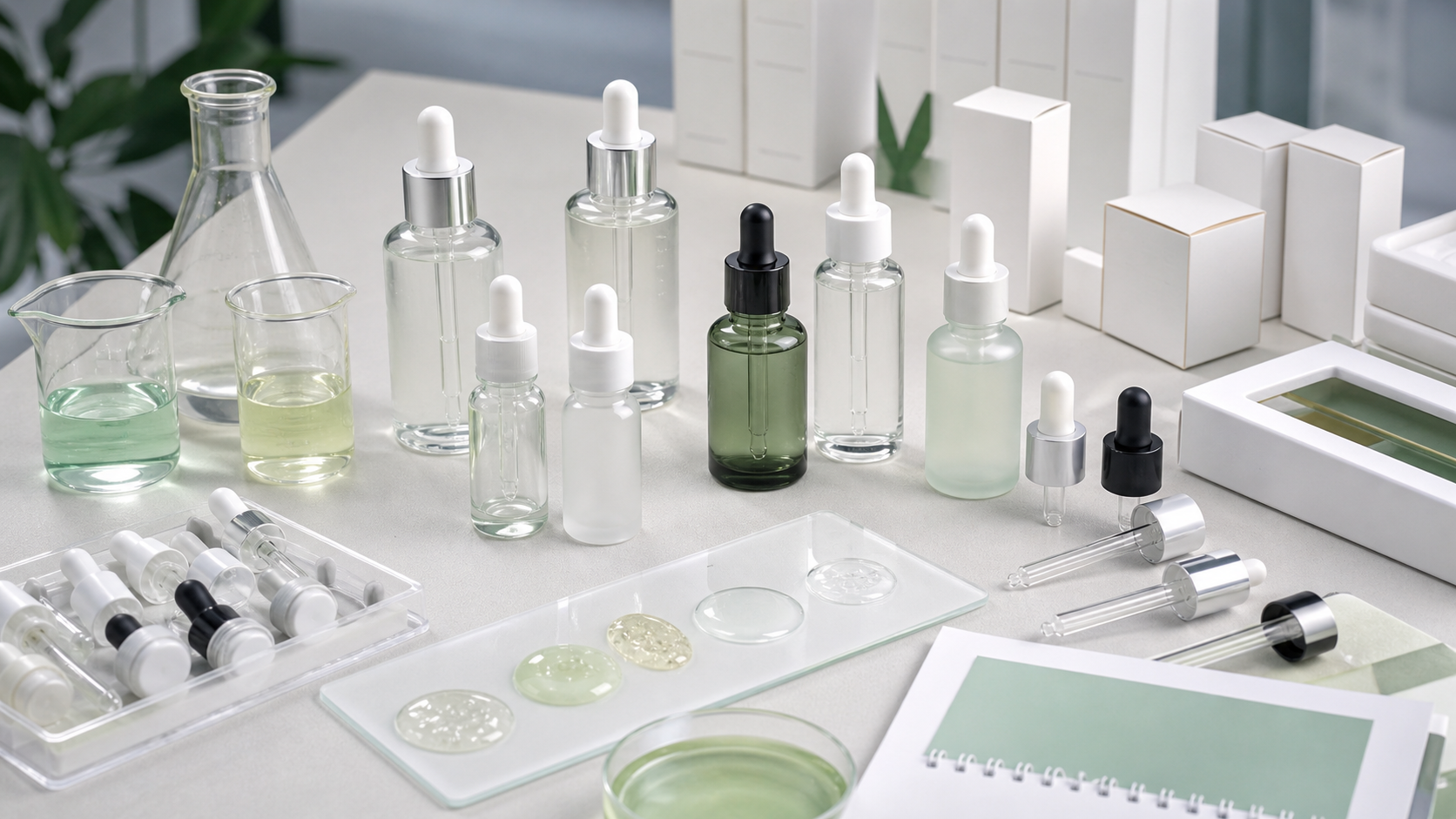
Many brands choose a dropper bottle because it communicates a concentrated serum, facial oil or booster format. The visual language is familiar: a clear or frosted bottle, a collar, a rubber bulb and a glass or plastic pipette. However, a familiar pack is not automatically the correct pack for every formula.
A watery serum, oil serum, gel serum and suspension serum behave differently in a dropper. Some products flow too fast and create messy dosing. Others are too viscous and do not fill the pipette well. Certain formula components may affect decoration, cap liners, droppers or plastic materials. Packaging should be reviewed during custom formulation development, not after the final sample is already approved.
Early packaging discussion also protects cost and MOQ. A stock bottle with label decoration may be suitable for a fast launch. A custom color, special cap, frosted coating, heavy glass base or special carton may increase component MOQ and lead time. The best decision connects brand image with manufacturing reality.
Glass vs Plastic Dropper Bottles
Glass is common for facial serums because it looks premium, has good weight in hand and is often used for ingredient-led skincare positioning. Amber, green or opaque glass may help support a light-protection story, although the brand should confirm whether the formula truly needs that level of protection. Glass can also increase freight weight and breakage risk, especially for Amazon, DTC parcels and international distributors.
Plastic dropper-style packaging can reduce weight and breakage risk. It may suit lower-priced ranges, travel products or channels where durability matters more than heavy-premium feel. The tradeoff is perceived value and compatibility. Buyers should ask which plastic material is used, whether it fits the formula, and what decoration options are realistic at the target MOQ.
| Packaging Route | Best Fit | Buyer Watchouts |
|---|---|---|
| Clear glass dropper | Classic serum, facial oil, ingredient-led skincare and DTC hero products. | Check light sensitivity, label adhesion, carton protection, freight weight and breakage. |
| Frosted or colored glass | Premium positioning, clinical or boutique skincare lines. | Decoration MOQ, color consistency, coating scratch resistance and sample lead time. |
| Plastic dropper-style bottle | Low weight, travel, e-commerce bundles and startup cost control. | Formula compatibility, perceived value, cap seal and recyclability claim discipline. |
| Airless pump alternative | Serums that are too viscous, sensitive or messy for a dropper. | Pump output, viscosity, MOQ, component cost and user expectation. |
Match the Dropper to Formula Viscosity
The most important technical question is whether the dropper dispenses the formula cleanly. A low-viscosity serum may drip too quickly if the pipette opening is too large. A gel serum may not draw enough product into the pipette. An oil-based product may feel elegant in glass but can affect label adhesion or carton staining if leakage is not controlled.
During cosmetic OEM/ODM service planning, buyers should request formula-filled packaging samples. Test how the consumer will actually use the product: opening the cap, squeezing the bulb, drawing product, dosing on hand or face, closing the bottle, and storing it upright or on its side. The sample should also be checked after transport simulation or basic leakage observation when relevant.
Pipette, Bulb, Collar and Neck Details
A dropper system includes more than the bottle. The rubber bulb must feel controlled and recover its shape. The collar should fit securely and align with the brand look. The pipette length should reach the product without scraping the base or leaving too much inaccessible liquid. The neck finish and closure torque should support sealing without damaging the component.
If the formula contains oils, fragrance, solvents, colorants, acids or active-positioned ingredients, the project team should discuss material compatibility. A supplier may recommend glass pipettes, plastic pipettes, different bulbs, liners or an airless alternative depending on the formula. The buyer should not approve a component only from a catalog image.
Decoration, MOQ and Brand Positioning
Dropper bottles can support many brand styles. A transparent label can look minimal. A white label and silver collar can create a clinical feel. A matte carton can make a low MOQ serum feel more finished. A colored glass bottle can signal a specific product family. The challenge is to choose decoration that fits the sales channel and budget.
For private label skincare, strong artwork and carton design often matter more than a custom mold. A brand can use stock dropper bottles while still building a clear product family through label hierarchy, color coding and outer cartons. More custom packaging can be considered after demand and reorder volume are proven.
Dropper bottle MOQ can come from bottle stock, bottle color, collar finish, bulb color, pipette type, label printing, carton printing, inserts and shipping cartons. Buyers should request component-level MOQ instead of only asking for finished-product MOQ. A small formula batch may still require a larger packaging purchase if the selected component is not in stock.
Buyer Checklist Before Approving a Serum Dropper Bottle
- Confirm serum type, viscosity, ingredient sensitivity and expected fill volume.
- Choose glass, colored glass, plastic or an airless alternative based on formula and channel.
- Test the final formula with the actual dropper, bulb, collar, cap and carton.
- Check pipette pickup, dosing control, leakage, closure torque, label adhesion and carton fit.
- Request MOQ by bottle, dropper, decoration, label, carton and any custom color.
- Review target market label space, claim wording and ingredient list requirements before printing.
- Ask how the factory will inspect appearance, fill weight, packaging function and retained samples.
- Plan export packing and reorder lead time before the first bulk production run.
Quality Control and Compliance Notes
Serum packaging quality control should include both appearance and function. Useful checks may include bottle defects, pipette straightness, cap fit, dropper draw, leakage observation, fill volume, label placement, carton condition and batch coding. If a formula is sensitive to light, oxygen or packaging contact, the test plan should reflect that risk.
Label and claim requirements vary by target market. A dropper serum should avoid medical claims, guaranteed results, unsupported certification language or regulatory promises that the brand cannot support. Mooyam Cosmetic can provide quality control and compliance guidance for manufacturing discussions, but buyers should confirm market-specific obligations with qualified advisers.
FAQ
Are glass dropper bottles always better for serums?
No. Glass can look premium, but plastic or airless packaging may be better for some channels, formulas, shipping conditions or low MOQ plans.
Can a thick serum use a dropper bottle?
Sometimes, but thick formulas may not draw or dispense well. Buyers should test the final viscosity in the actual dropper before approval.
What size is common for serum dropper bottles?
Common sizes include 15 ml, 30 ml and 50 ml, but the best size depends on price positioning, usage amount, packaging availability and channel.
Can Mooyam help source serum packaging?
Yes. Mooyam can support customized packaging sourcing, sample development, compatibility checks and production planning for serum projects.
Should packaging be selected before formula sampling?
Packaging direction should start early, but final approval should use formula-filled packaging samples because formula behavior affects dispensing and compatibility.
Can I customize bottle color or cap finish at low MOQ?
Some decoration is possible at lower MOQ, but custom colors, caps or coatings may require higher component minimums. Ask for MOQ by component.
Does Mooyam accept retail orders?
No. Mooyam Cosmetic supports B2B beauty brands, private label buyers, distributors and wholesale OEM/ODM projects only.
Choose Serum Packaging With Mooyam
Looking for a reliable cosmetic OEM/ODM manufacturer for serum packaging, sample development and production? Contact Mooyam Cosmetic to discuss your formula, dropper bottle options, MOQ, quality control and export support.